Alba Iulia

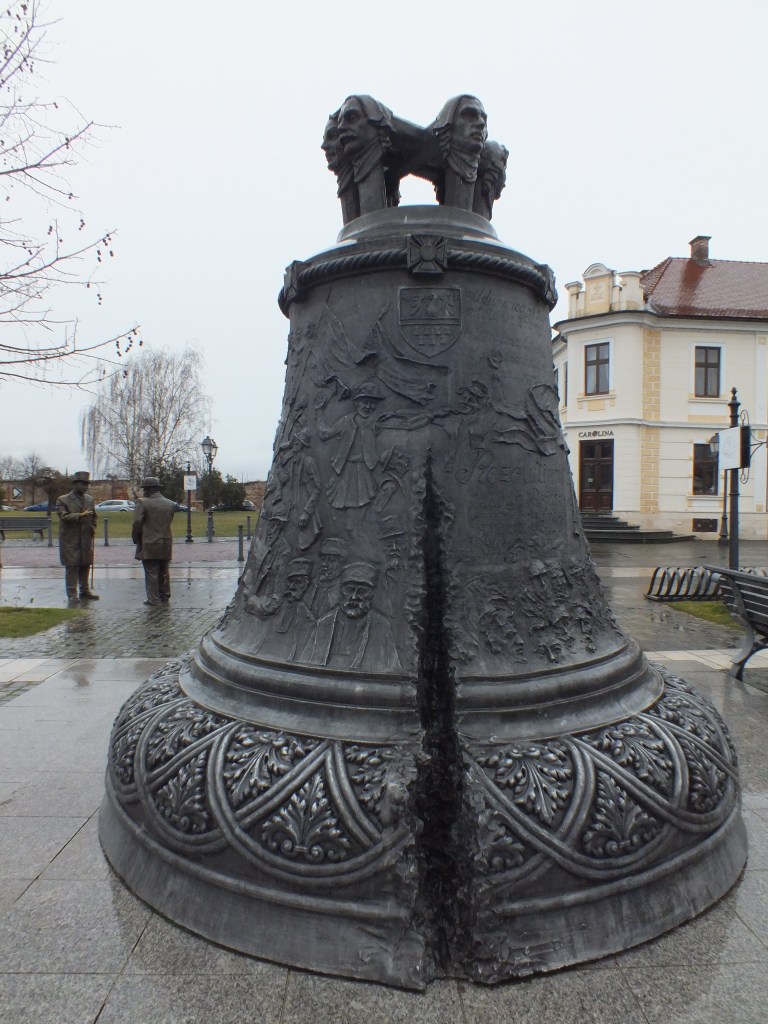
‘There’s no culture here, only history,’ says the young man showing me around the hostel in Alba Iulia. But what a history it is. An entire nation’s history encapsulated in one city: the Capital of the Soul of all Romanians.

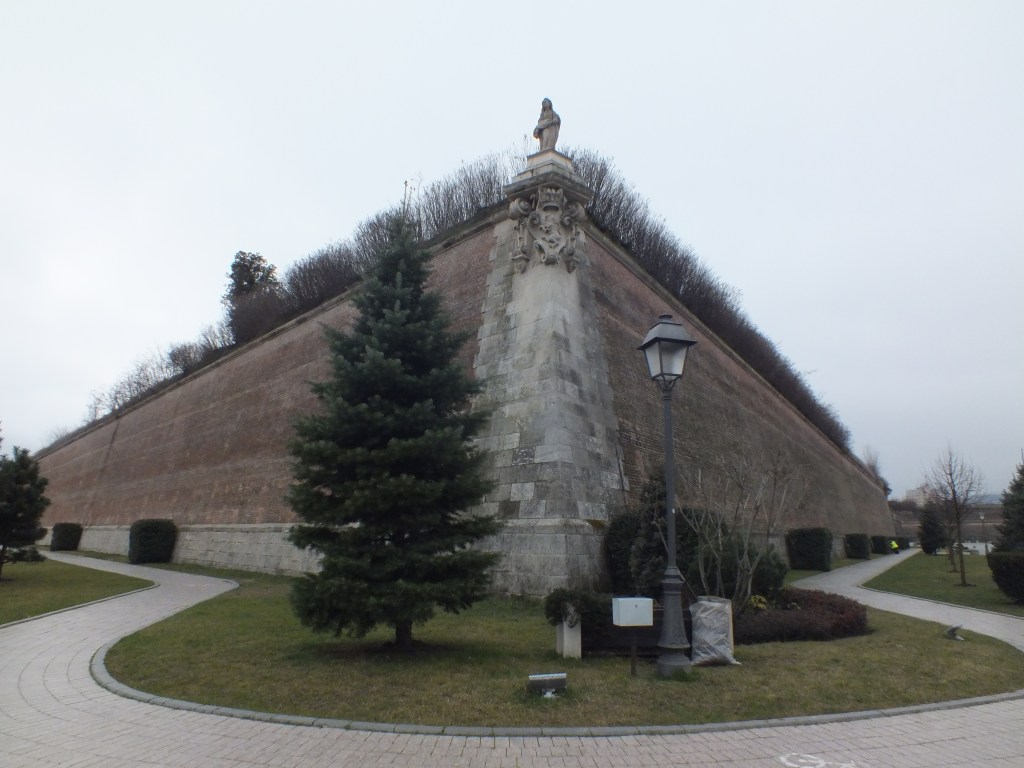
Alba Iulia is a mythical city with a seven-pointed star fortress, lying in the Mureș Valley where the Apuseni Mountains and the Târnavelor Plateau meet. Here the Daco-Roman origins of Romania are tangible: remains of Roman columns, tombs and inscriptions are stored in cluttered arcades, and archaeological excavations of Roman streets are exhibited under scuffed glass walkways. More fragments can be found in the National Museum of the Union, where quotes from classical sources testify to the existence and bravery of the Getae and Dacian peoples. And neoclassical gateways, bronze Roman soldiers guarding the streets, and carved depictions of the great battle between Dacians and Romans attempt to keep this memory of a fierce people alive.
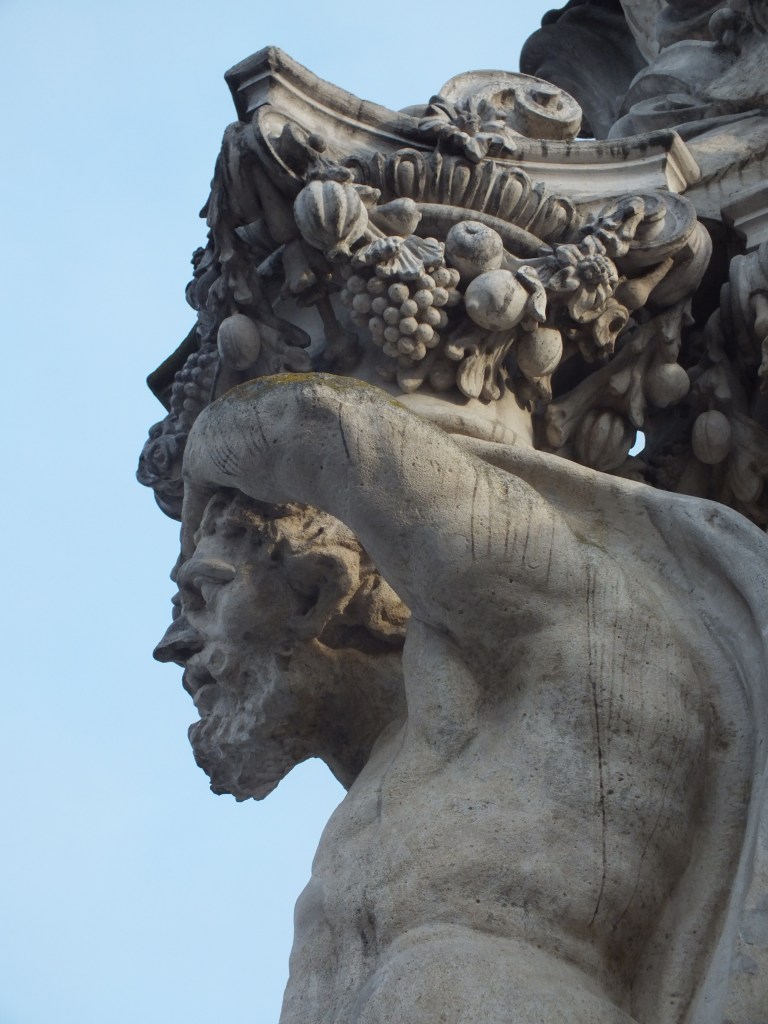
It is hard to get a sense of a city in the cold rain, when no one but statues brave the streets and not even the cafes can face opening. So the only thing I am left with, that I can communicate with, is this history.

If the Dacian spirit is reborn in anything, it is in the struggle for liberation fought by Romanians and captured within the history of Alba Iulia. The fight for recognition of the Romanian people – for centuries enslaved as serfs and excluded from exercising any form of political power, a majority governed by non-Romanian minorities – centres symbolically on the figure of the Romanian peasant. A tall, imposing obelisk outside the citadel walls commemorates the peasant revolt led by Horea, Cloșca and Crișan, who were executed in Alba Iulia’s central square and extolled by French revolutionaries.

And then liberation becomes unification. The story of Romanian unification seems drawn to Alba Iulia with a magnetic quality. From Michael the Great’s arrival into the city in 1599 and brief rule over the provinces of Transylvania, Wallachia and Moldova – a fleeting but foundational moment of unity – to the declaration of Greater Romania in 1918, the city acts as a kind of national repository, and attracts nation-building activities like the 1922 coronation of King Ferdinand and Queen Marie. It turns the city’s present into a re-enactment of the past: even the 2018 centenary of Greater Romania, with its celebratory banners still plastered around the city over a year later, has passed into an ever-present history. Alba Iulia bears this history like a scar, a memory that is stubbornly and proudly visible.

Over time the River Mureș has drifted away from the city, and now vegetables are grown at the base of the fortress. I do not know what has happened to the revolutionary, emancipatory spirit of the city. In the Coronation Cathedral, portraits of King Ferdinand and Queen Marie dominate the western wall, although the Catholic Ferdinand refused to be crowned in an Orthodox church and preferred to set the crown on his head with his own hands. And now, every hour, the cathedral politely waits for the Hungarian Catholic cathedral next door to ring its bells first.

But then a new guest arrives at my hostel one night, a Hungarian-speaking Romanian photographer, who has returned from photographing bacteria under microscopes in Oxford and is now working on a documentary series on orphanages across Romania. I am puzzled at first, because he speaks to the manager in English, but it turns out that even his poor, broken English is better than his Romanian. It is a strange contrast to the myth of Alba Iulia, where unity and nationhood shout loudly, but in the end cannot connect two citizens of the same country, whose only resort is an alien language.

Standard

Hamba III

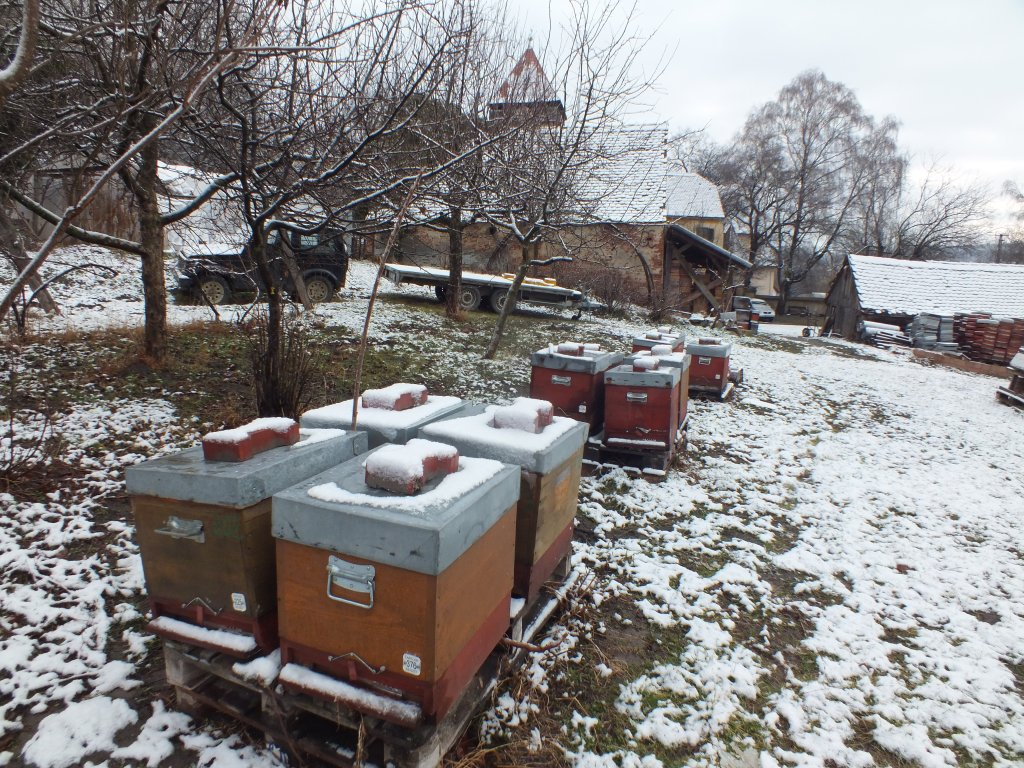
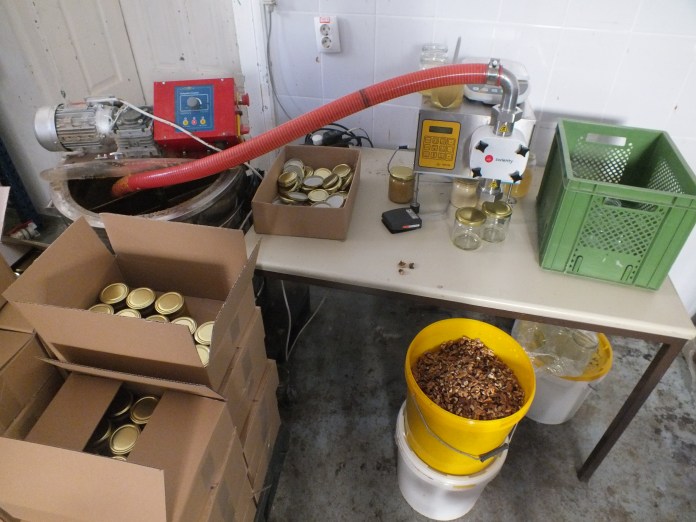
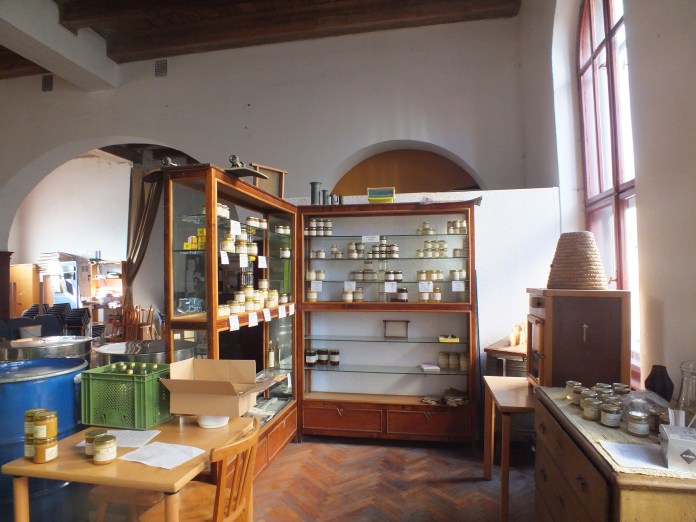
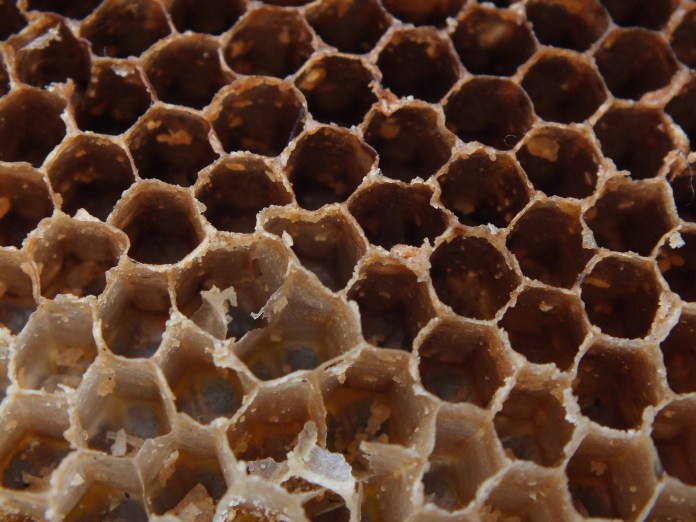
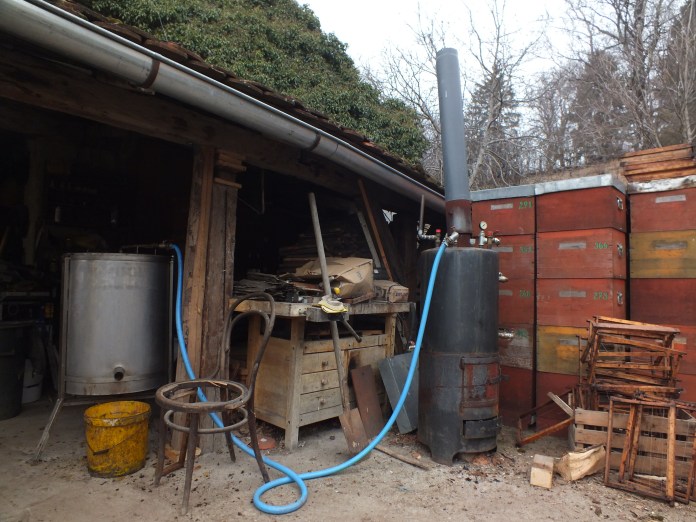
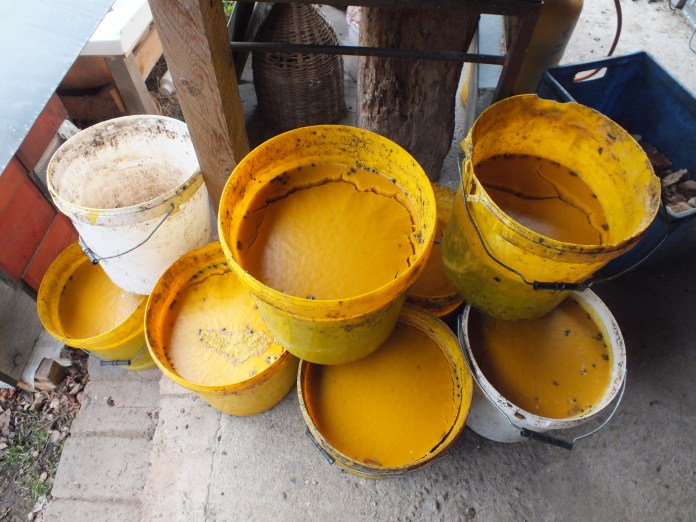
There are fourteen jars of honey on the counter by the kettle, and another eight inside the kitchen dresser. For breakfast we will drizzle acacia honey over muesli, or spread rich, dark honeydew honey – collected by bees from the sap excreted by aphids – on rye bread, or perhaps we will try a spoon of sharp, fruity buckwheat honey. After dinner we might compare French, Italian and German chestnut honeys, though it requires the experienced beekeeper’s tongue to detect that the smoother Italian honey has been dried, maybe to delay fermentation, or to compensate for collecting the honey before it has matured. For Willi, who once spent a summer in the chestnut forests of southern Germany, the authentic taste of chestnut honey is unmistakeable. Yet the best honey is a mysterious, black, Italian, treacle-like substance with the distinctive bitter flavour of coffee as it melts sweetly in the mouth.

But here I am guilty of an English obsession with flavour.

Romania is a leading authority in apitherapy, and developed some of its most important research and remedies during the years of communism. Willi sells it to us with his own story, which sounds too good to be true. One Christmas, his central heating exploded and burned his leg through to the flesh; not wanting to go to hospital at Christmas, he applied some honey to the burn and after three weeks of honey dressings, his leg had healed perfectly. Another anecdote is prompted by the discovery of a plastic bottle of homemade wine hidden in the corner of the larder, given to Willi by a grateful neighbour after he came round with a deep cut and was given a tincture of propolis (the sweet, amber, antibacterial substance secreted by bees to prevent foreign objects like mice from contaminating the hive) to put on the cut, which again healed perfectly. Everything has concentrated goodness. Bee stings are good for rheumatism, pollen helps indigestion (the soft, sandy fresh pollen is infinitely preferable to the dried stuff sold in shops), honeydew honey helps with bronchitis and respiratory problems. It goes on for books and books.

This is all a world apart from the commercial bargaining of the global honey wholesale market, in which a kilo of honey costs something like: €10 from the UK, €2.50 from Romania, €1.50 from Ukraine, and 70 cents from China. Here, the story of honey is one of hypocrisy and corruption. The biggest honey consumers are in the West, yet most honey is produced outside the West, where loose regulation, long transport routes and ingenious substitutes obstruct transparency and ensure low prices. For the Western consumer the result is perfect: high standards of Western beekeeping and expensive honey exports, and cheap honey whenever desired.

Willi’s distrust of such globalisation comes from his own experiences working as an organic certifier for a French company and witnessing the rampant corruption. But it also comes from the subsidies offered by the European Union and the Romanian State to encourage beekeeping, which have artificially and unhealthily inflated the numbers of hives across Romania and made a few people very rich. This distrust seems to reflect, on the one hand, a deep, vindictive hatred of anything connected to the state, and on the other, a bitter antipathy to multinational companies that suck money and life out of eastern European countries.

So like bees that swarm to survive, leaving behind infections and doing away with unproductive queens, Willi has left the old communist beekeeping association with its out-of-date advice and register of ghost beekeepers, and has set up his own association. This has provided him with a network of like-minded beekeepers working organically. But he struggles to convince them to sell their honey directly to customers rather than the wholesale market, which bleeds beekeepers dry but retains some kind of elusive hold over them.

Willi is an example of entrepreneurship at its most principled: anti-state, anti-corporate, independent, honest, and integrated into a local economy in which money does not simply disappear. But in the end it all depends on the thing at the centre of it all: honey. It doesn’t need enhancing and it doesn’t need marketing. People will always want it.

Standard

Hamba II

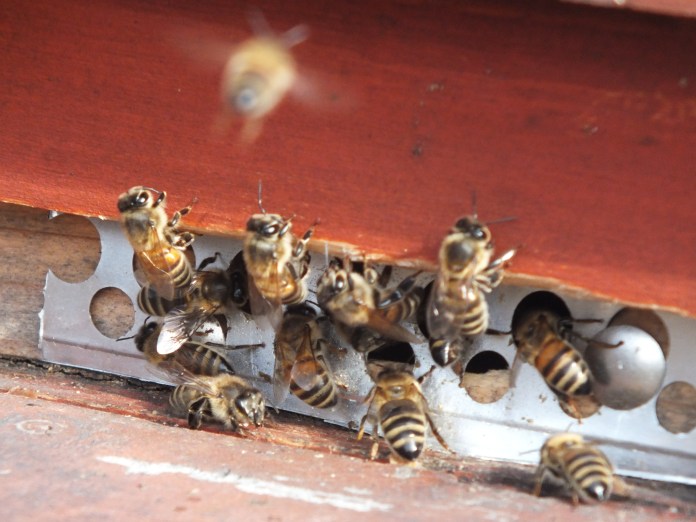
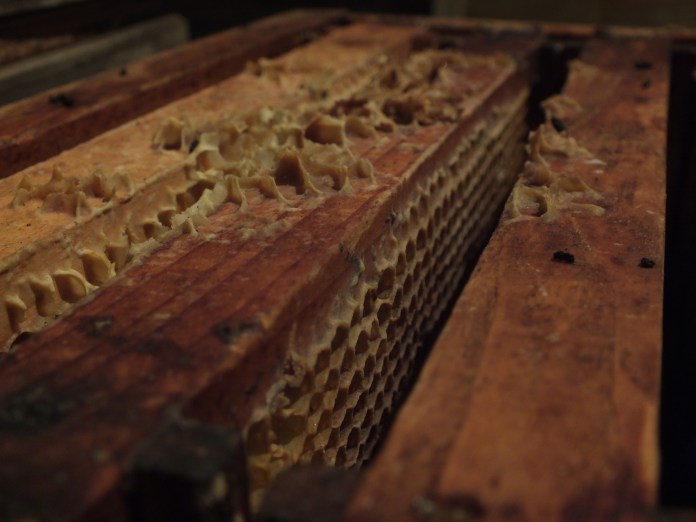
We work without gloves, opening up the hives and measuring the strength of each brood. Willi brushes aside bees with his fingers so gently it looks as though he is stroking them, sometimes picking them off the old queen cages one by one, at other times scooping them up by the handful and dropping them into another hive. I stay as still as possible while bees land on my hands; I bring my hand closer to my face to watch them, the skin on my hand becoming an unfamiliar barren landscape on which the bees’ elongated bodies pulsate, as though they are expecting something to happen.

I do not know what Willi sees when we open up a hive. What I see are frames of wax that range from a pale yellow to a deep black, and lots of bees – sometimes calmly huddled in tight circles, sometimes flying in a fast, muddled chaos, disoriented by the overcast sky. But Willi knows the families before we have even opened them and what it is that he is trying to cultivate in them, and he responds to each one with affection, disappointment, anger, irritation, satisfaction and hopefulness as we work our way through the 300 hives.

I move slowly, focussing intently on the task and walking in an unnatural way to avoid angering the bees on my legs. But the buzzing, smoky atmosphere is frequently interrupted by Willi’s Sia ringtone, and as he answers his phone and chats to a new shop that wants to sell his honey or a fellow beekeeper who wants his advice, he carries on lifting and pushing frames and flicking bees out of the way in a relaxed, mindless way.

We establish a rhythm, replacing mouse-infested old bases with newer mouse-proof ones, inserting insulation frames to keep the brood warm, removing dead hives (this year was a bad year – around 30% lost) and making notes. We also undertake bee eugenics with queens who have bred with the black bee, a stronger and more aggressive bee than the Buckfast bee.

This begins at one unremarkable hive which Willi recognises before we have even opened it, and which prompts the first murderous pronouncement of the day: he wishes to find the queen and kill her. Willi removes each frame and inspects each one slowly until he finds her. He picks her out and triumphantly holds her up right in front of my eyes, before squeezing her dead with his fingers.

Further on, the situation in another hive is less clear: we need to add a swarm to strengthen the bee numbers, and we want to keep the best queen, but first we must check that there is a second queen to replace the first. Willi picks up the first queen and hands her to me; she struggles so lightly against my fingers, as I hold onto what feels like wriggling eyeballs, that I am not sure whether I am about to crush her or release her. Eventually the second queen is found. For a few long silent seconds, I ignore the unspoken fact that one of us must kill my queen. But then Willi, in a single, swift gesture, takes her from me, pinches her and tosses her dead body over his shoulder. The new queen is installed in the brood, and the rest of her hive unceremoniously tipped out onto their new home.

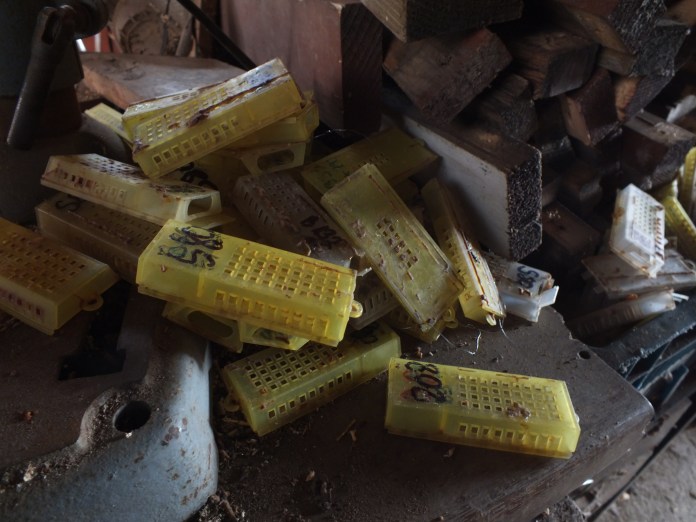
My grasp of genetics is not good enough to understand what is going on with these queens. The notes that I am making are not the unique IDs of each queen, but her genetic lineage. Some new lines will be in-bred for a year to strengthen a particular characteristic, but afterwards they will join this big and complicated family tree. Each year, Willi takes selected queens and drones to a controlled mating station in the mountains, where there is no risk of the queen encountering any other drones. Other queens are artificially inseminated in Austria or Germany and driven over to Romania, placed in little yellow plastic cages and wedged between wax frames. Sometimes the bees are just left to fight it out over the queens themselves.

The conditions are not ideal, but pressure to get through all 300 hives before spring starts means that we need to work in colder weather. This means that the bees are attracted to the warmth of our bodies and they settle on us, covering us in small spots of orange poo.

It is hard to tell whether Willi ever gets stung. My first sting comes on my second day, as we are changing the bottom of a busy hive. I feel a long slow stabbing pain in my leg which begins to spread and burn. However, having previously made a fuss when a bee got trapped inside my face net, I now feel the need to prove my beekeeping aptitude by staying silent and refusing to show any sign of having been stung. The pain just becomes one of the many sensations I am hyper aware of in that moment.

The life of a beekeeper is nomadic. Not from ancient tradition, like the transhumance of shepherds, but as a result of the 19th century commercialization and industrialisation of honey production. In replacing the older practice of bee hunting, beekeeping has domesticated, technologized, and controlled bee populations, and increased honey yields almost fivefold. This is not hobby beekeeping, but nor is it highly commercialized: it is a small organic local honey business, producing around 8 tonnes of honey a year.

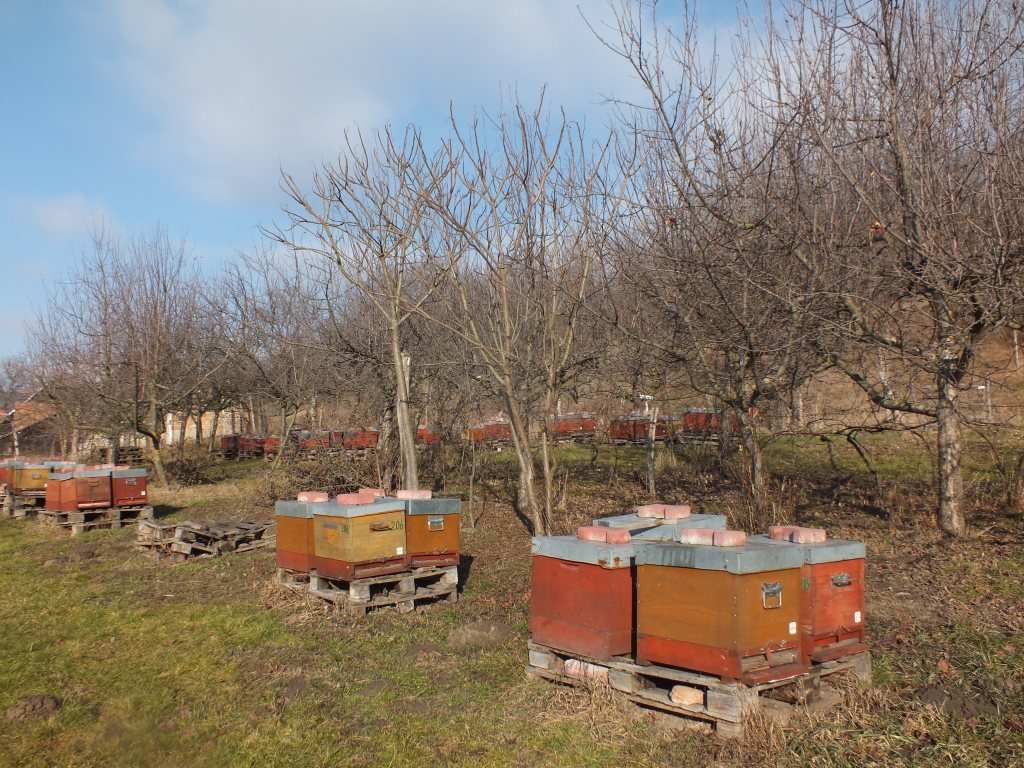
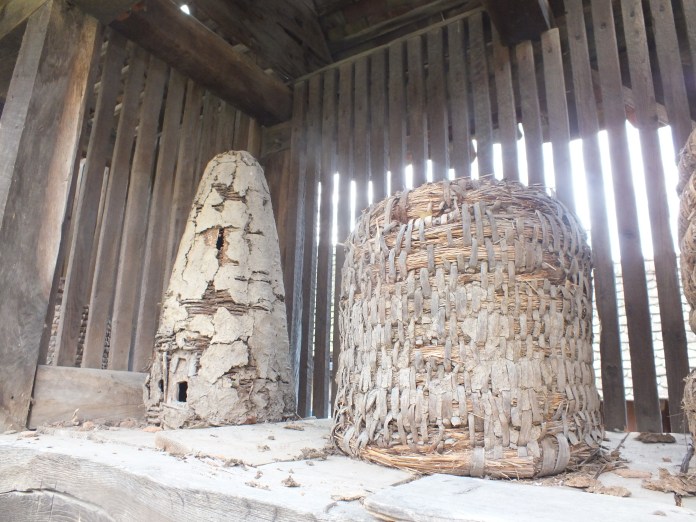
The season from April to September is marked by the sequence of flowers the beekeepers will follow: first rapeseed, which will provide protein for the development of bees, then acacia, lime and sunflower. 170 hives at a time will be loaded onto a truck and driven by night – 300km south to the Danube for acacia, 300km west for a second flowering of acacia, 500km east to the Black Sea for sunflower. The hives are weighed to monitor the daily honey production, and are moved on once the production begins falling below a certain level, or enough honey has been collected.

This method is not without problems: use of neonicotinoids on sunflowers has killed many hives, and declining bee populations has led many farmers to increasingly use self-fertilising seeds, which in turn deprive bees of nectar. Neonicotinoids are banned by the EU, but up to this point Romania has had derogations permitting their use – this year will be the first year without the derogation for sunflower. (Willi explains it like this: the French protest against neonicotinoids and ban them in western Europe, and then buy cheap sunflower oil from Romania.) The early spring this year will also, Willi suspects, kill the acacia flowers and mean no acacia honey this year. But when a honey year is good, it is very good.

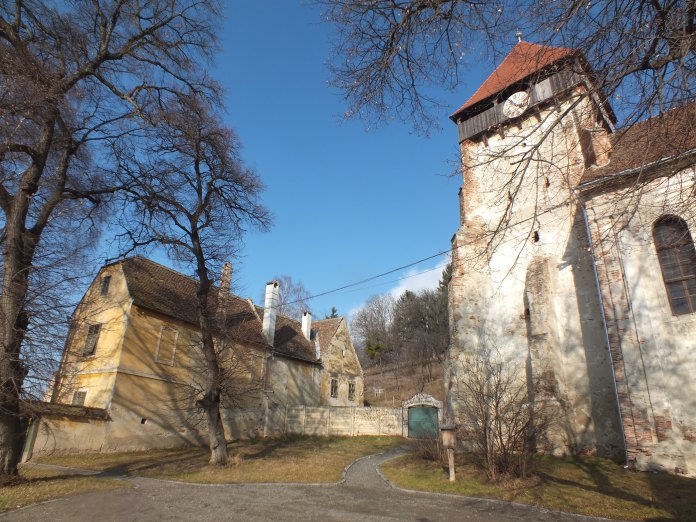
At the moment, the hives are scattered around the countryside nearby. Land and houses are so cheap that if Willi finds a good location, he can afford to buy an abandoned house just to keep the bees in the garden. He also uses empty land next to an old Saxon monastery, and the ruins of a communist dairy. But finding safe locations can be tricky: this year several of his hives were attacked by bears, while others were attacked by an irate neighbour who blocked the hive entrances with expanding foam.

There is saying here – what is good for the bee is bad for the beekeeper. Bees look after themselves: they keep their hives clean, they manage their own temperature, they find their own food and water, they find a new home when they need to. It is our interfering, our desire for honey, that puts them under pressure and increases their vulnerability to diseases. But bees continue to do what bees do. Now, they are just starting to bring the first pollen of the year back to the hive – large, pale yellow lumps of hazelnut pollen. For all the beekeeper’s efforts to control and support the hives, it’s the bees who stay in charge.

Standard

Hamba

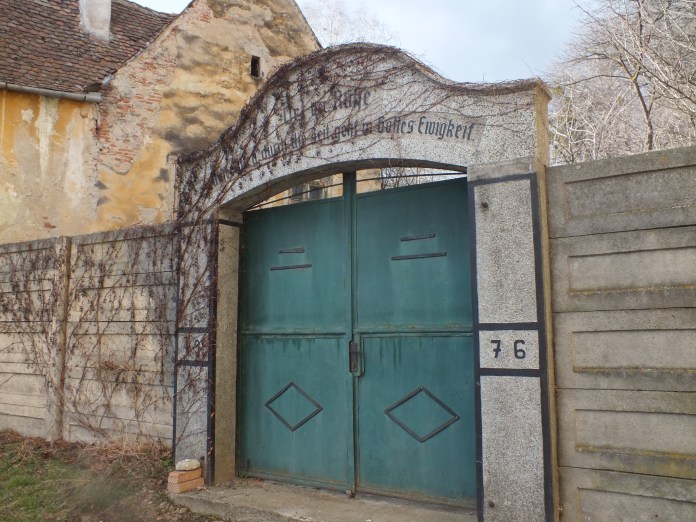
Willi picked me up from Sibiu on a hunt for gas. After driving around the city outskirts looking for butane for the bees and making small talk, we set off for the village of Hamba, 8km north of Sibiu. It is one of the 250 Saxon villages in Transylvania whose Saxon history is slowly disappearing. Even the road we enter on is not the original Saxon road but, thanks to a sharp kink in the road, a new one that ensures our entry is through the Romanian part of the village.

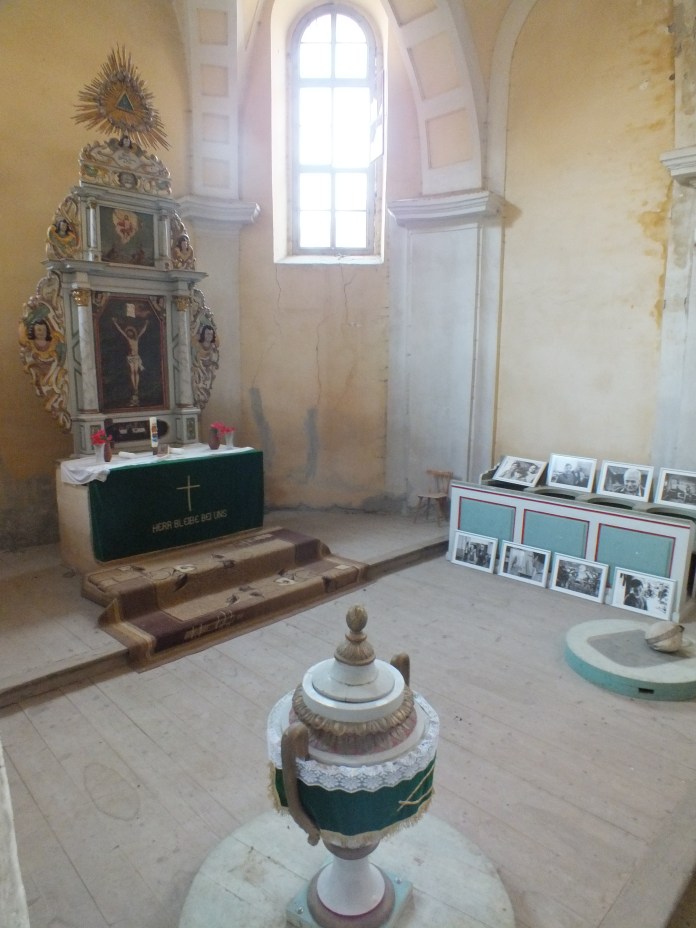
The story of the village can be told quite neatly through its churches. The oldest church in the village is the evangelical Saxon church, first built in the 13th century but whose oldest remaining part is now a 16th century bell tower and a 19th century hall. It was closed once most Saxons had left the village: they were deported, or left to avoid deportation, after the Second World War, or were then later sold to Germany by Ceaușescu, as Willi was, for around 5,000 marks a person.

A Greco-Catholic church once marked the Romanian street in the village. When the Greco-Catholic Church was banned by communists, the churches were handed over to the Orthodox Church and served the new Romanian populations that moved in. The building was not returned after 1989, and so a new Greco-Catholic church has been built across the road.
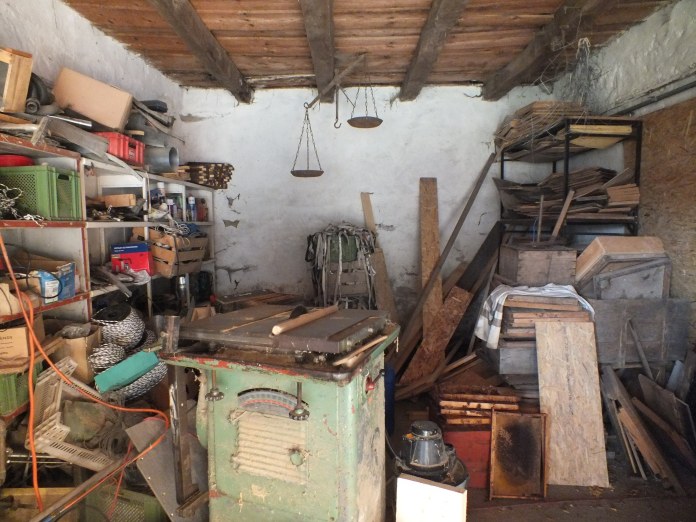
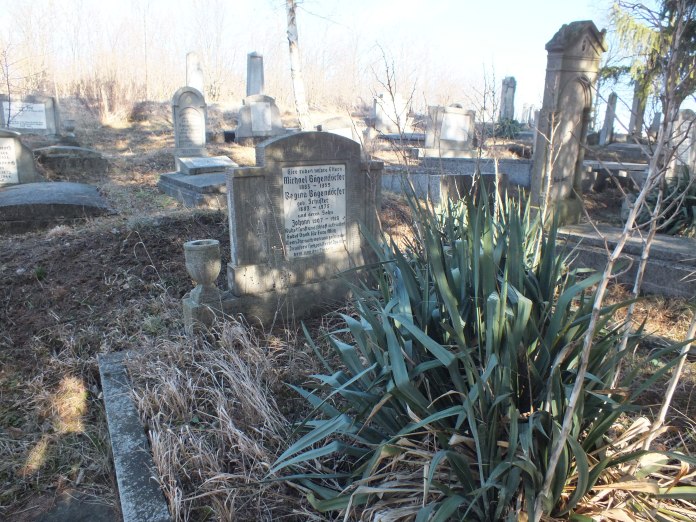
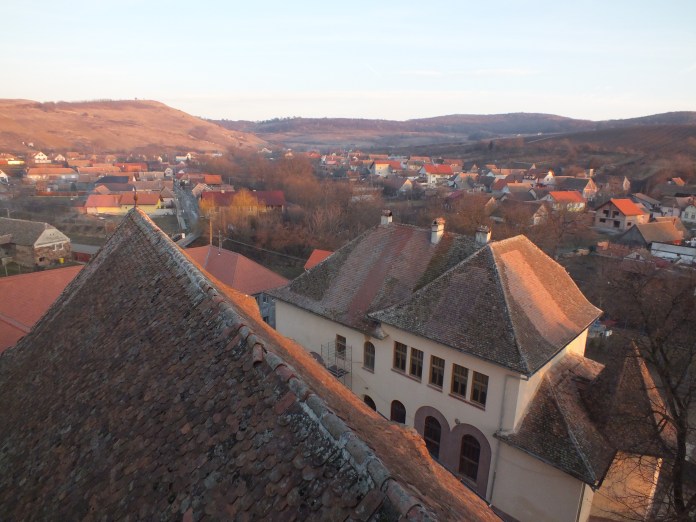
Willi rents the land around the evangelical church and the old priest’s house, which had lain empty for 20 years before he moved in. He also rents the old Saxon school next to the church, which had 120 students before the Second World War but which has long since closed. It now houses his bee business. Behind the house lies the church graveyard, distinguished not only by its use of the local Saxon dialect, but by its position on the opposite hillside from the other village graveyard.

Willi is one of the very few Saxons living in the village, though he is not originally from this village but from a town 40km further north. His grandmother was sent to Russia when her son (Willi’s father) was six years old. Afterwards she did not return to Transylvania but went to Germany. Her son tried to get permission to visit his mother when he was 18, but was refused. So he tried to swim across the Danube, but was caught and sent to prison for two years. Once marked as a political prisoner, future attempts to travel to Germany were futile. It was only in the 1970s that his mother – now remarried and with a new family – was able to come to Romania and they saw each other for the first time.

Willi and his family were sold to Germany in 1982, but in Germany their Saxon dialect was believed to be Romanian and they were seen as foreigners. Willi says he never really felt at home in Germany, and so 15 years ago he returned to Transylvania, where at last he feels good. He had studied agriculture in Germany and was working as an inspector for organic certification in eastern Europe (and occasionally central Asia). He found the old priest’s house in Hamba, with its land and spacious buildings, and set about restoring what he could, planting a small orchard and setting up an apiary which has grown into a very successful business. The village is perfect for bees, surrounded on three sides by forest, and with a vast abandoned orchard in the neighbouring valley.

But while business is booming and demand for honey is stronger than ever, there is no one in the village to employ. The young people have left to go to England, Germany, Austria, France, Italy and Spain. Those who are looking for work are those who have returned from the west with health problems – and unable to do the manual work that is needed.

Willi is rude about the Romanians (he distinguishes between the old and new Romanians), and rather more kind towards the gypsies. But it is not simple cultural hostility. In my bedroom, the old priest’s office, the bookcases are filled not only with German and French classics, but with well-read Romanian ones – Mihai Eminescu, Ion Creangă, Ana Blandiana, Lucian Blaga.

The hostility is personal for Willi. Every year he sees another fortified Saxon church crumble into ruins, or an old Saxon house pulled down to make way for a new Romanian one. He points out Saxon houses which have been bought by Romanians and whose roofs have been immediately replaced to be less Saxon. With fewer than 30,000 Saxons left in Romania, the church cannot afford to keep up the maintenance of these buildings, and the local communities and councils have no interest. While there are plenty of articles written about Saxons returning to Transylvania – the story is very popular among journalists – the numbers are negligible given the speed at which the buildings and culture are collapsing. It is, Willi feels, an 800-year history being wiped away.

Yet the place overflows with life. A shaggy, creamy Carpathian Sheepdog leaps in the air every time anyone walks past, two cockerels compete for attention, five doves coo obliviously in their dovecote, a pregnant cat lounges on top of the stove (her kittens will be given away as gifts to loyal honey customers), and two enormous sheep are spoilt morning and night with hand-fed corn. Willi’s young children visit from Sibiu speaking the Saxon dialect, defying the empty church and graveyard between which they live. And when the sun comes out and the air becomes uncomfortably warm, out come the bees buzzing noisily and reassuringly, reminding us to get on with life.

Standard

Sibiu

At last snow fell, the night before I left Bucharest, and the media reaction rivalled English snow hysteria. But when I got off the bus mid-way across the Carpathians on the way to Sibiu, I realised I had forgotten what cold felt like: the pinching in my nose, the wind up my sleeves and down my collar and through my socks, the feeling that my clothes were so useless I might as well have been naked. And it was barely -3.

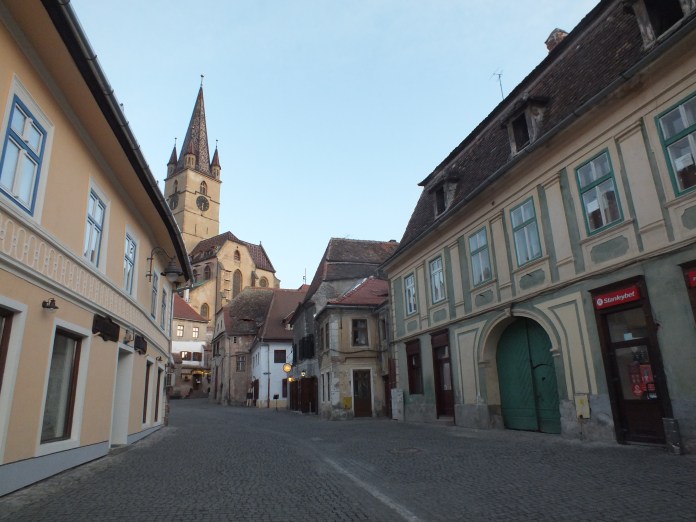
Sibiu loudly asserts a European identity. Its selection as European capital of culture in 2007 symbolised Romania’s entry into the EU, cultivating a globalised medieval history of centuries of European migration and cultural exchange. The German-speaking Saxons of Transylvania, a community that includes the descendants of the lost children of Hamelin, and their history dominate the city’s landmarks. Church notice boards and tourist information panels are in German, Friedrich Schiller gets not only a book shop but a Piaţa dedicated to him, and manhole covers are impressed with both the names of Sibiu and Hermannstadt, the city’s Saxon name. My bus driver had blond hair and blue eyes. Even the parking system seems German in its efficiency.
Sibiu seems to have embraced a kind of transcendent European identity: in the building that once housed the Museum of Saxon Ethnography (and perhaps still does, but no information is provided), there is now hosted a virtual museum where you can interact with videos about European art masterpieces and watch virtual reality documentaries about subjects so far removed from anything else in the museum or city (such as polar bears) that they seem designed only to show off the fact that they have funding from the EU. The museum switches between Romanian, French and English without any logic or translation, creating a kind of distant metalanguage that floats above any real place. I felt a true citizen of Europe.

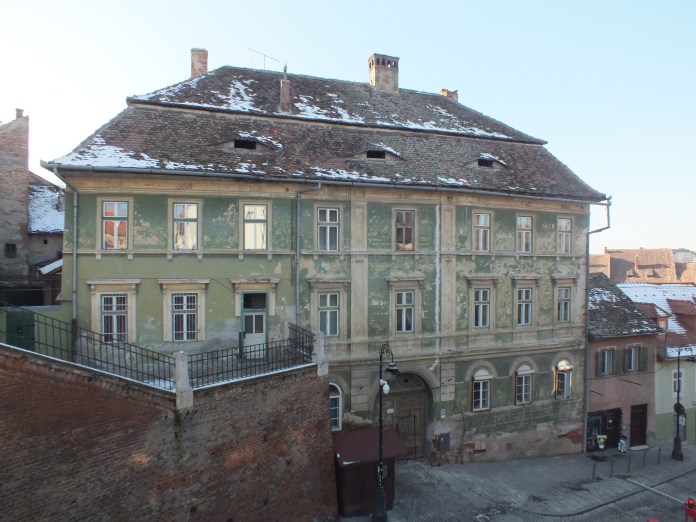
Sibiu also cultivates its imperial past, not only in historic monuments like the Brukenthal Palace but in other living ones such as the Hotel Römischer Kaiser. More hidden are the traditions of the crafts guilds from the 14th century, though tourist shops sell the usual but beautiful painted bowls of Horezu, intricately decorated hollow eggs, carved spoons, and rough, soft cotton shirts decorated with embroidery and handmade lace.

The craft traditions are best seen at the ASTRA museum – firmly a Romanian museum – which houses one of the largest open-air ethnography museums in Europe (at this point, it is hard to imagine a world beyond Europe exists). Old houses built in traditional styles from across Romania have been carefully transported and reconstructed in the park, and are now arranged in ungeographic but attractive clusters.

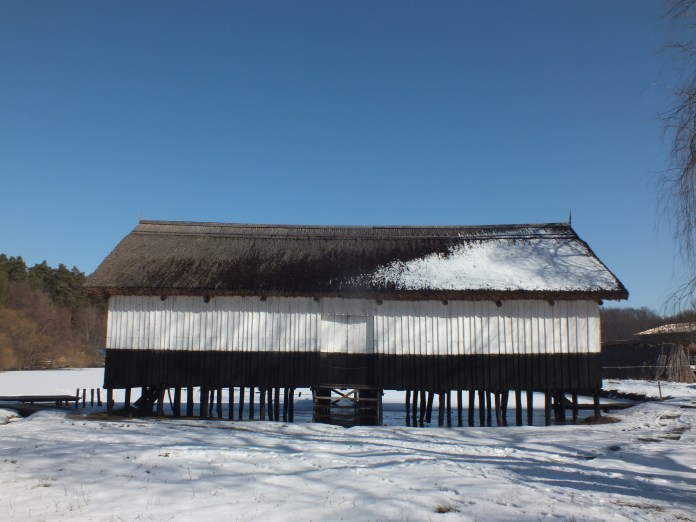
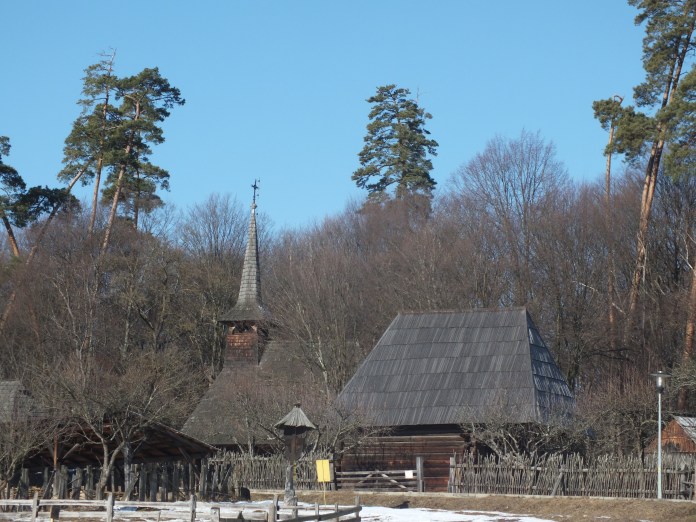
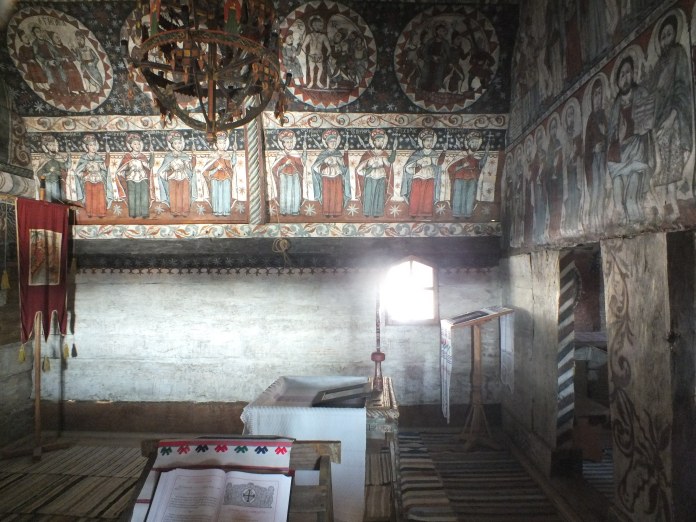
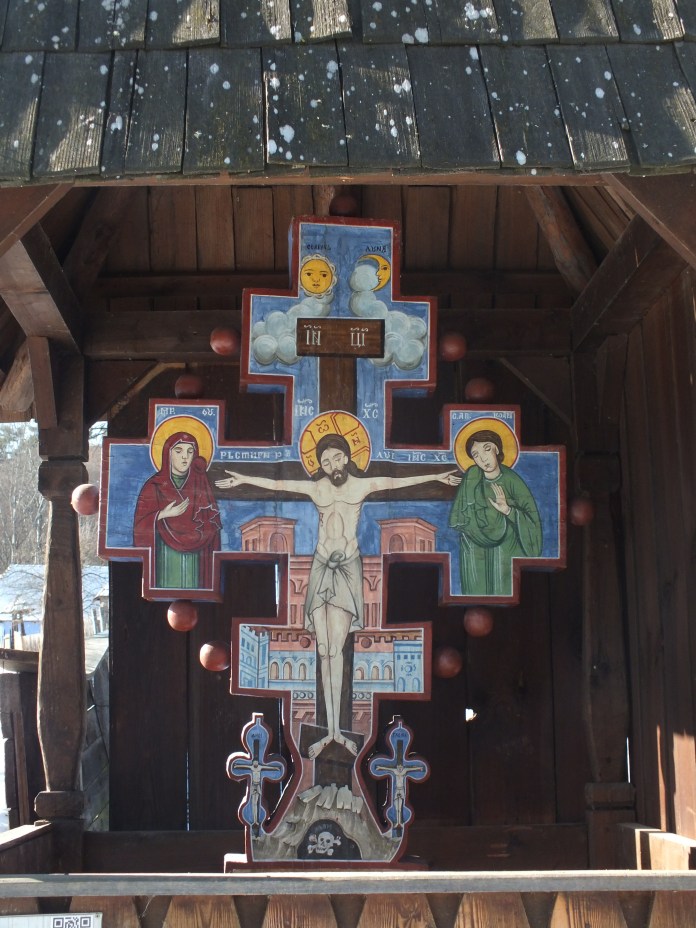
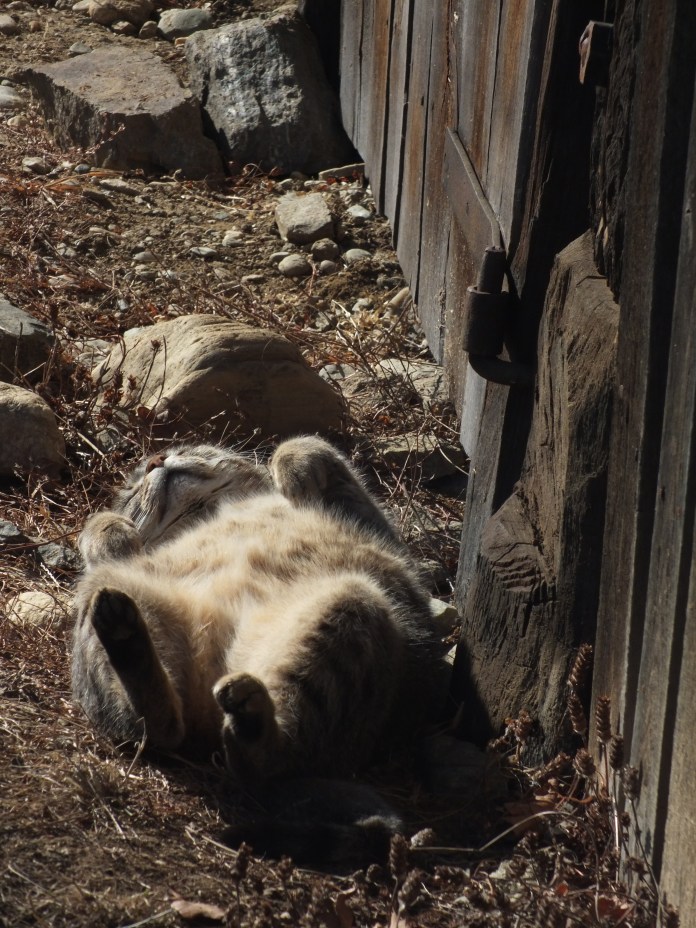
When I visited, the only sign of life, apart from stray cats and a solitary donkey, came from a transplanted wooden church which was amplifying a serice across the empty village. As I wandered around, this chanting and singing was accompanied by the beat of dripping icicles and the tinkle of falling icicles. Most of the houses were padlocked shut for winter, but I could climb up onto verandas and peer through windows into sparsely furnished rooms, admiring the technical mastery and beauty (so fain) of the houses. Further away, in a large frozen lake stood buildings on stilts, their blackened wooden stilts tapered precariously thinly at the surface of the ice.

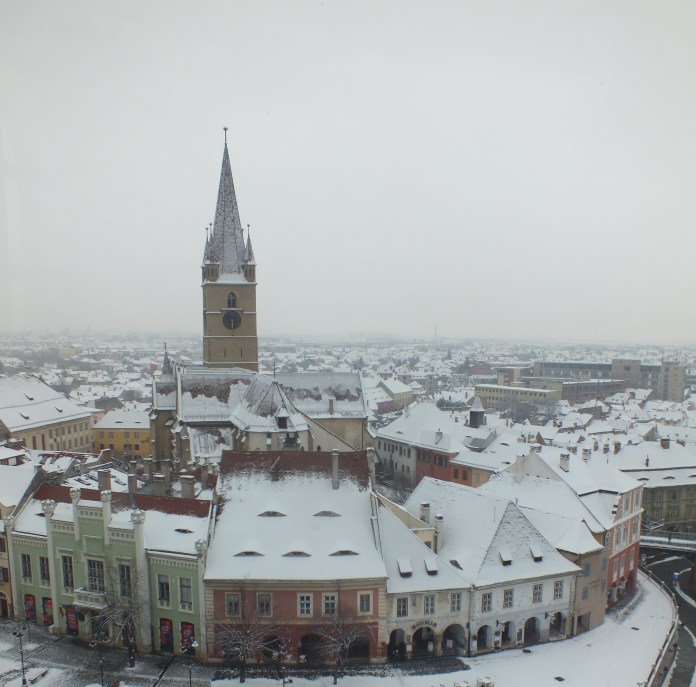
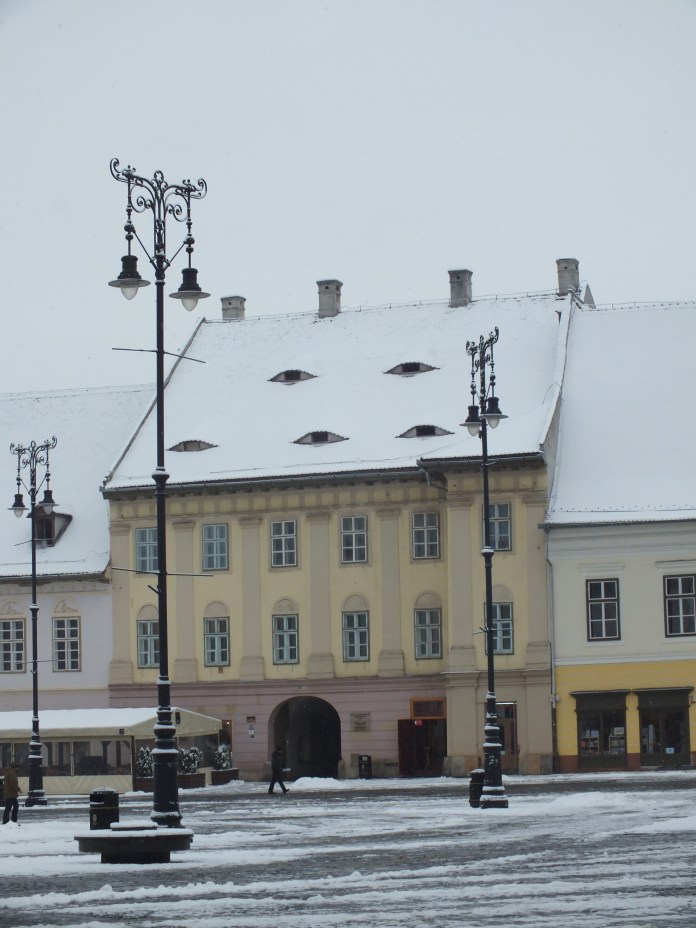
Everywhere in Sibiu seemed frozen and asleep, with Christmas gone and spring not yet arrived. The museums were mostly closed for periods that coincided with my stay.  An ice-rink in the middle of the central square stood empty most of the time, occasionally enjoyed by a child, and once by an elegant grandmother far outshining her granddaughter. Only the eyes in the roofs, which normally gaze sleepily out over the city under hooded lids of roof tiles, seemed awake, transformed by the snow into a dark, bright stare.

Standard

Bucharest

DSCF1285

The blog is back. This new journey starts with a bus ride from London to Bucharest one unseasonably warm January night. The bus is full of Romanians returning home to renew their papers or stock up on jam, but there are two other young English people on board who have decided to take a principled stand against flying. Our journey takes us across France, Belgium, Germany, Austria, Hungary and finally Romania, but by Frankfurt a heavy fog settles that stays with us for the rest of the way.

Punctuated only by 10 minute breaks at motorway service stations every few hours, the ride is smooth and dozy. Gradually people start to unwind. A man insists on spending the entire journey sleeping in the aisle, and nothing anyone can say and no amount of people stepping over his sleepy corpse will move him. One of the drivers bids a passionate and highly unprofessional farewell to a passenger in the morning, and by the afternoon has seduced a new one (he does this journey twice a week). There are only four people left on the bus for the final leg of the journey, most of which is spent trying to work out who the undocumented extra passenger is: it is not the old man wearing dirty flip flops and carrying a plastic shopping bag of clothes who got on in a frosty Budapest and mutters continuously in a strange mix of English, Romanian, Russian and German, but the smart young woman with headphones.

DSCF1051

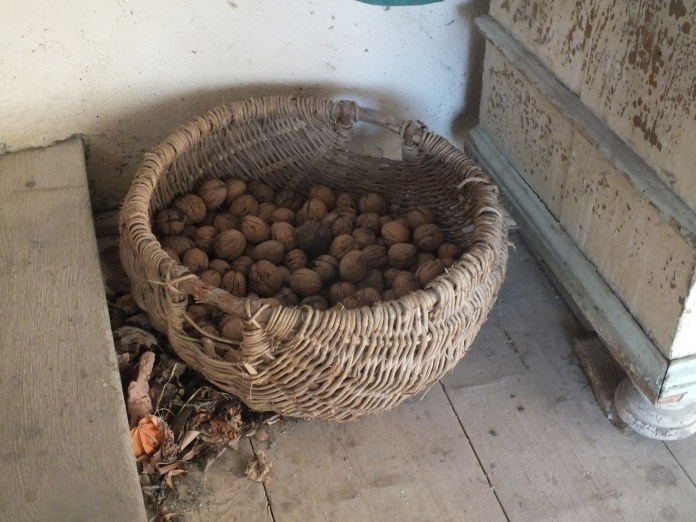
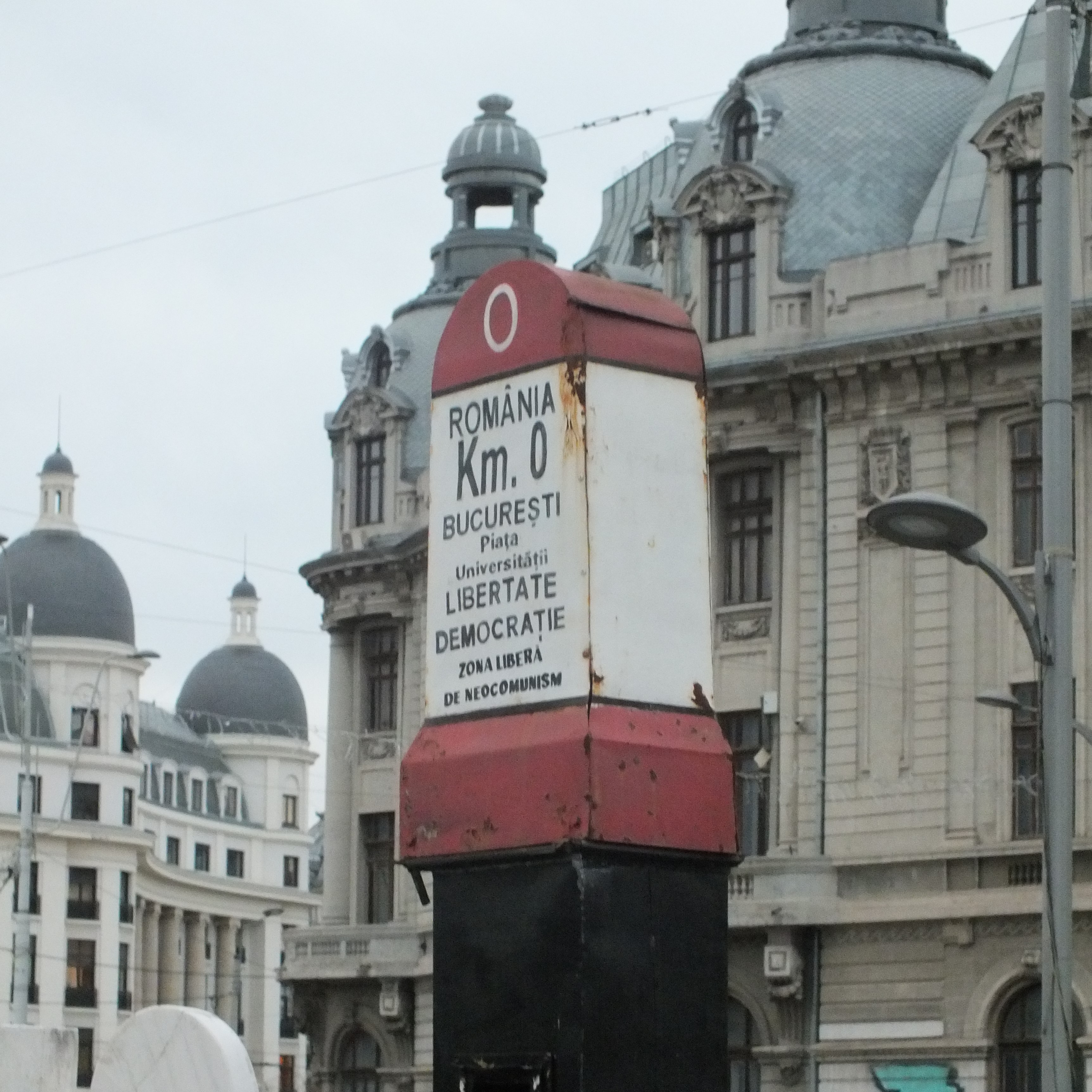
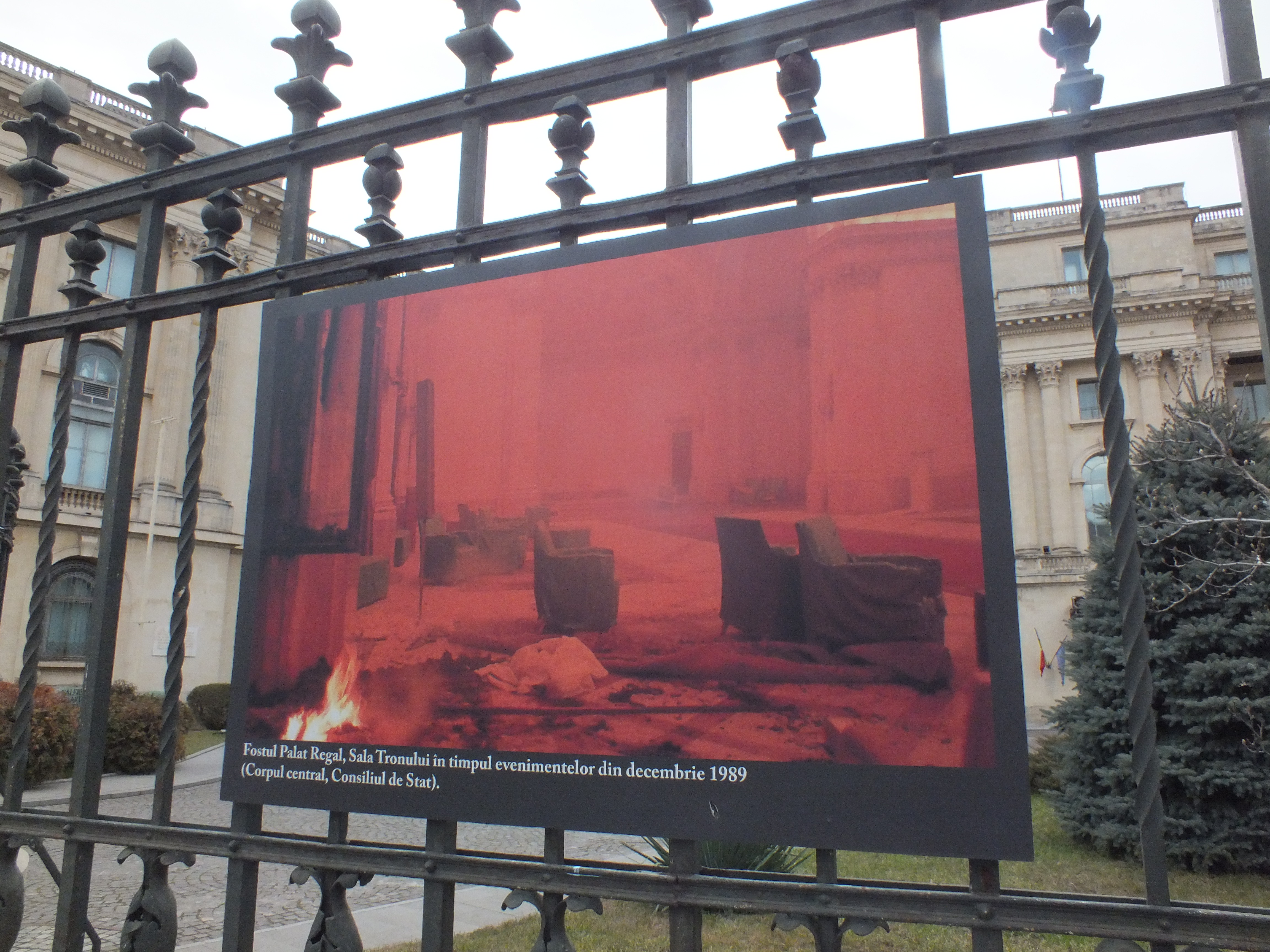
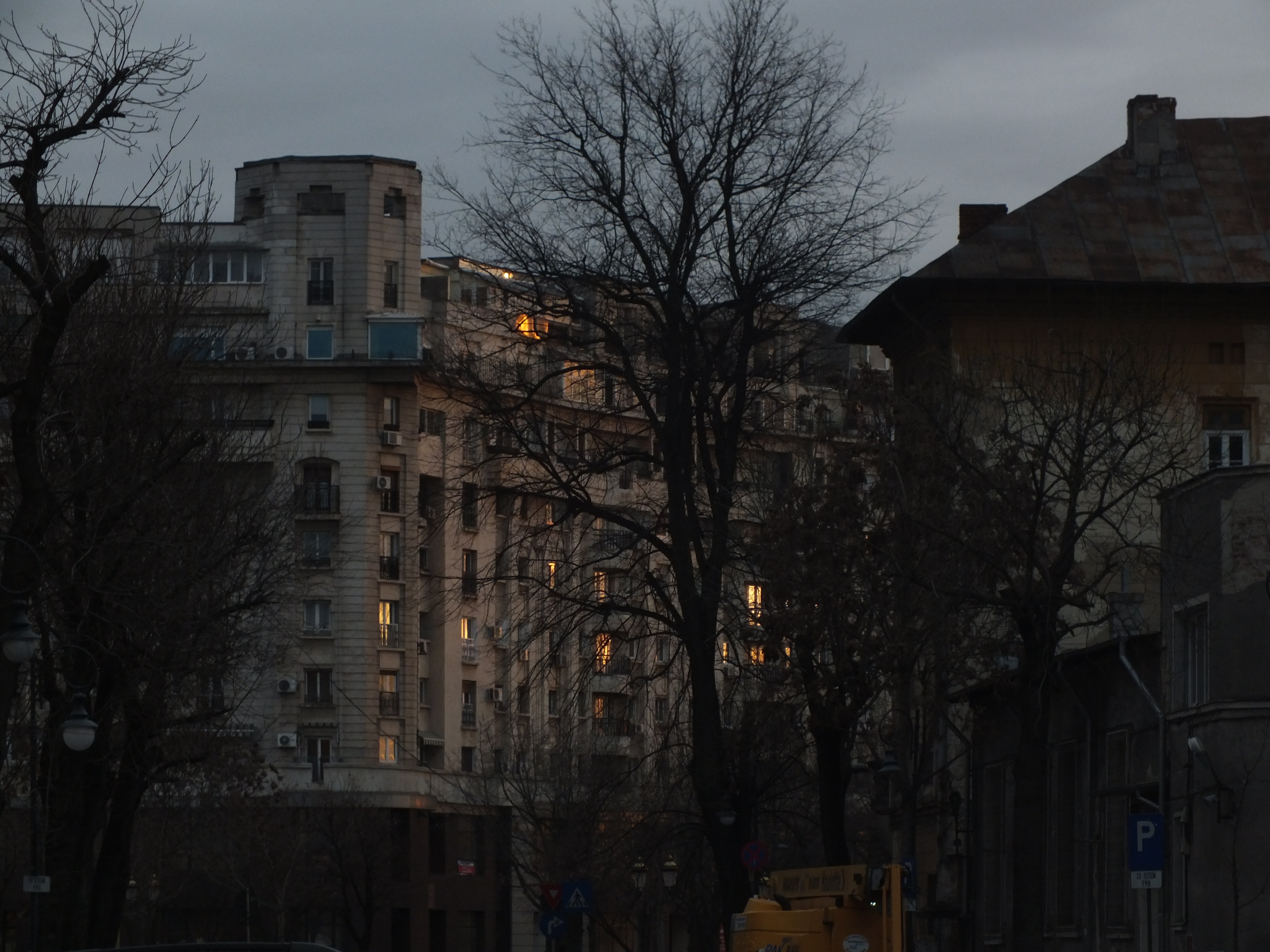
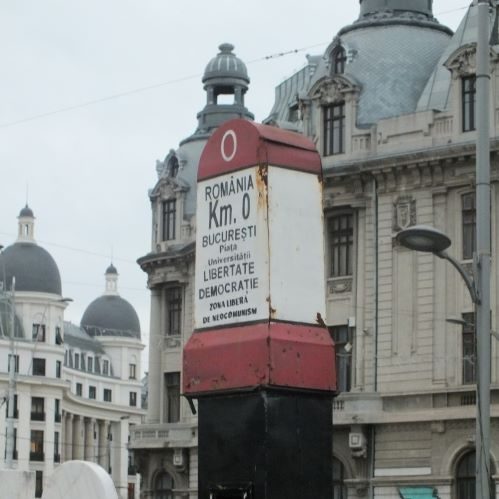
The Bucharest I arrive in is without snow. That it is almost twenty degrees above the average temperature has been accepted as a natural anomaly. Cars now rule the city: not in the chaotic noisy way they used to with horns and alarms, but with a choking jumble of double or triple parked cars that make every corner blind, block entire lanes of traffic and push pedestrians into the roads. As I wait for a bus, the only reassuring mode of transport, a taxi driver pulls over, opens up his boot, retrieves a thermos and starts cracking open walnuts with a glass bottle on a nearby bench.

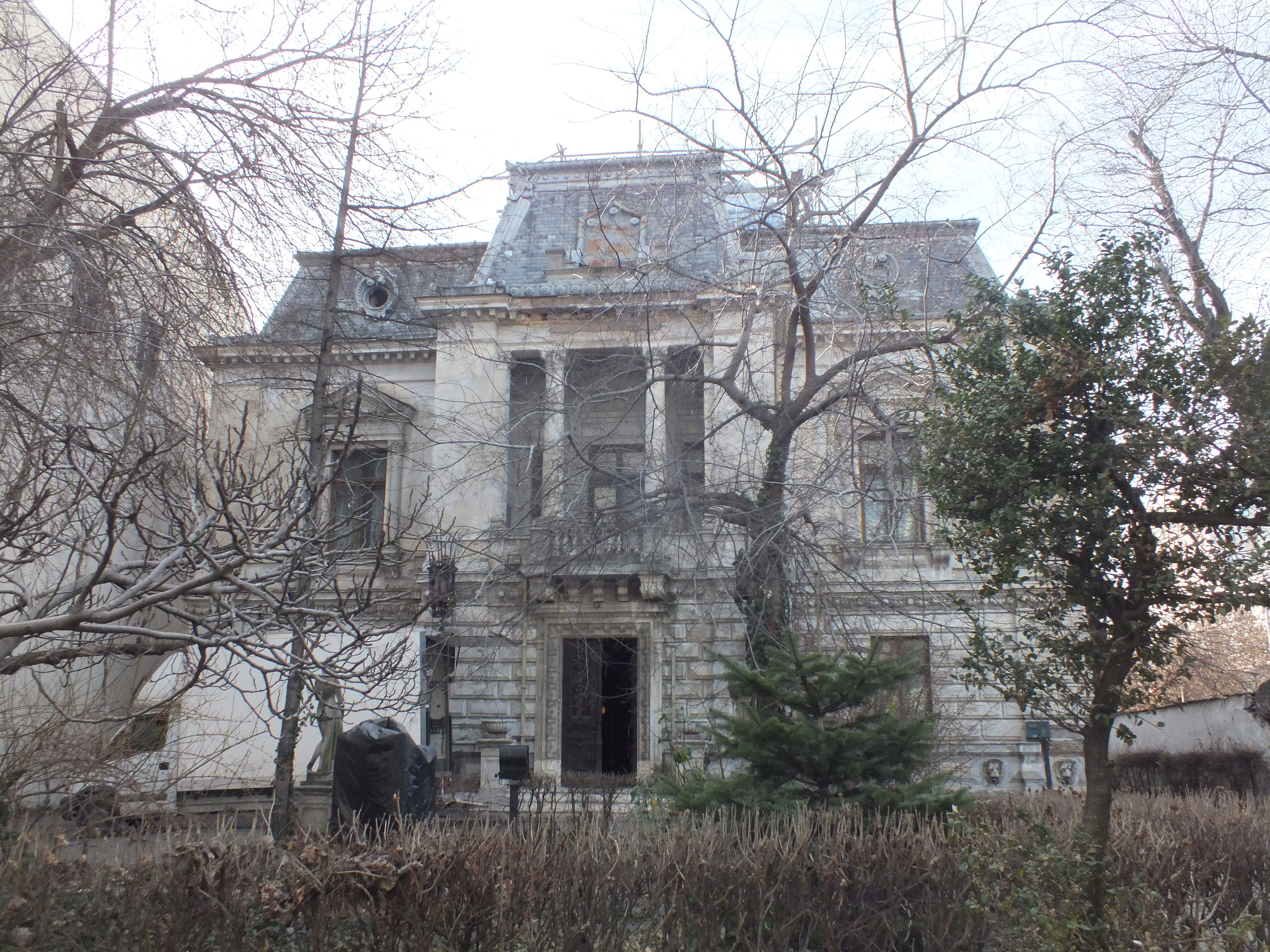
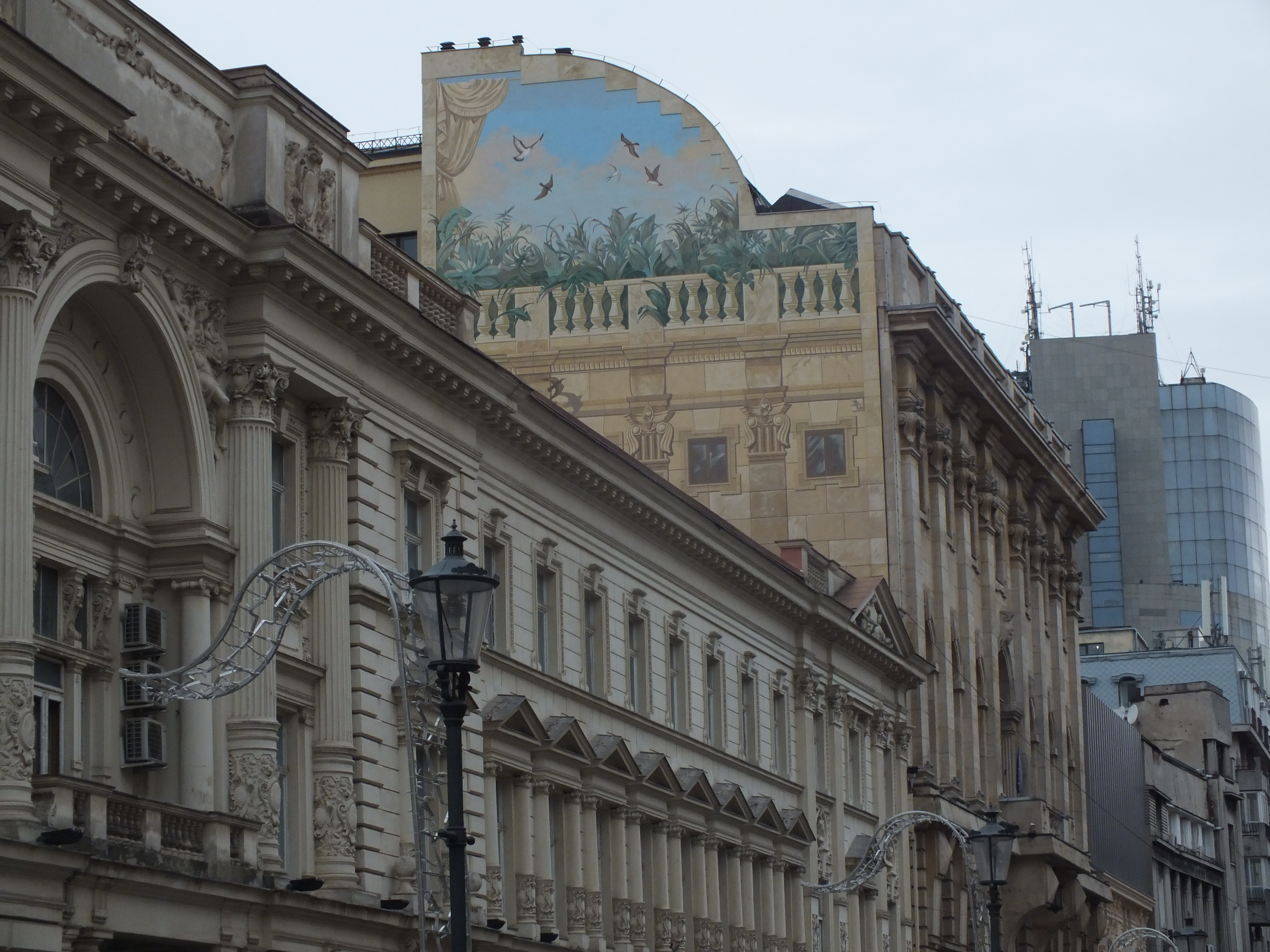
While the Italian facades and bars of Lipscani have been spruced up beyond recognition, streets of old crumbling buildings remain for sale, seemingly forever unsold, awaiting their collapse before new blocks can go up in their place. Round red plaques warn passers by that these buildings are dangerous after earthquakes. The night of Brexit, Bucharest experiences its biggest earthquake in a year, and in the apartment in Colentina we gild picture frames with gold leaf.

I have been trying to reactivate my memory, so I walk and walk. The smell of fresh concrete and placinta cu mere at Piata Victoriei metro station awakens new memories, but the changes in once familiar streets are enough to unsettle any confidence in those memories. I have a new moment in time to capture and remember. So this is what this blog will do over the next few months, as I prepare to become a student of history, memory, the past – and who knows what else.

DSCF0976

DSCF1218

DSCF1248

DSCF0772

DSCF0944

DSCF0852

DSCF0727

DSCF1244

DSCF1001

DSCF1265

DSCF0804

DSCF1081

Standard

Manor Park, London

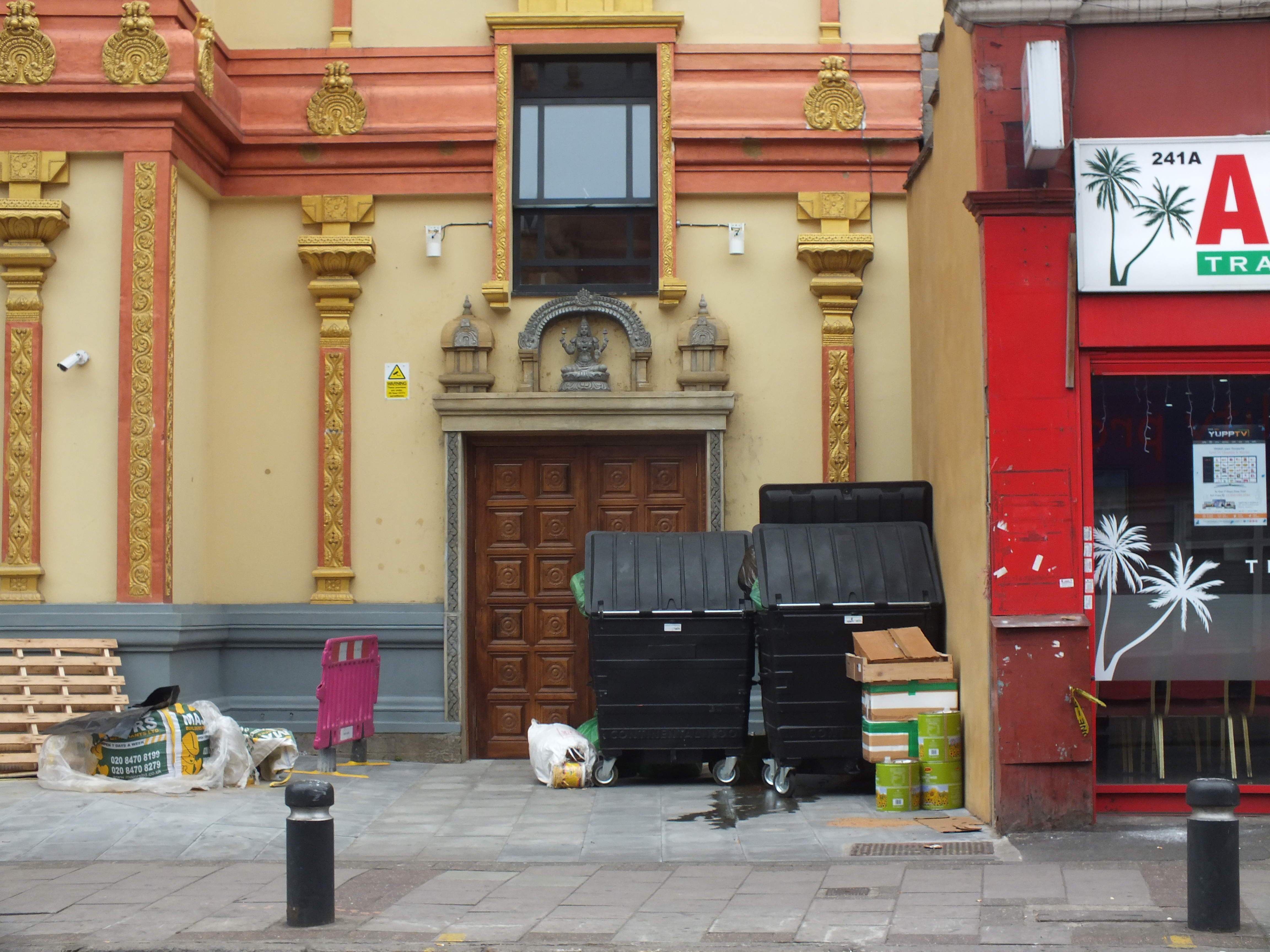
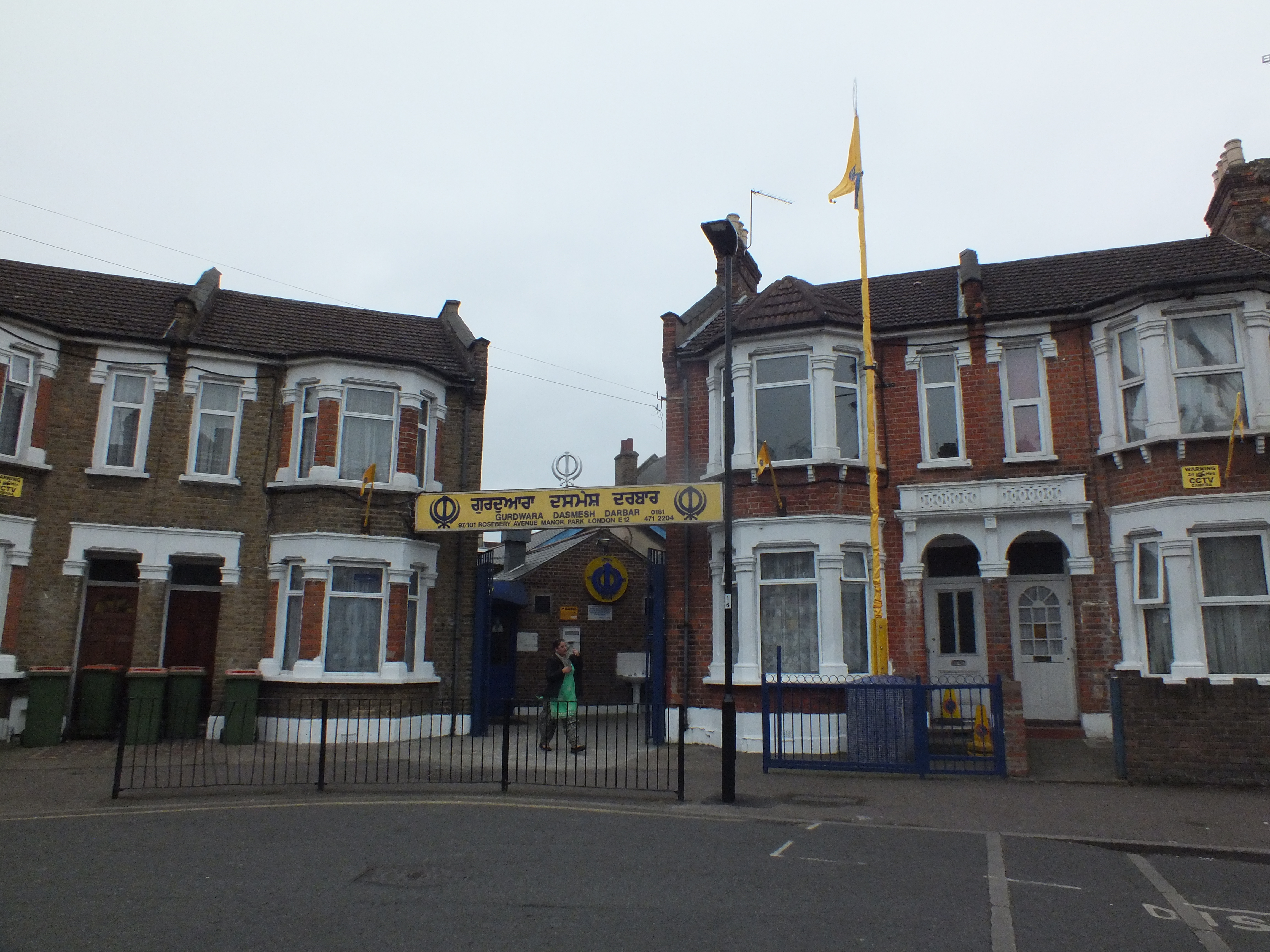
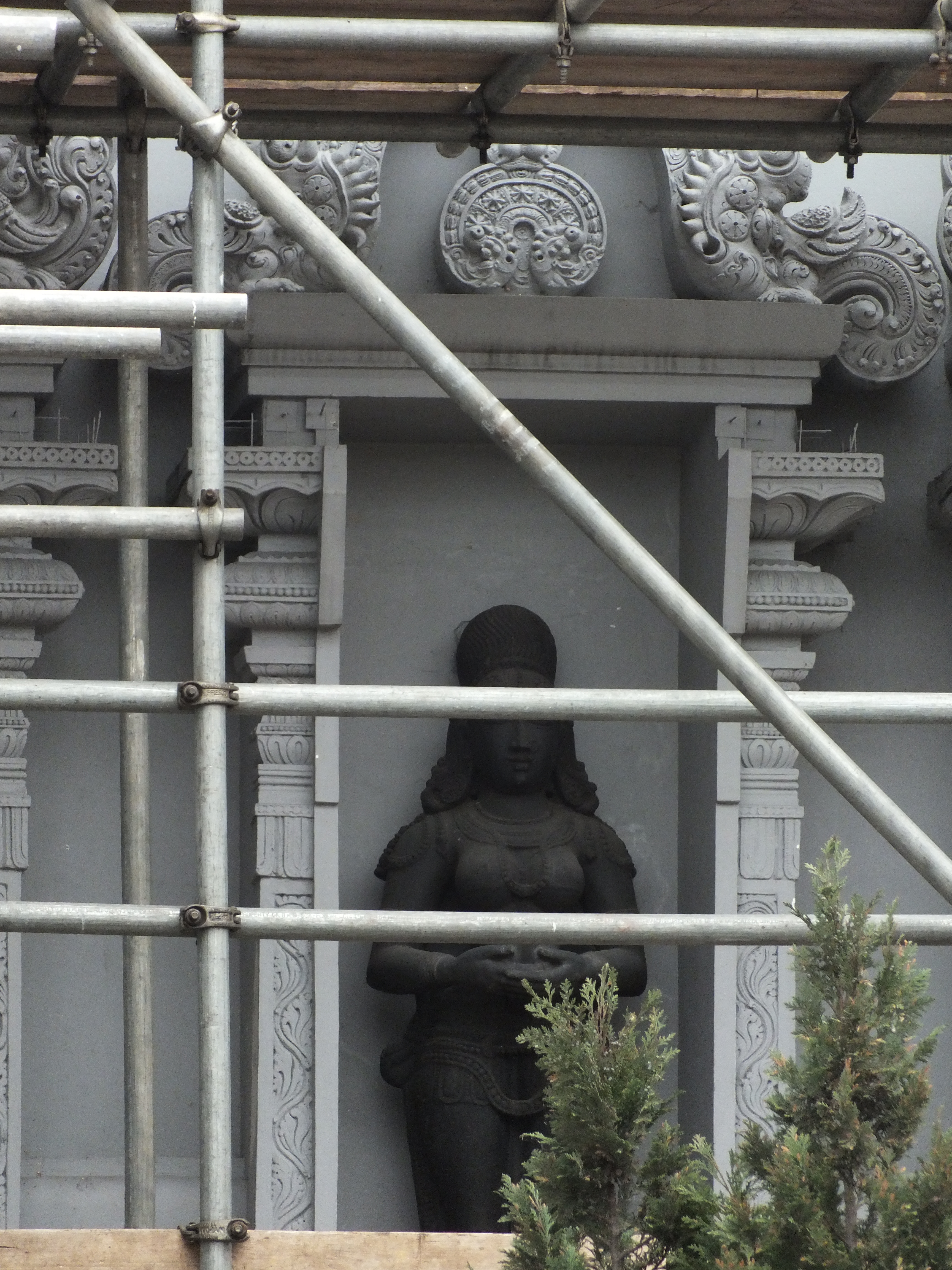
I’m back home again in E12, the land of poets, amidst Byron, Shakespeare, Wordsworth and Coleridge, on the corner where Browning meets Shelley. While I’ve been away the world has seen Brexit and Trump, but in East Ham we’ve got a new Hindu temple and another Romanian café. The entrance to the swimming pool has moved and my cat won’t eat cat food any more. But at least the tube announcer’s voice sounds just the same.

DSCF5215

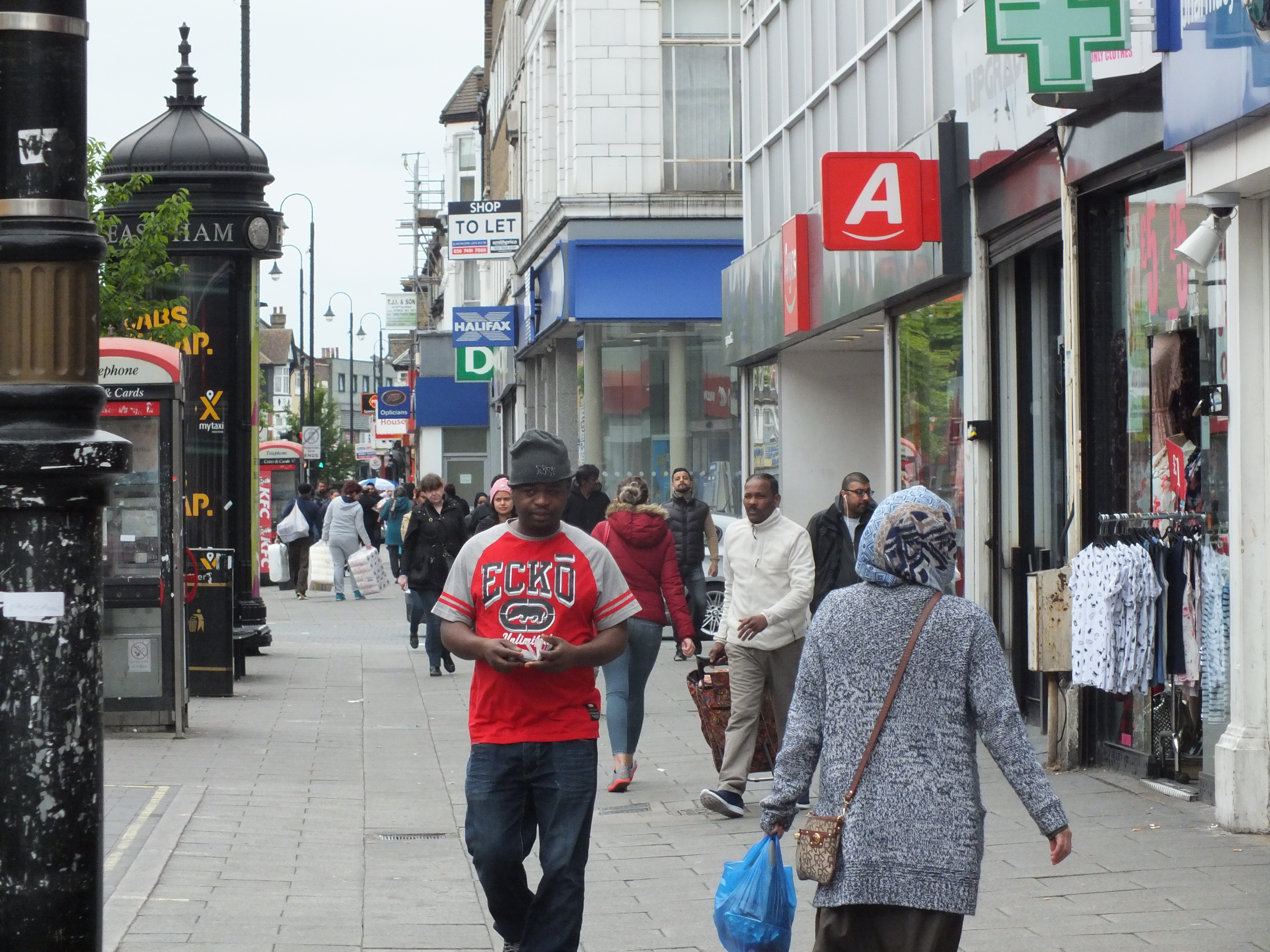
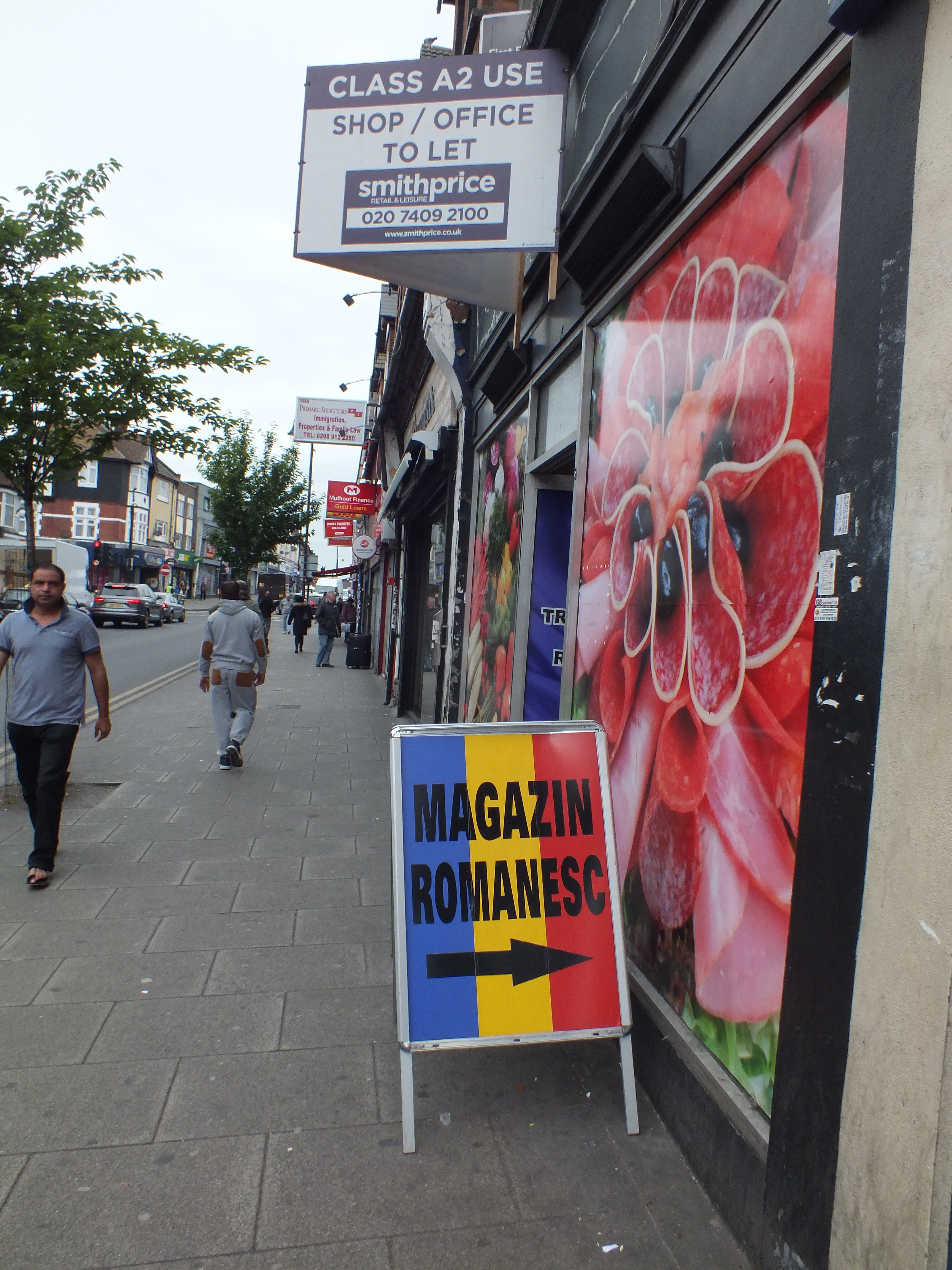
It was never going to be entirely like being back in the green England of old though. The streets are full of Bengali, Russian, Romanian, Tamil, Urdu and Polish, while the occasional fragment of English drifts from the mouths of teenagers, indigenous East Enders and shockingly middle class white thirty-somethings. Mangoes, coconuts, peppers, herbs, bananas and sacks of onions are swamped by mysterious knobbly vegetables. It still feels exotic going into most shops, wandering through aisles of rice and flour as Bollywood music plays, or along shelves of packet soups and tinned meat imported from Lithuania.

DSCF5176

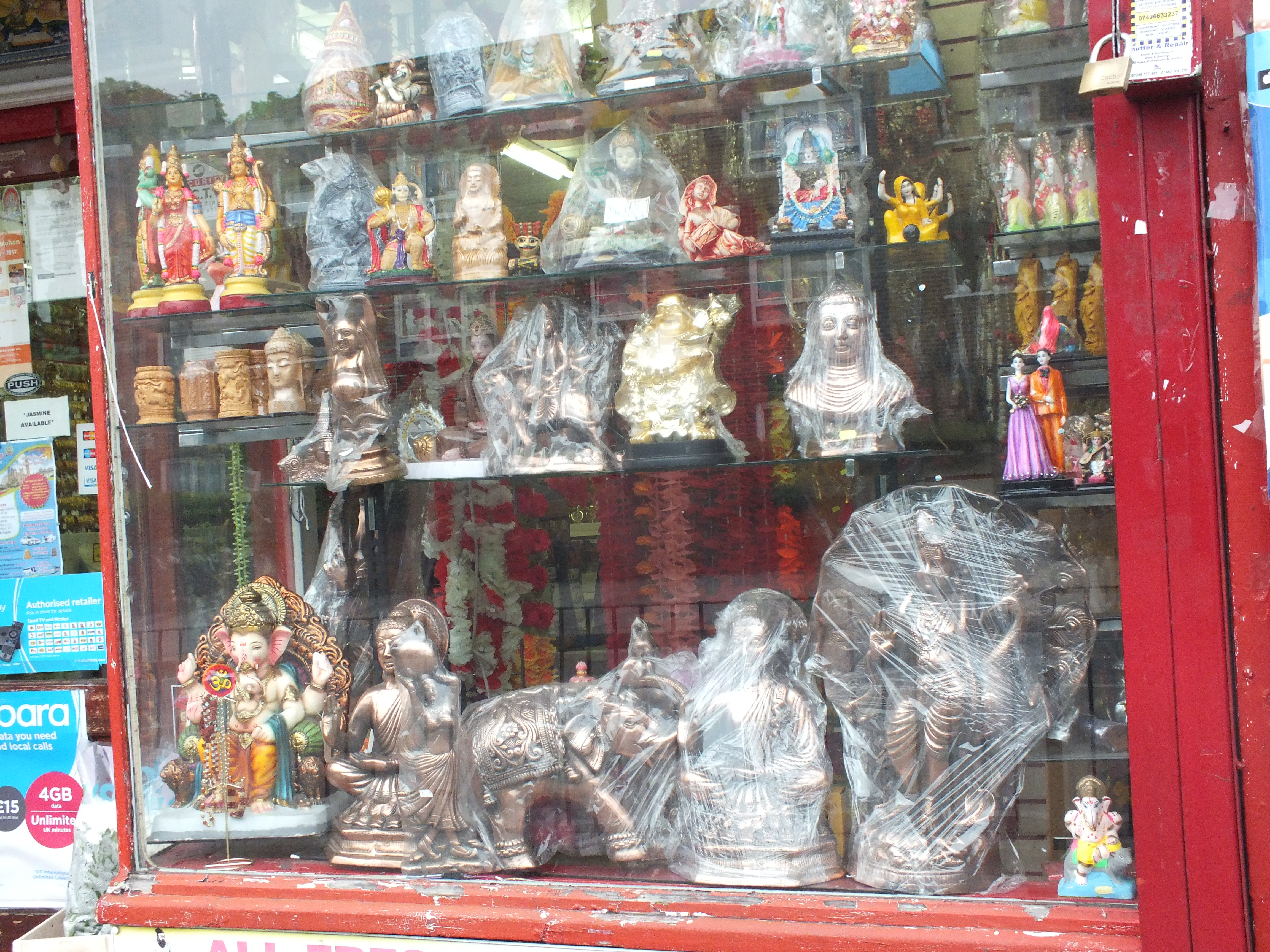
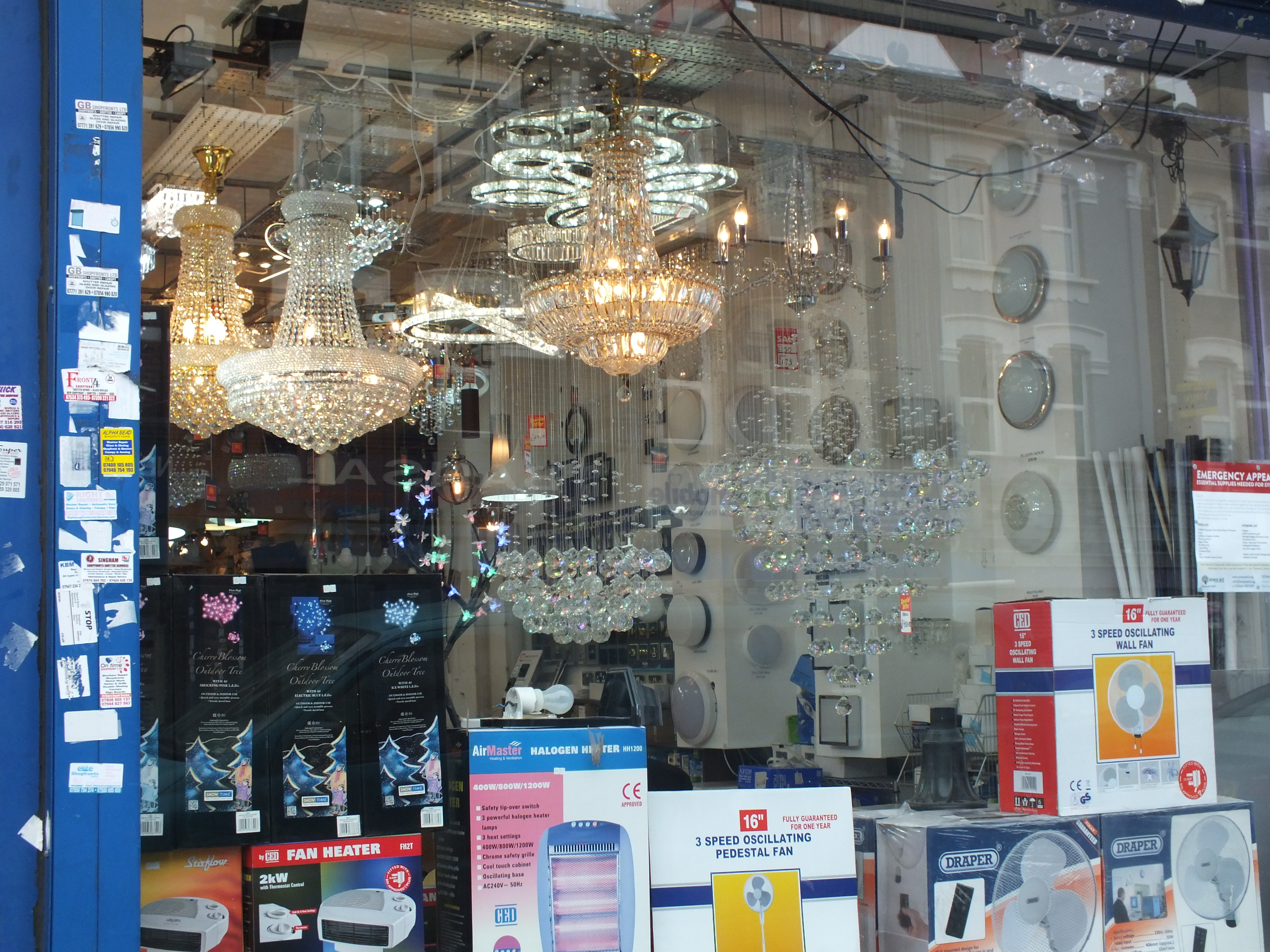
In one shop window the gods are wrapped in plastic, while in another, colourful and glittering sari fabrics hang luxuriously off elegant mannequins (the one with mechanical praying hands which went up and down all day has long since gone). At the Lucky Centre you can find bouncy balls, screws, toys, buckets, light bulbs, pens, feather dusters, and everything you could possible need. Betting shops, pawnbrokers and pound shops dominate the southern end of the High Street, but as you wander north into Manor Park the best vegetable shops appear: 6 mangoes for a pound! 10 rotting peppers for a pound! Batternat squash! Spanyhs! Salary! 5 hot papers for a pound!

To try and get myself into the feel of Britain, I’ve been reading the Lonely Planet guide to Great Britain. East London is not recommended. I say all the better for us. The day I arrived home we went to see the bluebell wood in Wanstead Park and it couldn’t have looked pettier. Since that brief period of sunshine it has been almost consistently overcast and grey. But I’ve swum in the cold water of the North Sea and my homecoming is complete.

So now I’m back, but I still don’t know what I’ve come back to. Part of me never wants to stop travelling and seeing new places, and another part of me wants to stay at home all year baking bread and cleaning windows.

I think what I most want to do is to start exploring my own country in the same way I’ve been exploring other countries. I’m curious to see if travelling around England will feel different from travelling in other places. And having encountered so much national pride in other countries, I’m intrigued by the United Kingdom with its tensions and embarrassment over nationalism.

But for now, I think I’ll stay put – I’m still watching things here in Manor Park.

DSCF5218

DSCF5207

Standard

Charyn Canyon & the Lakes

Kazakhstan is vast and everything is very far away from everything else, so we needed to find a guide with a car. Andrei was a graphic designer when he wasn’t a guide and he often seemed to speak in Photohop English, speaking about the landscape using terms like layers, background, foreground, contrast, shadow, dimension, shape, focus.

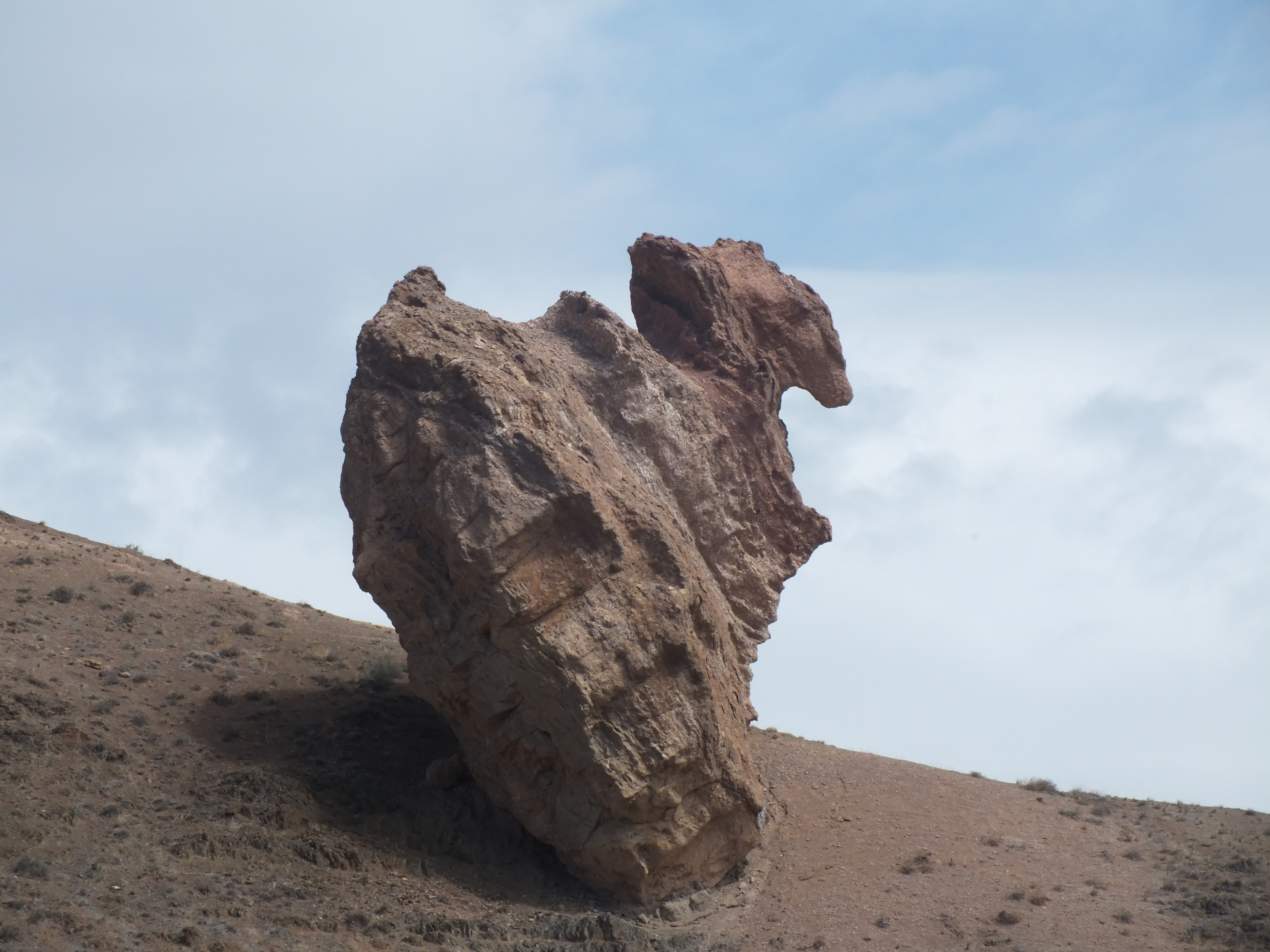
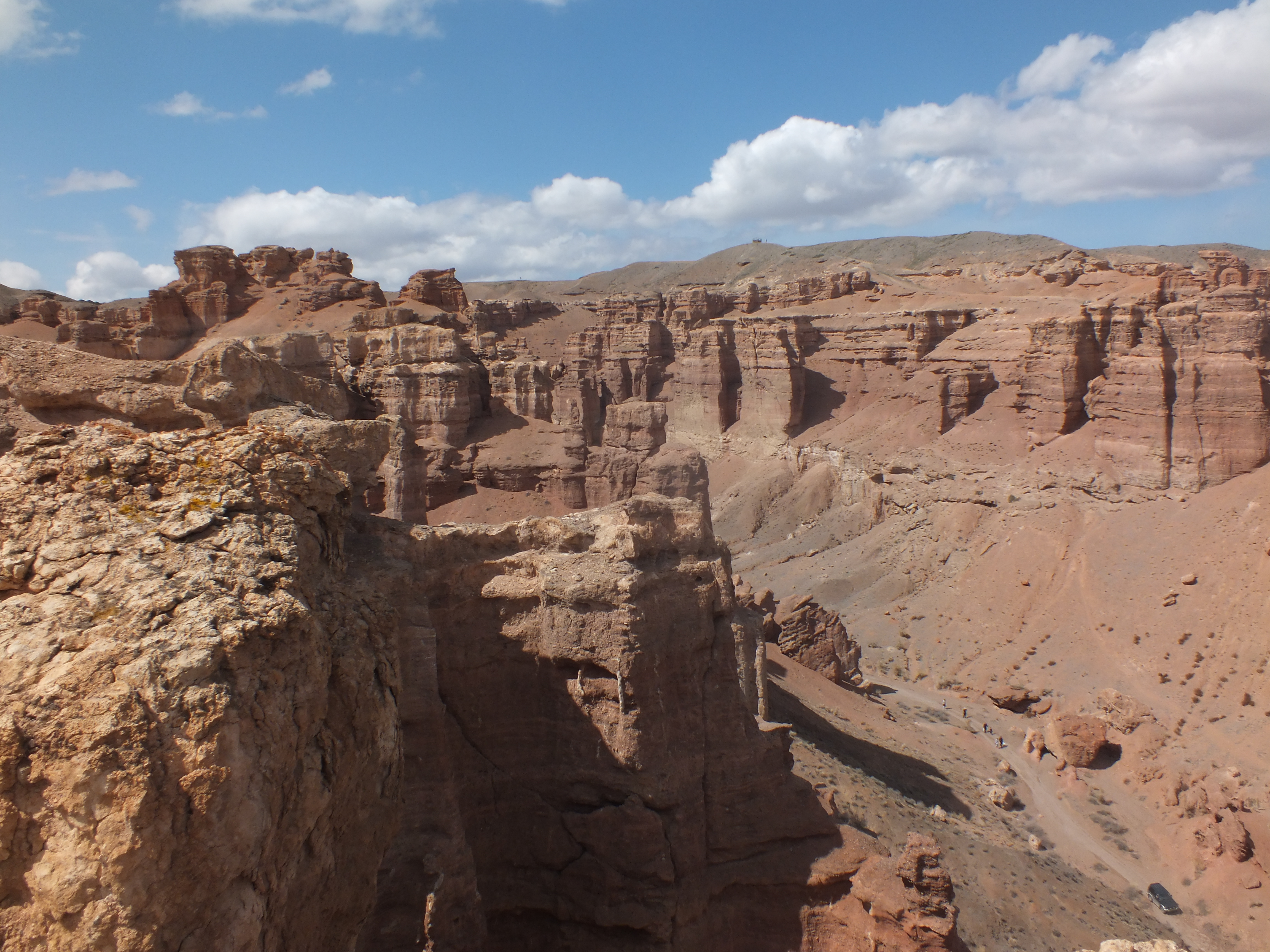
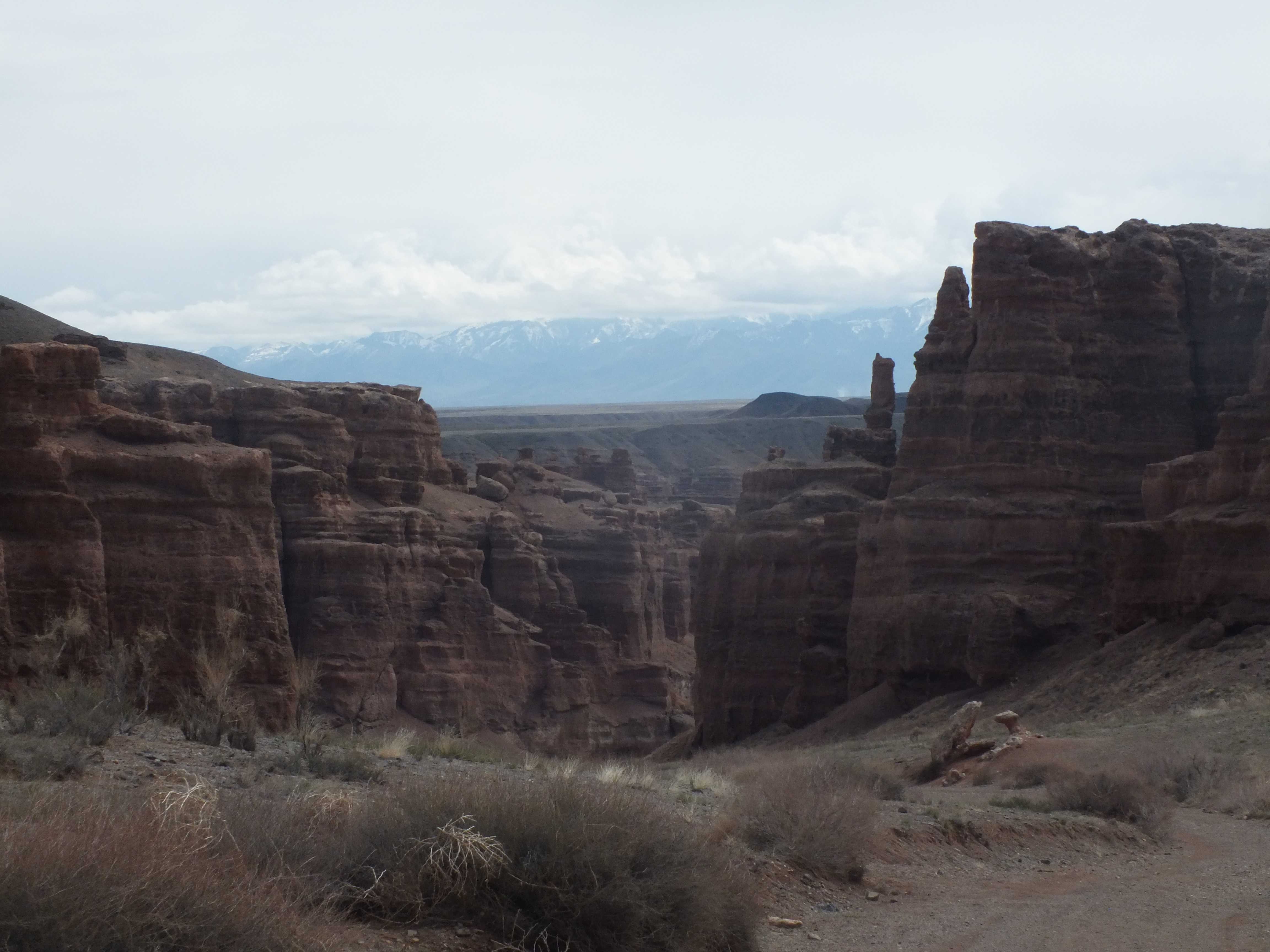
We drove east to Charyn Canyon (‘like the Grand Canyon, only prettier’ is how it’s advertised) and descended into the Valley of Castles. We were alone, apart from the occasional little eagle and steppe mouse. The rocks towered above, balancing impossibly. Andrei asked us what we saw in the rocks, and we all saw a squirrel crossed with a turkey.

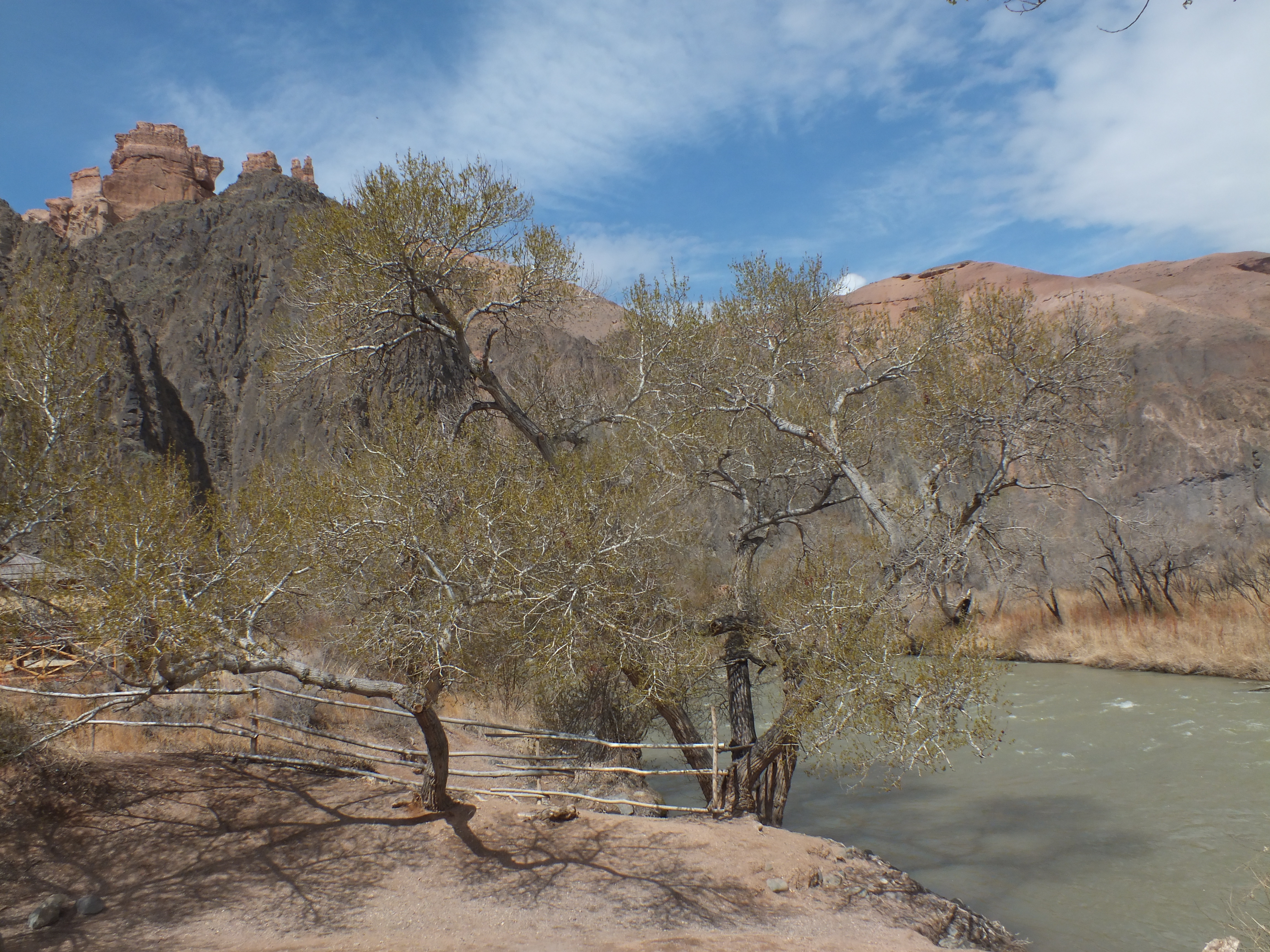
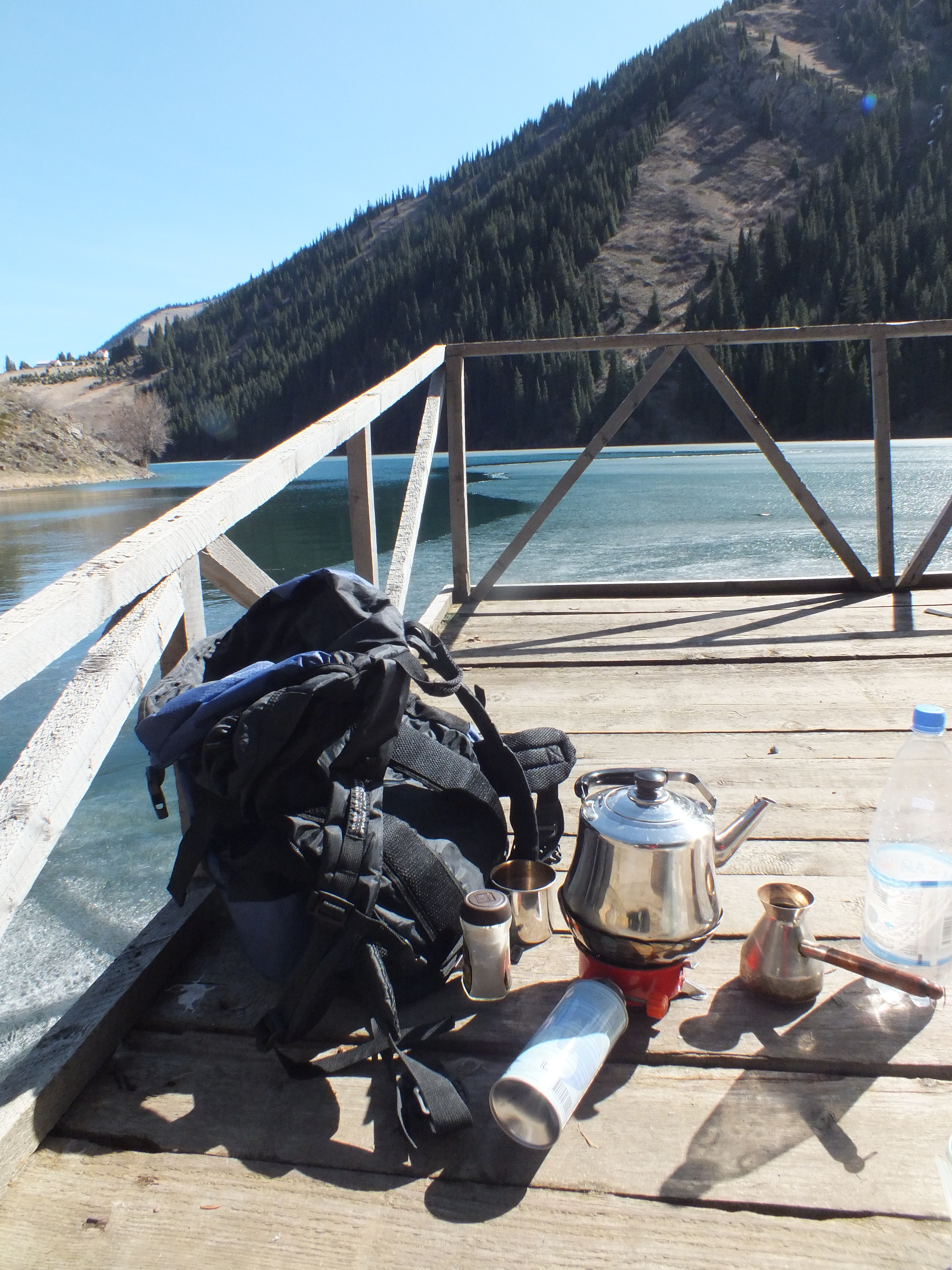
At the end of the Valley of Castles we came to a fast-flowing river lined with sogdian ash trees, ancient and rare trees which were just coming into leaf. Andrei pulled out a picnic: a stove and coffee pot, and a Russian Easter kulich. No Kazakh walk is complete without cups of steaming tea or coffee, even if only drunk out of a plastic water bottle cut in half.

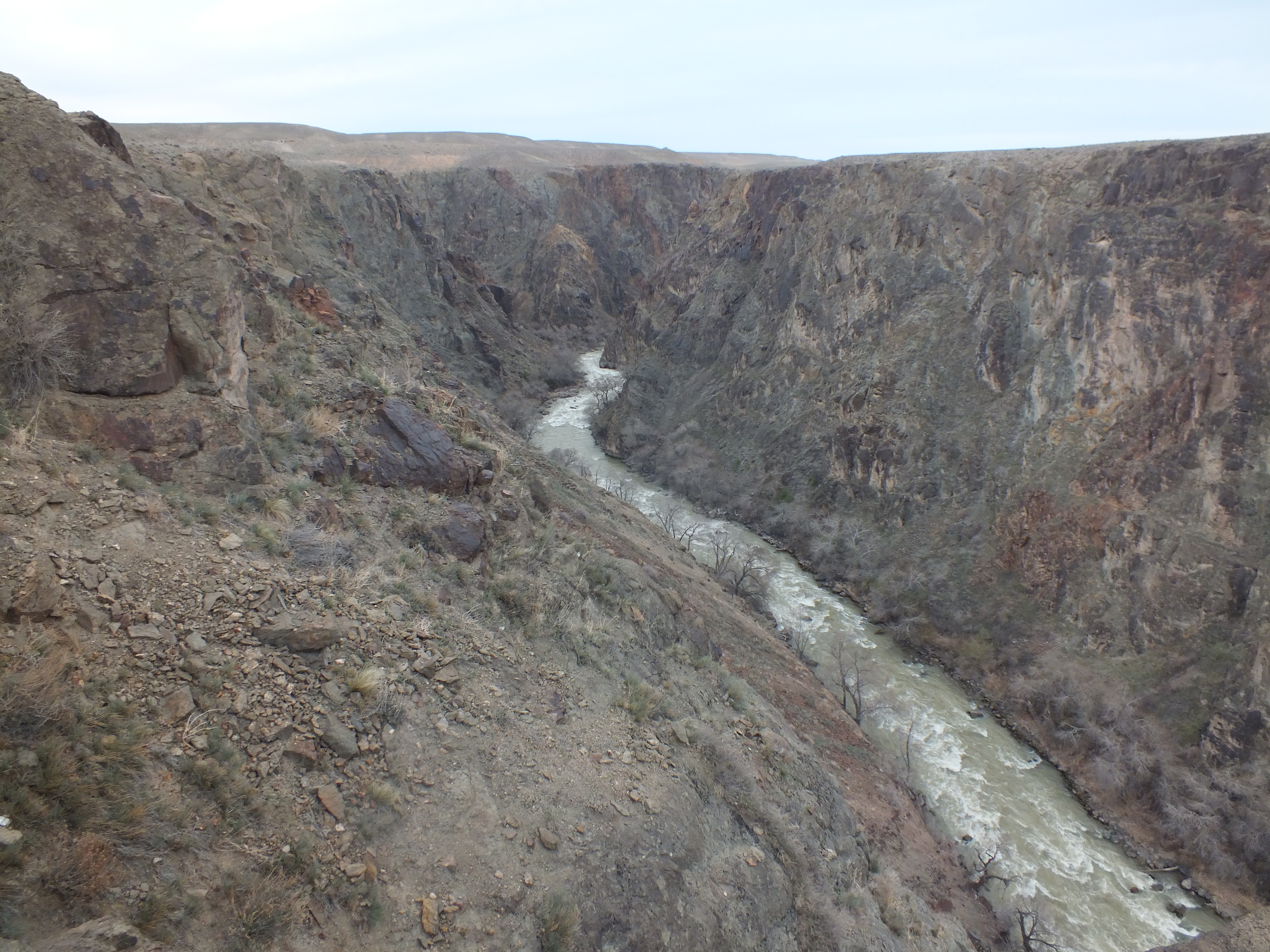
Andrei asked if we wanted to go extreme. It wasn’t really that extreme, but it was a proper little adventure across sandy slopes and steep rock faces. We climbed up around the back to reach the top of the canyon, where the view was spectacular. The canyon stretched out for 200km and behind it were snowy mountains in the background. We saw other people beginning to arrive as specks on the dusty road below.

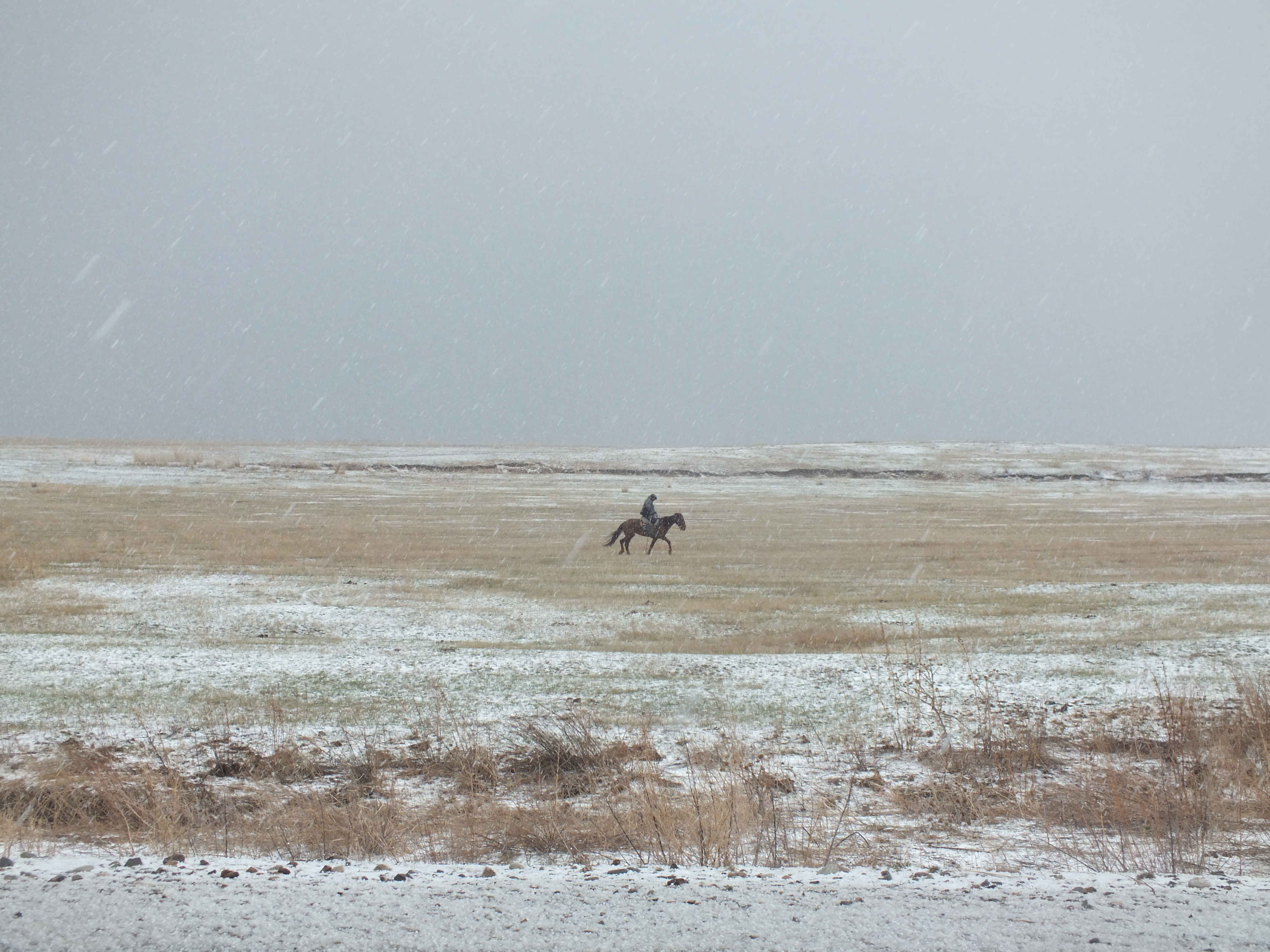
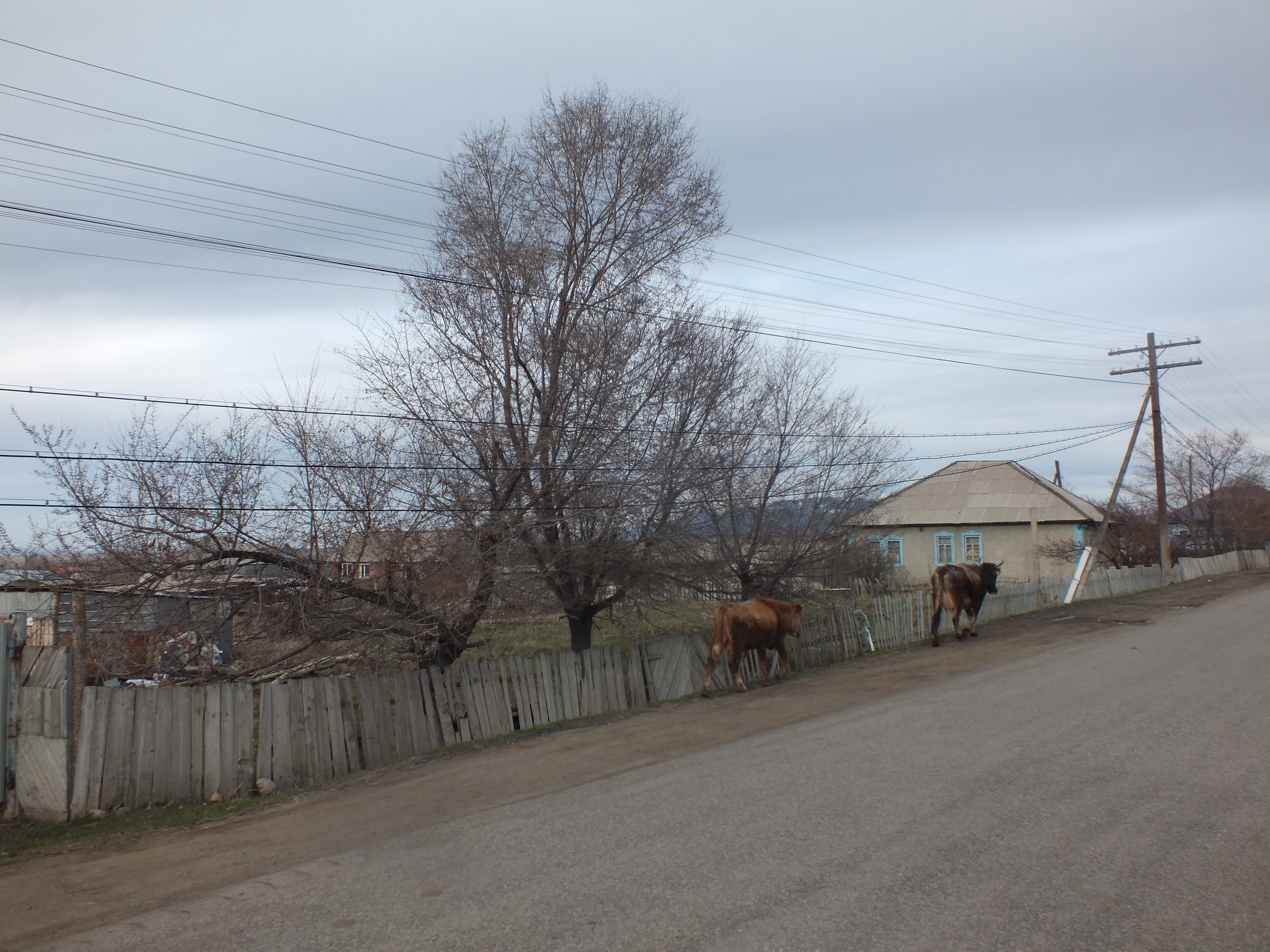
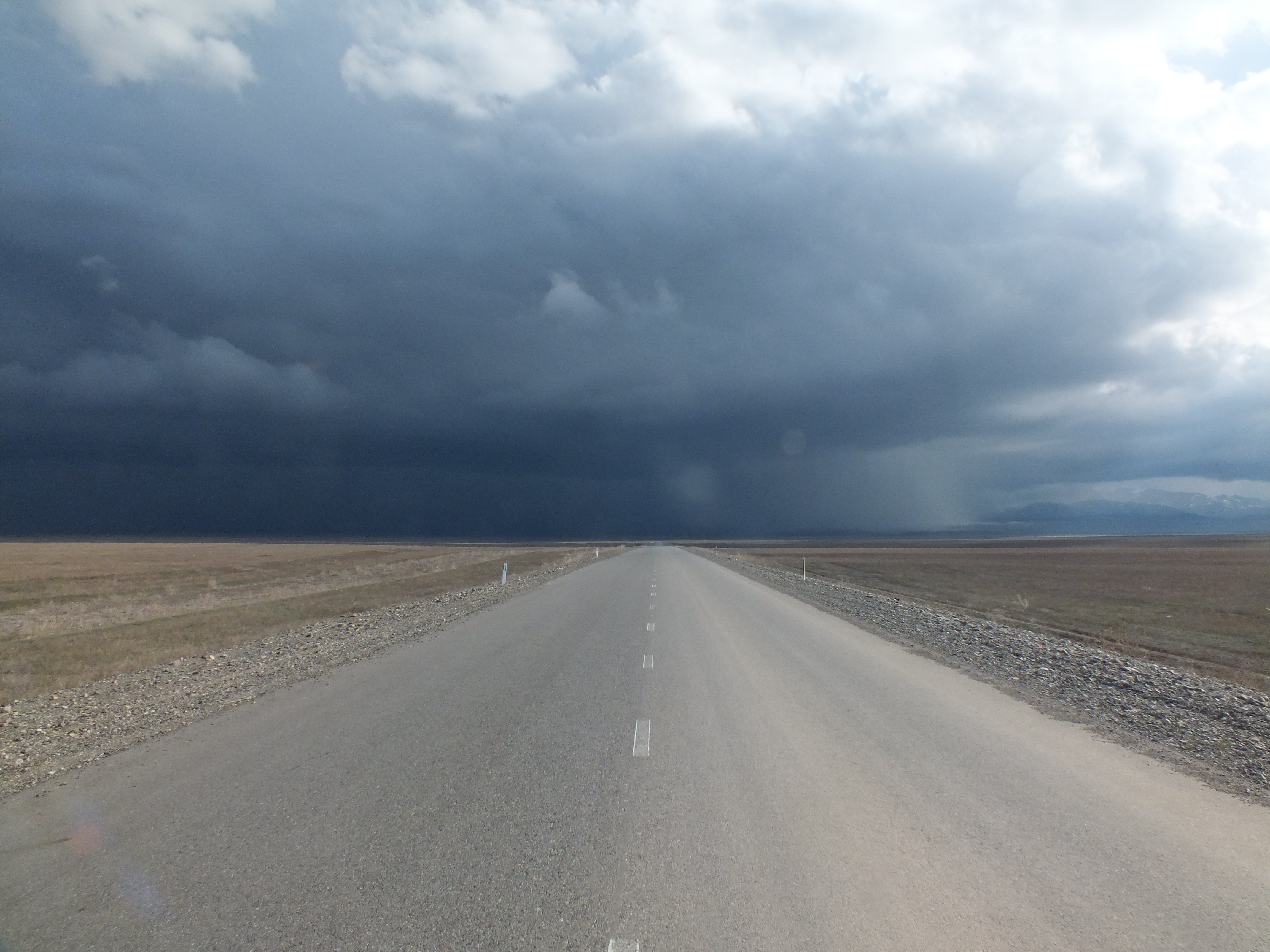
Afterwards, driving towards our guesthouse, an approaching storm turned the sky black. Hailstones the size of chickpeas beat down on the car, and the landscape turned white. A man galloped past, huddled in a duvet-like coat, while the poor animals stood looking miserable, covered in hail and snow. The villages we passed through were deserted and covered in a thin white blanket of snow, while smoke rose out of the grim and damp-looking wooden houses.

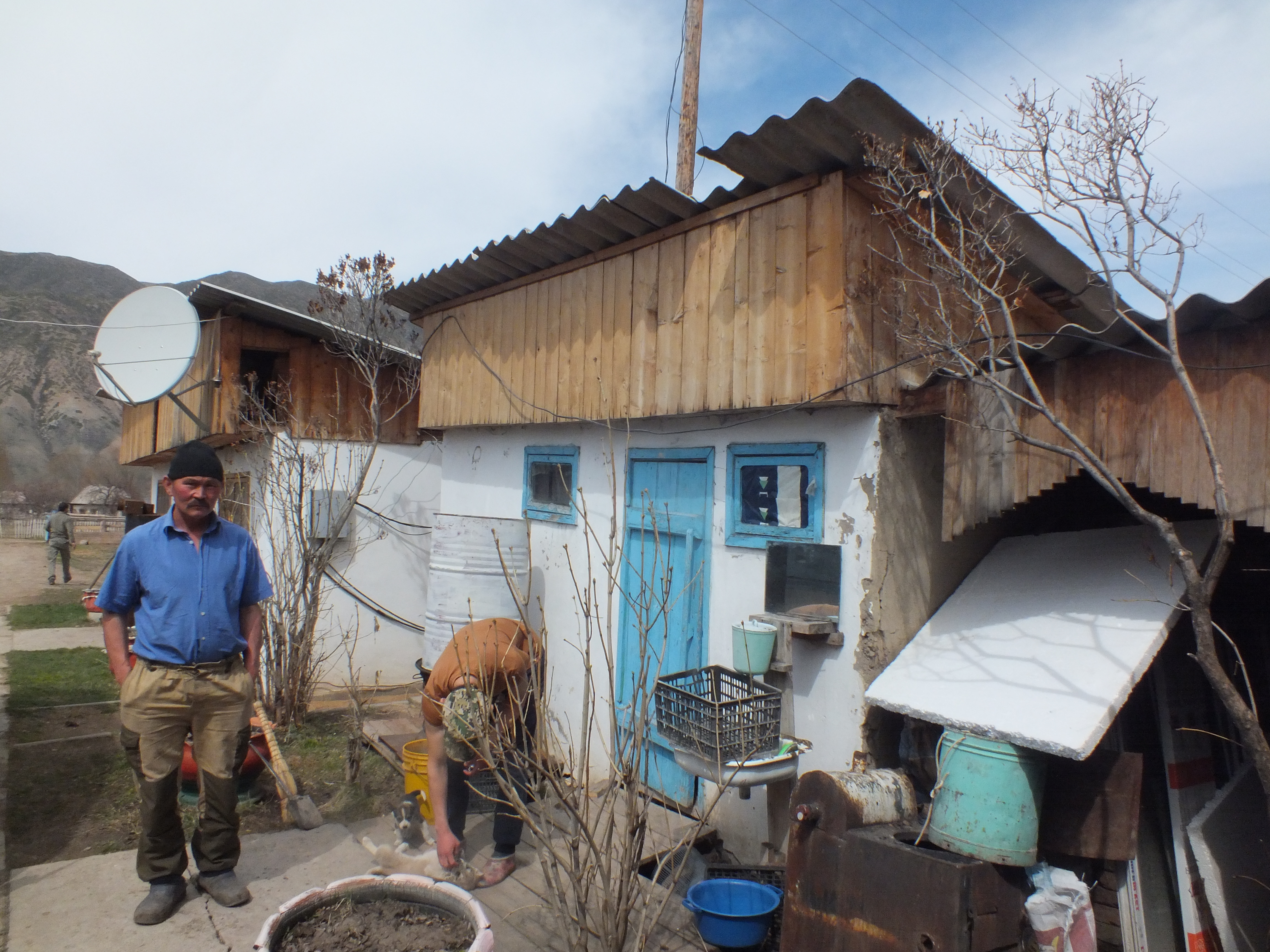
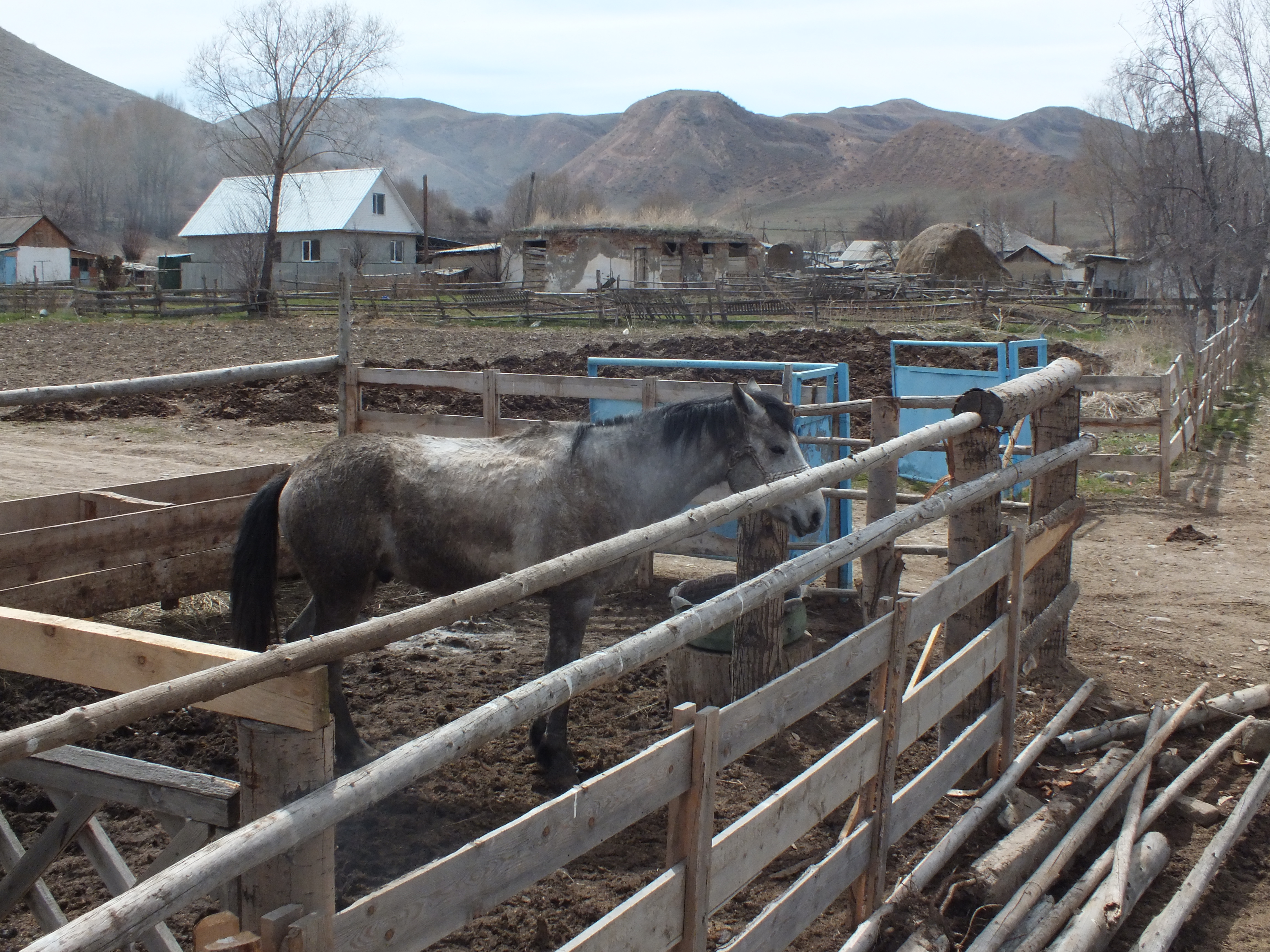
The storm had missed the village of Saty. We arrived at a smart wooden guesthouse and sat down with our host on a sofa next to the stove. ‘Why are you vegetarian?’ he asked Sophie. ‘Meat is power.’ There was no arguing with him. After warming up and sweating everything out in the tiny wooden banya, we returned inside and were presented with a noble Kazakh attempt at vegetarian food: a mountain of roast potatoes and a few carrots. But there also were glass bowls with the most delicious blackberry jam and plates of freshly made baursak, Kazakh fried bread. And more rahat chocolate of course.

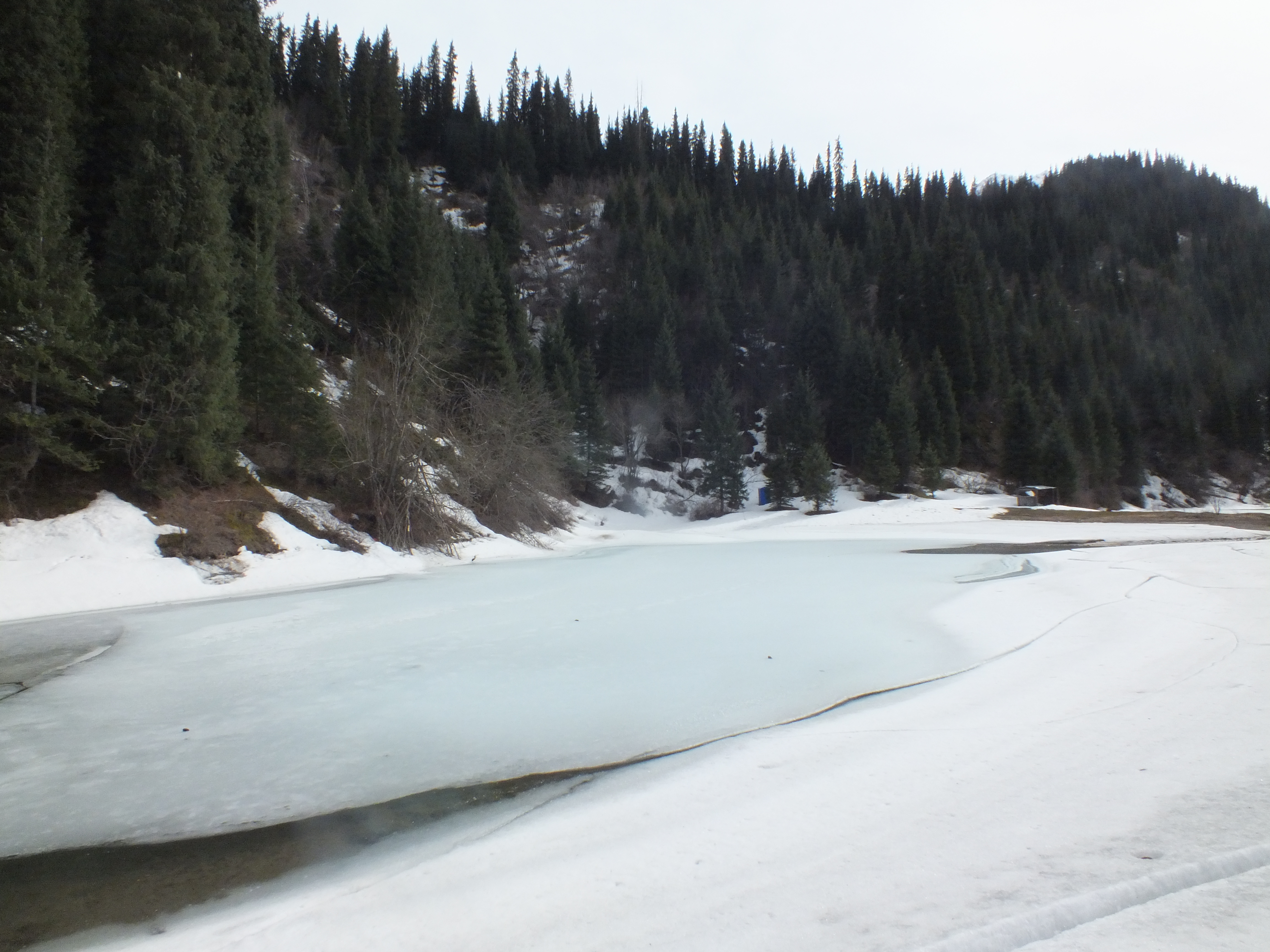
The following day we drove towards the Kyrgyz border, an area patrolled by guards on horseback with rifles slung across their chests, looking just like cowboys in westerns apart from their great padded coats. We showed our passports to enter into the mountains and arrived at Kolsai Lake. It glittered and sparkled in rainbow colours between fir-covered mountainsides. We walked to a part of the lake still frozen and sat on a jetty drinking tea, watching ducks fly overhead and listening to the deep, alarming, thuddering sounds of the ice sheet cracking.

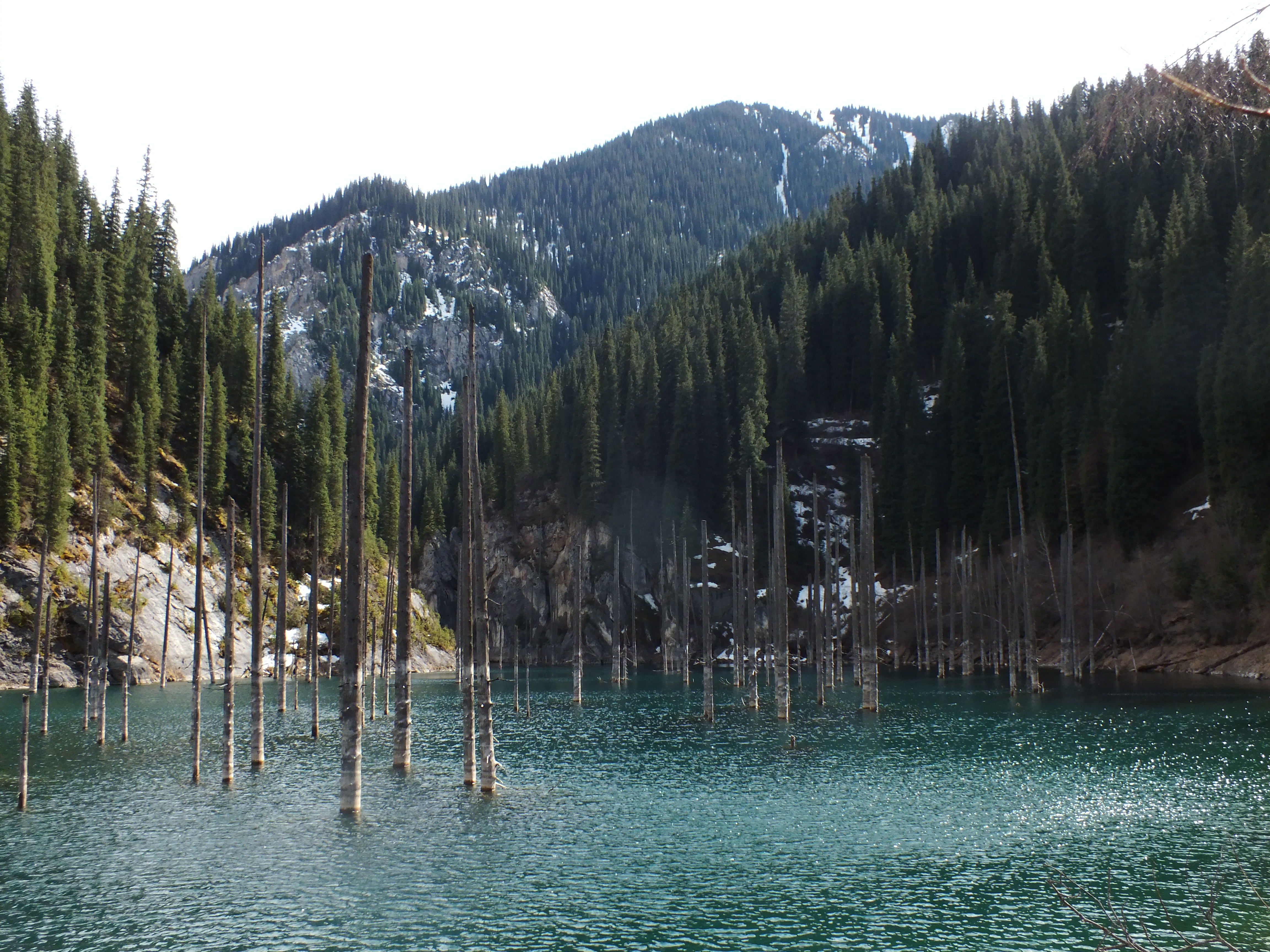
I think the most beautiful place we visited though was Kaindy Lake. Formed after a landslide in 1911 which blocked the river and flooded a forest, it is a haunting place. Skeletal, bleached tree trunks still stand in the water, utterly dead but together creating a strangely alive and alert atmosphere.

On the long drive home we listened to Andrei’s music: Armenian rappers boasting about being macho and women demanding big beards, a satirical Russian song about Barbie, Ukrainian bikers dreaming of freedom, a rapper’s remix of Borodin’s Prince Igor, and – best of all – a song I’ve been looking for since my trip to Georgia (in 2014!) about there being no train from Moscow to London.

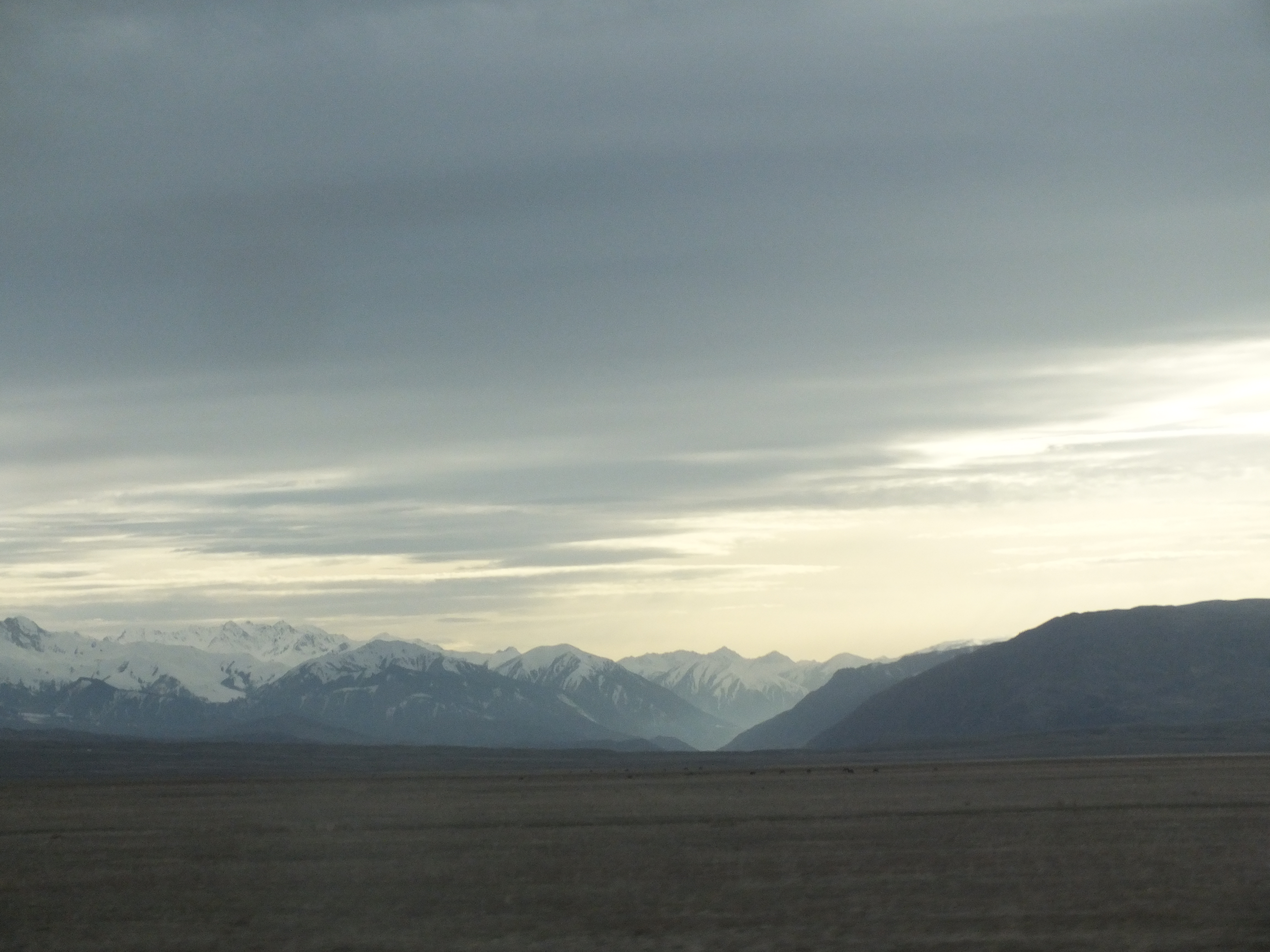
We drove across the vast, flat, open landscape, past distant snowy mountains over which the sun was beginning to set, watching an eagle briefly fly along with us, almost like a dolphin. As it grew dark, we passed along a deep black canyon in which raged a white foaming river, and once more returned to that flat, never-ending grassland, as we listened to a beautiful Ukrainian voice sing his love song to the sky.

Kazakhstan was a strange place. Between the Russian dominance and Uzbek, Korean, Georgian, Ukrainian or American influence, it was full of contradictions: rough concrete houses and super-expensive shops, beautiful mosques and aisles full of vodka, developed cities and a yearning to live in a yurt and kidnap a wife.  Answers to questions conflicted: the stress in Kazakh is always on the first syllable said one man, but another told us it was always on the last syllable. Yes, it is still possible to visit the wild apple forests, but no, they were all cut down years ago. But come back in autumn – it’s really beautiful then, they promised.

Standard

Shymkent & Turkestan

Shymkent has long been called the Texas of Kazakhstan, a wild place full of crime and gangsters where everyone and everything is out of control. It’s 11 hours from Almaty, but only an hour and a half from Tashkent in Uzbekistan. ‘Be careful,’ we were warned in Almaty, ‘they’re not friendly like we are here.’

From the train we were met by our guesthouse owner, who offered to take us on a tour of the city. We were driven around night-time Shymkent, past the screams of a funfair, the mayor’s palatial official residence, and streets full of neon tulips (tulips, like apples, apparently originate from Kazakhstan).

‘What do they say about Shymkent in Almaty?’ he asked. An awkward silence. ‘You don’t need to worry about crime here. Everyone is much friendlier in Shymkent.’

Southern Kazakhstan borders Uzbekistan and is in some ways closer to the settled culture of the Uzbeks than the nomadic life of Kazakhs. Unlike cities such as Almaty and Astana, which were largely built by Russian invaders, some of the towns in southern Kazakhstan still seem as though they belong to an ancient past. The most famous of these is Turkestan, which has been inhabited since the 4th century BC, but which became famous in the 14th century when Tamerlane ordered the building of a magnificent mausoleum to the sufi saint Khoja Ahmed Yassawi.

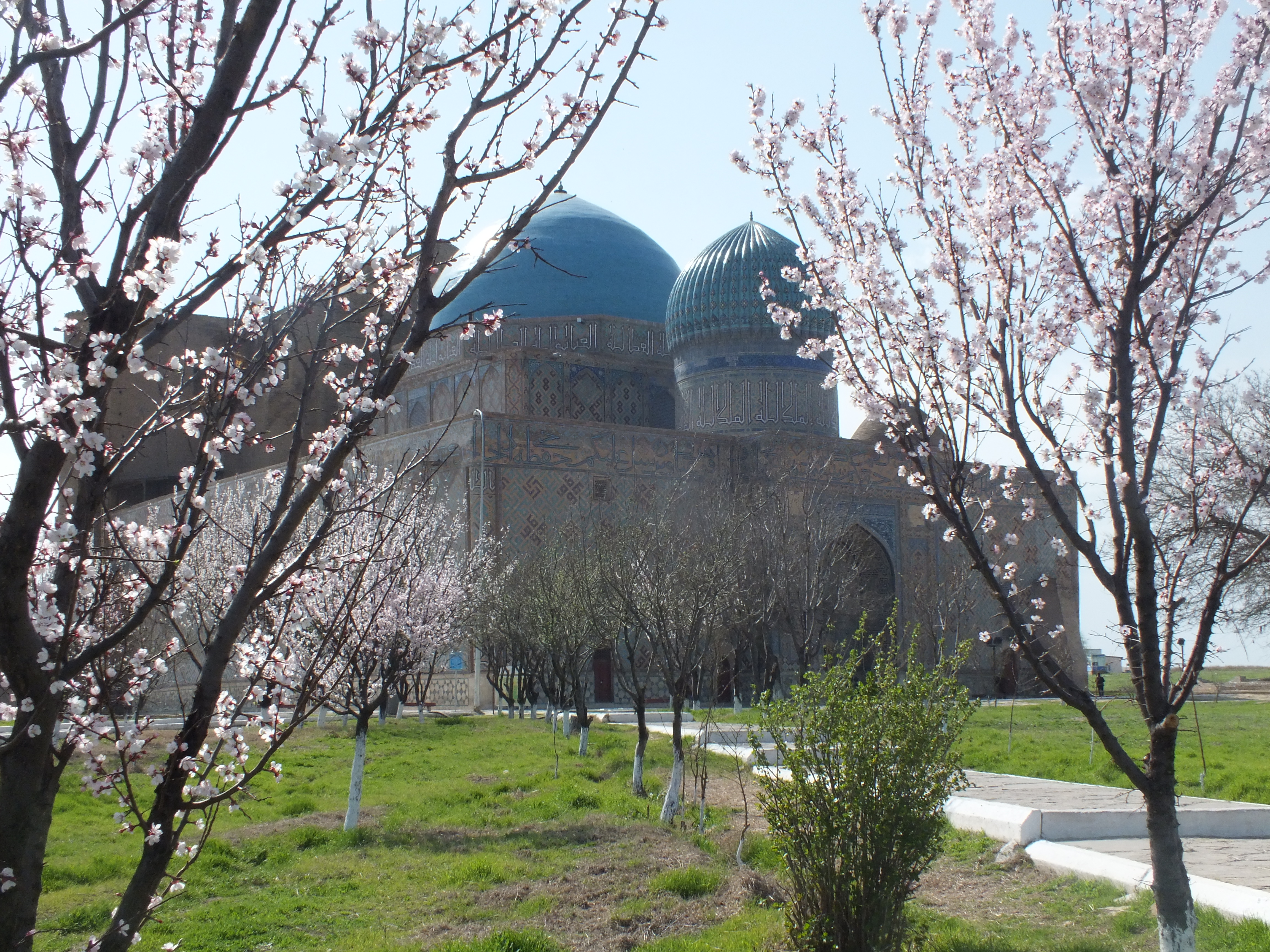
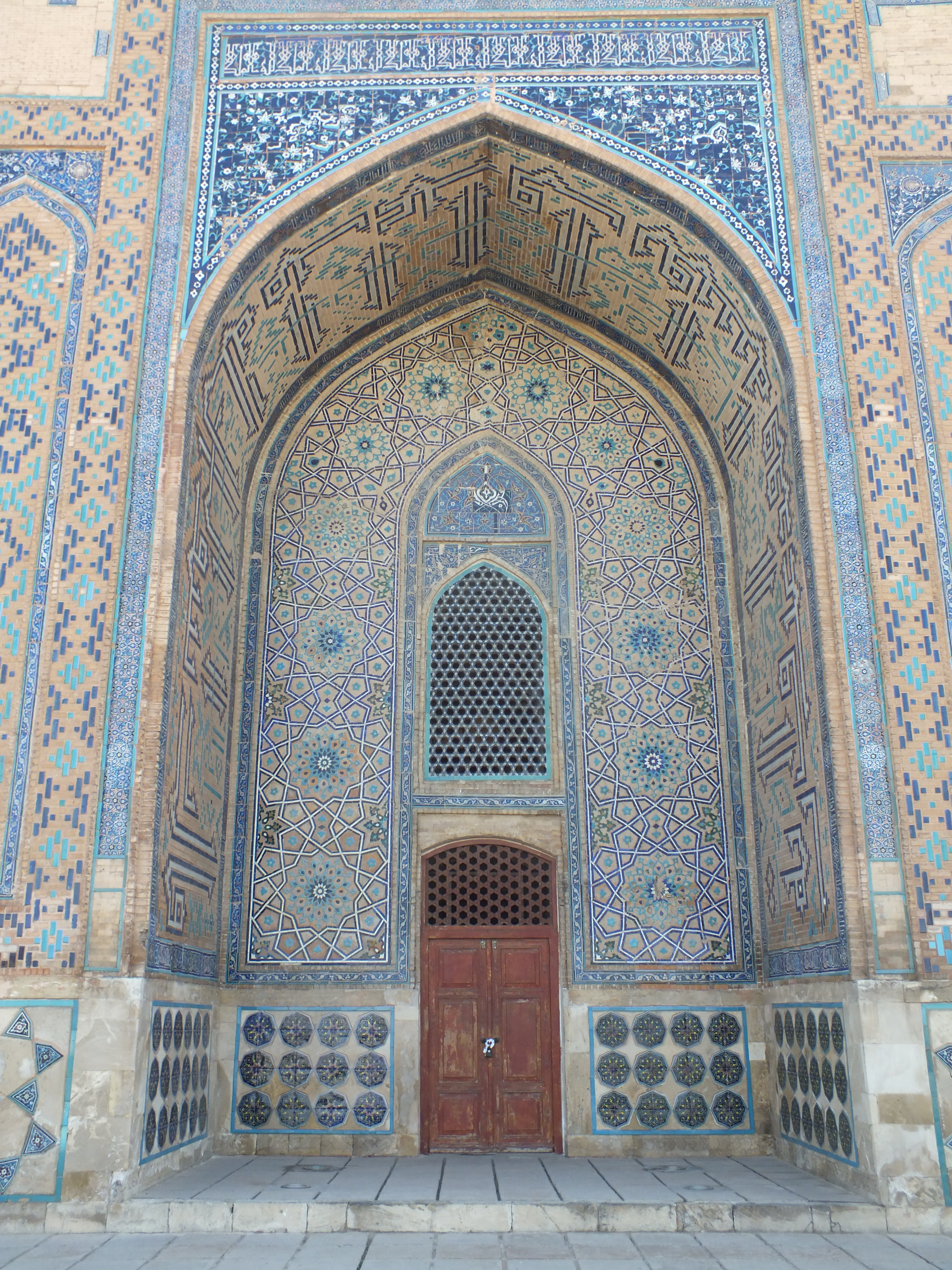
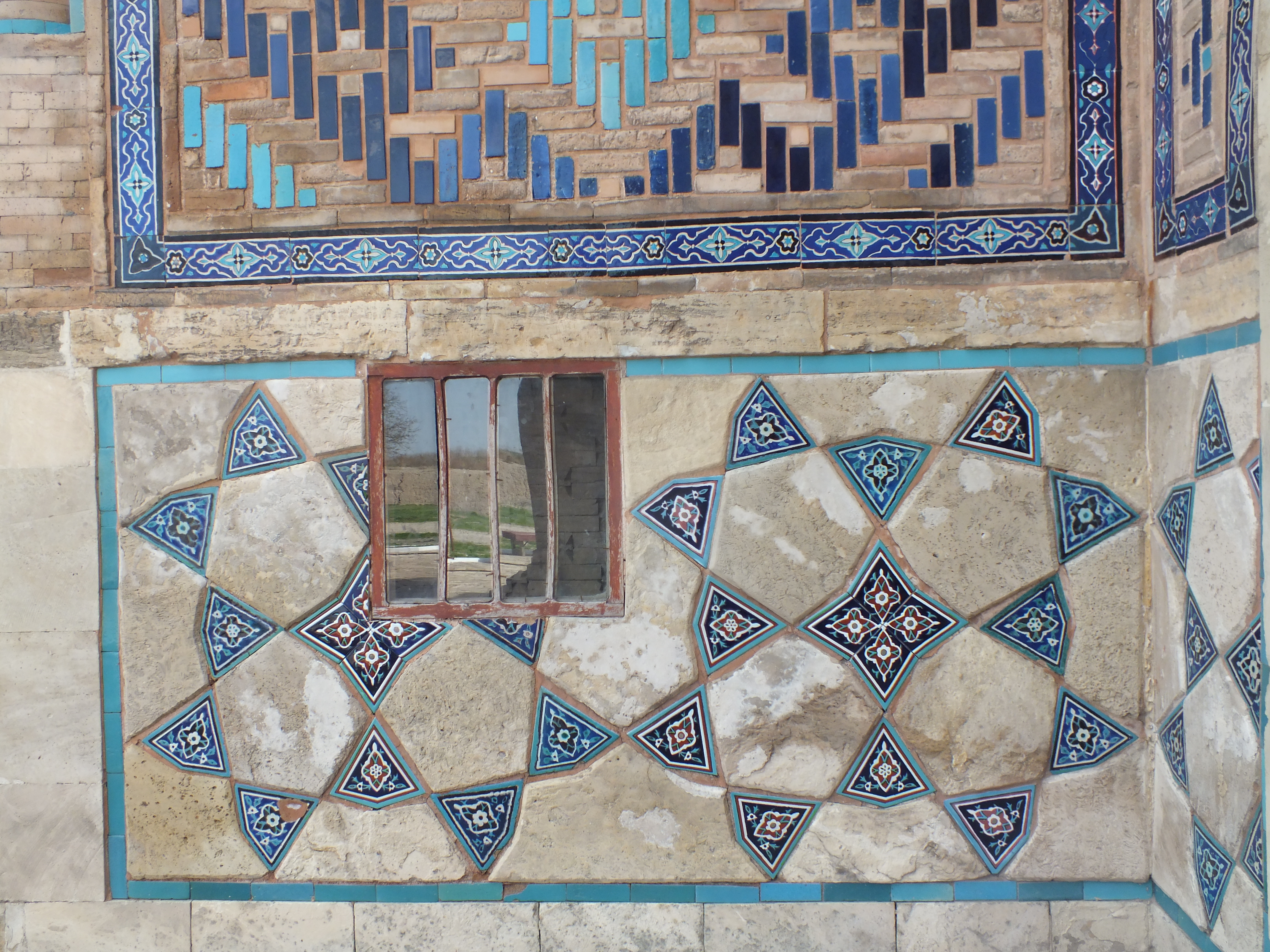
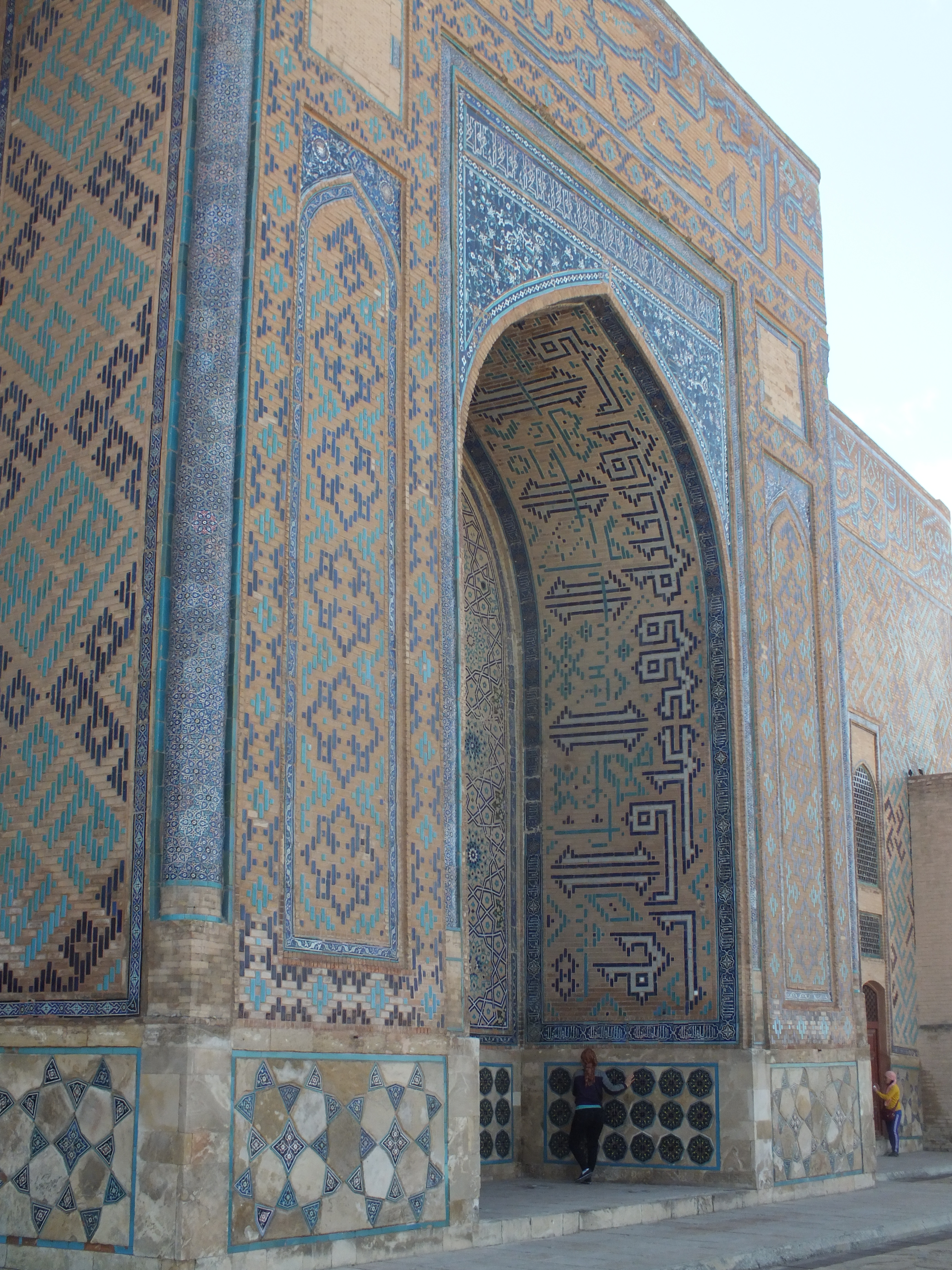
We reached the mausoleum through a stone archway and along a path lined with trees thick with blossom. From a distance, its colours looked dull, the air clouded by the dust that blows off the steppe. Close up, however, the tiled walls are bright and lively, exquisite in pattern and colour. Women walked slowly around the perimeter, both hands on the walls, head bowed, feeling their way as they prayed. Birds swooped in and out of their nests in the building, squeezing through the intricate geometric lattices. On the south-eastern side, the Mausoleum revealed its unfinished state: only bare brown brick remains, undecorated and with wooden beams still sticking out. It had a very different kind of beauty: austere, meditative, calm. This mausoleum is considered by some to be one of the three greatest pilgrimage sites of Islam, second only to the Haji (some even consider three pilgrimages here to be worth one pilgrimage to Mecca).

We found our way to the ticket kiosk and bought tickets at the rate for ‘citizens from the far abroad’. Inside the mausoleum was a large white hall with bare walls and scalloped ceiling, and a magnificent great cauldron in the centre, two metres in diameter and made of seven kinds of metal. Along a tomb-like corridor we found a wooden grille, through which we could see the green tomb of Yassawi. Pilgrims sat here on benches, praying and talking to family and friends.

Surrounding the main mausoleum were mosques, smaller mausoleums for other holy people, and a bath house. As we were looking at an old wooden column carved with calligraphy, on top of which perched a pigeon’s nest with tiny chicks, a group of teenage boys came up to us. Without a word, they stood behind us and one held up his phone to take a selfie with us. They went off looking happy, taking more selfies in front of the old Qurans.

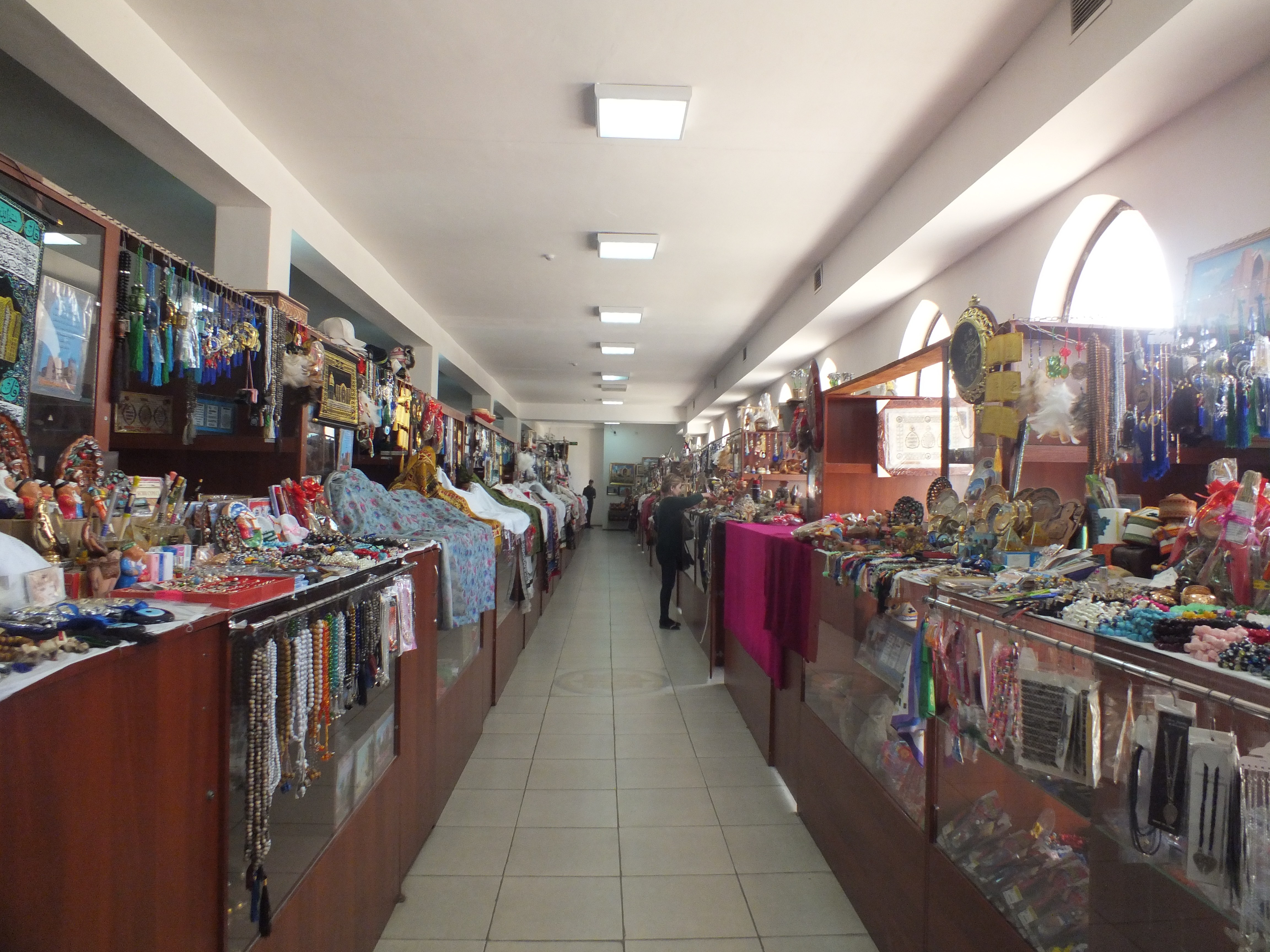
A camel sat on a carpet, waiting for tourists, but soon wandered off into the field of blossom. In the distance we could see the bright white mosque newly built by President Nazarbayev, glinting on the hazy horizon. In a canteen we found shubat (fermented camel’s milk) to drink, and then we hunted unsuccessfully through a hall of souvenir stalls, which was empty apart from a few stall owners hiding among their felt hats, miniature dombras and bracelets made of wolf claws.

On the bus back to our guesthouse, the conductor wanted to know what we were doing and where we were going. In between collecting bus fares, he would come back to us and resume a conversation through Google translate. It was a conversation often repeated, in restaurants, in the banya, on the train, with policemen, with printers, with shopkeepers: what are you doing in Kazakhstan? Tourists! Why do you want to come to Kazakhstan on holiday?! How much does it cost to come here? Where are you going? What are you doing? Are people friendly here?

The ethnic diversity of Kazakhstan is fascinating. Between all central Asian countries there has always been movement – Shymkent, for example, is the heart of Uzbek Kazakhstan – but Kazakhstan’s history makes it especially diverse. After the absorption of Kazakhstan into the Russian Empire and then the Soviet Union, it came to be known as a place of exile and forced labour. As well as the famous exiles such as Dostoevsky (who was interested in the ‘indigenous’ question in Kazakhstan) and Trotsky, thousands of people from North Korea to Ukraine were imprisoned in Kazakh gulags. Today, among populations of Russians, Koreans, Germans, Ukrainians, Belarusians, Uyghur, Chechens, Tartars and others, memories of this past are fading, or being deliberately ignored, and only the odd comment serves as a startling reminder.

In Shymkent we saw no trace of the wild west. The long Uzbek houses make parts of the town look like a village, with narrow streets through which men wander with trolleys, crying their wares. Drivers are astonishingly well behaved. We needed to print our train tickets, so we found a large copy centre where a group of young women and an old man sat. Walking into the room brought stares and the now familiar sensation of extreme self-consciousness, as though our mere presence would sustain conversation for the rest of the day. With much giggling they asked the usual questions (what are you doing in Kazakhstan! you came here on holiday?!), then refused to take payment, preferring payment in the form of English practice.

Another exchange took place in a canteen where we were having breakfast. We were approached by a kindly and distinguished looking gentleman who wanted to practise his English. Marat (like the Frenchman, he said, drawing a finger across his neck) was a wind power engineer who told us about his dream for Kazakhstan to be the largest producer of wind power. The more vodka he drank, the more enthusiastic he got about wind energy, and boasted that Kazakh wind turbines could be two and a half, later three, times more efficient than other countries. He’d won an innovation award in California and would be at Expo 2017 in Astana in the summer. I looked him up afterwards and he really had invented a wind turbine that was one and a half times more efficient than other types.

Marat told us that all Kazakhs must know their family members up to seven generations back, but that he could go twenty generations back. He insisted on getting more cake and tea, and taught us how to politely pour it out: the less full the cup, the more honoured the person is, and by the end we were pouring out thimblefulls to sip at every few minutes. He punched himself on his heart with pride every time he mentioned the word Kazakh. His greatest dream was not to build wind turbines or win prizes, but to retire and return to the heart of Kazakhstan, to live on the steppe with his horses, dogs and cows. For now, though, he could only wait for his lift to the windy plains of Otrar.


Standard

Medeu

One of the best things about Almaty is how close it is to the mountains, and how easy it is to get there. Bus number 12 leaves from opposite the Hotel Kazakhstan – if in doubt, just follow the crowds with skis and snowboards – you give your 20p to the conductor, and twenty-five minutes later you’re in the Tien Shan mountains. Another twenty minutes and you can be whizzing down the mountainside. It’s a completely different world: American diplomats, international oil executives, rich Russian tourists, and the generally mega wealthy, trot around in goggles and ski boots, sitting at expensive European cafes and getting sunburnt.

Away from all this the mountains are yours. One day we joined a group of Kazakh girls walking up to a frozen dam; they were feisty geology students, training to be the next generation of energy executives – some of them were the first ever female students in their fields. We stopped to look at a squirrel, a fluffy red and grey Kazakh squirrel with great tufty ears. Coca cola and boiled eggs came out, and the girls all burst into something between a traditional Kazakh song and a rap.

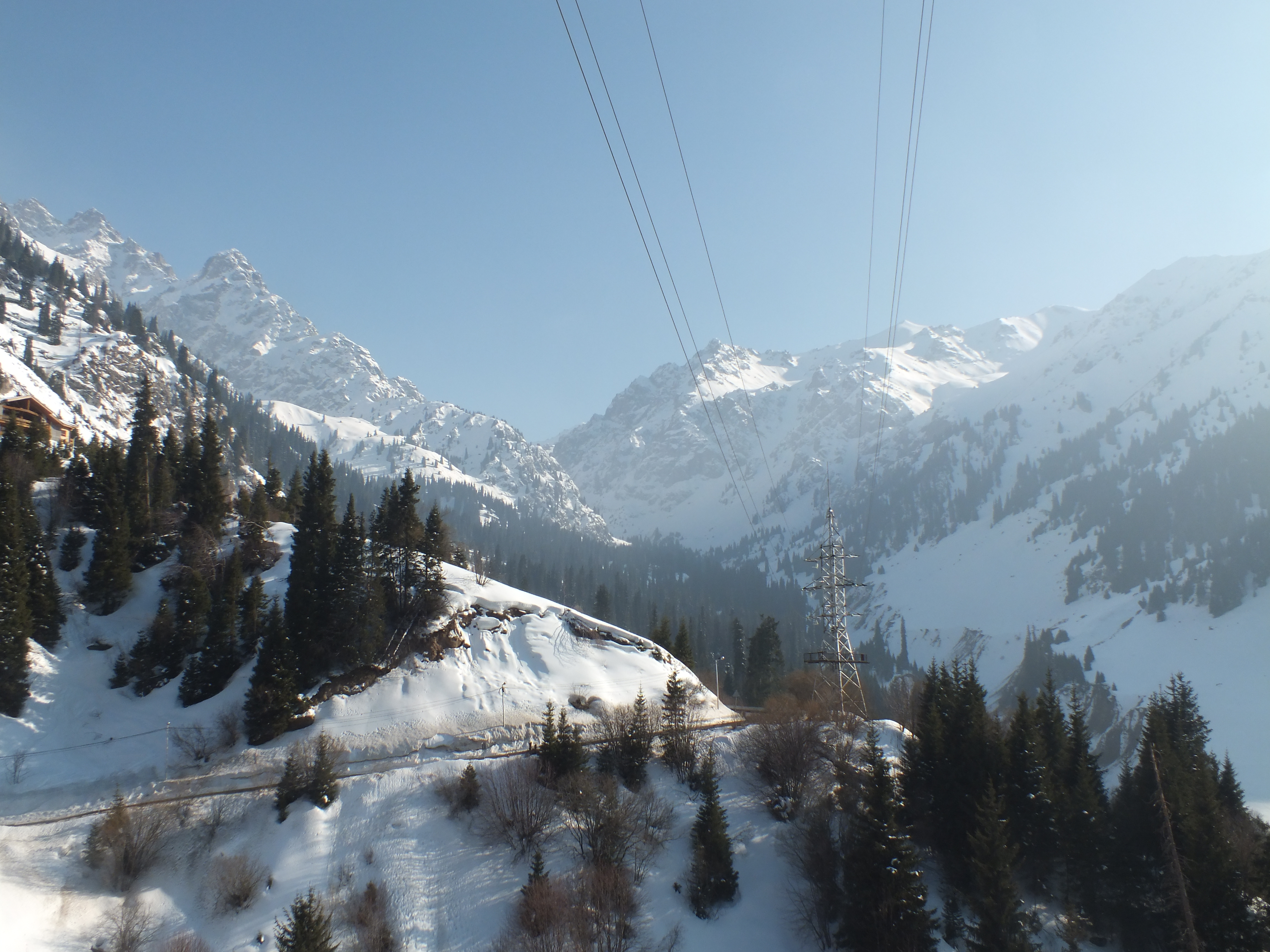
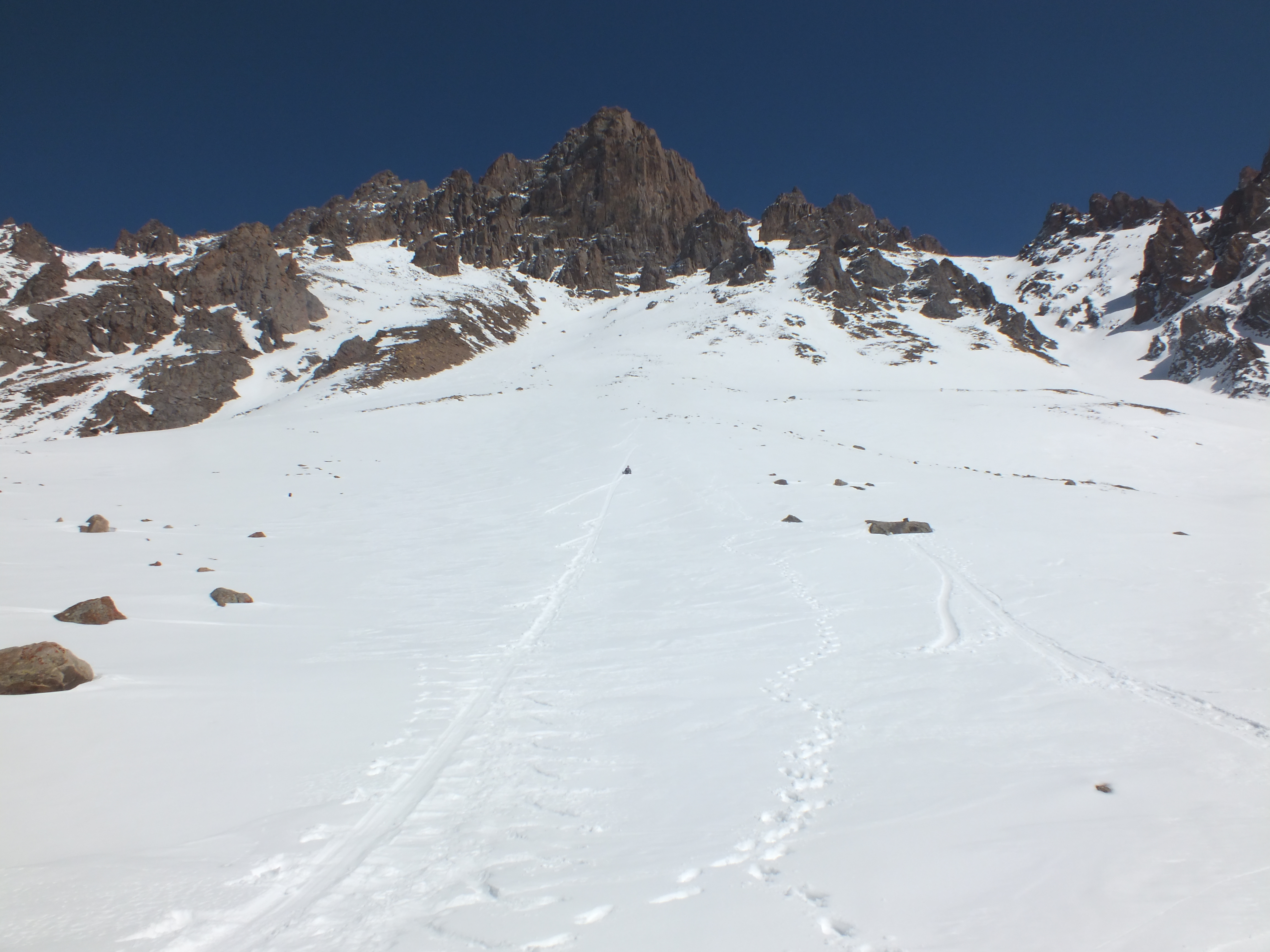
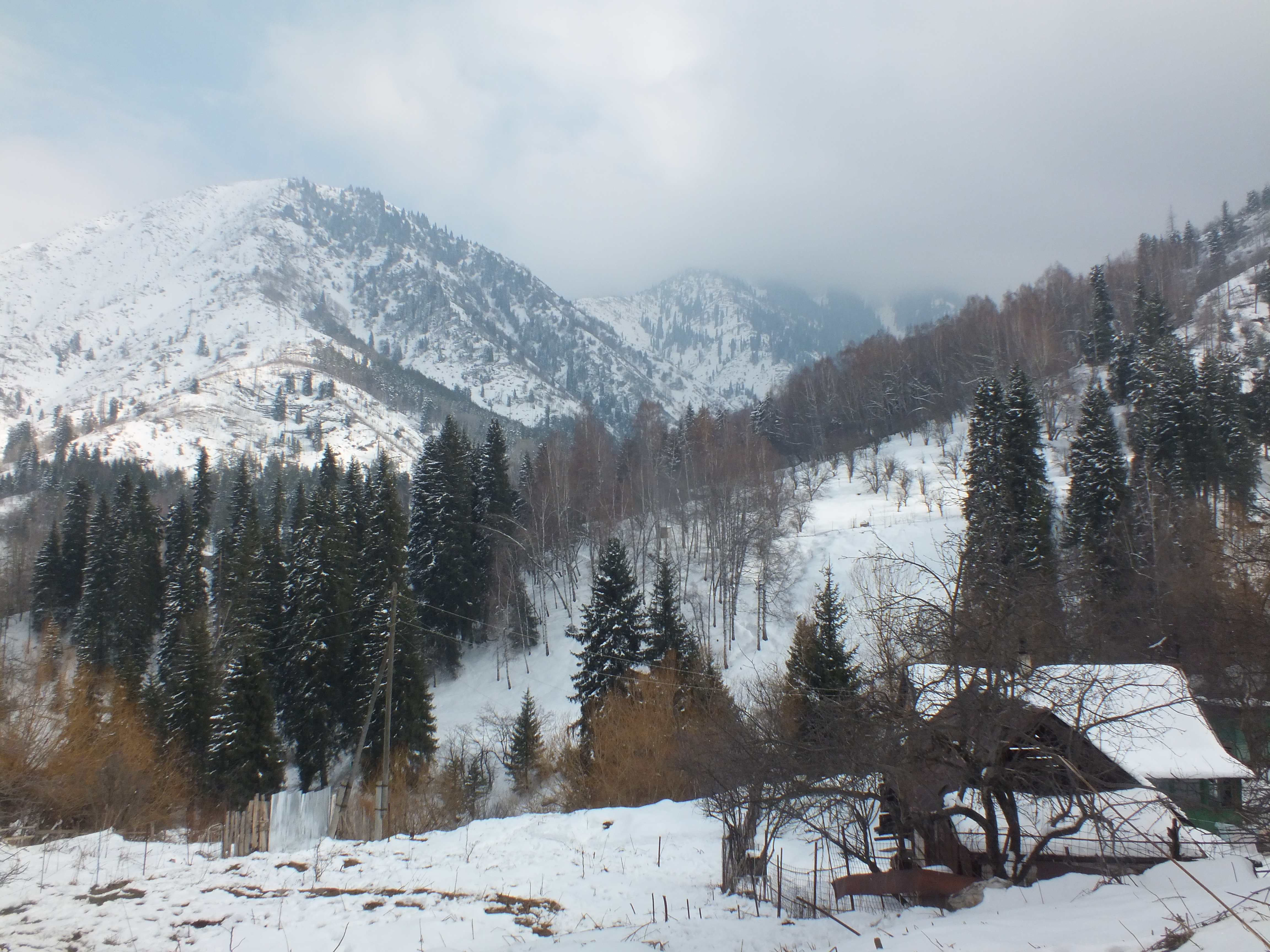
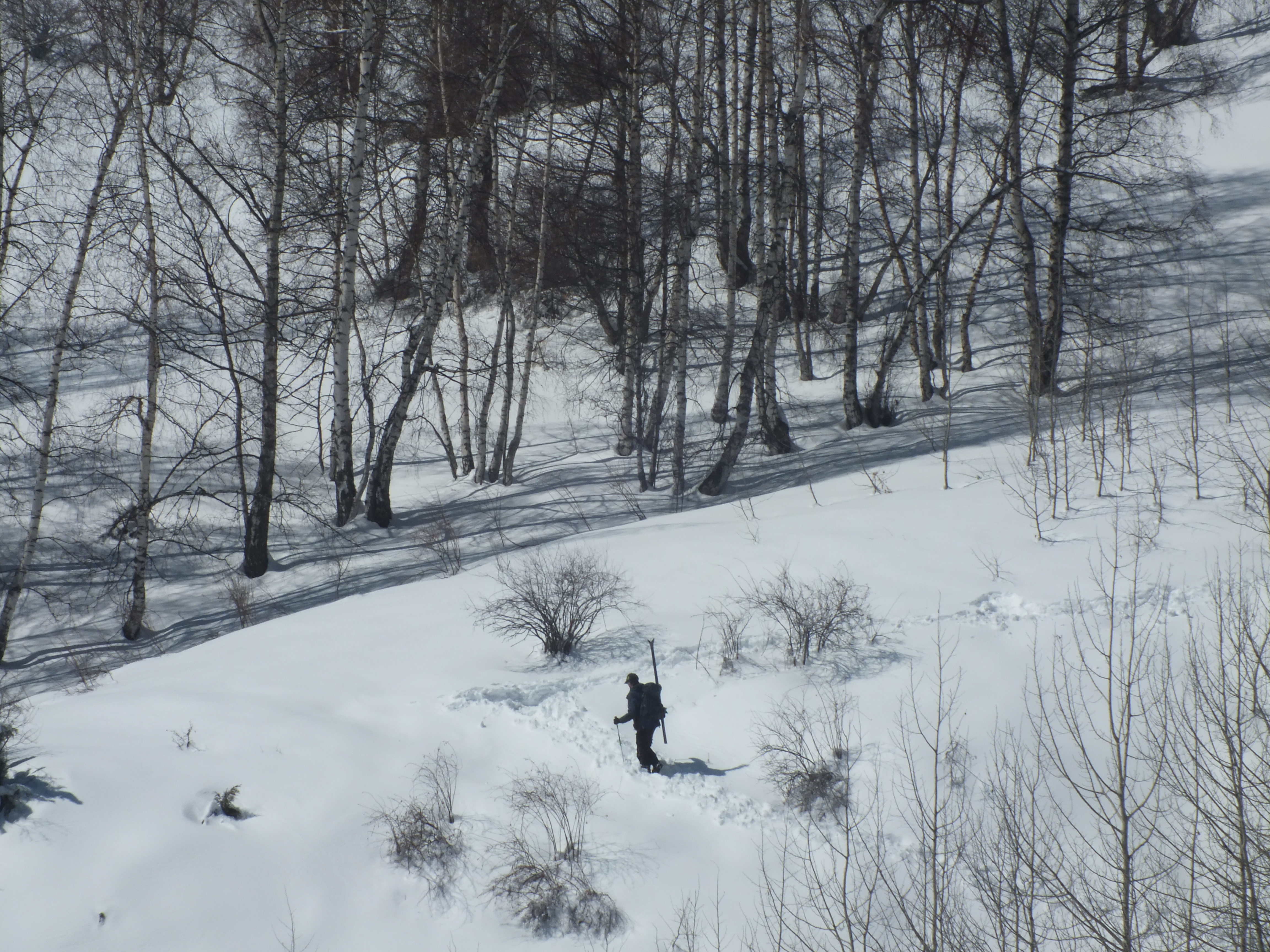
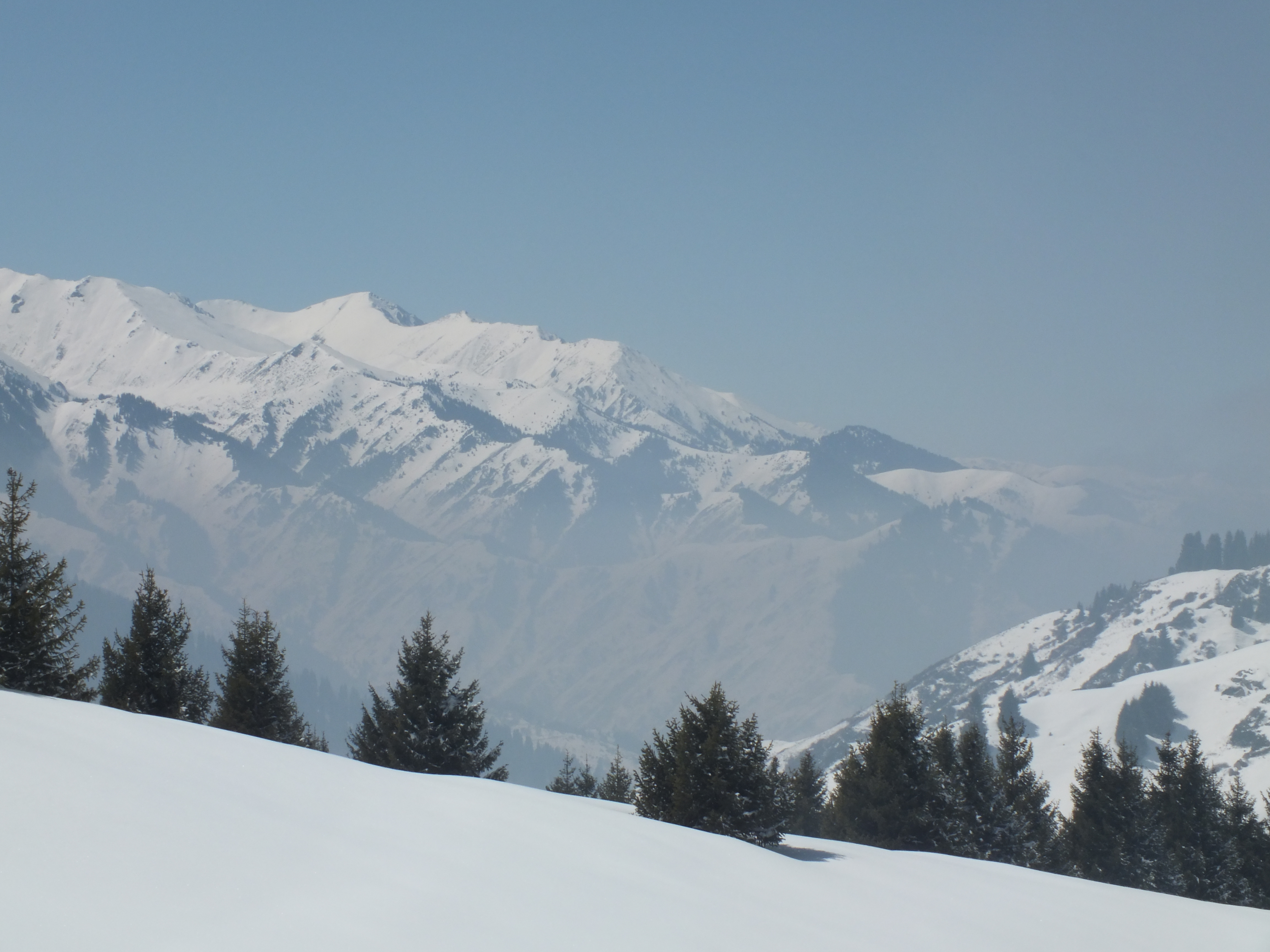
Up in the mountains, the sky was the most intense blue, almost dark grey, against the sparkling and blinding snow. The birch forests loked like something from a fairytale, branches heavy with snow and icicles, while further up fir trees huddled close together. Each day the sun grew stronger and our feet sank deeper and deeper into the snow. We passed a man carrying his skis up the mountain, and a surprisingly large number of bare-chested men walking in crampons – fewer clothes seemed to be the way to go. The weather was pure and intense, and the power of the sun felt stronger than in any other place I have been.

Going down, the tracks often turned into slides and we tobogganed down on our coats where we could. It was so much fun!! We finished our longest walk in the public baths in Almaty, where we circled between the Russian banya, Finnish sauna and Turkish steamroom. It got rather hot, and we probably should have followed the dress code of the venik woman, who wore a jumper and balaclava while she beat customers with branches of birch. But by bedtime I felt completely serene and strangely energised.

Standard