I arrived early for the 48 hour train journey to Novosibirsk and waited on the platform with a line of grannies whose wiry grey hair was stuffed into headscarves and their mounds of plastic bags tied tightly with string. The door of the train finally opened and the provodnik stepped out, carefully inspected our passports, ticked our names off his list, and slowly, one by one, let us board.
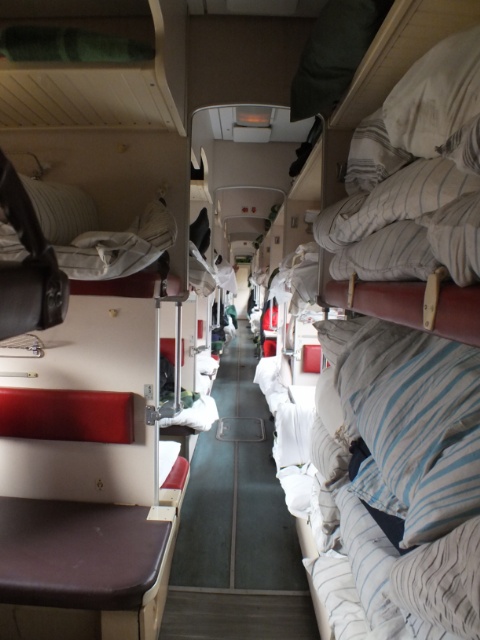
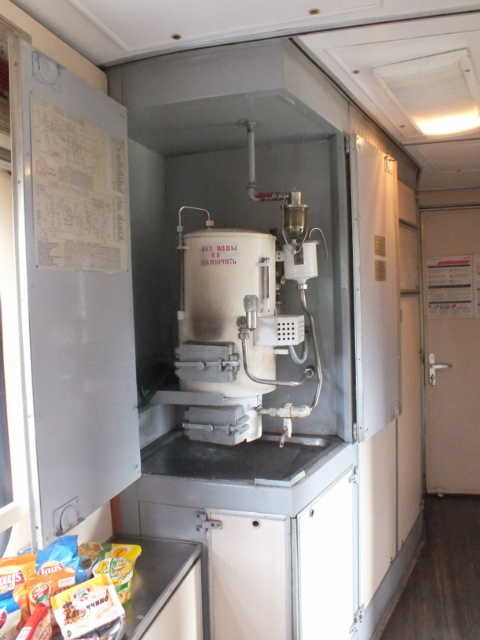
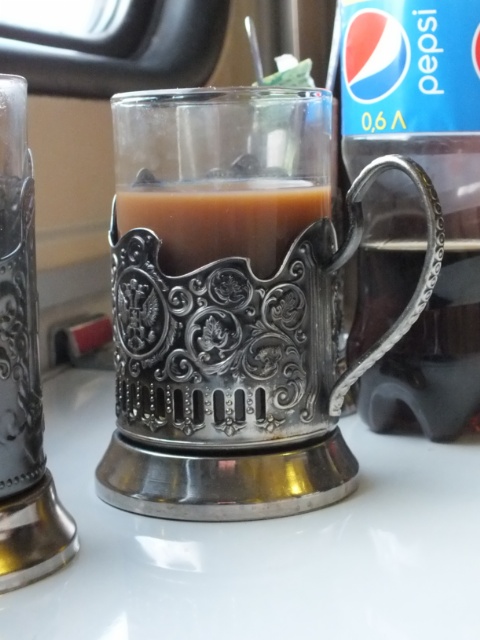
A 3rd class platskart carriage has 54 bunks arranged in groups of 6, with an open corridor the whole way down. At either end is a toilet which opens straight onto the track, and a metal sink with taps that only drip orange water from rusty screws. By the provodnik‘s compartment at one end is the samovar for everyone’s tea needs, and he will lend out cups and cutlery or sell crosswords and pot noodles.
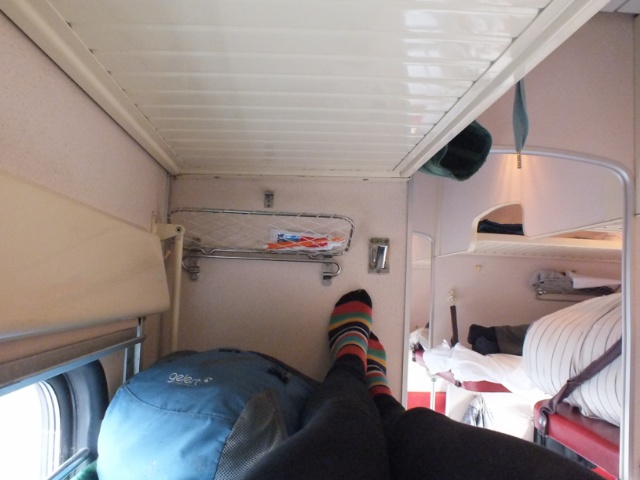
This is what the Trans-Siberian Handbook has to say about my seat: “Avoid berth No 38 at the toilet/smoking area end of the carriage like the proverbial plague.” But I found it a rather convenient spot, off the tea route and with good access to extra windows. It was an upper bunk bed in the corridor, just below the luggage rack and with enough room to raise your head and squeeze in, but not enough to actually sit up.
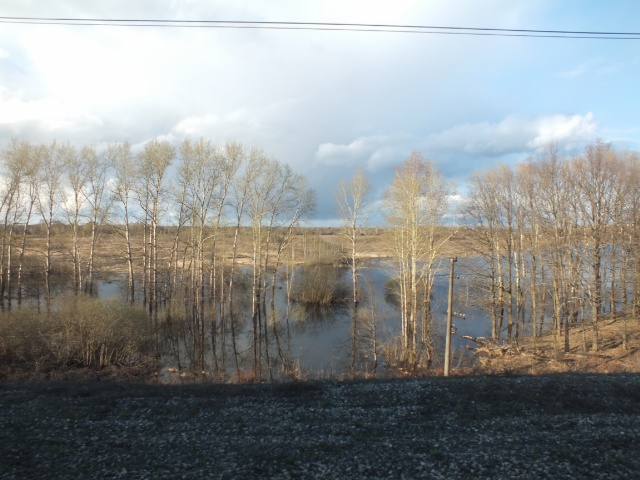
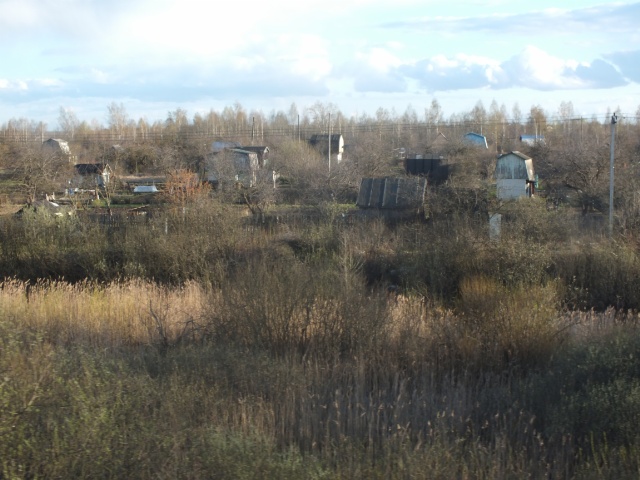
To begin with I sat by a group of bored soldiers, hair trimmed to reveal every pimple on their scalps and yawning their whole journey. I made sure to be interested in the landscape outside. Hour after hour of the same forests and lines of silver birch, with the occasional village, swamp and freight train, made it feel as though the train wasn’t moving anywhere.

After the soldiers came an inquisitive man who, on discovering I was English, announced this to everyone nearby, who all nodded wisely. We chatted, as far as my Russian allowed, about the standard train journey topics of conversation: where are you from, do you like sport, what do you think of Russia, what’s London like, where are you going, how much is it costing you? By the first evening, the men were miming all the Australian animals they could think of.
The following morning I woke up to find Russia’s new national kickboxing champion sleeping in the berth below me. Opposite us were his trainer and father, and the usual conversation took place. Then the champion’s father phoned up his nephew who spoke English and passed the phone over to me: he was in the middle of working out (it was mid-morning for us but 2.30pm for him, wherever in Russia that placed him) and his shoulder ached, but he wanted to know if I actually was who I said I was. When I had convinced him that I really was English, he told me all about his wedding and how he had enjoyed it so much he wanted to get married again.

A few more rainy hours of forest later and I suddenly heard unmistakeably English voices boarding the train. They turned out to be students from Kazan on holiday. By this time the kickboxing champion and his gaggle of adolescent fans had plucked up courage to ask questions (the usual), and then we all started listing as many Garry Potter characters as possible. New Russian names appeared such as Neville Longotton and Bezgolovina Nick, and I was, to general astonishment and ridicule, able to produce Bertie Botts Every Flavour Beans. Afterwards, it was the Russians’ turn to teach us a card game which only the Russians seemed to understand, and so each English player picked up a Russian assistant to play their hand for them.
And somewhere outside in the black night, we passed the tall white pillar marking our entry into Siberia.
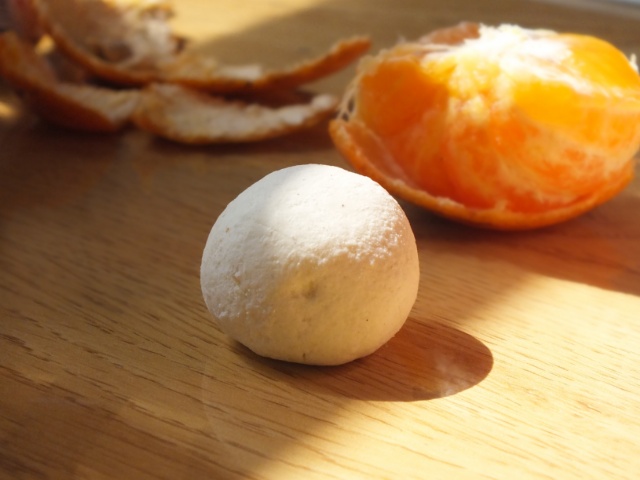
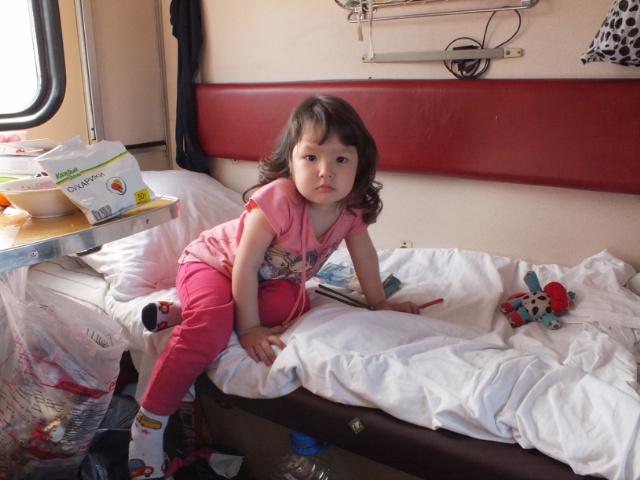
Next morning, a young woman who had boarded the train with her children the day before invited me to share her table. She began, shyly, to make conversation in surprisingly good English. She had come from Bishkek where she lived with her Kyrgyz husband and was going home to Yakutsk, where her parents had moved decades ago to work in the diamond mines. Her whole journey was 6 days, with a three year old and six month old baby. We chatted about yoga, I showed her photographs of Europe, and she gave me kurut, a traditional Kyrgz salted milk snack which looked like a bonbon but which tasted surprisingly pleasant. She was 23, and told me about wanting to visit the Kyrgz mountains and travel, but just looked at her children and shrugged. I agreed to come and visit her in Kyrgzstan, and we would see the country together.

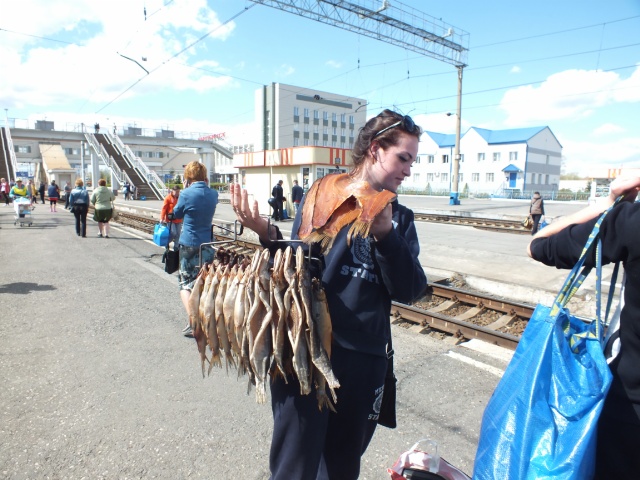
The train passed through the Barbara Steppe, hundreds of kilometres of swampy ground interspersed with patches of trees. At a station in the middle, I stepped off the train and bought a smoked fish from the ladies on the platform, who carried them strung by their eyes on a kind of metal coat hanger.
At last, we arrived at Novosibirsk, the capital of Siberia and one of Russia’s most industrial cities. I said my farewells to the train and made my way to suburban hippy land, a foretaste of my life in a Siberian village I think.
 Km. 0
Km. 0 