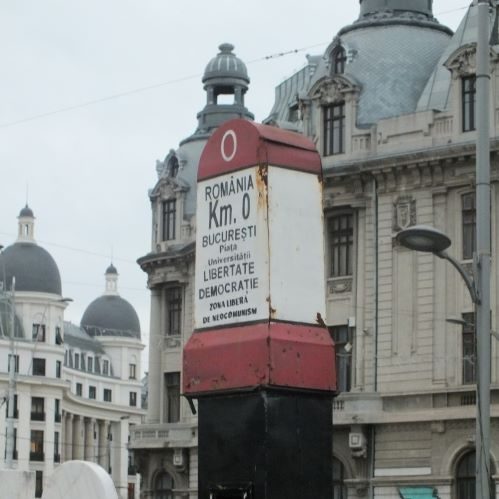
I and my Red Bench housemate Sylvester, a Russian-speaking, philosophising French poet (undertaking a very feeble attempt to stop smoking in an effort to remove superficial, inessential things from his life), were persuaded to go and volunteer in the Altai Republic. The Altai mountain range extends across southern Siberia, China, Kazakhstan and Mongolia. It is one of the poorest parts of Russia, has no railway, and is only just opening up to tourists.
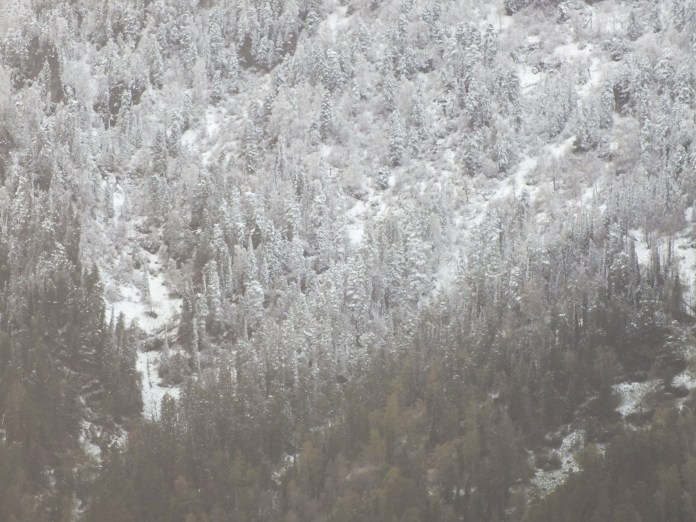
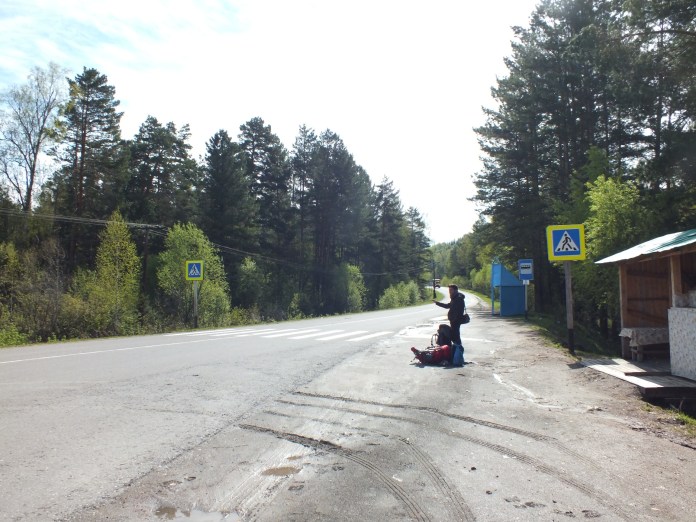
Since Sylvester’s budget for three years is almost the same as mine for three months, spending money was not really an option. Instead we hitchiked and spent three days walking along roadsides, picking up lifts in dark gleaming cars and rusted vans with no seats, also picking up the occasional old man in need of a chat.
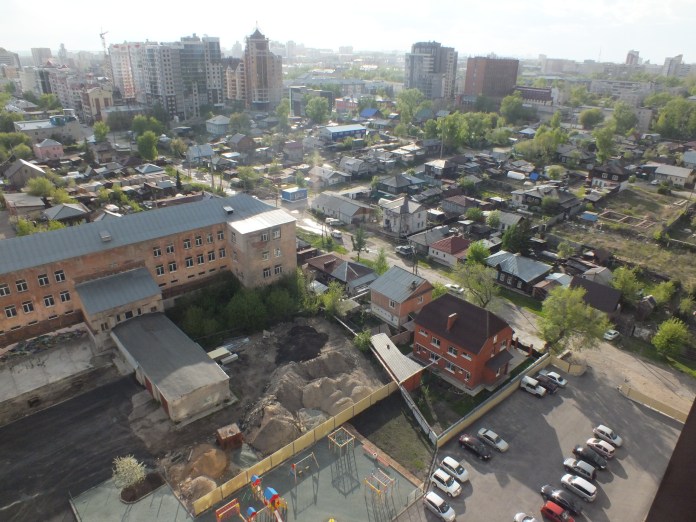
The first evening we were dropped twelve kilometres outside the city of Barnaul and went to stay with a couple, Anton and Liza, friends of a friend of Red Bench. They live in one room on the sixteenth floor of a new turquoise apartment block; they have a tiny bathroom without a door, and the flat’s one tap is in the bath. We were shown their belongings, which included a bazuka, blueprints for a nuclear bunker from 1984, and a mentos tube containing seven and a half years’ worth of toenail clippings. After dinner, we all trooped to Anton’s mother’s flat in the next door block, where we sat on the balcony, smoking and drinking tea, and then were taken to another flat where we were expected to wash.
We drank beer and ate salted fish until midnight when a friend arrived to take us for a drive. She turned up the music until the bass thumped through the entire street, and we tore up and down Prospekt Lenina. ‘What can we show someone from London?’ asked Liza. Administrative buildings, broken fountains, an illegal brothel, gangs of gopniks (‘the Russian equivalent of chavs’), and more administrative buildings. Ten litres of beer and several trips to alleyways later, we returned home, crammed into the bathroom for a final cigarette, and pulled out the bedding and briefly slept.
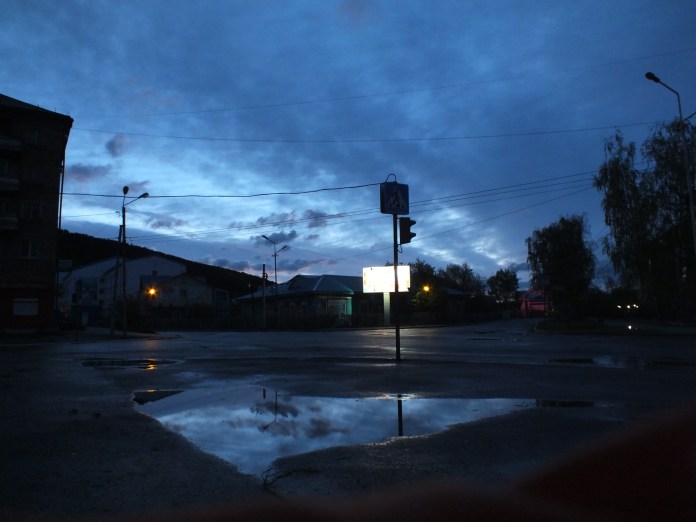
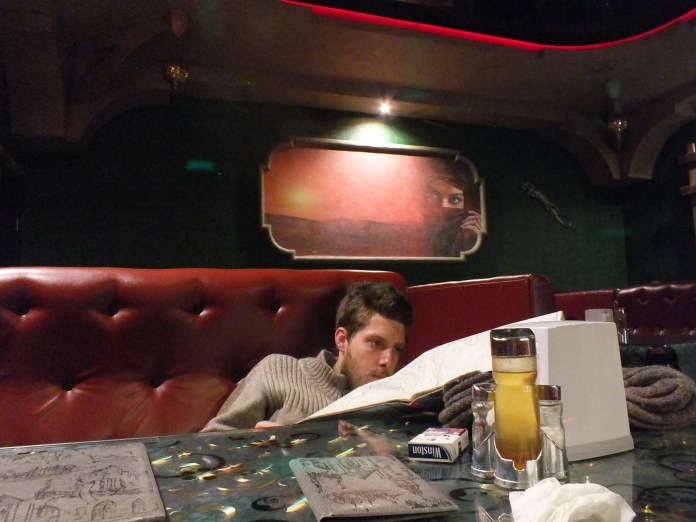
The next morning, after a long search for wellington boots without heels, and after a breakfast identical to the previous two dinners, we set off towards the River Ob. A warm wind howled and blew furiously – it was wonderful. To begin with we didn’t have much luck hitchiking, since we hadn’t got the right pose and it looked like we were selling things, but by 10pm we finally made it to Gorno-Altaisk, capital of the Altai republic. A cafe full of Turkic Altai faces was still open, so we hung around until closing time. Then we wandered through the pitch black streets until it started to rain, and took shelter under the porch of a shop. Out came the sleeping bags again and we stared at the crossroads, where a smiling politician gazed down on us; a tree, lit up by traffic lights, had turned into a clown-faced Pinnochio, gobbling and chattering in the wind.
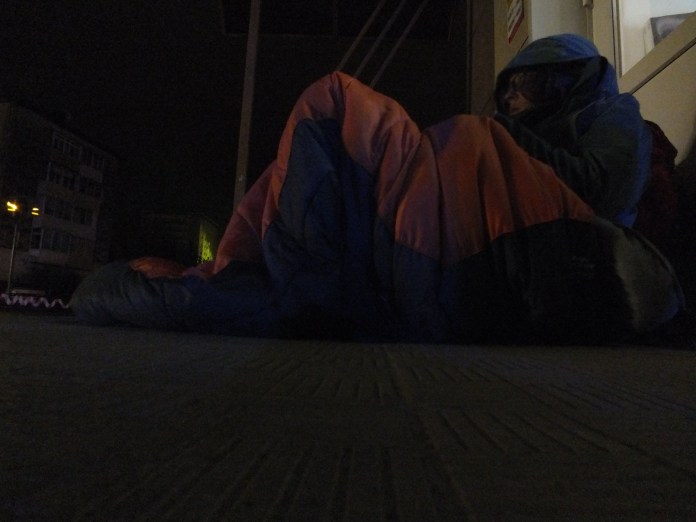
Drunk men would walk past, stop, stare at us in a confused way and hesitate, before walking away or staggering forward. I had some sense of self-preservation, but Sylvester was perfectly happy to sleep; when needed he would politely explain that we had no money and give them directions to the bus station, while I tried desperately hard to stop myself laughing out loud. As the people began to disappear, I was left with only the wind and the ever more animated and cheerful Pinnochio. Gradually it grew light and the outlines of mountain appeared through the cloud. We set off at 5am, just as the drunk men started returning, and were soon picked up by a Ukranian man late for work. He invited us to his garage for Israeli coffee, we were introduced to his father-in-law, and discovering his shop had no electricity, he took us home. Sweet strong coffee couldn’t have come at a better time.
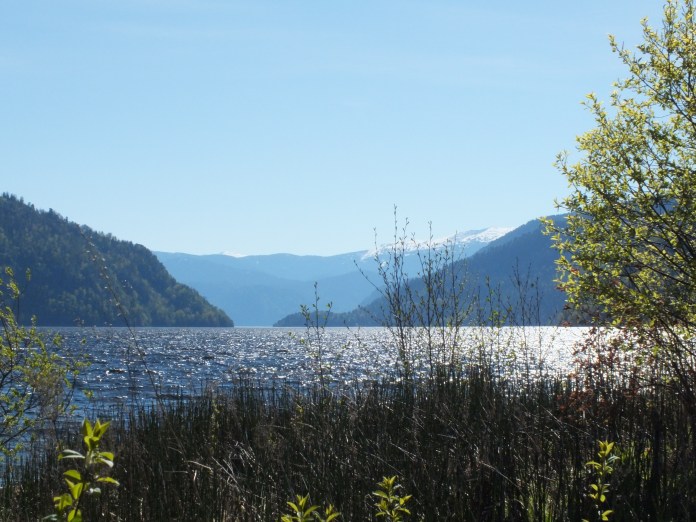
We passed through smaller and smaller villages, the cars getting fewer and fewer, until our final lift to the village at the end of Lake Teletskoe. The couple was silent and the wife looked especially glum. ‘It’s a dump’ was the only thing they had to say about the village. When we arrived it was just beginning to rain, and we sat in a cafe for three hours watching wild horses graze outside as it switched rapidly between sunshine and thunder and hail.
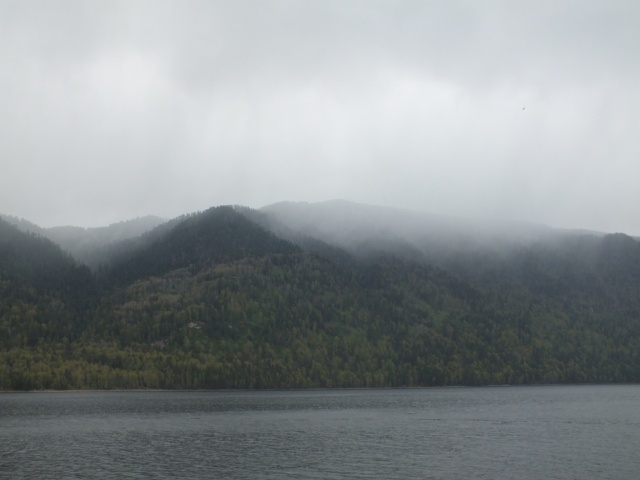

At last a small boat sped towards us, and we rode back across the lake for an hour until we reached a small peninsula, hidden behind which was a little jetty and a cluster of wooden houses at the foot of the mountain. It was a tourist eco-village that takes on a few volunteers alongside the summer staff. And it was paradise: only mountain behind and lake in front.

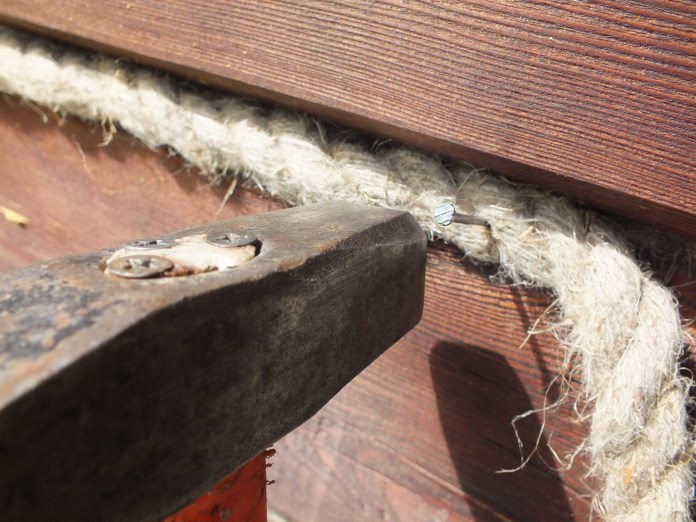
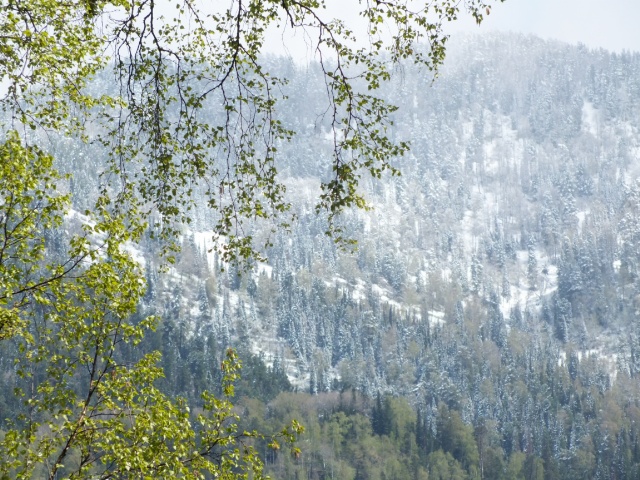
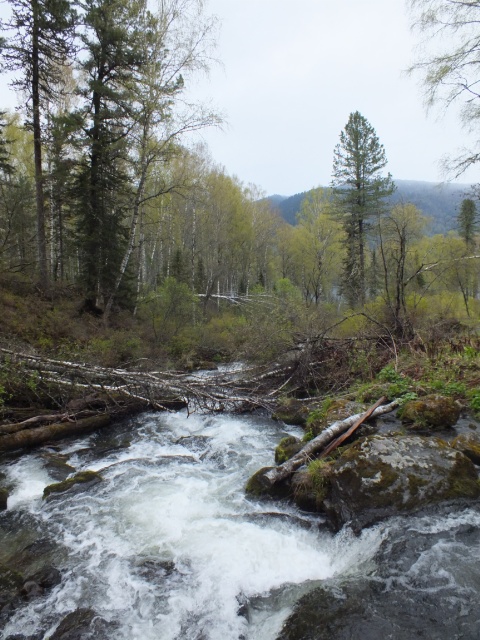
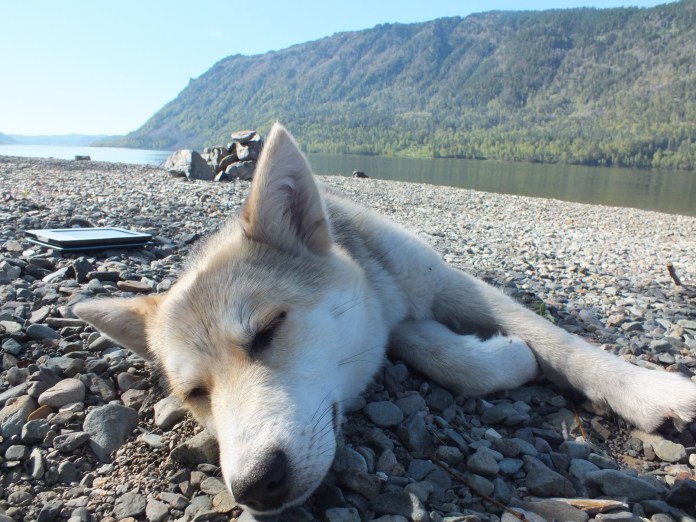
Lake Teletskoe means Golden Lake, and is one of the largest freshwater lakes in Russia; its water is sacred to the Altai people, but more recently has acquired New Age fame as being the gate to Shambala. The air is pure and the water is completely clear. Every morning I drink and wash in the stream which runs down from our waterfall. All you can see is forest, a few snowy mountain peaks in the distance, and water. We live in a small attic room above the banya, so every evening the rooms fill with the smell of birch. Glancing into someone else’s room, I saw animal skulls, knots of driftwood, crystal rocks and stones from the lake, and the wall was hung with rifles. All I have to do for this is hammer a few nails into decorative rope or peel some potatoes.
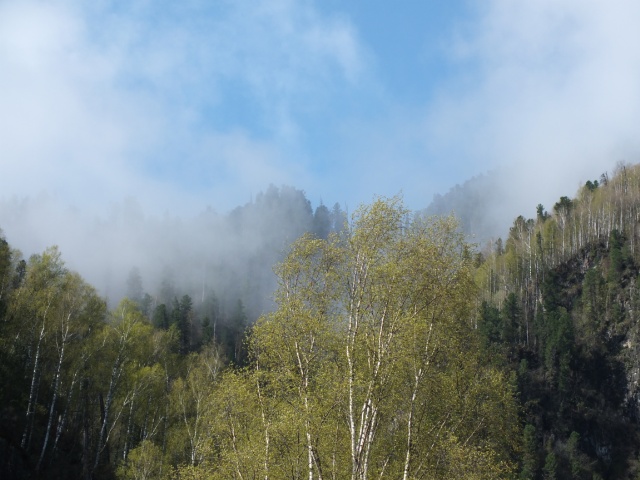

But there is nowhere to go: we are stuck on this little peninsula, the steep mountain behind forming an enormous wall that is impossible to walk or climb. I can’t help thinking it is just like an earthly paradise. Or perhaps it’s more like purgatory. Having crossed the great lake we walk through the forest, and returning, we remove every piece of clothing and inspect ourselves for ticks. This allows for a healthy dose of daily introspection.
It’s not a question of whether you have any ticks, but how many are on you, have you been bitten (do you want to go to hospital or risk it), and are there any still on you. I have been bitten at least once, and the following 72 hours were spent in a mild panic and state of hypertension. But I didn’t die and I didn’t go mad. Though I’m not quite sure how I would know if I had gone mad or how anyone else would know. In fact, just the paranoia about ticks is enough to drive anyone mad.
 Km. 0
Km. 0 