After the heavenliness of the east coast, I needed to see Tasmania proper. Real life and more typical landscapes and so on. Also, rain was forecast and I didn’t want the fragile illusion of paradise shattered.
My first lift from ‘the village’ was in a bright yellow camper van with dream catchers, from a cheerful tanned blond family as Ozzie as you can get. Then at St Helens I struck gold: a lift straight to Devonport, further than I’d ever hoped to go that day. It was from an Englishman who’d taken a detour (just a little one) after finishing a film lighting job for a commercial for the Ashes – Hobart was standing in for England. He had great stories of skydiving and living in a camper van on Bondi beach while being an extra at the Sydney opera house. We stopped off at a cheeserie for tasting, then he left me by the side of the road. Third item lost: my nice little pink water bottle with filter.
30 seconds later, I was picked up by a mother and daughter. ‘We don’t usually stop for hitchhikers,’ she kept repeating, and the journey passed like a job interview. But they gave me lots of recommendations and went out of their way to take me to Penguin.
I’d wanted to see penguins in Penguin, and I saw plenty: rubbish bins moulded with penguins, penguin murals, penguin logos, penguin barber and ice-cream figures, and a 3m tall fibre glass concrete penguin, the town’s pride and glory. But no actual penguins – you had to go elsewhere for them. I did find a shop giving away spinach for free though.

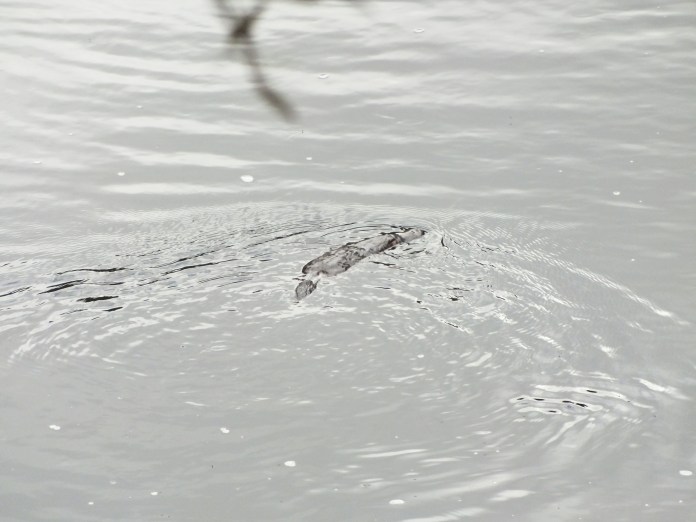
Looking for somewhere to camp, I got a lift from a builder just returning from a job for his nan, who in return had made him a massive shepherd’s pie. I had to hold it the whole way, gazing at the warm, crispy golden crust, the smell wafting up so, so temptingly. He suggested a camping spot: Fern Glade, a quiet spot along a river where you have one of the best chances of spotting a platypus. I did indeed see two, bills exploring the smooth water before their sleek slimy bodies dived under again. But it was an eerie place, an echoey valley given a sinister feel by the distant industrial sounds and the bird calls which sounded creepily human. I pitched my tent behind a block of toilets and tried to ignore the quiet thuds and pants of wandering pademelons.
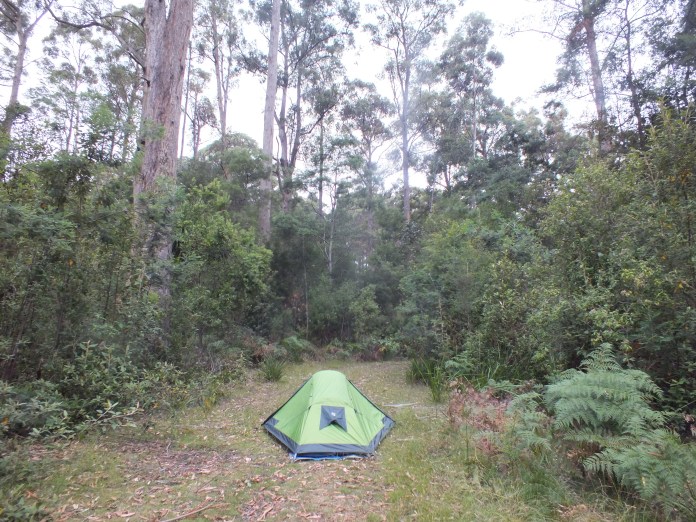

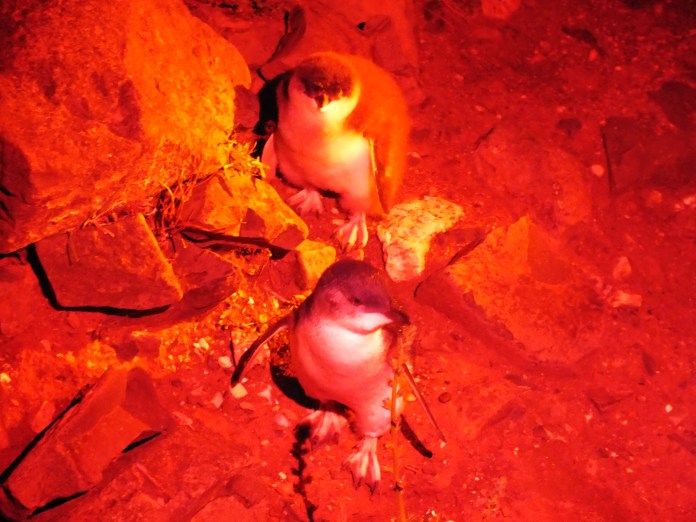
It rained all night so the next day I caved in and went to a hostel. Burnie is extremely small and quiet. It markets itself as a crafty place, but there’s not much to it. But at last I got to see some penguins! They’re tiny creatures, about the size of a rabbit, and every evening the chicks wait around for their parents to arrive home and feed them. The adults, however, seem to have little interest in their children, and just sit on the rocks for half an hour or longer, letting the chicks squawk and fight among each other. Perhaps they’re trying to toughen their children up.
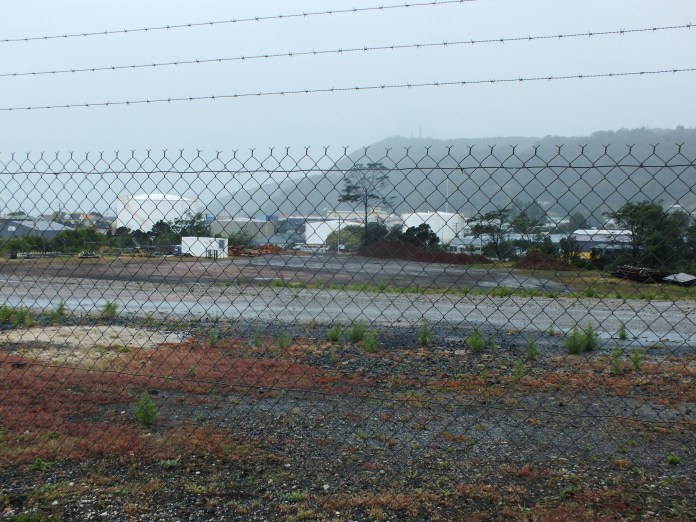

The next day I went on a drive with an English ecologist, who showed me how many of the plants and birds around are actually British. The whole landscape and ecology has changed so much in the last three hundred years. We stopped off at an aboriginal cave, a 50 foot cleft in a rocky outcrop. There are three major headlands in that area, and the story told is of three older children who were left to look after their younger siblings. The older children got carried away playing and allowed the younger ones to wander off and die. When the parents returned, they cast out the older children. The three children can still be seen in these three outcrops. Overlaid onto this story was the geological story of the rock – just another story to add to the rich history and readings of the landscape.

Finally we reached Stanley (now achieving even more local fame as a set for the Hollywood film ‘The Light Between Oceans’). It is very quaint, with several chocolate shops and B&Bs advertising ‘colonial accommodation’. The Nut, an extinct volcano (and another outcast child), was very bizarre, and, jutting out into the treacherous Bass Strait, was of course extremely windy (where isn’t it windy on this island?).

The ecologist left me outside Stanley, bidding me farewell to the sound of sky larks. And that was as far as I got along the north coast, the most populated part of Tassie. It was grey and quiet, even though it was in some ways busier than anywhere else I’ve seen here. It felt a lot more connected to the mainland, both in terms of trade and tourism. Waiting on the roadside, with low heavy clouds overhead and not a building in sight, I felt closer to the world than I’ve felt for a long time.
 Km. 0
Km. 0 