
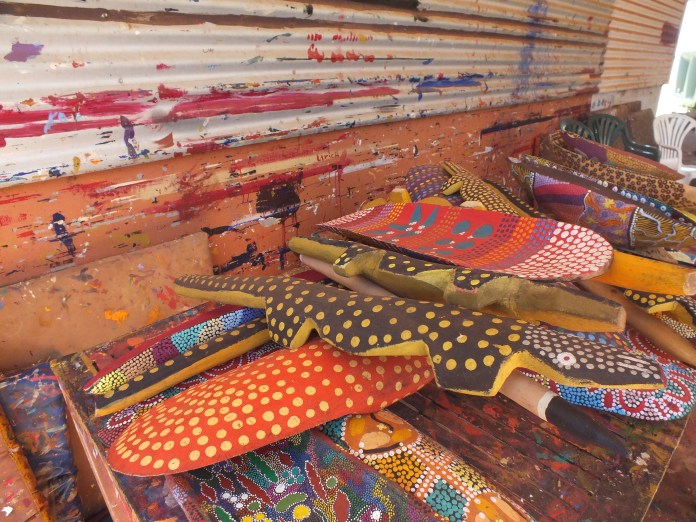
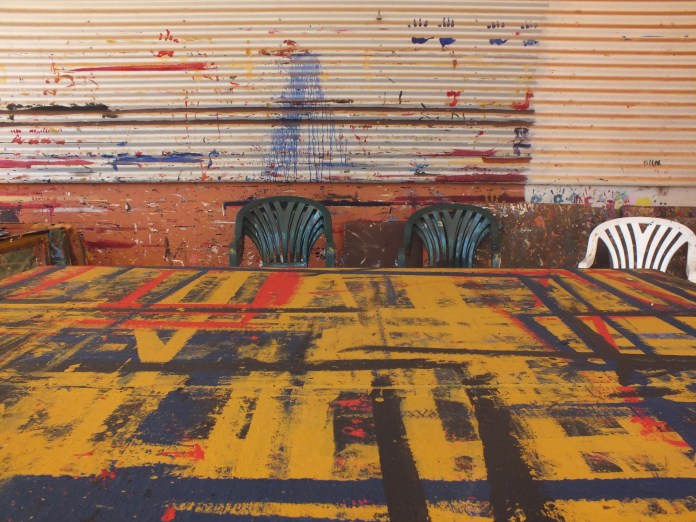
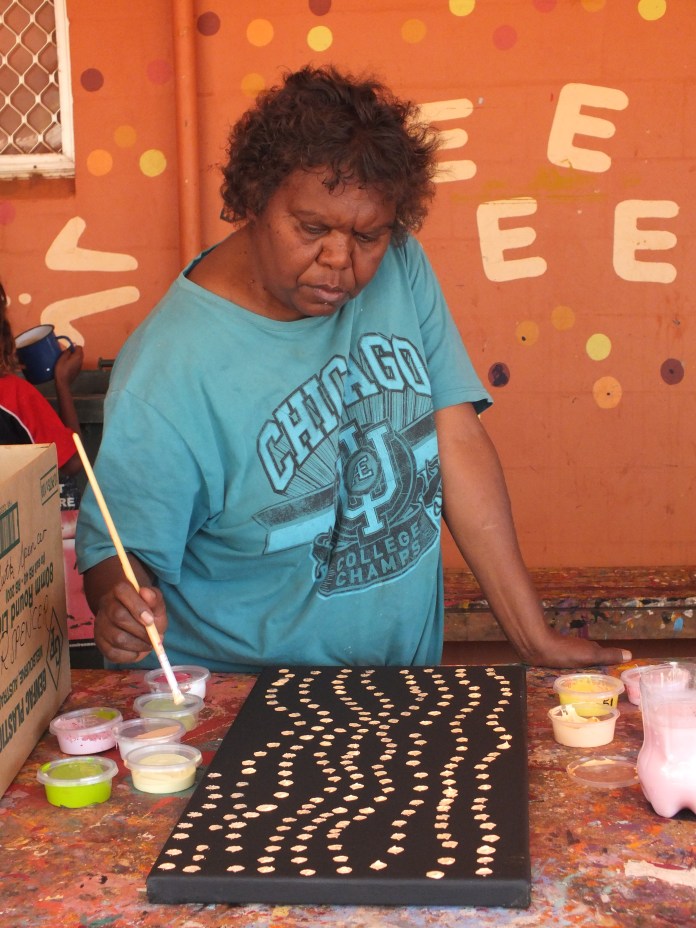
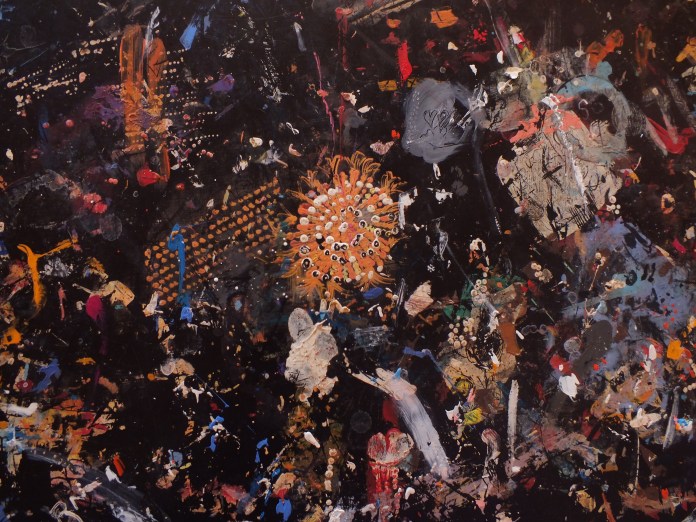
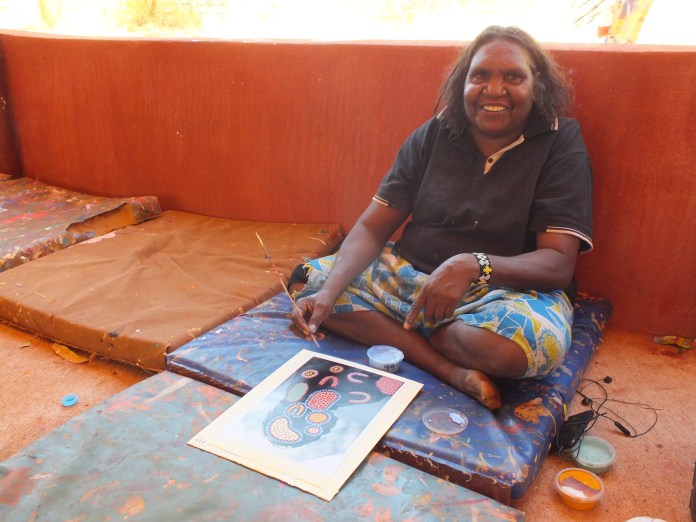
The aboriginal town of Yuendumu is well known, between its brawls and occasional riot, for its art centre. As with almost every service or organisation in the community, which appear to be run exclusively by white people and makes the town seem (to an outsider’s eye) divided into white providers and aboriginal users, this art centre employs young white Australians and welcomes volunteers from around the world. They need as many workers as possible because the scale of production is practically industrial. Anyone in the community can come and paint, and on the whole it seems to be a way to earn money rather than the practice of a traditional culture. The works are usually traditional, depicting a story or dreaming from the land around, yet sometimes it is the non-indigenous staff who teach the aboriginal artists how to paint a particular image. It is an intriguing collaboration and meeting of cultures, and often seems driven entirely towards economic success. And they are very successful: every day we sent paintings off across the world.
In the week I spent there, we primed and prepared canvases, made up pots of paint, tagged and unpicked paintings, processed artworks, and tidied the gallery, all day long. But much of the work was fetching cups of tea for the artists, handing out sandwiches, moving pots of water and cushions for them, or microwaving their lunch. I felt uncomfortable doing a lot of this: was this demanding behaviour an expression of long overdue entitlement, or laziness, dependence, or even resentment? There were big cultural differences on every level, even between our western expectations of politeness and friendliness, and aboriginal ways of communicating and socializing. But my time here was too fleeting to get to know people, to go beyond superficial encounters and cautious eyes. It was, nevertheless, an extraordinary and rewarding week, and among the most magical, dramatic and strangest I’ve ever experienced.
Next door to the art centre lived an ancient lady called Rosie. She was frail and thin with wild white hair, and would stand at the fence watching us. One afternoon she beckoned me over, gripping the fence tightly, peering through the wires, and pointed upwards towards the branches. She told me to listen, and we stood there looking at each other and listening to the birds over the barking of dogs and music from a distant radio: ‘baby bird… there… not that one – that one… baby bird – there… there…’
The first night I arrived, I was taken to visit her by Juliana, a Columbian woman who had an amazing skill for getting on with everyone. It was dark and Rosie was sitting outside her house on a metal box. Inside I saw bare painted concrete walls and no furniture besides the metal sink. Around her neck was a necklace of seeds and a big wooden cross. She started talking, moving between English and Walpiri, telling us about her old land, the missionaries, and the family that had left her. She wanted us to know the Walpiri words for everything and kept translating for us. ‘I’ll give you a skin name’ she said to me. ‘Naparrula’. There are 16 skin names, and they form a very complex system for determining who you can marry.
Rosie talked and talked and talked, with her sandwich uneaten in her hand. We tried to get her to eat, but no matter how much she insisted ‘I’m hungry’, the sandwich lay uneaten in her hand. She wouldn’t let us go. She grabbed hold of Juliana’s wrist with one hand and her breast with the other. ‘Lampurna, lampurna’, she repeated, taking hold of her own breast. ‘Milk, same word. We all women, black and white’. As we tugged away, Rosie pulled Juliana’s wrist harder and looked up. Her hollow face was lit on one side as though in a film. ‘Pray for me’, she croaked. She looked up at us, and let us go.

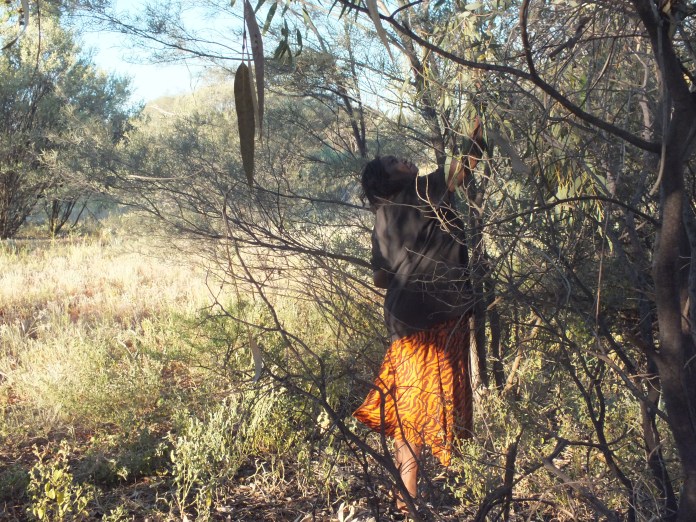
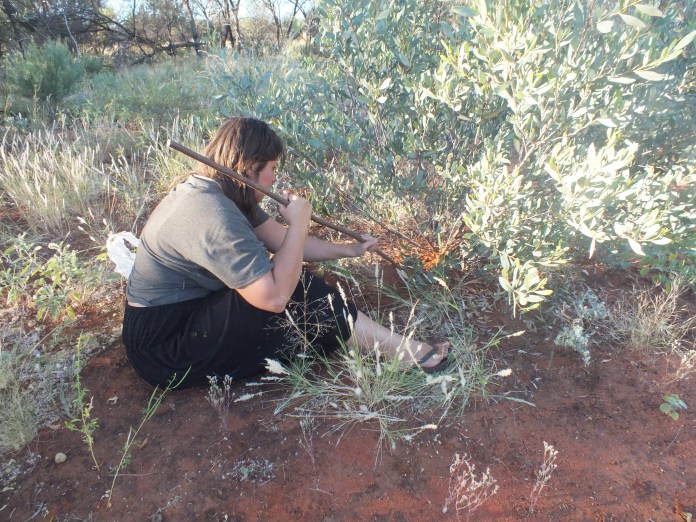
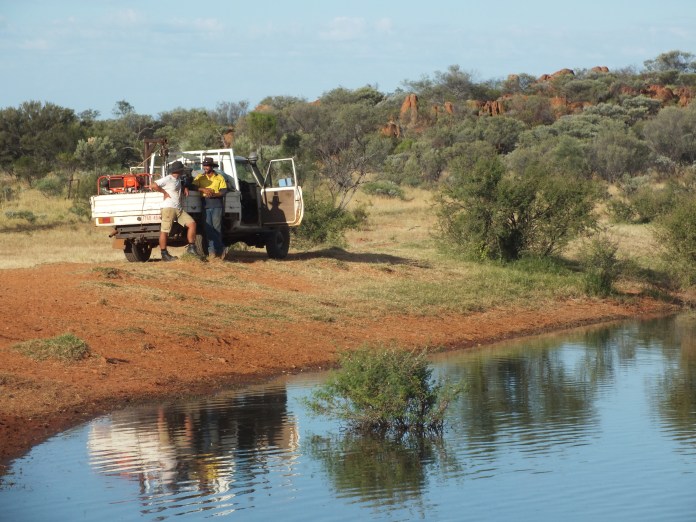
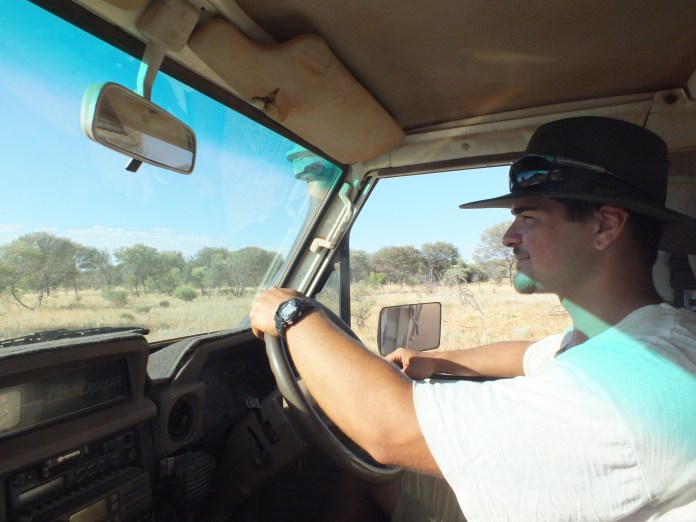
It was the older women who were the most open and generous. Dorothy was a healer, and she took us hunting for bush tucker. Inthe evenings we drove around in the art centre’s ex-army land rovers, whose wooden benches in the back were cushioned only by the dogs that piled in with us. Off the roads, we started wandering through the bush. We looked for shells of insects underneath bushes, and started digging among the roots of the wittchety bush for grubs. We searched the vines in trees for the elusive green fruit of the bush banana. Suddenly, walking past one big tree we bumped right into gnarled pale grey balls hanging from the branches: bush coconuts. If you crack open the coconut there is a large sweet juicy worm you can suck out, some pink fly eggs (a bit of extra fibre), and the hard white flesh of the coconut which is slightly bitter.


Another day, while we were working in the gallery, a wailing started next door. Someone was crying. Within seconds others started joining in, shrieking and moaning, hugging each other, shaking hands, tears flowing freely. Painting immediately stopped and everyone got up to join the crying for the rest of the day. That afternoon the sounds of wailing and moaning gave the town a haunted atmosphere. A few days later, as we drove out of town, we passed a sorry camp: a collection of mattresses lying outside on the sand where people were sleeping.
Among the volunteers at the art centre was an Irish ceramicist. It was suggested we go out and find some clay to have a pottery class, so, taking Dorothy with us, we drove to a dried out creek and started digging in the hard earth. We suddenly stopped. Dorothy was looking very uncomfortable. You cannot remove stones from the ground because they are sacred, but you can take away earth. We weren’t sure about clay. Nor was she, it seemed. Although she said it was alright, there was something uncomfortable about the whole thing. But we took the lumps of clay, soaked, strained and dried it out, and ended up with a beautiful reddish brown clay. The plan was to fire it outside in a bonfire the following week, so I’ll have to wait and see how it went.
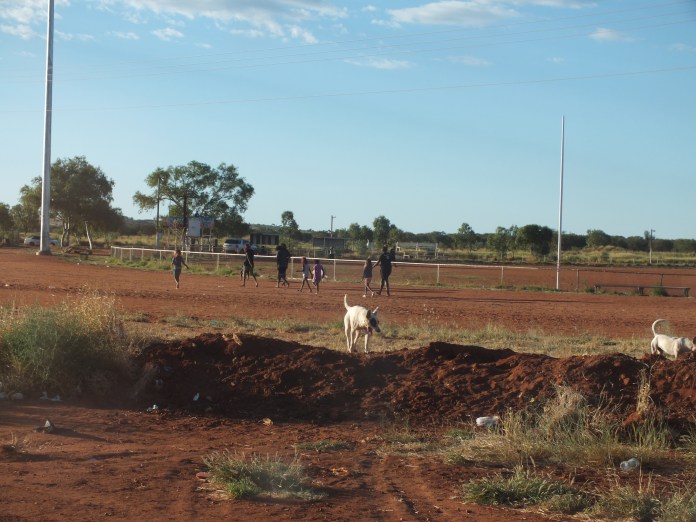
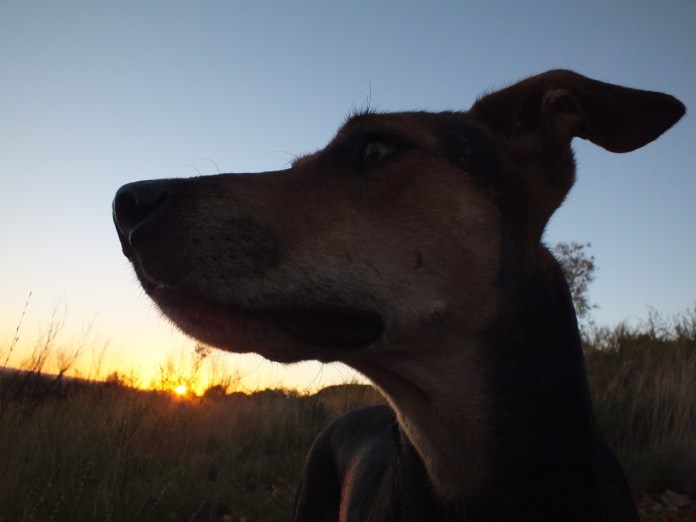
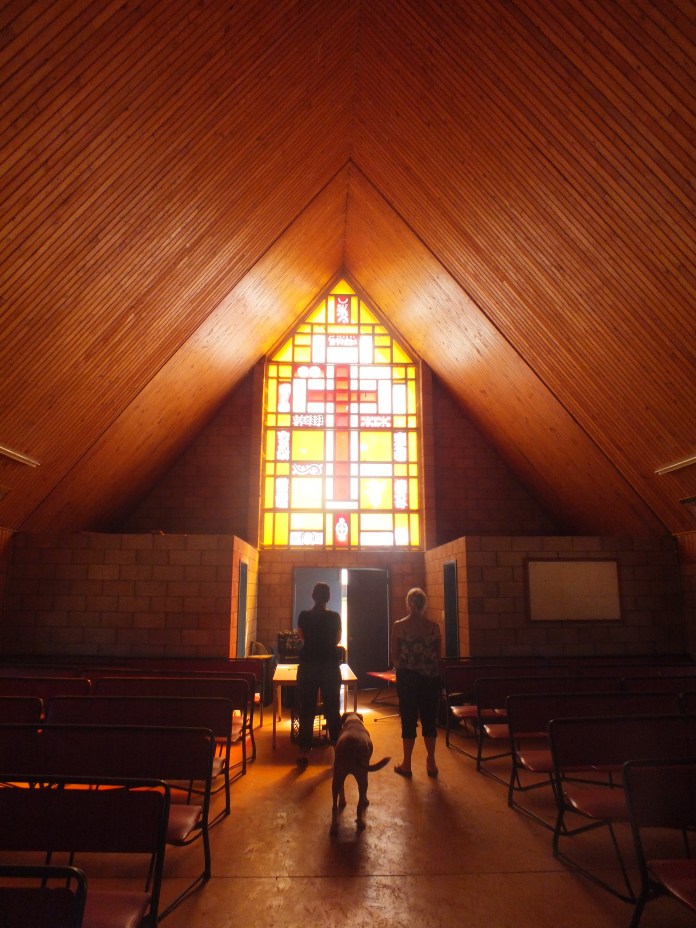
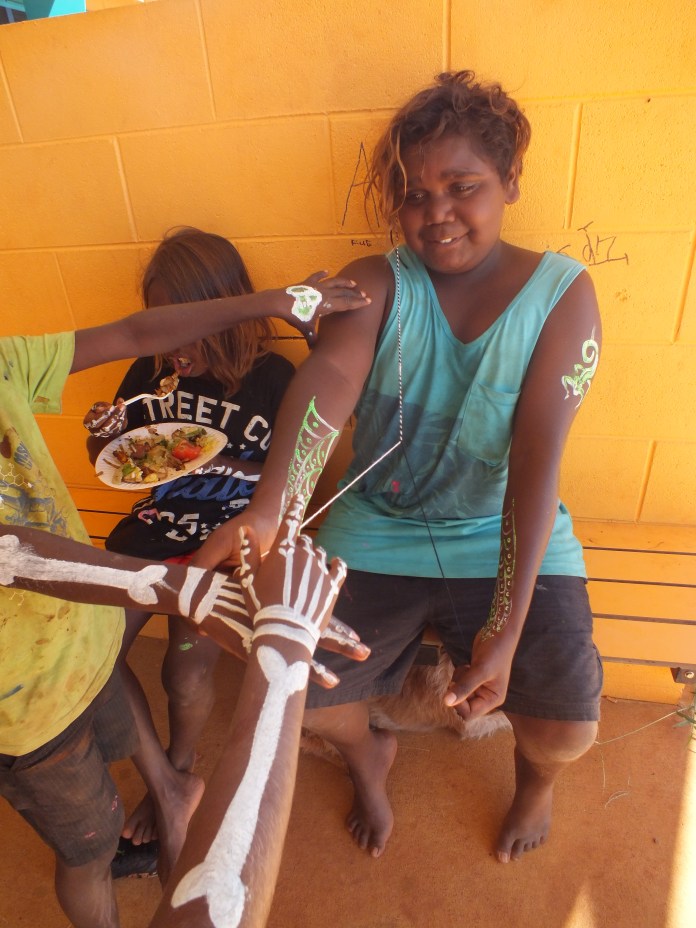
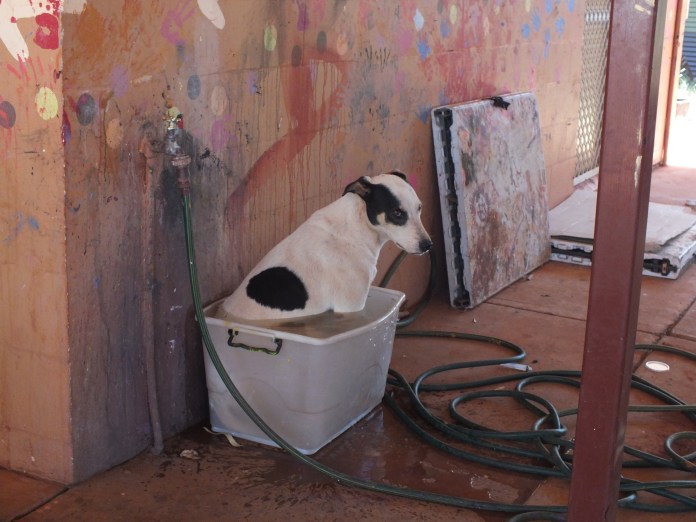
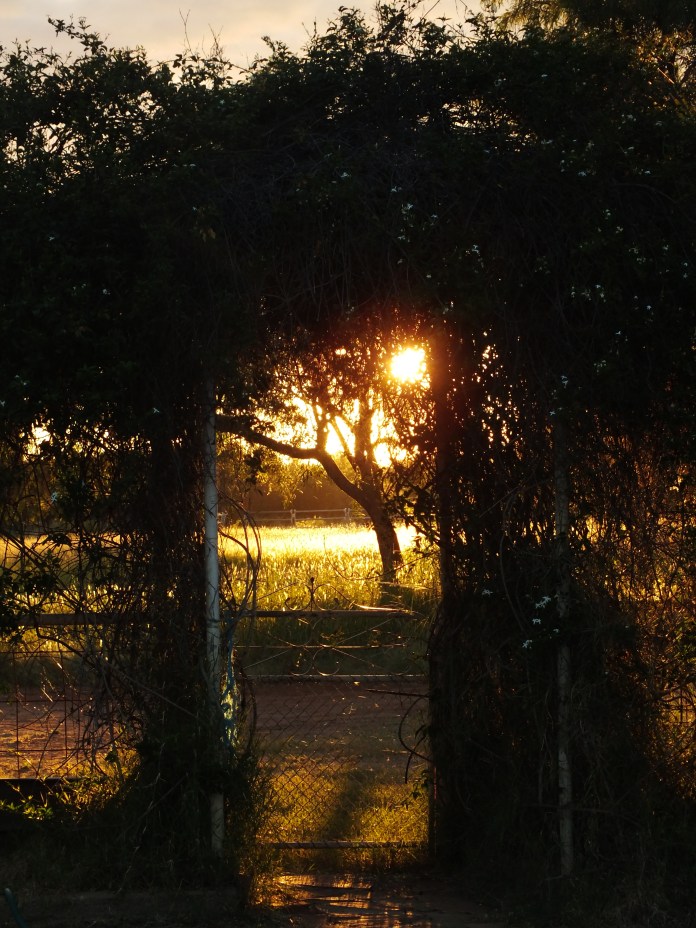
The town itself was dusty and dirty but had a great sense of community. Passers by would engage you in conversation, even if their dogs weren’t quite as friendly. Every time we walked out our gates and barbed wire fences we would be accompanied by at least three dogs, who essentially protected us from unwanted attention. The dogs went everywhere, even into the old Baptist church with its beautiful paintings and strange faith which combined Christianity and dreamtime. They sat on the paintings which had just been sold for thousands of dollars. They took me through the bush at sunrise, seemingly aware of the traditional belief that if you don’t ask for permission, you get lost. They fought in the dust as we lay on the dirt by a bonfire, stargazing. They had their parties while we had ours, revelling in the illicit pleasure of alcohol in one of the few houses with an alcohol permit. There was Ben the dingo, the most graceful and fastest dog of them all, Rosie, who was unaware of how fat she was and would knock you over in eagerness, and Daisie, who couldn’t go five minutes without a cuddle. And there was Blackie, Kira, Ziggy, Raya, Plummie…
I wish I’d had more time to get to know people, to get to know the culture, to learn Walpiri, to understand the stories of dreamtime in the paintings and the landscape. But it would take more than a lifetime.























 Km. 0
Km. 0 