
Maori legend tells of the great ancestors arriving in Aotearoa/New Zealand from Polynesia by canoe. Over 1200 years later, I’m sitting in the kitchen of a family descended from Uruao, the first man to settle in the city of Nelson. Opposite me sits a large, dark-skinned woman with an intricate tattoo covering her right arm. Her grey hair is pulled back into a loose bun, and she would be the epitome of the kindly grandmother were it not for the fiery words being spat out. She is describing the confiscation of her iwi’s (tribe) sacred land by the Church of England, which used it to build an orphanage where ‘malnourished’ Maori children (including her father) would be brought. Twenty years ago, seeing the land finally returning to the iwi, the former pupils, now white-haired, wept. Today the orphanage is rumoured to be haunted with the sound of children crying.
She goes on to describe how her father fought in the First World War, but, unlike other pakeha (non-Maori) soldiers, received no farmland on his return. The kitchen in which I am sitting is his family land, handed through the generations. It is reasonably large, but houses three families. Outside, everyone’s children (with Maori names like ‘Tane’, which translates as ‘god of the forest’) play among the chickens and orchards.
The matriarch of this family is feisty, astute and wicked. She’s married to a European and says this is the only way to beat the white man. They continually shout at each other (‘why you looking at me like that?’), but say that the only way to deal with differences and problems is to talk about them – and they really can talk.
She explains the work she does for the iwi as a board member: after the establishment of a special body in 1995 to deal with Treaty of Waitangi claims, the various iwis put forward their claims for land, repeatedly. Eventually, land began to return to their iwi, piece by piece. Not always the same land, not always good land, but still land. I start getting lost when she goes into details of leases and commercial redress. Once they received this land, they created an iwi incorporation to manage it: a financial, commercial arm of their work funds the other cultural and social arms of the trust. The Maori board members are businessmen and lawyers, and work hard to earn money. Some of the trusts are enormously wealthy, but this one is relatively small – worth a mere $250 million. She describes how the trust gets phone calls from pakeha outraged that their elderly parents now have to pay thousands of dollars for their leases when previously they only paid a few dollars a year. The trust is sympathetic, but it’s not their concern: the commercial arm must operate commercially if it is to survive. It’s harsh, but I can’t argue without bringing up the obvious hypocrisy.
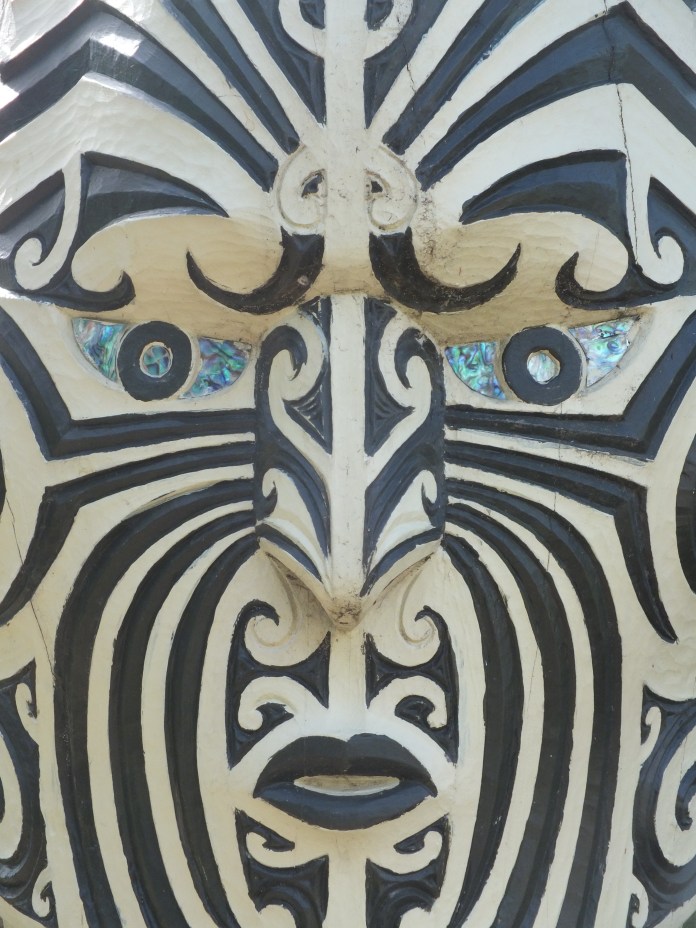
I was taken to the Marae, the tribal meeting ground, and was formally welcomed alongside a group of visitors sent by the government to discuss proposals for a new Maori Land Service. The ceremony was all in Maori and I was pulled through it by holding hands with another woman. We entered and sat on one side of the room. The chair opened the meeting and a man got up to introduce us, after which the women of the local iwi stood and sang. Then someone from the visitors got up and said something, and the women in our group stood and sang. The welcome closed with a prayer, an envelope was surreptitiously handed around the room with money from the visitors, and we were greeted with the hongi, an exchange of the breath of life by touching nose with nose. We drank and ate, and then the real business of the hui (meeting) began. Although everyone could speak Maori, they clearly found it easier to speak in English.
The proposal presented to unify all Maori land services into a single entity is a good one in principle, but the details are controversial, to say the least. Everyone spoke, very articulately, and we broke into smaller groups to discuss specific scenarios. It felt entirely democratic – the way politics should be. Except that all the suggestions were rejected (it couldn’t be government run, and it couldn’t be run be current Maori organisations) and no one could come up with any better suggestions – they just refused to choose between two unlikeable options. The poor man in charge was left with nothing positive. But it didn’t help that he was who’d had to reveal that the iwi chiefs had met and agreed on one proposal without consulting or informing anyone else, which put everyone in a bad mood. The whole discussion and situation was extremely hard to follow, especially with all the Maori words and acronyms, and without understanding the tensions between groups, trusts, tribes, families and personalities, and all their histories. Yet the atmosphere was warm and open, and the discussions were practical and very engaged.
At the end, in typical Maori fashion, we drove the man leading the discussion back to our house because he was the estranged husband of the matriarch’s sister, and father to the troublesome niece who was now being tamed by boarding school. The next morning I was told in great detail about his lurid love life and bitter divorce.
The six days I spent living with the family was great fun, and eye-opening. They were incredibly friendly but formidable: intelligent, clued up, resourceful, passionate, and relentless. The way they’re ruthlessly pursuing their agenda, training their own armies of lawyers and businessmen to fight from within, and completely integrating European and Maori values, is undeniably impressive. Since that week I’ve met and talked to other Maoris who tell slightly different stories. This is just one I experienced and was moved by.
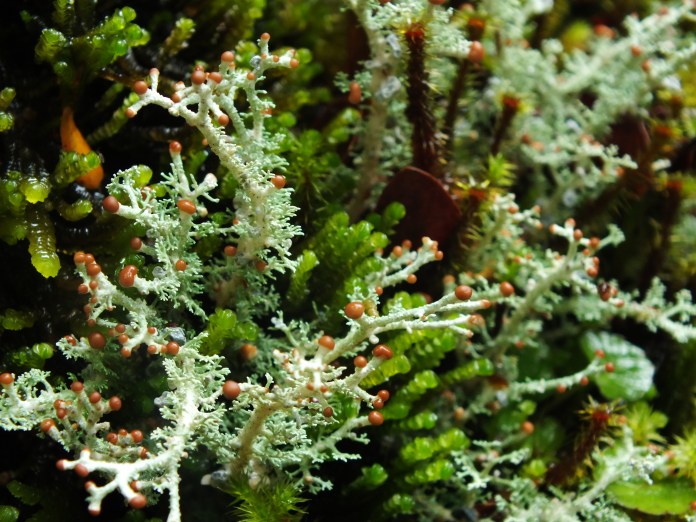

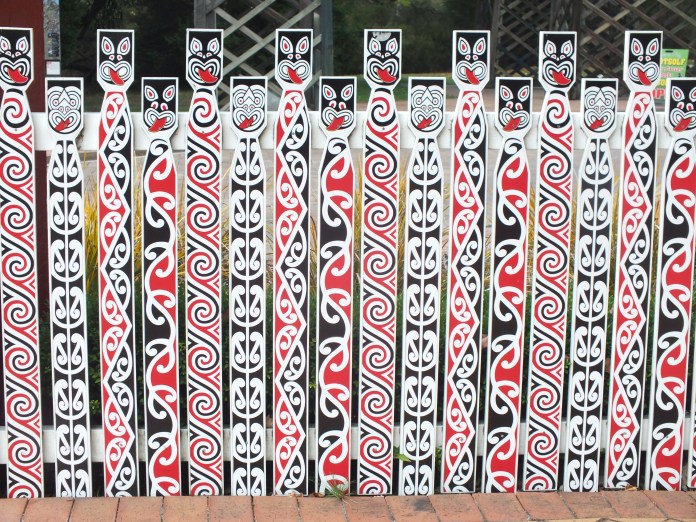


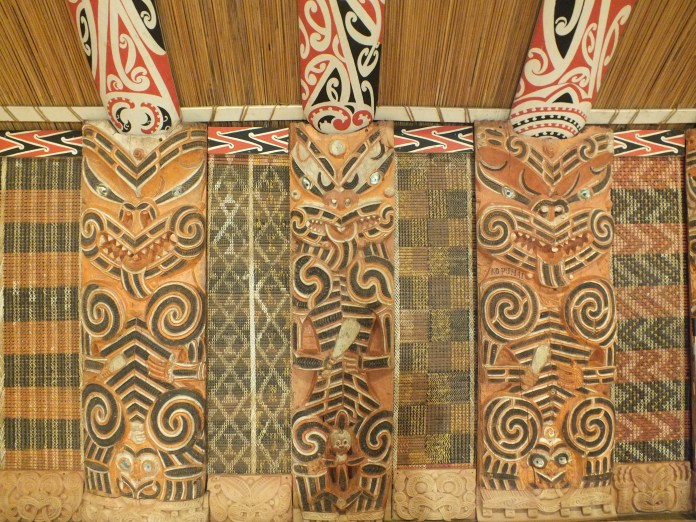
I wasn’t allowed to take photos of the marae. These photos were taken in Rotorua, Auckland and on my walks.
 Km. 0
Km. 0 