Medeu

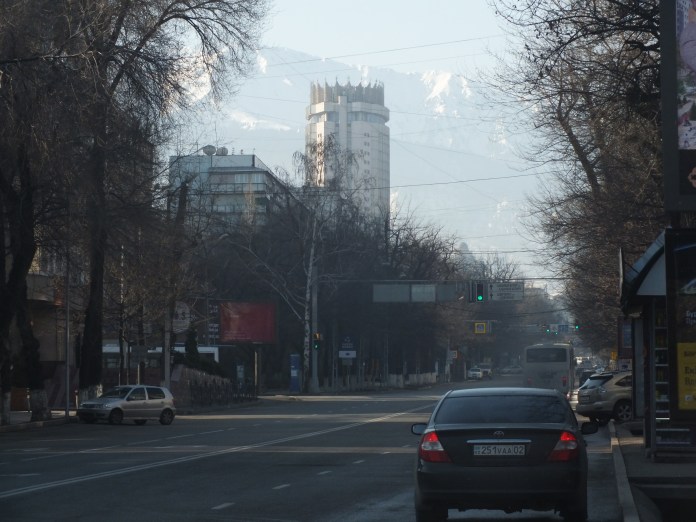
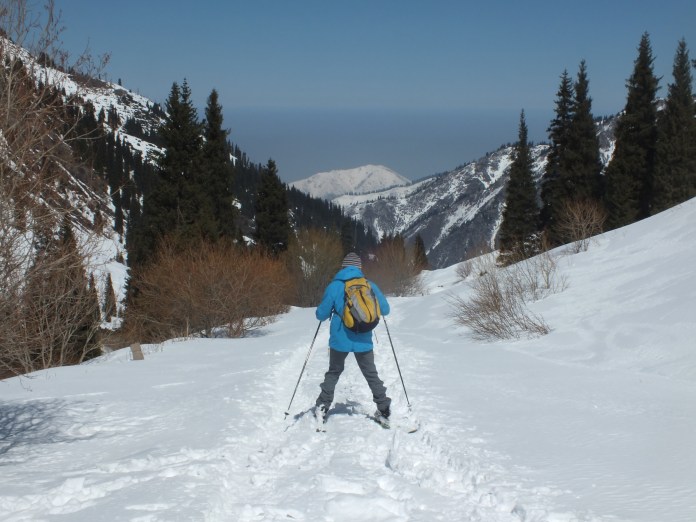
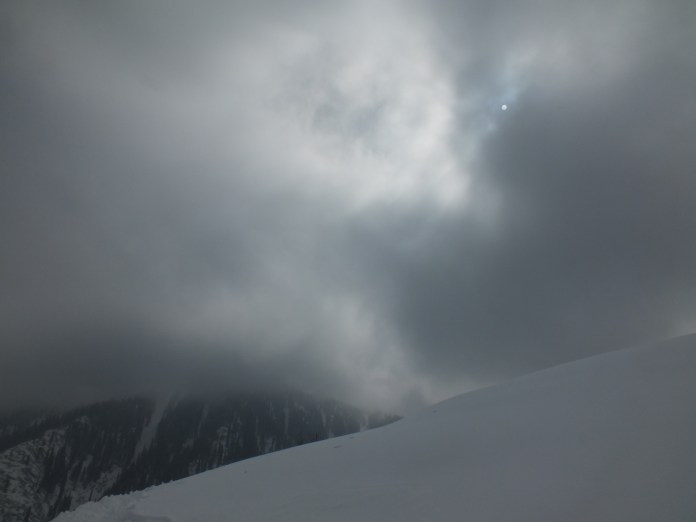
One of the best things about Almaty is how close it is to the mountains, and how easy it is to get there. Bus number 12 leaves from opposite the Hotel Kazakhstan – if in doubt, just follow the crowds with skis and snowboards – you give your 20p to the conductor, and twenty-five minutes later you’re in the Tien Shan mountains. Another twenty minutes and you can be whizzing down the mountainside. It’s a completely different world: American diplomats, international oil executives, rich Russian tourists, and the generally mega wealthy, trot around in goggles and ski boots, sitting at expensive European cafes and getting sunburnt.

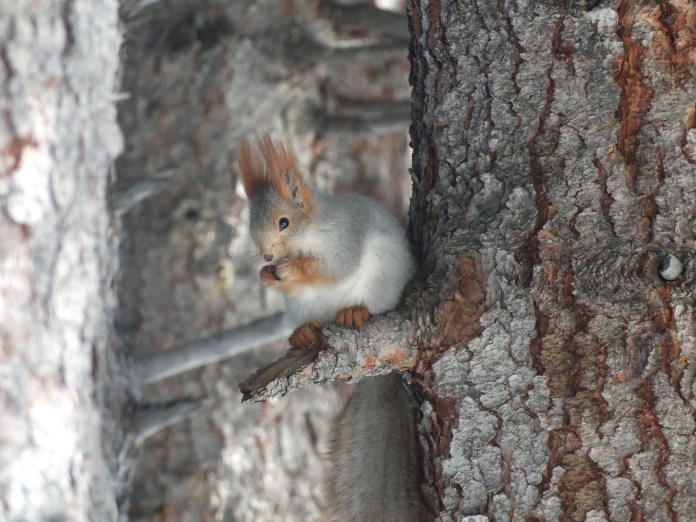
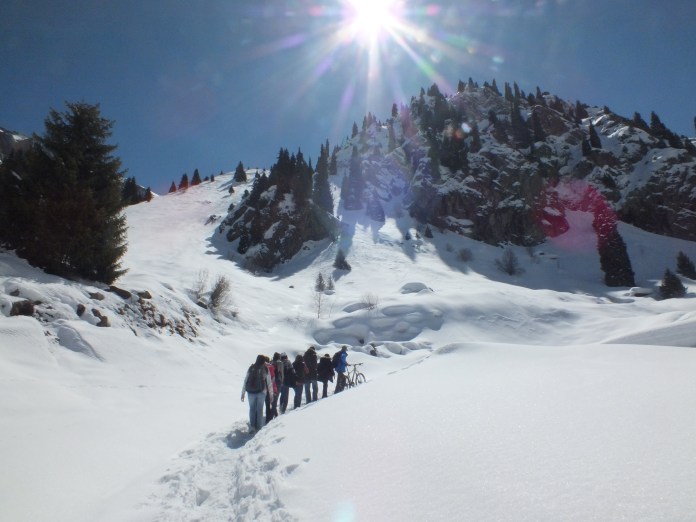
Away from all this the mountains are yours. One day we joined a group of Kazakh girls walking up to a frozen dam; they were feisty geology students, training to be the next generation of energy executives – some of them were the first ever female students in their fields. We stopped to look at a squirrel, a fluffy red and grey Kazakh squirrel with great tufty ears. Coca cola and boiled eggs came out, and the girls all burst into something between a traditional Kazakh song and a rap.

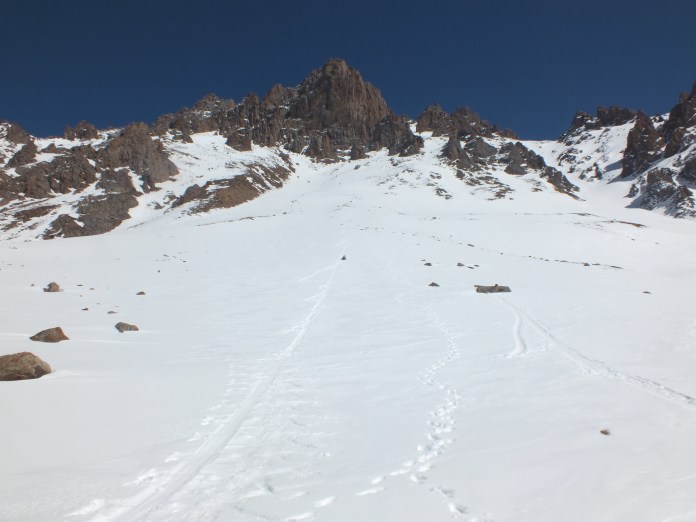
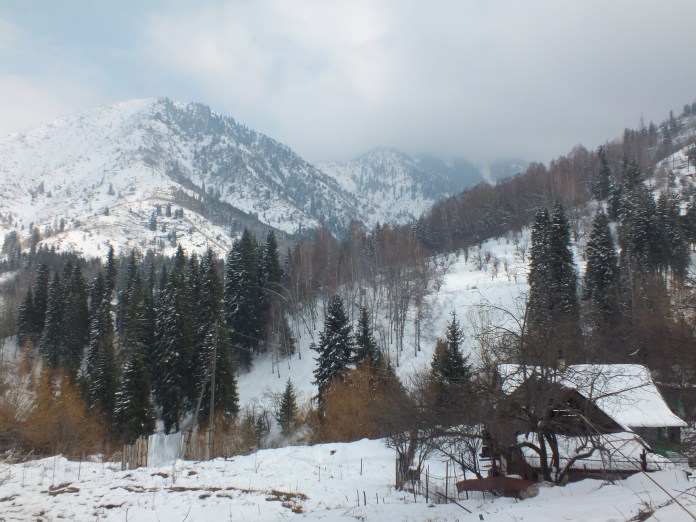
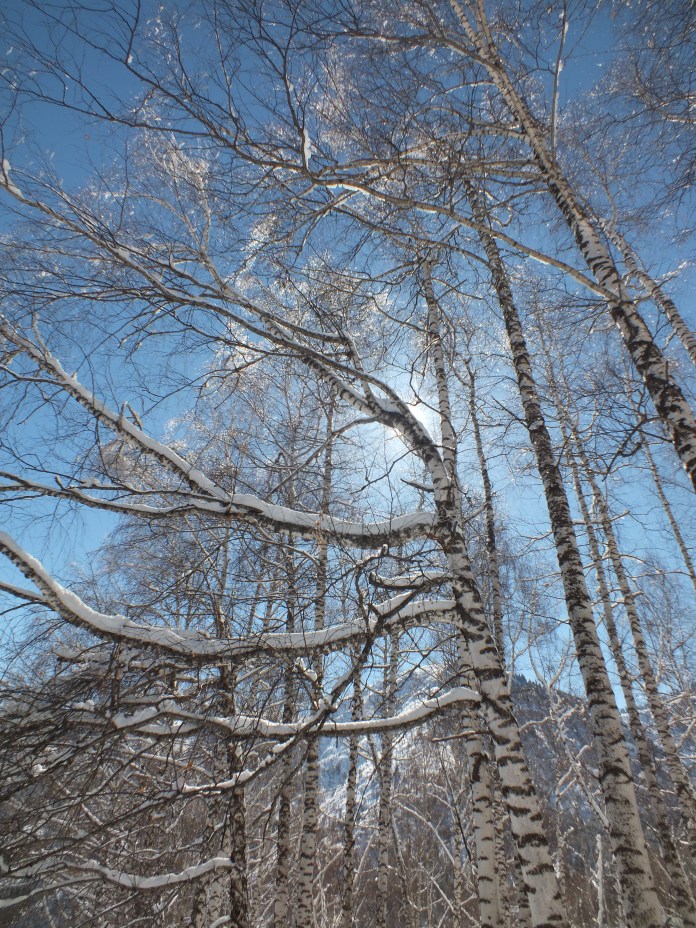
Up in the mountains, the sky was the most intense blue, almost dark grey, against the sparkling and blinding snow. The birch forests loked like something from a fairytale, branches heavy with snow and icicles, while further up fir trees huddled close together. Each day the sun grew stronger and our feet sank deeper and deeper into the snow. We passed a man carrying his skis up the mountain, and a surprisingly large number of bare-chested men walking in crampons – fewer clothes seemed to be the way to go. The weather was pure and intense, and the power of the sun felt stronger than in any other place I have been.

Going down, the tracks often turned into slides and we tobogganed down on our coats where we could. It was so much fun!! We finished our longest walk in the public baths in Almaty, where we circled between the Russian banya, Finnish sauna and Turkish steamroom. It got rather hot, and we probably should have followed the dress code of the venik woman, who wore a jumper and balaclava while she beat customers with branches of birch. But by bedtime I felt completely serene and strangely energised.

Standard

Almaty

I arrived in Almaty on a dark, rainy night and took an unmarked taxi to the hostel where I’d arranged to meet my sister. A Kazakh man was climbing the gloomy staircase, carrying, he told me, beer for us. Sophie had befriended the entire hostel and everyone seemed to know who I was. Around midnight we headed off to the next door Turkish-Russian-Kazakh restaurant to meet her friend Yusuf, and then came back for beer with Ilya, the Jazz flautist from the staircase. The following day we were booked in for Yusuf’s English lesson, given by Gulya who lived in our dormitory.

We were the only tourists in the hostel: most people had moved to Almaty for work and were living there indefinitely. Ilya had spent his first three days living in Almaty train station before finding a barista job, which paid $7 a day (that’s almost as much as we were paying for a night in the hostel). When we turned in at 3am, he said he wasn’t able to go to sleep because he wouldn’t be able to wake up in time for work at 7am. I never saw him again.
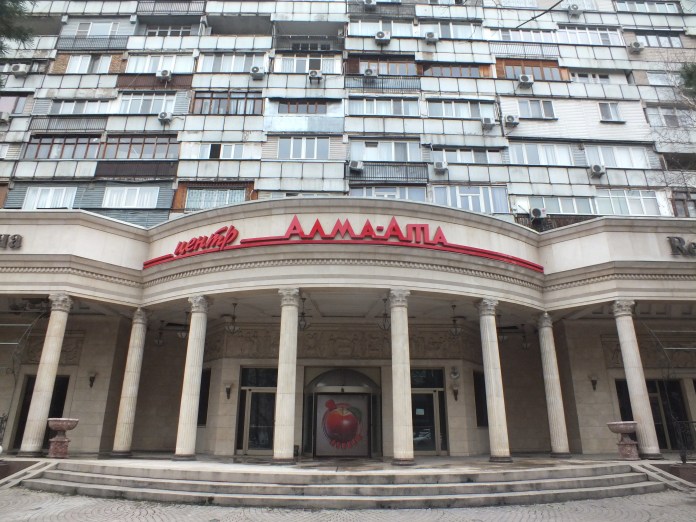
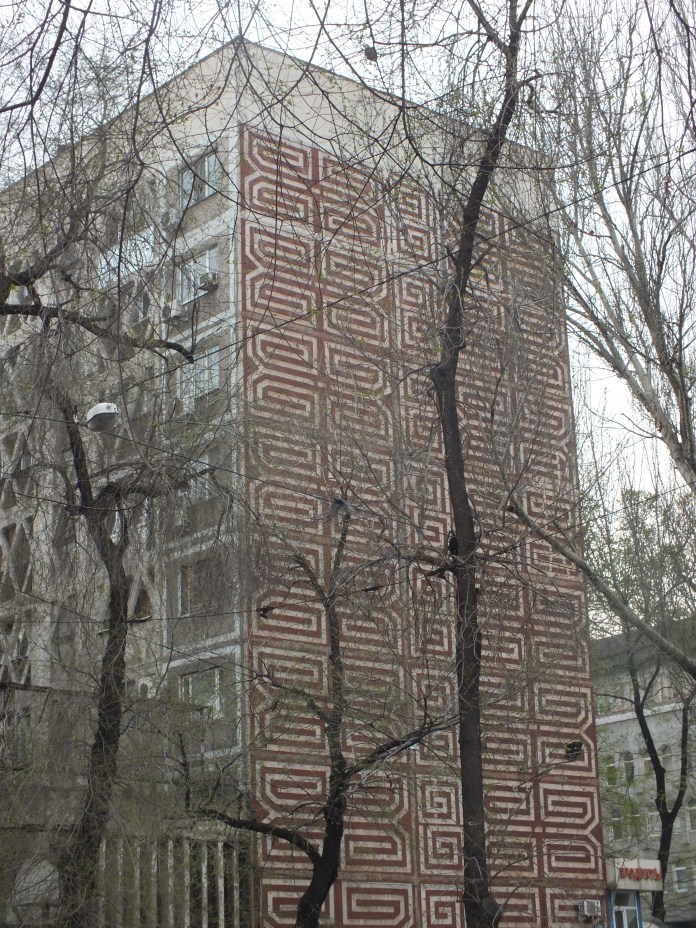
By daylight I was surprised at how pleasant a city Almaty is. There is a surprisingly large amount of surviving Tsarist architecture: small, pretty, pink and green buildings with white ornamentation that make you think of dolls houses or castles in winter wonderlands. Even the Soviet-era blocks have simple bits of decoration that give them individual character and make any walk varied and interesting. What could be a grey concrete grid of a city is in fact a pleasant network of streets, almost always tree-lined, and often with pedestrianised side-streets linking the wide, busy avenues with grand views into the mountains.
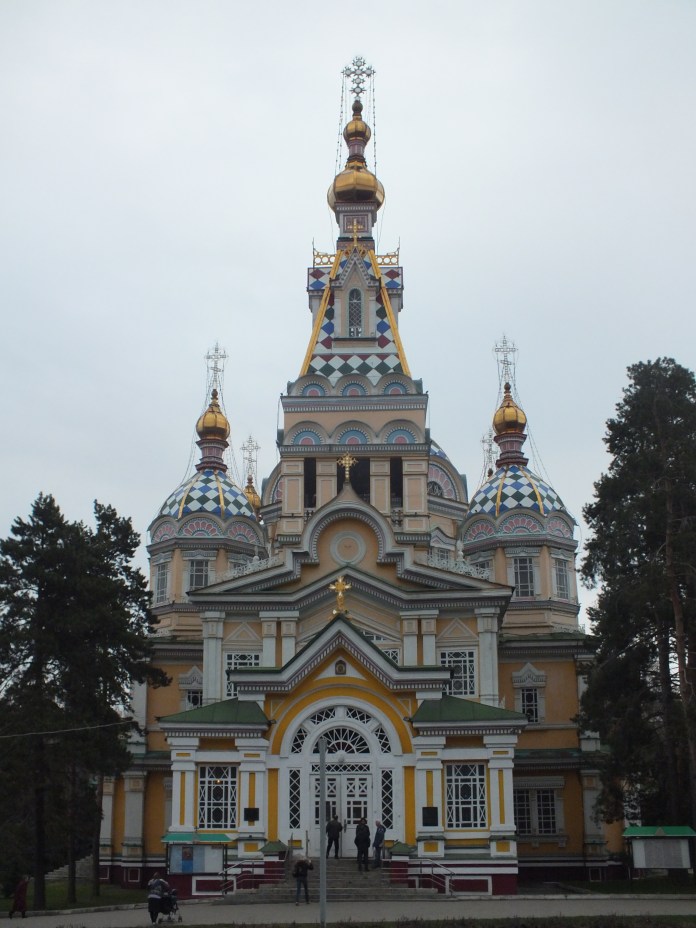
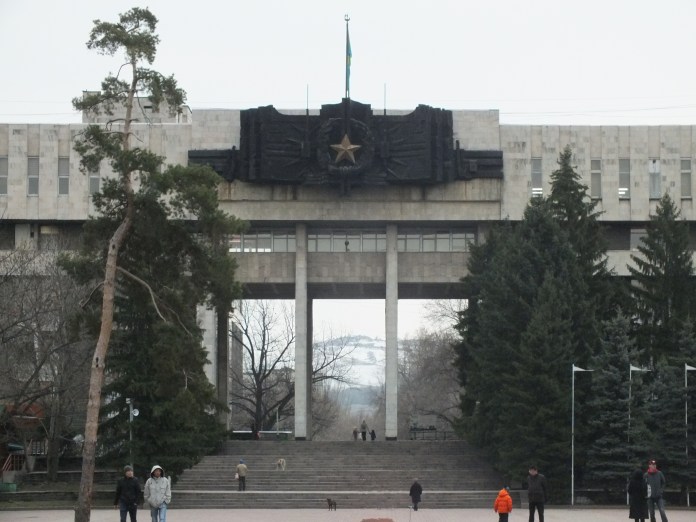
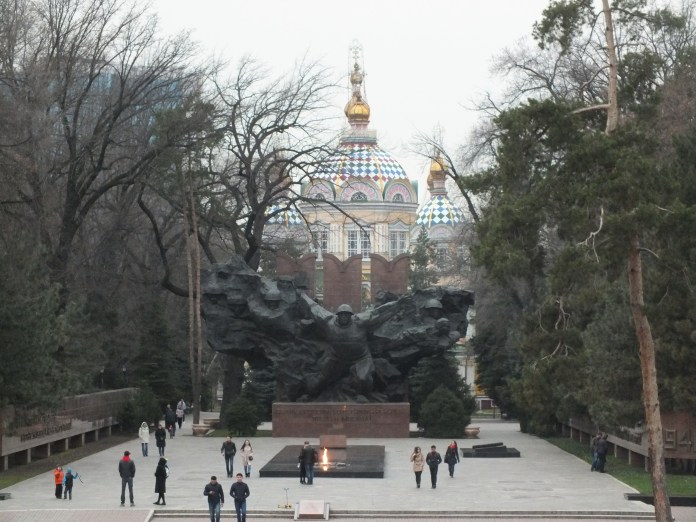
In the centre of Almaty lies Panfilov Park, which is dominated by a large Russian Orthodox cathedral made entirely of wood and painted in bright colours. A terrifying Soviet war memorial looms out over passers-by behind the cathedral (which thankfully overshadows the sculpture). It depicts the Panfilov heroes, three times larger than life and with impossibly chiselled cheeks and muscles. The accompanying quote glorifies Moscow and is a reminder of just how Russian Almaty can feel, with its banyas, blinnayas, ballet and borsch. In fact, there is even concern about the survival of the Kazakh language because Russian is so widely used. But I wasn’t expecting Almaty to also feel so European, to have so many dainty little cafes, American films and western luxury brands. It all feels a very long way from the once nomadic life of the steppe.
We decided to go to the opera house, an ornate and gilded building where all the workers were dressed in smart blue and gold trouser suits. I do not understand how it is possible for one nation to produce so many beautiful and glamorous women – it made me feel very ridiculous and inferior, sitting on my little blue and gold chair in walking boots and a fleece. Our tickets for Birjan and Sara, a traditional opera about love between two dombra players, cost £2, but there were so few people that we were allowed to sit anywhere in the stalls we liked. Sara sang about Birjan, ‘my proud hawk, nightingale of the steppe’, and Birjan died surrounded by his three great loves: his mother, Sara (‘my steppe glow’), and his dombra (Kazakhstan’s national instrument, a traditional wooden two-stringed instrument). With his dying breath he sang a lament for his homeland and for his song that would live on in Kazakhstan. At the end the small audience all clapped in time together, a very sorry sight. But it was so much fun that we immediately bought tickets for the opening night of a ballet adaptation of Anna Karenina. The star of that performance was very much the three year old boy who stood on stage soaking up his applause, bowing grandly, admiring his new lego, who in the end had to be dragged off stage.

There are some good museums worth visiting in Almaty. The best is on Kazakh folk instruments, and it is housed in a wonderful old wooden building where you can listen to music played on the instruments. Other museums feel rather Soviet, with large empty marble halls, faded and dusty displays, attendants who tail you everywhere, and, invariably, photos of President Nazarbayev on the top floor, or even a whole exhibition on him if you’re lucky. But there were beautiful things: as a crossroads of the world since neolithic times, Kazakhstan has a fascinating archaeology and incredibly rich mix of cultures. There were fabulous ethnographic displays of traditional dress and yurts and, my favourite, a pair of enormous boots which looked just like a whole sheepskin wrapped around a foot.

We were wandering around the state art gallery, past paintings of eagle hunting and a very dashing Stalin, and found ourselves in a room of east Asian art. There was a TV crew set up and a producer came over, desperate for an interview with someone – anyone, apparently (though foreigners are always an excitement – in the whole week we were in Almaty, I could probably count the number of westerners we saw on one hand). Sophie neatly side-stepped the invitation by saying I would give an interview, so I went on Kazakh TV, reciting whatever the producer mouthed at me, saying how much I admired Chinese culture for having invented porcelain, gunpowder and paper.

On Easter night we went to the cathedral. As we approached Panfilov Park there were stalls selling circus toys, flashing balls and spinning toys thrown into the air, which gave the night a festival, even carnival, atmosphere. Hundreds of people were overflowing from the building and the service was being screened outside, while inside the priests would occasionally turn to the camera and shake incense at us through the lens. Everyone carried baskets with painted eggs and decorated kulichs, with candles which, when burned too low, would be removed from the kulich and stuck into the soil of the cathedral garden. Priests would regularly venture outside, accompanied by soldiers, to drench us in holy water, joining in everyone’s laughter as they did so.

In the early evenings of our wanderings through the streets and parks, we would catch tanatlising wafts of chocolate and caramel and roasted nuts. We couldn’t work out where it was coming from until our final day, when at last we saw the ‘Rahat’ chocolate factory right in the centre, the other side of the bazaar. It was with pride that the many generous people we encountered, who gave us lunch and fed us on countless occasions, would bring out ‘Rahat’ biscuits and chocolate. For all the deliciousness of Russian sweets, or even the sweet goodness of an Uzbek tomato or Georgian wine for that matter, nothing was better than the shy smile of a Kazakh offering us Rahat.
Standard

Guangzhou to Urumqi

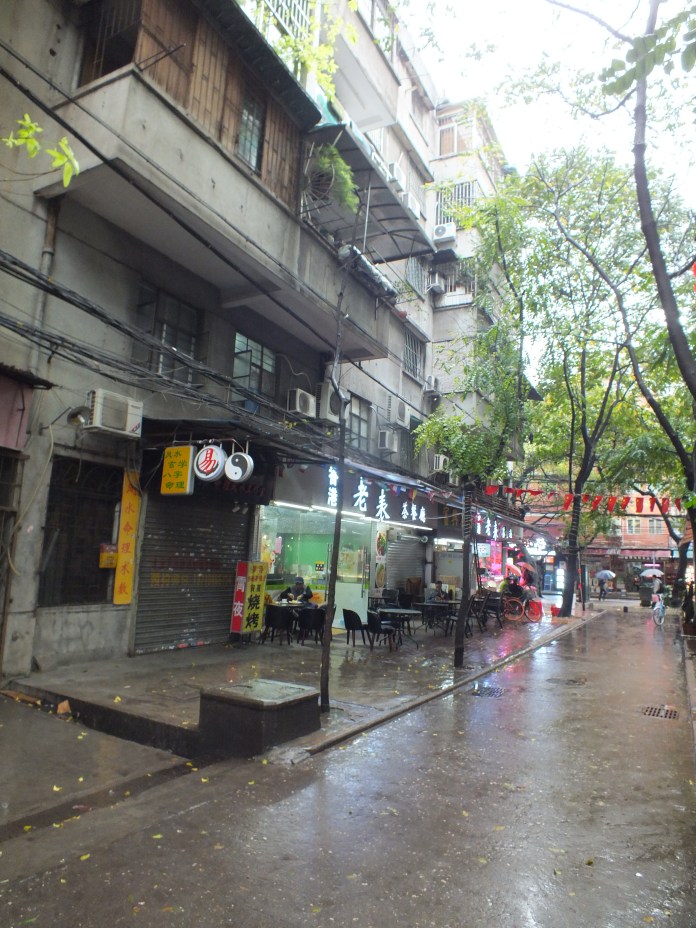
There was something strange about Guangzhou. An intensity of colour, in spite of the drizzle, and a vividness in the streets. With a jolt, I realised it was spring and the colour was the green of new leaves.

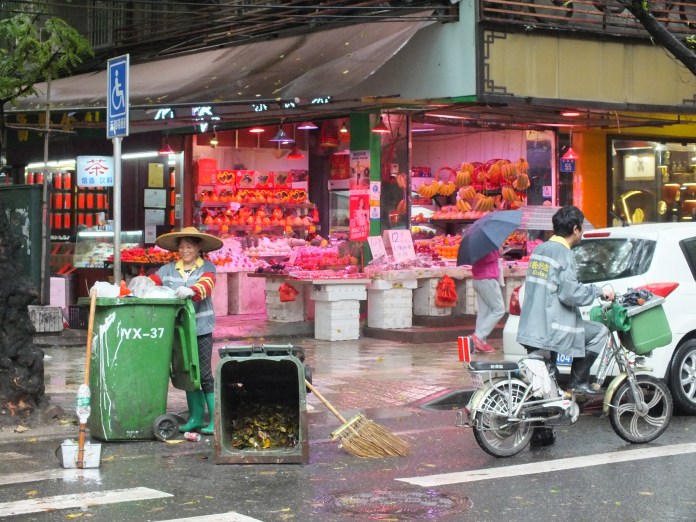
From the air the city seemed an ordered sprawl of tower blocks, between which were squeezed tiny tiled houses collapsing in on themselves and large warehouses with cracks running along their rooves. From the ground the city teemed and bustled. Women in conical hats swept the streets and rode bicycles laden with empty plastic bottles. Blackened repair shops sold gas rings, taps, light bulbs, cooking pots, plastic sheets and ropes.

At the train station crowds of people crushed through the gates into neatly formed queues at each entry point along the grey concrete building. In front of me waited a man whose only luggage was a wooden board and bucket: later I saw him sit down on the bucket and use the board as a table for playing mah-jong. The gates opened and everyone ran forward, pushing their children into small gaps, desperate to get to the train first.

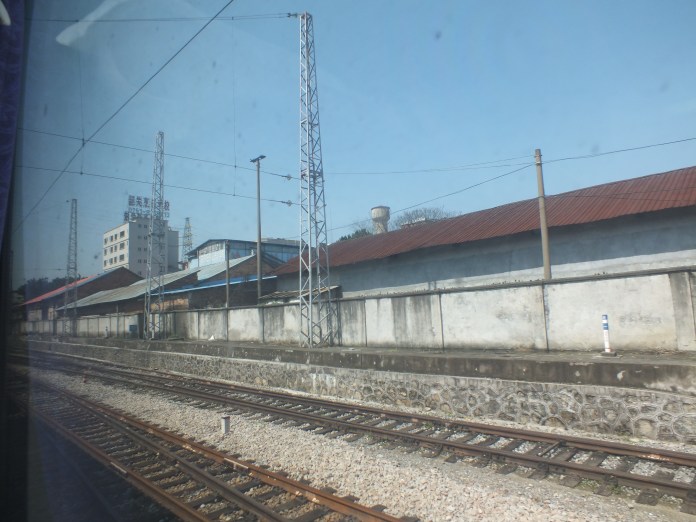
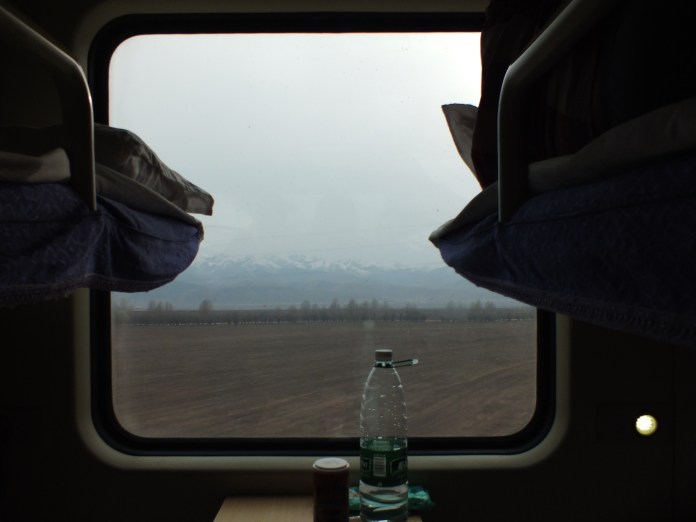
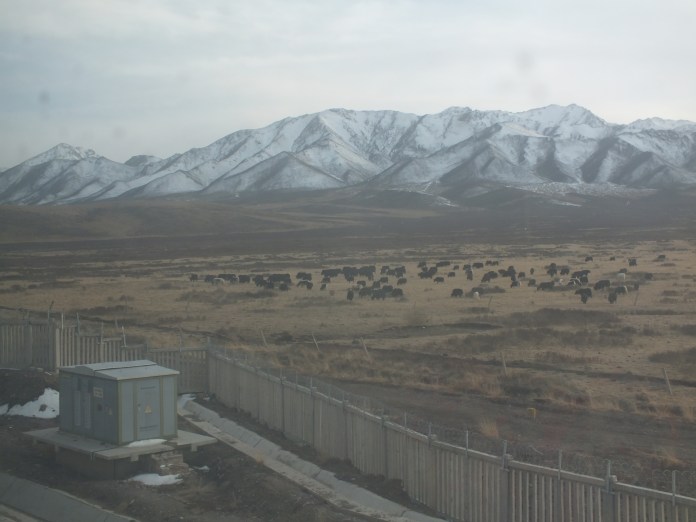
It took two days to cross China. The landscape turned from urban streets to suburban allotments, to fields where women ploughed with buffalo, and then to environmental catastrophe: for almost a whole day we passed mountainsides stripped of plants and replaced with fields, and now scarred by landslides and earth reinforcements. Finally we reached the beginning of the Tibetan plateau and we caught glimpses of spectacular snowy mountains, as well as yaks and temples strung with fluttering prayer flags.

In the far north west of China, in Xinjiang province, lies the city of Urumqi. Traditionally it is home to the Uyghur people, but has been flooded with Han Chinese in recent years, escalating ethnic tensions. Both Uyghur, written in Arabic script, and Mandarin are spoken. It is a beautiful but politically sensitive region, with sporadic outbursts of violence that have then been used to justify China’s nationwide security measures. In 2014 it took the Chinese government a week to announce that 96 people had been killed in a knife attack at a police station. This year a ‘great wall of iron’ was announced, and in April a ban on veils and ‘abnormal’ beards came into force.

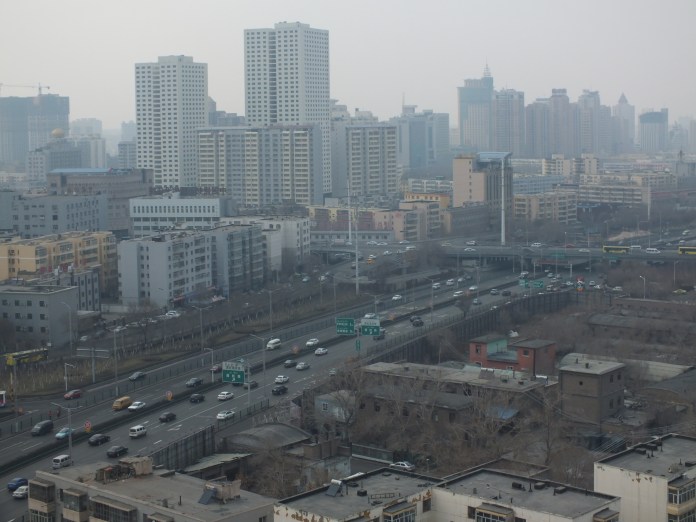
As I rode through the city on the wrong bus, I saw soldiers searching women’s hoods, convoys of tanks rolling through the streets, and armed police standing on street corners in groups of three, yawning and checking their watches. Every petrol station was locked off with barbed wire and cars were searched before and after entering. Prominent CCTV cameras photographed every vehicle and every pedestrian that passed. You couldn’t go through an underpass or enter a park without going through a metal detector and having your bag x-rayed. What was most scary was the normality with which every security measure was treated. Outside one street checkpoint a guard was shouting at a woman, holding his megaphone right in her face, and we all looked down and hurried past. On the street by my hostel another tank was parked. I felt too uncomfortable to take photos.

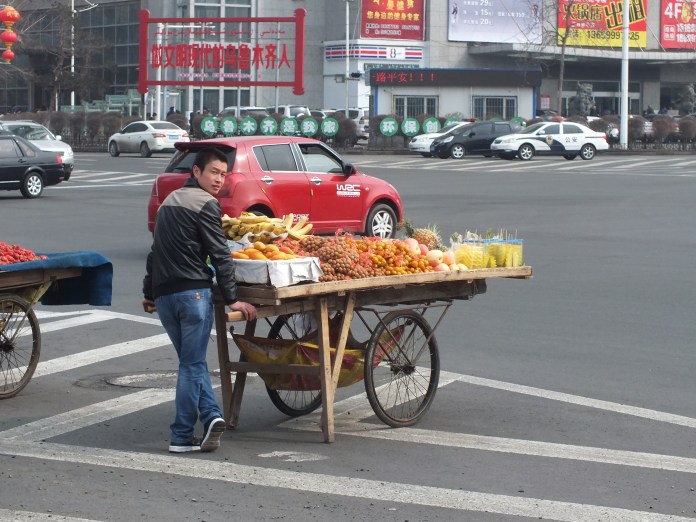
While I waited for a bus to Kazakhstan, I tried to see the city. I walked through the streets past slowly melting piles of soot black snow. It was cold and began to snow again, but there were still wheelbarrows full of strawberries, mulberries, fresh coconuts and decoratively peeled pineapples.

On Red Hill was an old complex of temples and pagodas which had been turned into an amusement park. Children and adults ate candy floss, rode bicycles through treetops and played shooting games. At the top of the hill, on the highest part, stood a police station, and we looked down through the metal railings onto the concrete jungle below and watched yet another convoy of tanks and armoured police vans drive past.

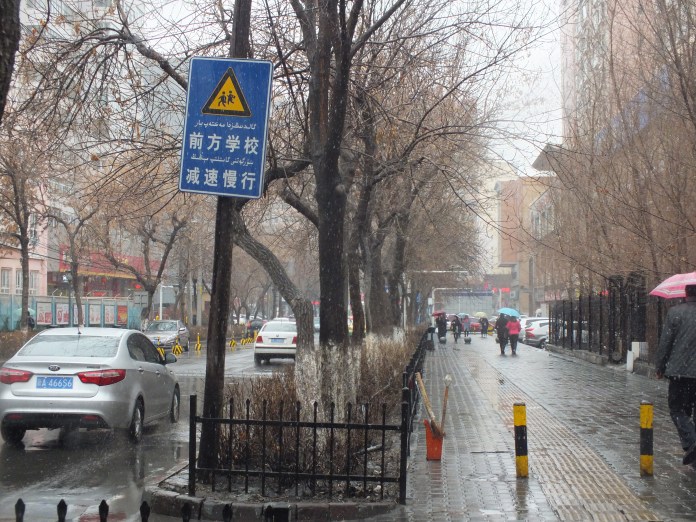
In my hostel dorm was a woman who lay in bed all evening and morning. She’d just broken up with her boyfriend and needed some time away. ‘You never see blue sky here – it’s the factories,’ she said. Today was Ching Ming, she told me, the day people mourn for dead family members and ancestors. Outside the snow fell onto a deserted school playground, and we stood at the window together, watching smoke rise from the grey concrete buildings into the eternally white sky.

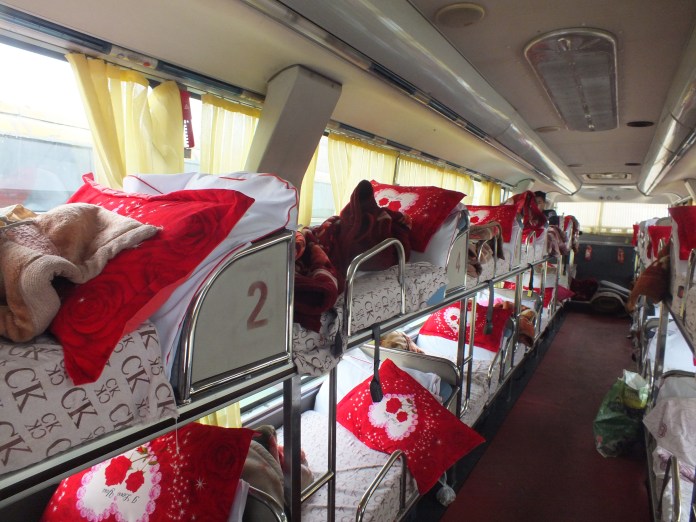
This was my bus from Urumqi to Almaty (a 30 hour journey, a mere 6 hours longer than advertised):

Standard

Singapore

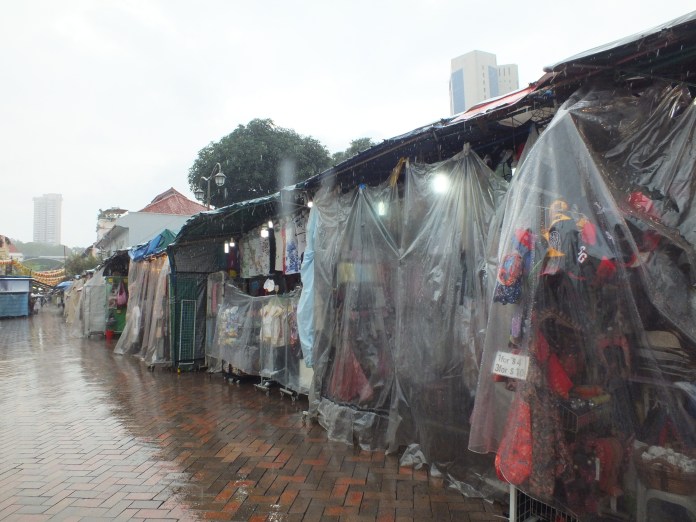
Half a day is not long enough at all to see Singapore, but – in what is beginning to feel rather like a tour of the British Empire – I had a go. It started raining as soon as I emerged from the metro and every shop was covered in plastic, so I decided to start with food. A classic breakfast is kaya toast (coconut jam and thick creamy butter between two slices of artificial white bread) accompanied by a cup of kopi, or coffee with condensed milk (Singaporean English is incomprehensible). The unfamiliar smell of durian wafted around. Small, pale yellow pieces of the fruit were expensive and smelled absolutely disgusting so I took the easy option of a durian milkshake. Out came a box of pureed durian and a waft of smelly feet. Closer to, the milkshake smelled of vomit and I struggled with the first few sips, but after a while I came to appreciate the delicate sweetness and the smell receded.

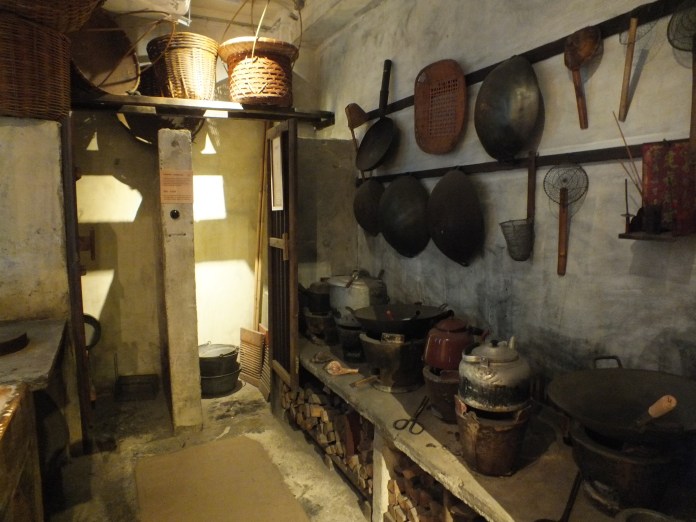
I hung around my hostel in Chinatown, wandering through street after street of sodden stalls selling tacky souvenirs and chocolate coated durian, until I came to a great little museum about the history of Chinese immigration to Singapore. It recreated the squalid living conditions of the area – each family shared one tiny room and were charged according to the size of their stove. The landlords and employers would encourage opium addiction in order to keep hold over their tennants and labour force. I found the Samsui women particularly interesting: identifiable by their blue tunics and big red hats, and often having made a vow of chastity, they worked on construction sites and did heavy manual labour. At the front of the house was the doctor’s room, where there was a hole in the floor through which you could see who was on the street below. It also allowed you to hoist up dishes of food from hawkers underneath, who would advertise what they were selling through a series of coded knocks. In the basement was a small memorial to the city’s death houses, places where people went to die away from home because dying at home was considered inauspicious. (How different are modern retirement homes?).

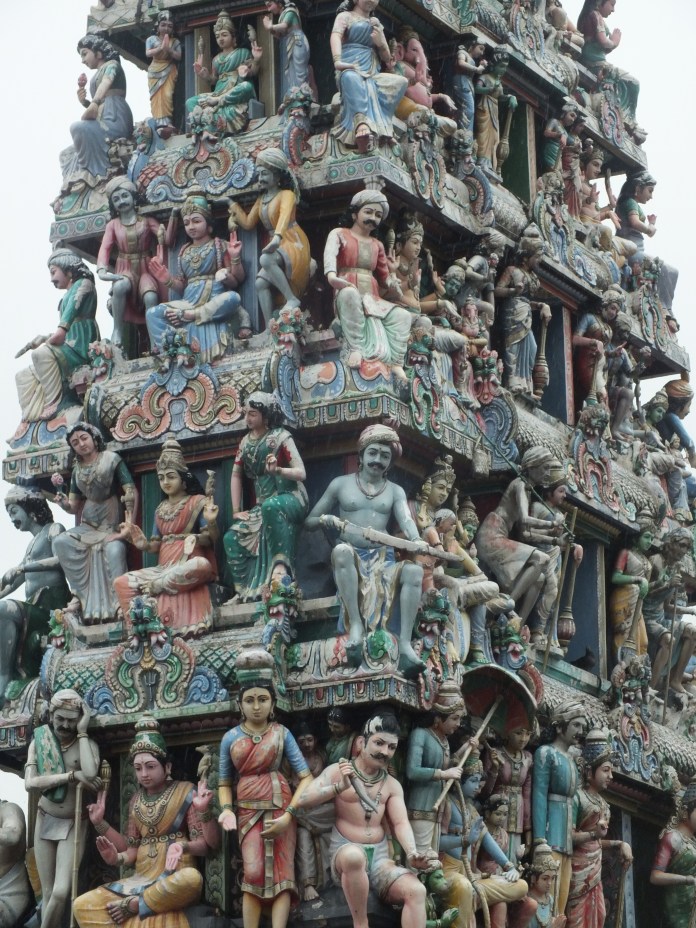
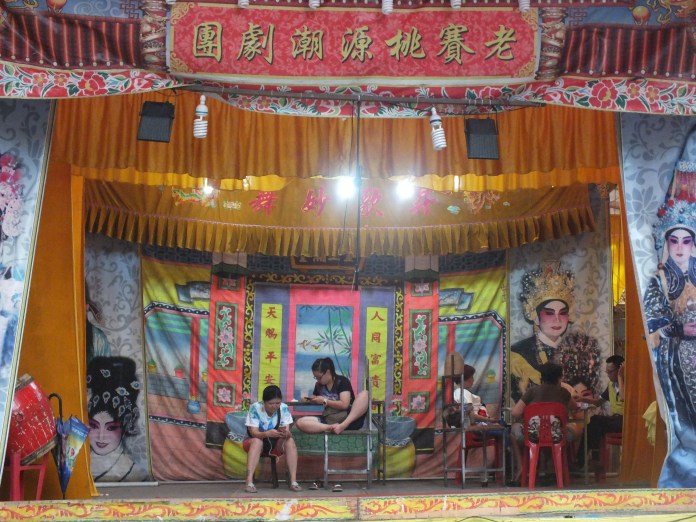
Singapore has such a mix of cultures. On the street where I stayed was a mosque, a hindu temple and a buddhist relic temple, while further around the corner I came across a synagogue, an Armenian church and a taoist temple. Inside the last temple I found a tent with a stage set up for Chinese opera; on stage singers in full make up were playing mahjong, while behind the curtain they sat sewing costimes.

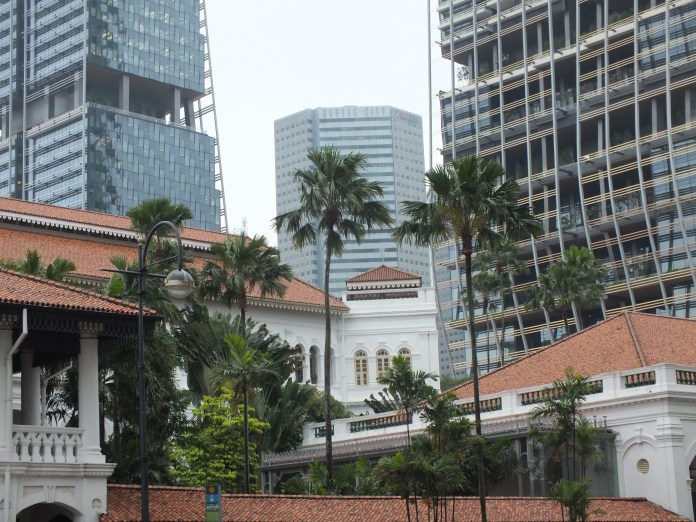
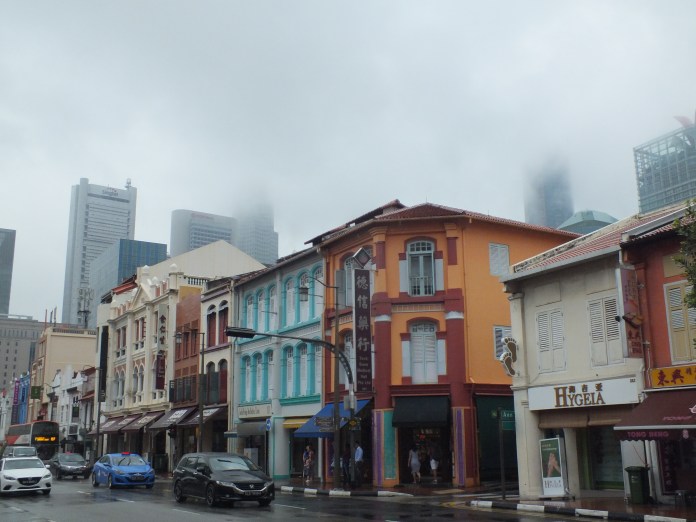
This mix is also visible in the juxtaposition of architecture, with colonial buildings that make you think you’re walking the streets of London brushing alongside buddhist dragons and futuristic skyscrapers. Many of the buildings are vertical gardens, making even the most urban areas feel pleasant in the tropical heat.
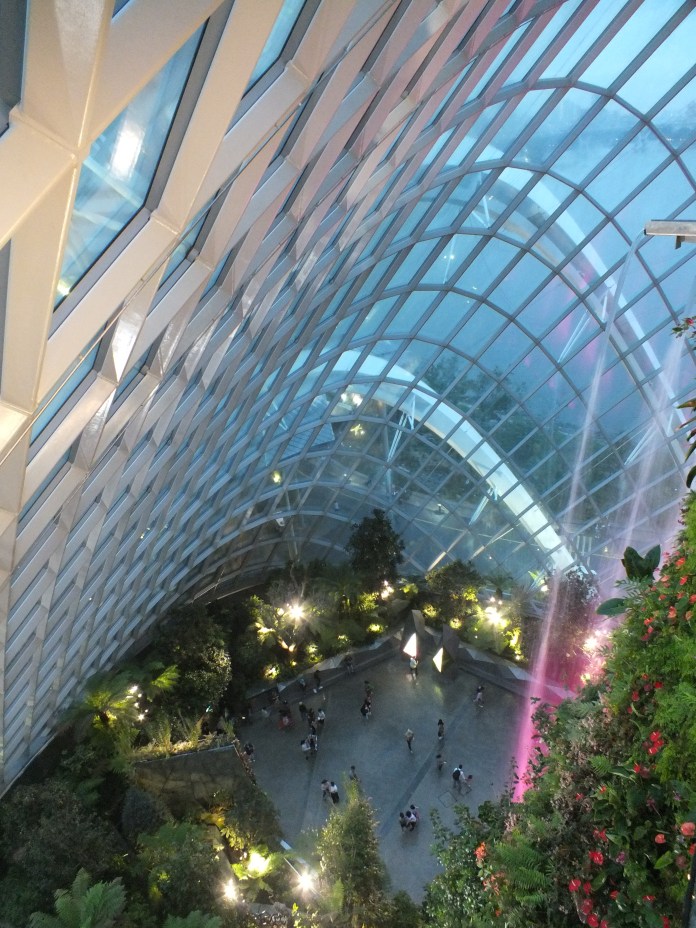
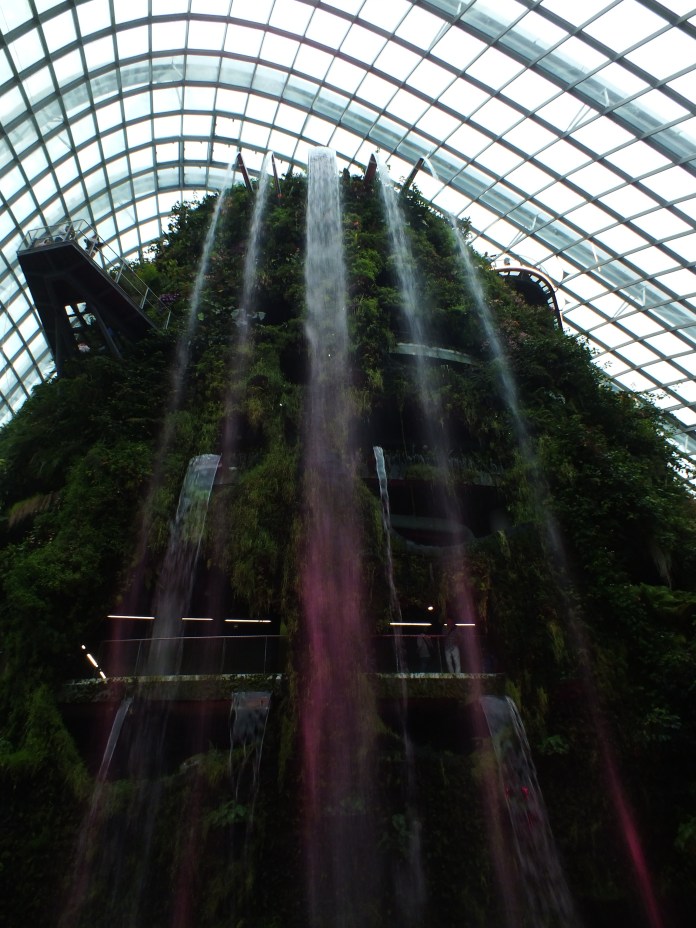
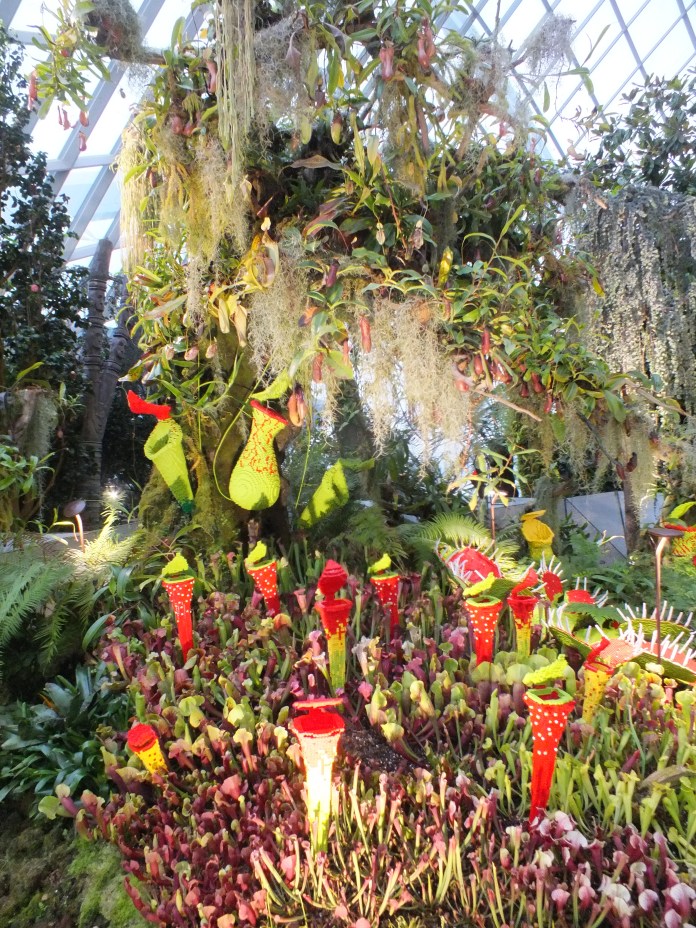
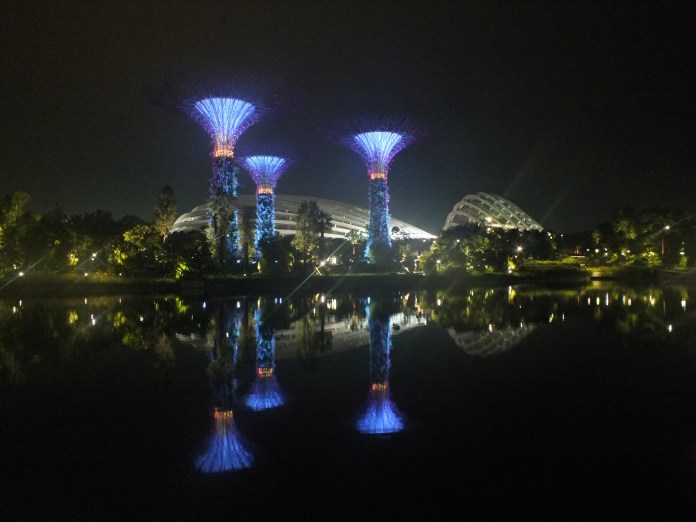
So, feeling in a mood for gardens, I went to the Cloud Forest at Gardens by the Bay, a botanical and climate change-themed amusement park. Inside a glass dome they have managed to create an artificial tropical mountain forest, complete with a 35m tall waterfall lit up in neon pink. Somehow a 200 year old forest has been established, recreating the beautiful, highly specialised natural environments that exist at different altitudes. Cloud forests are so highly adapted to their particular environments that they are especially vulnerable to climate change (rising sea levels, for example, pushes the cloud level higher) and are being destroyed at a higher rate than any other tropical forest. The dome was a very strange mixture of the real and the artificial: lego venus flytraps were dotted among real ones, carved wooden animals hid between the foliage and there wasn’t a single insect buzzing around. And that’s what Singapore felt like: exciting, often beautiful, and full of bizarre surprises and contradictions.
Standard

Uluru and the Top End

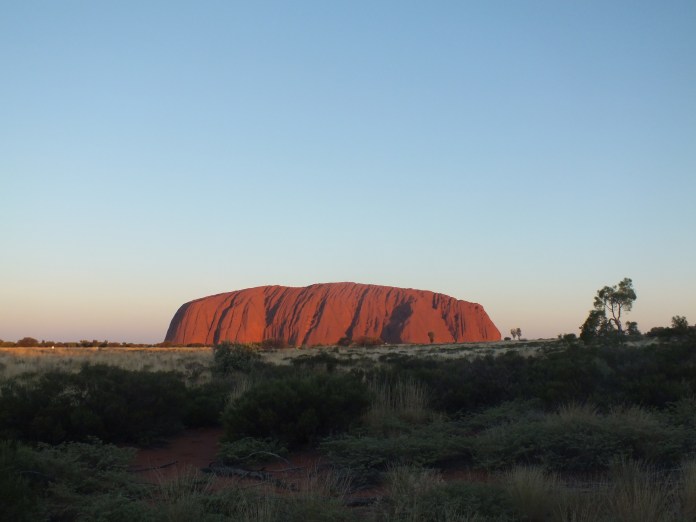
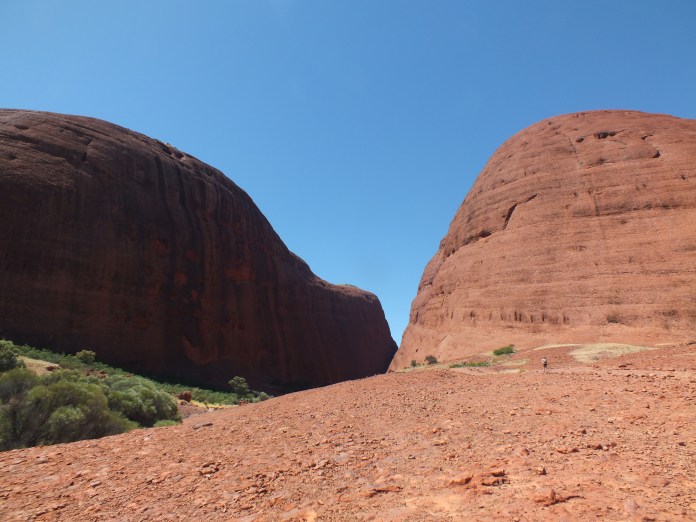
It was my last week in Australia. I’d been persuaded to see Uluru – not the magic glowing rock it’s sometimes made out to be, but a majestic and powerful creature of the earth – and began my journey north. From the bus I watched the landscape grow green and lush. Along the roadside were termite mounds ranging from tennis ball bumps to full-size snowmen creatures dressed in old t-shirts. Dark grey clouds appeared and glowered until late afternoon when it poured torrentially for five minutes, and I realised I hadn’t seen rain in over a month.

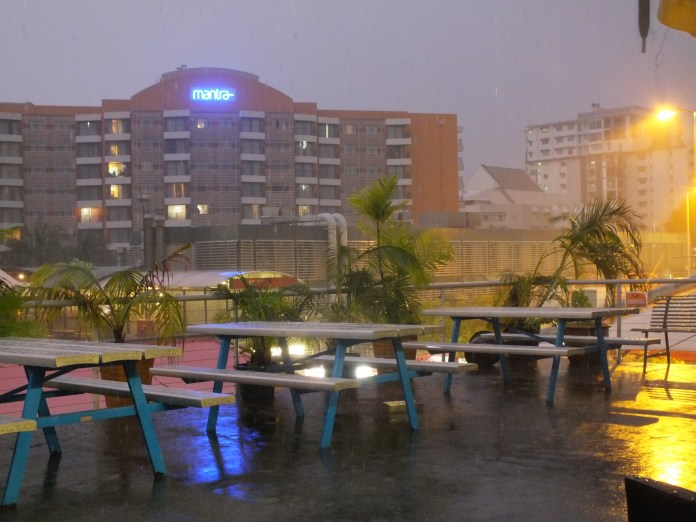
Stepping off in Darwin I was hit by the humidity: it was a physical resistance, like swimming through the air. In the hostel my air conditioning was mistakenly set to 26 degrees (which felt freezing) and I woke to find the floor and walls covered in a sticky layer of condensation. But now it’s only the end of the wet season – I can’t imagine what it’s like at Christmas.

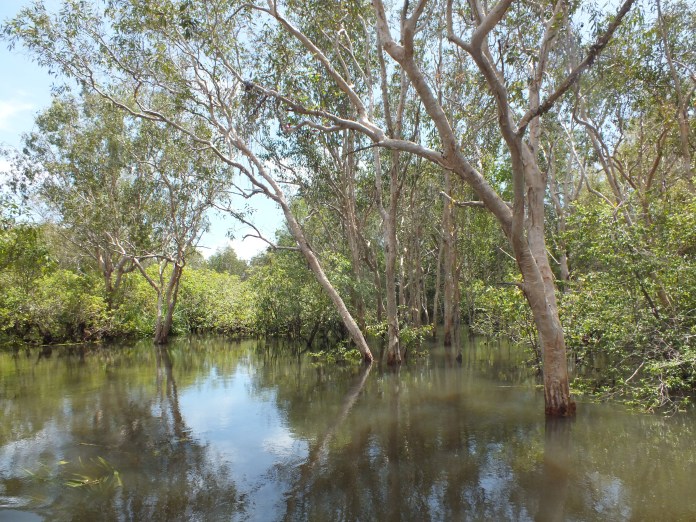
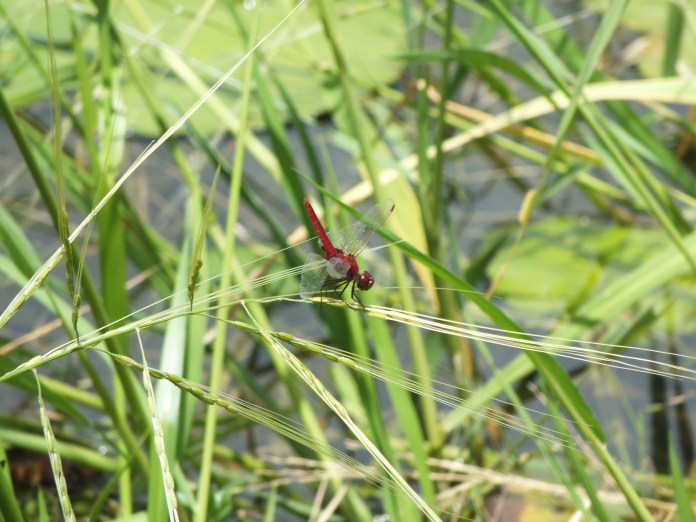
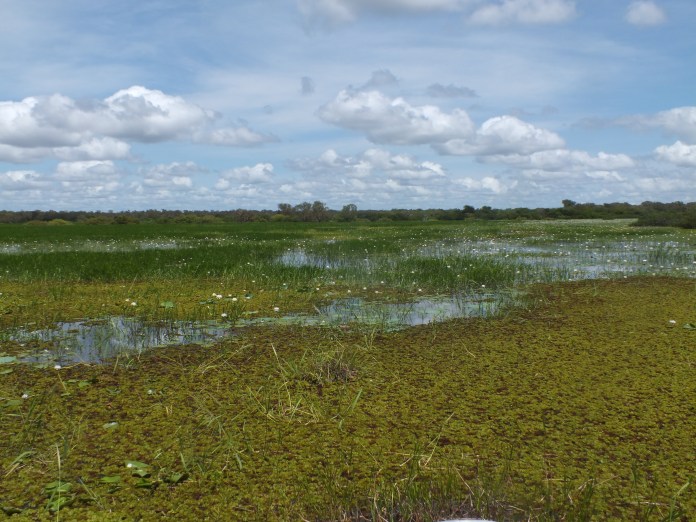
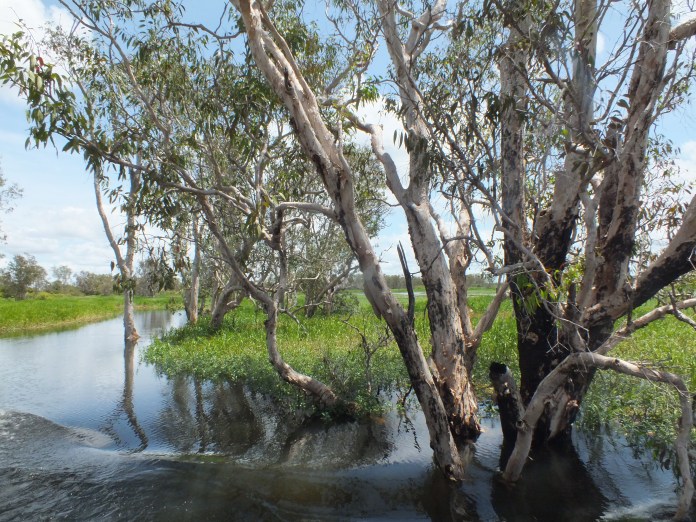
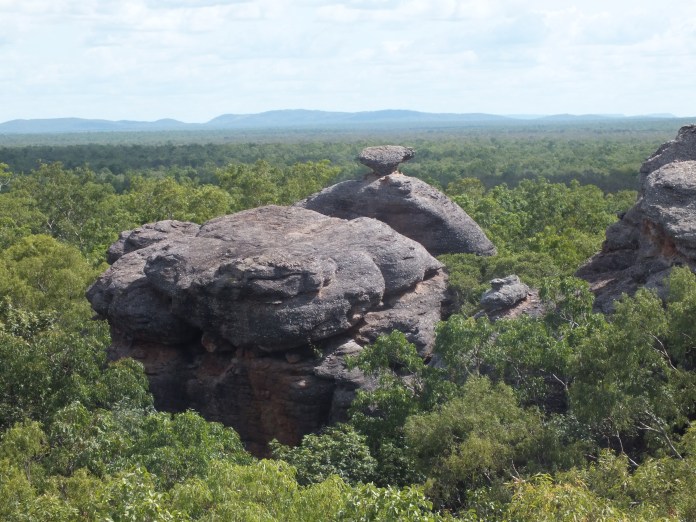
Since it’s the wet season it was harder to visit Kakadu, the massive national park in the top end of Australia. In fact, it was mostly underwater. I took a river cruise through parts that are dry land for the rest of the year. ‘Try to imagine my aunty standing underneath that tree fishing’, our guide said, pointing to a small bush – the few branches of the tree that still remained above water.

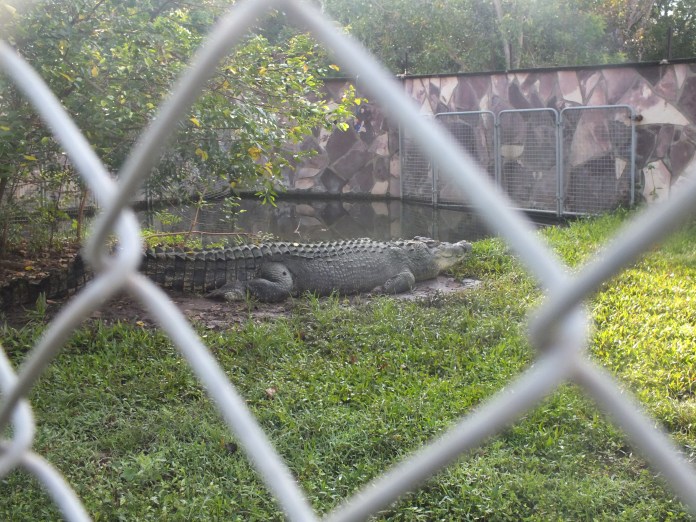
The water is beautifully tranquil, but murky and lethal. Before we set off in the boat we were given the compulsory lifebelt safety talk, but it ended with the instruction to never even think about using one since there are about 10,000 salties just waiting to eat you. It was very reassuring. The words of our guide kept on going through my head: ‘Remember, you’re no longer top of the food chain’. In the end, though, the closest I ever came to seeing a crocodile was the one caged in a roadside inn we passed, and the skull of the second largest croc in the world (the largest skull is in – where else – Russia). Instead we saw lilies, electric blue kingfishers, plump magpie geese, and lots and lots of still water.

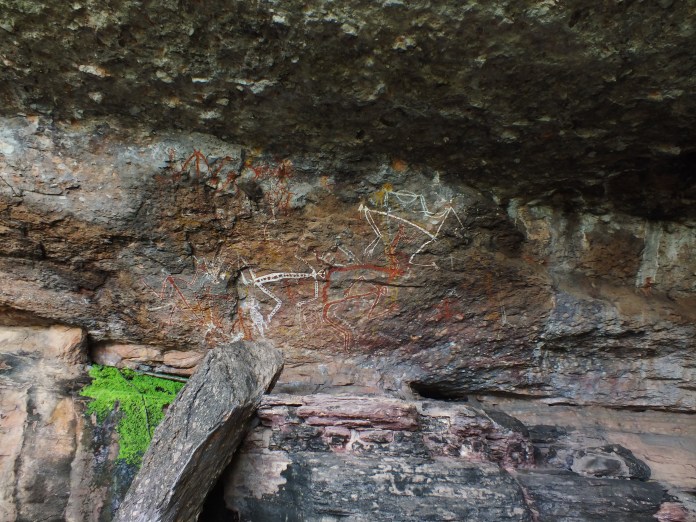
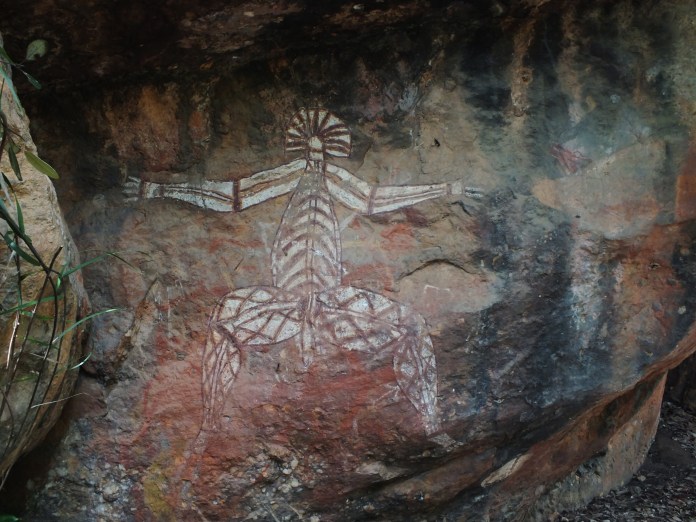
Kakadu is also home to some of the oldest rock art in the world. We saw a monster, painted in x-ray decorative style, who bashed women to death with a yam, a painting intended as a warning for women to stay near the camp. I thought the most interesting drawings were a series of very basic stick figures with balls for joints. They are a warning that this is sickness country and that if you stay your joints will swell up. Thousands of years later it was discovered that Kakadu sits on one of the world’s largest mines of uranium and what people were experiencing was radiation poisoning from the water.

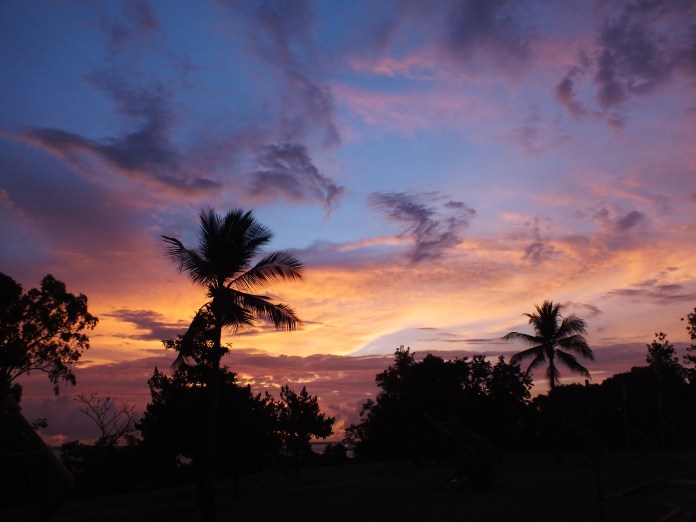
The small city of Darwin wasn’t quite as exciting as I hoped. I don’t know what I was expecting, maybe the old frontier town older generations talk about. It’s a quiet city, not unattractive, with a prominent WW2 history. The military presence is strong and Asia does feel very close – closer than Sydney or Melbourne. It did feel quite different from other places, with its massive bats, fragrant air, beautiful but untouchable water and spectacular sunsets.

It was a good place to say my goodbyes. On my last night a howling wind woke me up, and then the rain hit. It pummelled the sundeck and sunshade, making the swimming pool churn and knocking the potted palms over. Lightening bolts flashed like strobe lightning (frequent enough for me to get the photo below) and the thunderclaps rolled on for ages, sounding like atomic bombs. I woke again at 2am to catch my airport bus, but ten minutes before I had to go I realised I’d left my passport in the library photocopier (in a stupid fit of attempted organisation). I ran to the police station, but no help there, so ran to the library and hammered on the door until a security guard opened up. They looked at me very suspiciously, but went to have a look and returned, passport in hand! I sprinted back through the debris of the storm, only now feeling the humidity of the night – and even caught my airport bus on time. And it was in that hot, sweaty panic and the calm silence after the storm that I bid farewell to Australia.

Standard