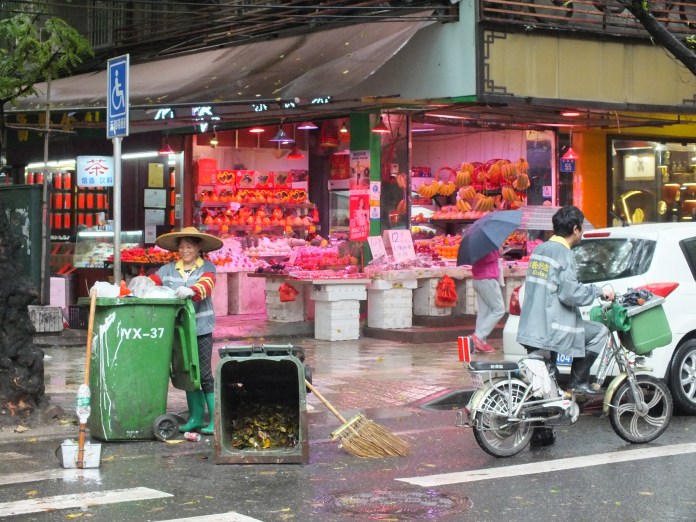
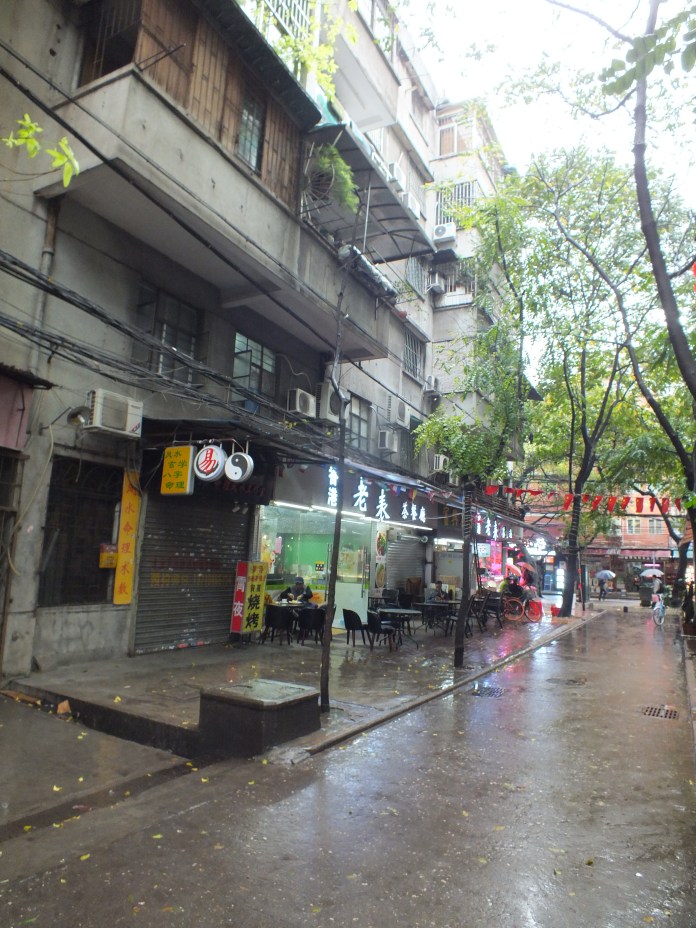
There was something strange about Guangzhou. An intensity of colour, in spite of the drizzle, and a vividness in the streets. With a jolt, I realised it was spring and the colour was the green of new leaves.
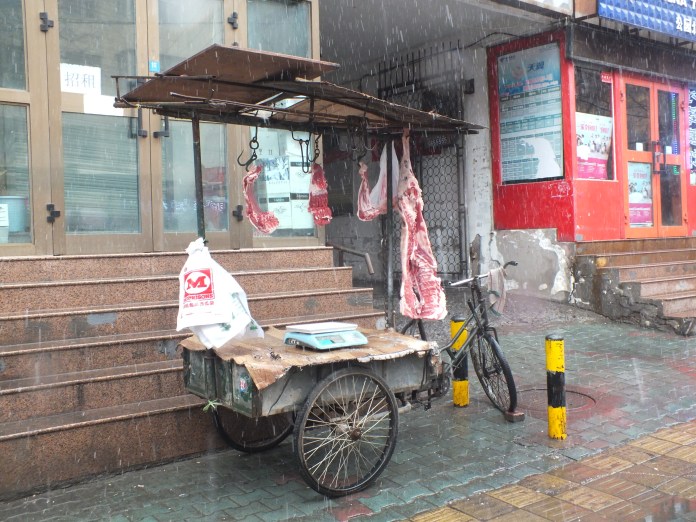
From the air the city seemed an ordered sprawl of tower blocks, between which were squeezed tiny tiled houses collapsing in on themselves and large warehouses with cracks running along their rooves. From the ground the city teemed and bustled. Women in conical hats swept the streets and rode bicycles laden with empty plastic bottles. Blackened repair shops sold gas rings, taps, light bulbs, cooking pots, plastic sheets and ropes.
At the train station crowds of people crushed through the gates into neatly formed queues at each entry point along the grey concrete building. In front of me waited a man whose only luggage was a wooden board and bucket: later I saw him sit down on the bucket and use the board as a table for playing mah-jong. The gates opened and everyone ran forward, pushing their children into small gaps, desperate to get to the train first.
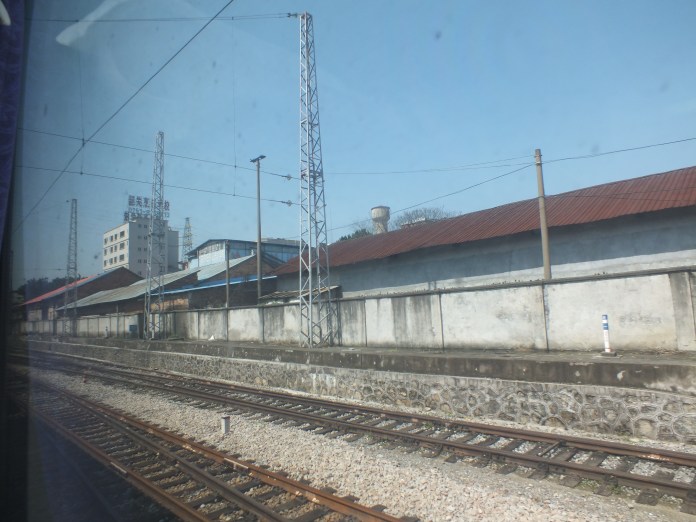
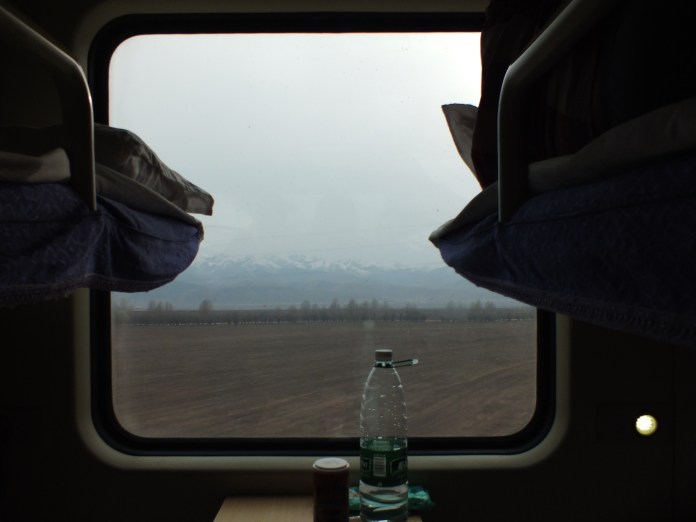
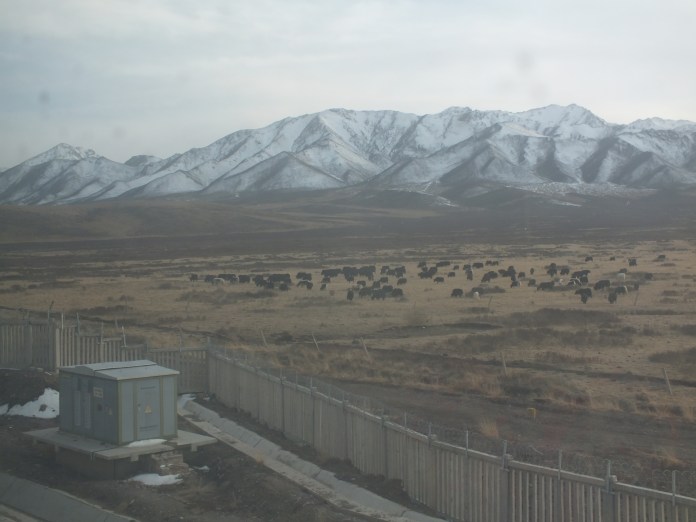
It took two days to cross China. The landscape turned from urban streets to suburban allotments, to fields where women ploughed with buffalo, and then to environmental catastrophe: for almost a whole day we passed mountainsides stripped of plants and replaced with fields, and now scarred by landslides and earth reinforcements. Finally we reached the beginning of the Tibetan plateau and we caught glimpses of spectacular snowy mountains, as well as yaks and temples strung with fluttering prayer flags.

In the far north west of China, in Xinjiang province, lies the city of Urumqi. Traditionally it is home to the Uyghur people, but has been flooded with Han Chinese in recent years, escalating ethnic tensions. Both Uyghur, written in Arabic script, and Mandarin are spoken. It is a beautiful but politically sensitive region, with sporadic outbursts of violence that have then been used to justify China’s nationwide security measures. In 2014 it took the Chinese government a week to announce that 96 people had been killed in a knife attack at a police station. This year a ‘great wall of iron’ was announced, and in April a ban on veils and ‘abnormal’ beards came into force.
As I rode through the city on the wrong bus, I saw soldiers searching women’s hoods, convoys of tanks rolling through the streets, and armed police standing on street corners in groups of three, yawning and checking their watches. Every petrol station was locked off with barbed wire and cars were searched before and after entering. Prominent CCTV cameras photographed every vehicle and every pedestrian that passed. You couldn’t go through an underpass or enter a park without going through a metal detector and having your bag x-rayed. What was most scary was the normality with which every security measure was treated. Outside one street checkpoint a guard was shouting at a woman, holding his megaphone right in her face, and we all looked down and hurried past. On the street by my hostel another tank was parked. I felt too uncomfortable to take photos.
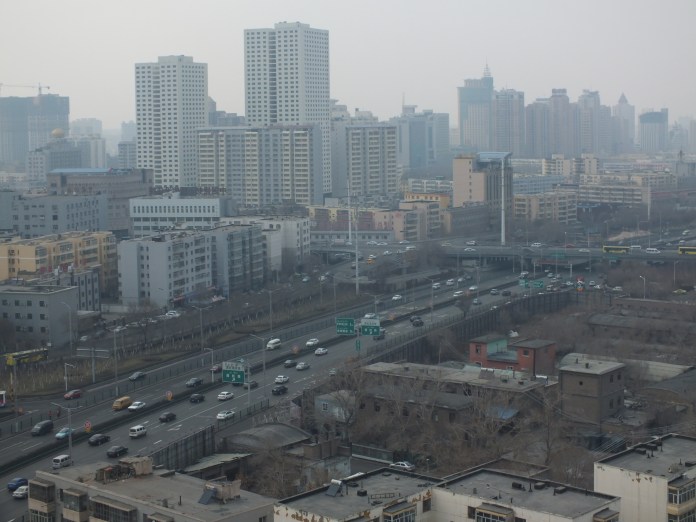
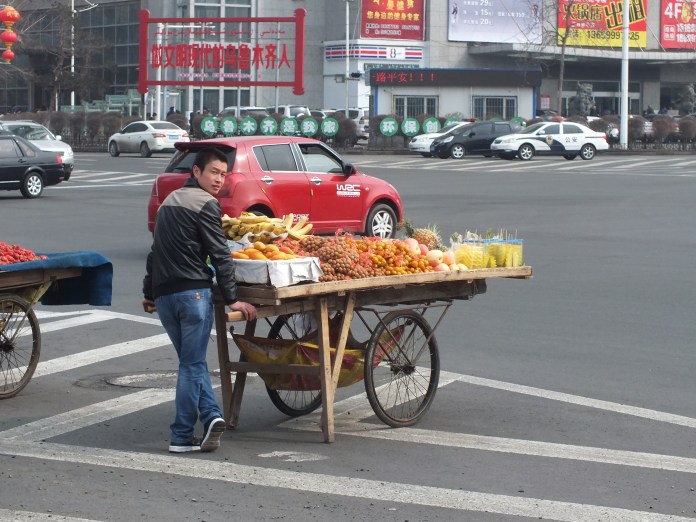
While I waited for a bus to Kazakhstan, I tried to see the city. I walked through the streets past slowly melting piles of soot black snow. It was cold and began to snow again, but there were still wheelbarrows full of strawberries, mulberries, fresh coconuts and decoratively peeled pineapples.
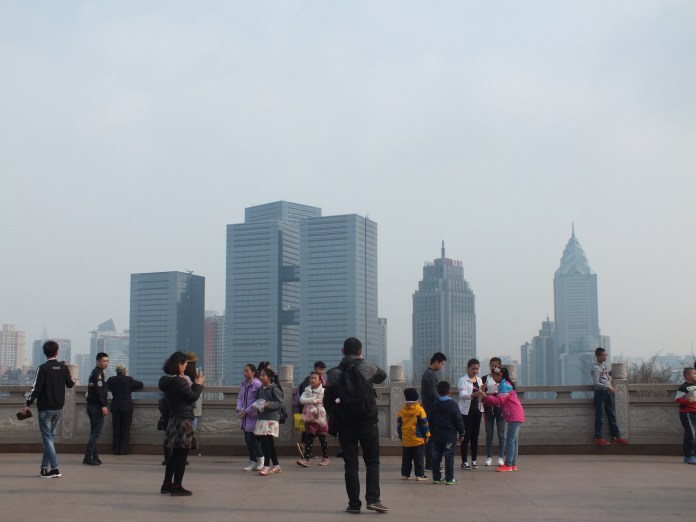
On Red Hill was an old complex of temples and pagodas which had been turned into an amusement park. Children and adults ate candy floss, rode bicycles through treetops and played shooting games. At the top of the hill, on the highest part, stood a police station, and we looked down through the metal railings onto the concrete jungle below and watched yet another convoy of tanks and armoured police vans drive past.
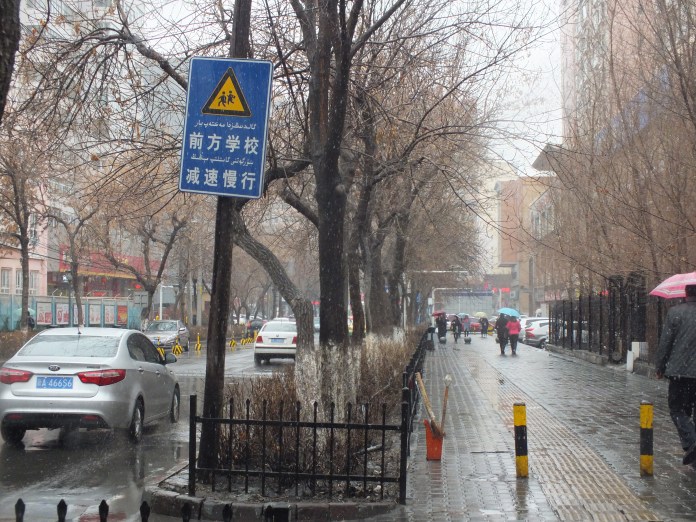
In my hostel dorm was a woman who lay in bed all evening and morning. She’d just broken up with her boyfriend and needed some time away. ‘You never see blue sky here – it’s the factories,’ she said. Today was Ching Ming, she told me, the day people mourn for dead family members and ancestors. Outside the snow fell onto a deserted school playground, and we stood at the window together, watching smoke rise from the grey concrete buildings into the eternally white sky.

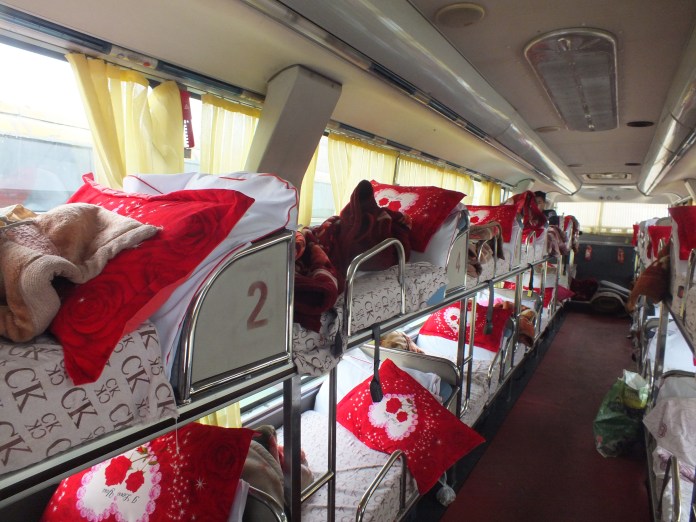
This was my bus from Urumqi to Almaty (a 30 hour journey, a mere 6 hours longer than advertised):

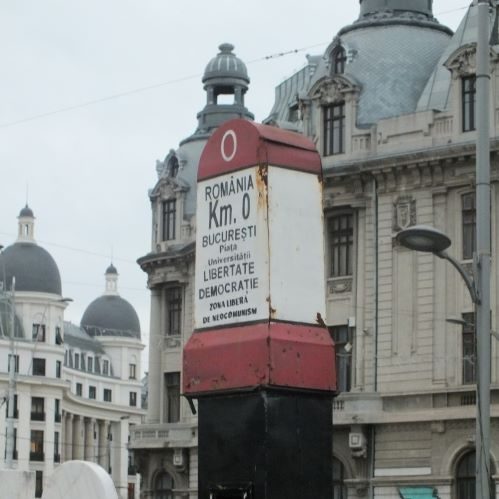
 Km. 0
Km. 0 
Very much enjoyed the post from Singapore. This post suggests a rather bleaker world out there. Makes me glad I live in Scotland even though there is frost in late April. The bunks in the bus are intriguing. It makes one wonder if people there are often traveling long distances. Go well.
LikeLike