Hamba II

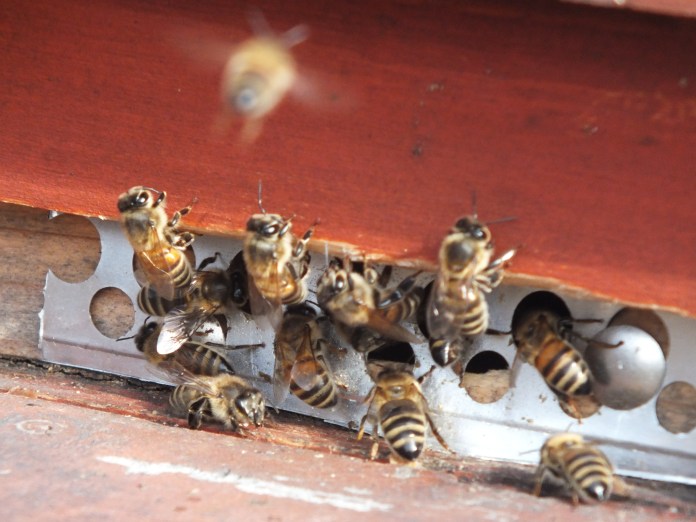
We work without gloves, opening up the hives and measuring the strength of each brood. Willi brushes aside bees with his fingers so gently it looks as though he is stroking them, sometimes picking them off the old queen cages one by one, at other times scooping them up by the handful and dropping them into another hive. I stay as still as possible while bees land on my hands; I bring my hand closer to my face to watch them, the skin on my hand becoming an unfamiliar barren landscape on which the bees’ elongated bodies pulsate, as though they are expecting something to happen.

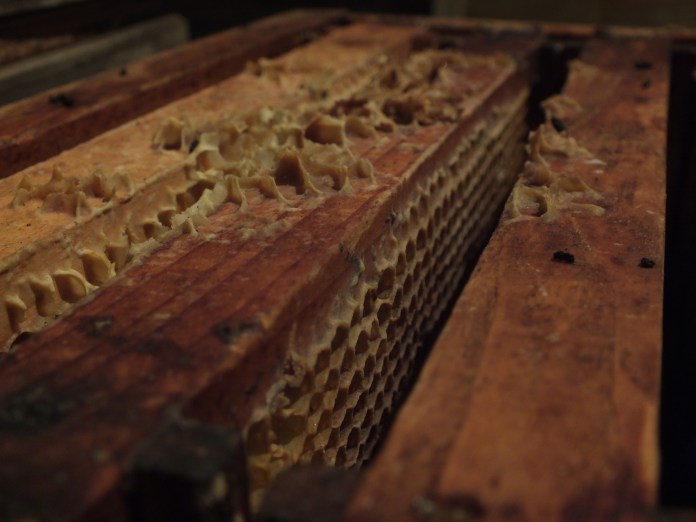
I do not know what Willi sees when we open up a hive. What I see are frames of wax that range from a pale yellow to a deep black, and lots of bees – sometimes calmly huddled in tight circles, sometimes flying in a fast, muddled chaos, disoriented by the overcast sky. But Willi knows the families before we have even opened them and what it is that he is trying to cultivate in them, and he responds to each one with affection, disappointment, anger, irritation, satisfaction and hopefulness as we work our way through the 300 hives.

I move slowly, focussing intently on the task and walking in an unnatural way to avoid angering the bees on my legs. But the buzzing, smoky atmosphere is frequently interrupted by Willi’s Sia ringtone, and as he answers his phone and chats to a new shop that wants to sell his honey or a fellow beekeeper who wants his advice, he carries on lifting and pushing frames and flicking bees out of the way in a relaxed, mindless way.

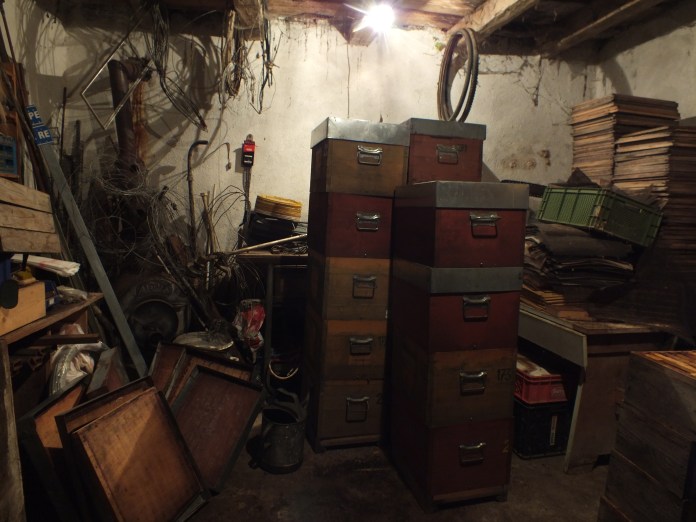
We establish a rhythm, replacing mouse-infested old bases with newer mouse-proof ones, inserting insulation frames to keep the brood warm, removing dead hives (this year was a bad year – around 30% lost) and making notes. We also undertake bee eugenics with queens who have bred with the black bee, a stronger and more aggressive bee than the Buckfast bee.

This begins at one unremarkable hive which Willi recognises before we have even opened it, and which prompts the first murderous pronouncement of the day: he wishes to find the queen and kill her. Willi removes each frame and inspects each one slowly until he finds her. He picks her out and triumphantly holds her up right in front of my eyes, before squeezing her dead with his fingers.

Further on, the situation in another hive is less clear: we need to add a swarm to strengthen the bee numbers, and we want to keep the best queen, but first we must check that there is a second queen to replace the first. Willi picks up the first queen and hands her to me; she struggles so lightly against my fingers, as I hold onto what feels like wriggling eyeballs, that I am not sure whether I am about to crush her or release her. Eventually the second queen is found. For a few long silent seconds, I ignore the unspoken fact that one of us must kill my queen. But then Willi, in a single, swift gesture, takes her from me, pinches her and tosses her dead body over his shoulder. The new queen is installed in the brood, and the rest of her hive unceremoniously tipped out onto their new home.
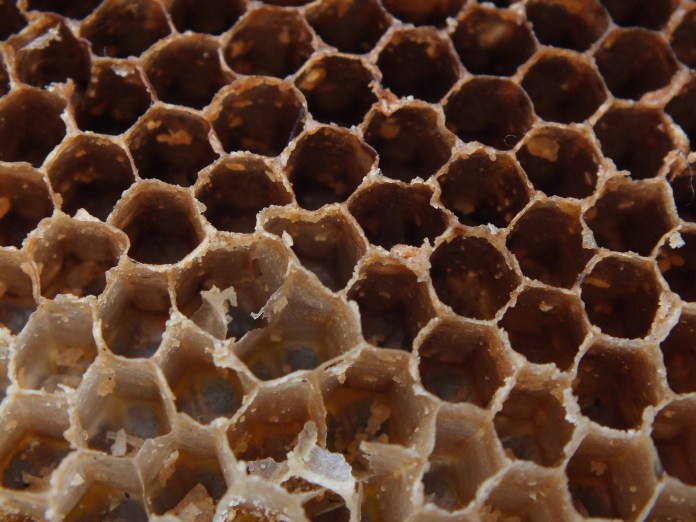
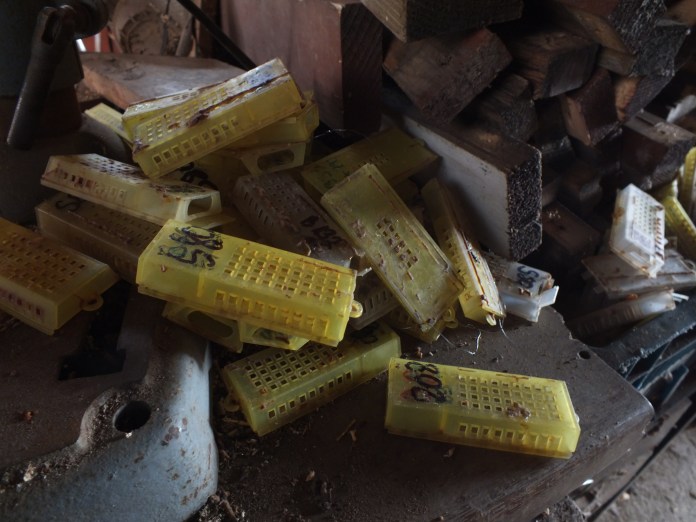
My grasp of genetics is not good enough to understand what is going on with these queens. The notes that I am making are not the unique IDs of each queen, but her genetic lineage. Some new lines will be in-bred for a year to strengthen a particular characteristic, but afterwards they will join this big and complicated family tree. Each year, Willi takes selected queens and drones to a controlled mating station in the mountains, where there is no risk of the queen encountering any other drones. Other queens are artificially inseminated in Austria or Germany and driven over to Romania, placed in little yellow plastic cages and wedged between wax frames. Sometimes the bees are just left to fight it out over the queens themselves.
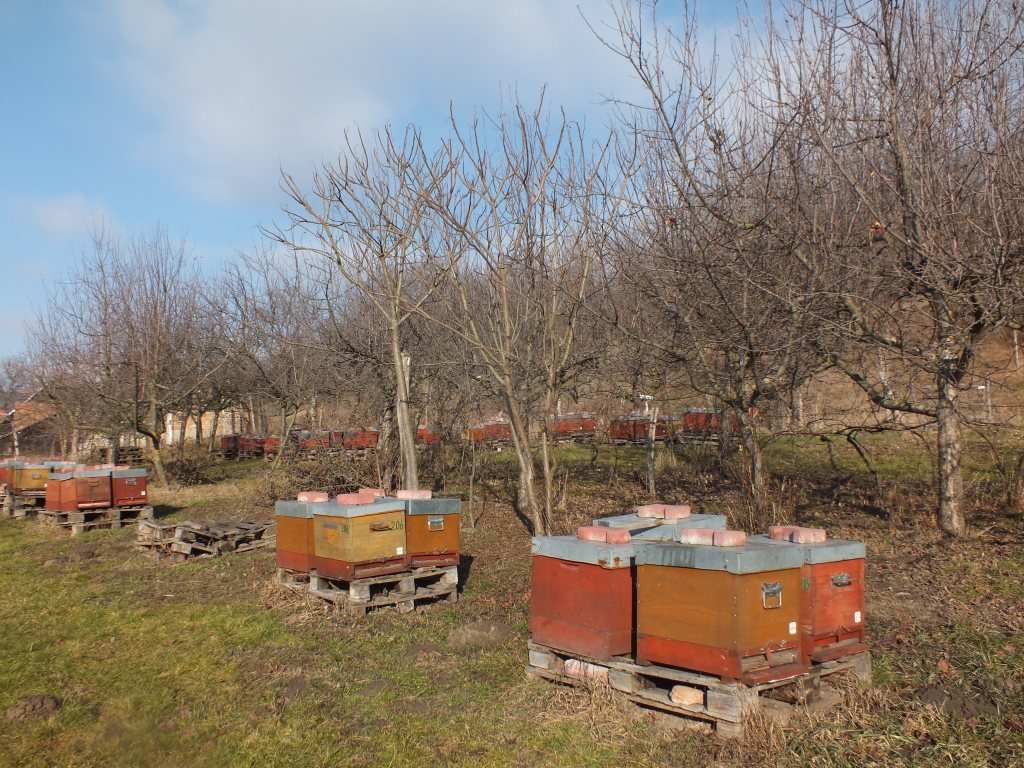
The conditions are not ideal, but pressure to get through all 300 hives before spring starts means that we need to work in colder weather. This means that the bees are attracted to the warmth of our bodies and they settle on us, covering us in small spots of orange poo.

It is hard to tell whether Willi ever gets stung. My first sting comes on my second day, as we are changing the bottom of a busy hive. I feel a long slow stabbing pain in my leg which begins to spread and burn. However, having previously made a fuss when a bee got trapped inside my face net, I now feel the need to prove my beekeeping aptitude by staying silent and refusing to show any sign of having been stung. The pain just becomes one of the many sensations I am hyper aware of in that moment.

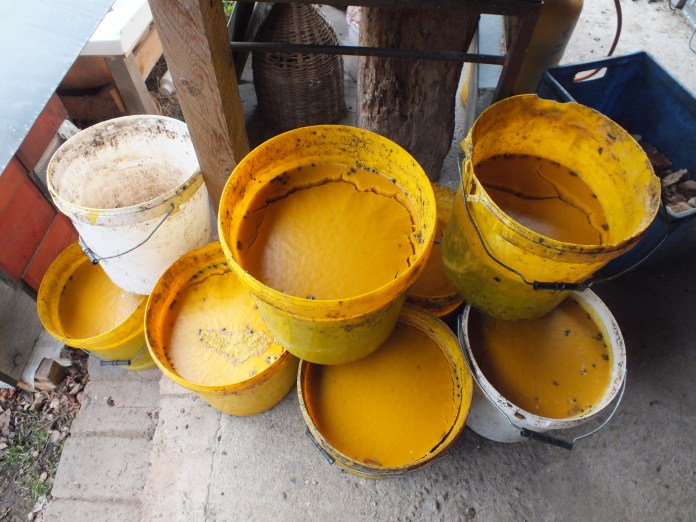
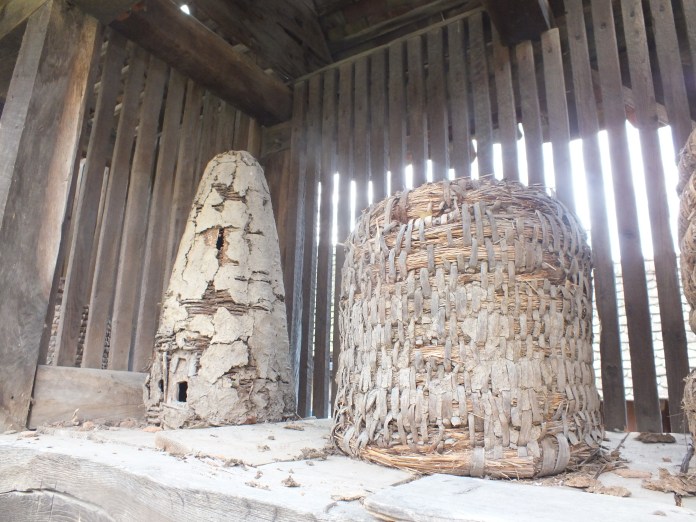
The life of a beekeeper is nomadic. Not from ancient tradition, like the transhumance of shepherds, but as a result of the 19th century commercialization and industrialisation of honey production. In replacing the older practice of bee hunting, beekeeping has domesticated, technologized, and controlled bee populations, and increased honey yields almost fivefold. This is not hobby beekeeping, but nor is it highly commercialized: it is a small organic local honey business, producing around 8 tonnes of honey a year.

The season from April to September is marked by the sequence of flowers the beekeepers will follow: first rapeseed, which will provide protein for the development of bees, then acacia, lime and sunflower. 170 hives at a time will be loaded onto a truck and driven by night – 300km south to the Danube for acacia, 300km west for a second flowering of acacia, 500km east to the Black Sea for sunflower. The hives are weighed to monitor the daily honey production, and are moved on once the production begins falling below a certain level, or enough honey has been collected.

This method is not without problems: use of neonicotinoids on sunflowers has killed many hives, and declining bee populations has led many farmers to increasingly use self-fertilising seeds, which in turn deprive bees of nectar. Neonicotinoids are banned by the EU, but up to this point Romania has had derogations permitting their use – this year will be the first year without the derogation for sunflower. (Willi explains it like this: the French protest against neonicotinoids and ban them in western Europe, and then buy cheap sunflower oil from Romania.) The early spring this year will also, Willi suspects, kill the acacia flowers and mean no acacia honey this year. But when a honey year is good, it is very good.

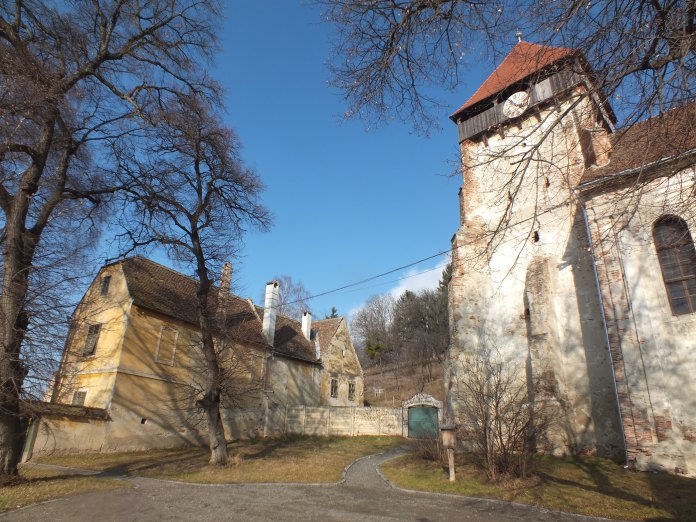
At the moment, the hives are scattered around the countryside nearby. Land and houses are so cheap that if Willi finds a good location, he can afford to buy an abandoned house just to keep the bees in the garden. He also uses empty land next to an old Saxon monastery, and the ruins of a communist dairy. But finding safe locations can be tricky: this year several of his hives were attacked by bears, while others were attacked by an irate neighbour who blocked the hive entrances with expanding foam.

There is saying here – what is good for the bee is bad for the beekeeper. Bees look after themselves: they keep their hives clean, they manage their own temperature, they find their own food and water, they find a new home when they need to. It is our interfering, our desire for honey, that puts them under pressure and increases their vulnerability to diseases. But bees continue to do what bees do. Now, they are just starting to bring the first pollen of the year back to the hive – large, pale yellow lumps of hazelnut pollen. For all the beekeeper’s efforts to control and support the hives, it’s the bees who stay in charge.
Standard

Hamba

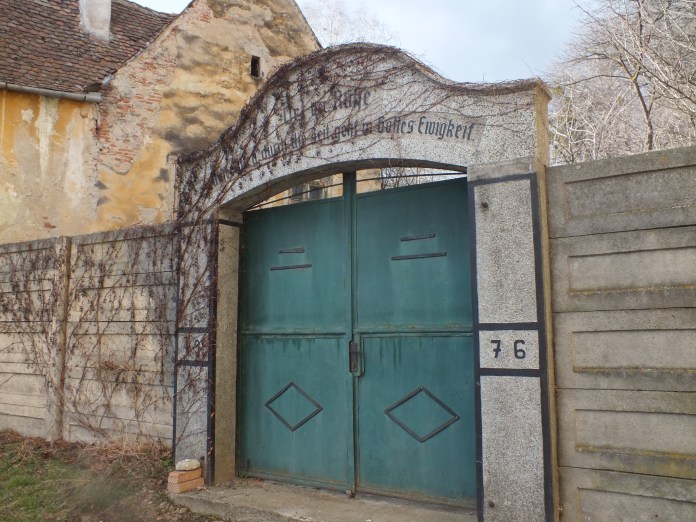
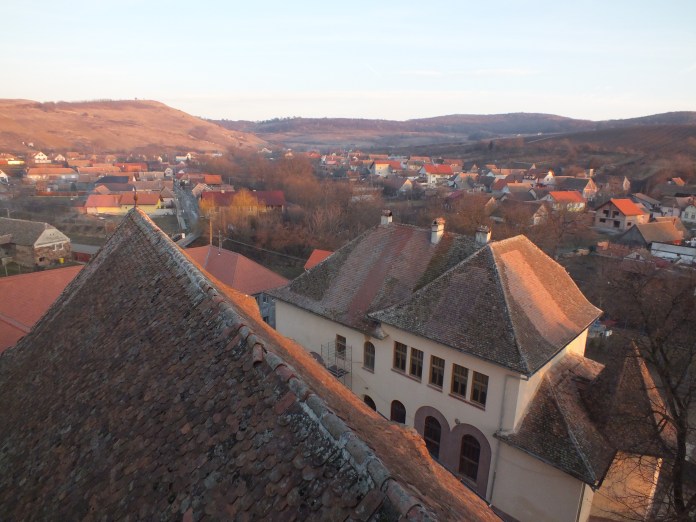
Willi picked me up from Sibiu on a hunt for gas. After driving around the city outskirts looking for butane for the bees and making small talk, we set off for the village of Hamba, 8km north of Sibiu. It is one of the 250 Saxon villages in Transylvania whose Saxon history is slowly disappearing. Even the road we enter on is not the original Saxon road but, thanks to a sharp kink in the road, a new one that ensures our entry is through the Romanian part of the village.

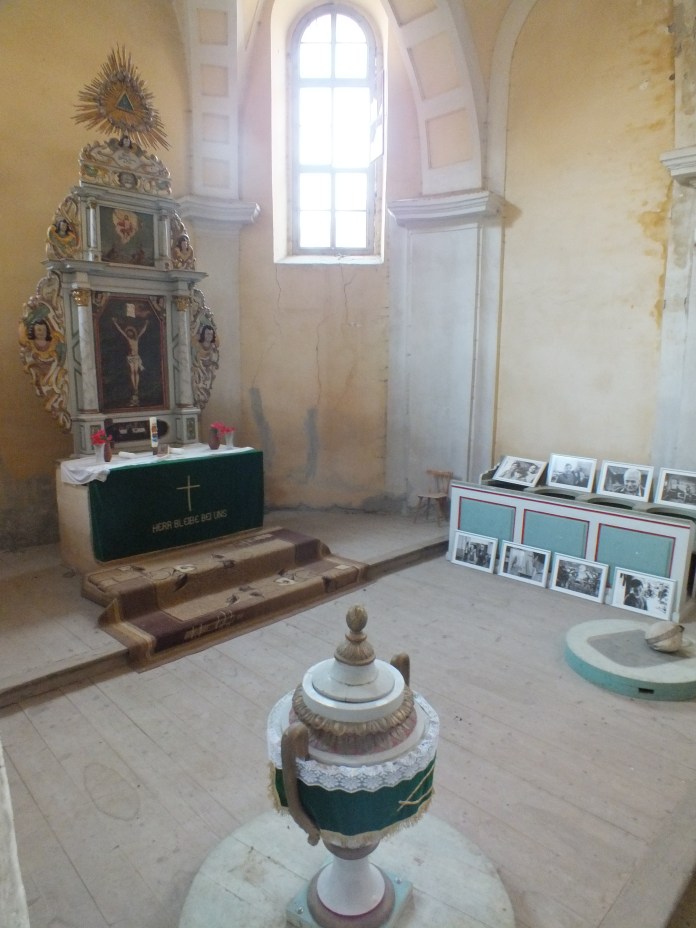
The story of the village can be told quite neatly through its churches. The oldest church in the village is the evangelical Saxon church, first built in the 13th century but whose oldest remaining part is now a 16th century bell tower and a 19th century hall. It was closed once most Saxons had left the village: they were deported, or left to avoid deportation, after the Second World War, or were then later sold to Germany by Ceaușescu, as Willi was, for around 5,000 marks a person.

A Greco-Catholic church once marked the Romanian street in the village. When the Greco-Catholic Church was banned by communists, the churches were handed over to the Orthodox Church and served the new Romanian populations that moved in. The building was not returned after 1989, and so a new Greco-Catholic church has been built across the road.
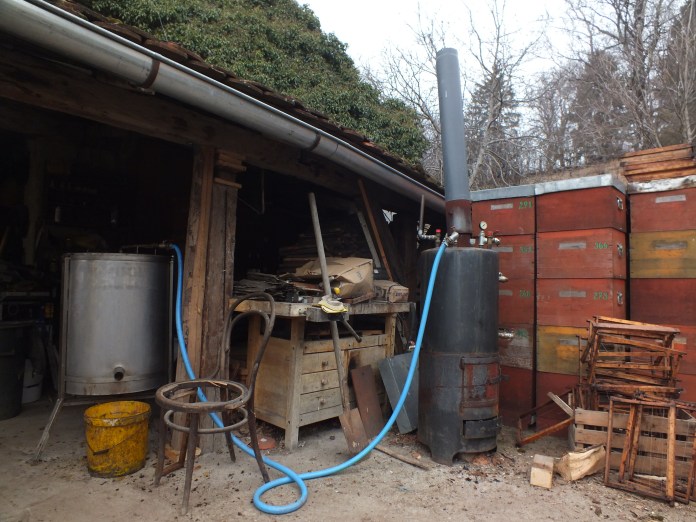
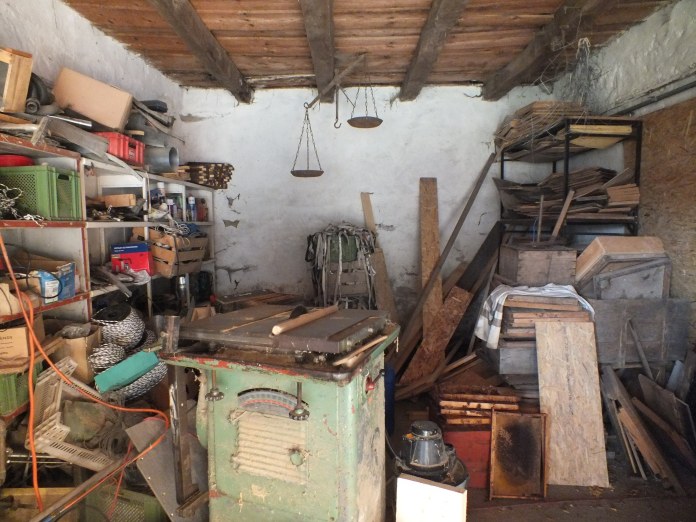
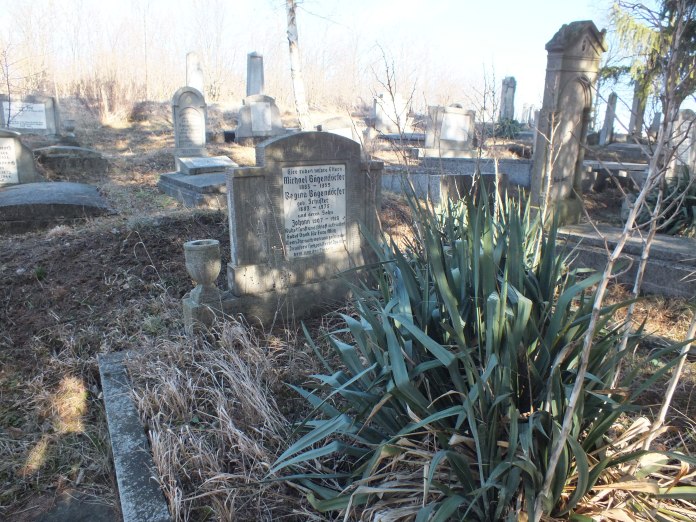
Willi rents the land around the evangelical church and the old priest’s house, which had lain empty for 20 years before he moved in. He also rents the old Saxon school next to the church, which had 120 students before the Second World War but which has long since closed. It now houses his bee business. Behind the house lies the church graveyard, distinguished not only by its use of the local Saxon dialect, but by its position on the opposite hillside from the other village graveyard.

Willi is one of the very few Saxons living in the village, though he is not originally from this village but from a town 40km further north. His grandmother was sent to Russia when her son (Willi’s father) was six years old. Afterwards she did not return to Transylvania but went to Germany. Her son tried to get permission to visit his mother when he was 18, but was refused. So he tried to swim across the Danube, but was caught and sent to prison for two years. Once marked as a political prisoner, future attempts to travel to Germany were futile. It was only in the 1970s that his mother – now remarried and with a new family – was able to come to Romania and they saw each other for the first time.

Willi and his family were sold to Germany in 1982, but in Germany their Saxon dialect was believed to be Romanian and they were seen as foreigners. Willi says he never really felt at home in Germany, and so 15 years ago he returned to Transylvania, where at last he feels good. He had studied agriculture in Germany and was working as an inspector for organic certification in eastern Europe (and occasionally central Asia). He found the old priest’s house in Hamba, with its land and spacious buildings, and set about restoring what he could, planting a small orchard and setting up an apiary which has grown into a very successful business. The village is perfect for bees, surrounded on three sides by forest, and with a vast abandoned orchard in the neighbouring valley.

But while business is booming and demand for honey is stronger than ever, there is no one in the village to employ. The young people have left to go to England, Germany, Austria, France, Italy and Spain. Those who are looking for work are those who have returned from the west with health problems – and unable to do the manual work that is needed.

Willi is rude about the Romanians (he distinguishes between the old and new Romanians), and rather more kind towards the gypsies. But it is not simple cultural hostility. In my bedroom, the old priest’s office, the bookcases are filled not only with German and French classics, but with well-read Romanian ones – Mihai Eminescu, Ion Creangă, Ana Blandiana, Lucian Blaga.

The hostility is personal for Willi. Every year he sees another fortified Saxon church crumble into ruins, or an old Saxon house pulled down to make way for a new Romanian one. He points out Saxon houses which have been bought by Romanians and whose roofs have been immediately replaced to be less Saxon. With fewer than 30,000 Saxons left in Romania, the church cannot afford to keep up the maintenance of these buildings, and the local communities and councils have no interest. While there are plenty of articles written about Saxons returning to Transylvania – the story is very popular among journalists – the numbers are negligible given the speed at which the buildings and culture are collapsing. It is, Willi feels, an 800-year history being wiped away.

Yet the place overflows with life. A shaggy, creamy Carpathian Sheepdog leaps in the air every time anyone walks past, two cockerels compete for attention, five doves coo obliviously in their dovecote, a pregnant cat lounges on top of the stove (her kittens will be given away as gifts to loyal honey customers), and two enormous sheep are spoilt morning and night with hand-fed corn. Willi’s young children visit from Sibiu speaking the Saxon dialect, defying the empty church and graveyard between which they live. And when the sun comes out and the air becomes uncomfortably warm, out come the bees buzzing noisily and reassuringly, reminding us to get on with life.

Standard

Sibiu

At last snow fell, the night before I left Bucharest, and the media reaction rivalled English snow hysteria. But when I got off the bus mid-way across the Carpathians on the way to Sibiu, I realised I had forgotten what cold felt like: the pinching in my nose, the wind up my sleeves and down my collar and through my socks, the feeling that my clothes were so useless I might as well have been naked. And it was barely -3.

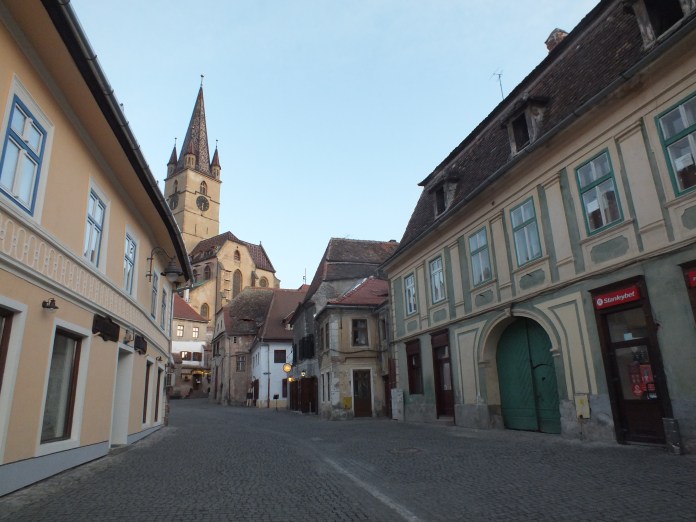
Sibiu loudly asserts a European identity. Its selection as European capital of culture in 2007 symbolised Romania’s entry into the EU, cultivating a globalised medieval history of centuries of European migration and cultural exchange. The German-speaking Saxons of Transylvania, a community that includes the descendants of the lost children of Hamelin, and their history dominate the city’s landmarks. Church notice boards and tourist information panels are in German, Friedrich Schiller gets not only a book shop but a Piaţa dedicated to him, and manhole covers are impressed with both the names of Sibiu and Hermannstadt, the city’s Saxon name. My bus driver had blond hair and blue eyes. Even the parking system seems German in its efficiency.

Sibiu seems to have embraced a kind of transcendent European identity: in the building that once housed the Museum of Saxon Ethnography (and perhaps still does, but no information is provided), there is now hosted a virtual museum where you can interact with videos about European art masterpieces and watch virtual reality documentaries about subjects so far removed from anything else in the museum or city (such as polar bears) that they seem designed only to show off the fact that they have funding from the EU. The museum switches between Romanian, French and English without any logic or translation, creating a kind of distant metalanguage that floats above any real place. I felt a true citizen of Europe.

Sibiu also cultivates its imperial past, not only in historic monuments like the Brukenthal Palace but in other living ones such as the Hotel Römischer Kaiser. More hidden are the traditions of the crafts guilds from the 14th century, though tourist shops sell the usual but beautiful painted bowls of Horezu, intricately decorated hollow eggs, carved spoons, and rough, soft cotton shirts decorated with embroidery and handmade lace.

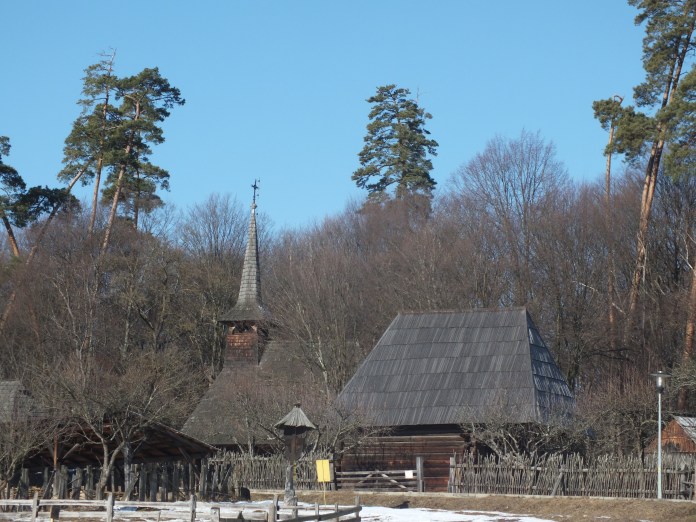
The craft traditions are best seen at the ASTRA museum – firmly a Romanian museum – which houses one of the largest open-air ethnography museums in Europe (at this point, it is hard to imagine a world beyond Europe exists). Old houses built in traditional styles from across Romania have been carefully transported and reconstructed in the park, and are now arranged in ungeographic but attractive clusters.

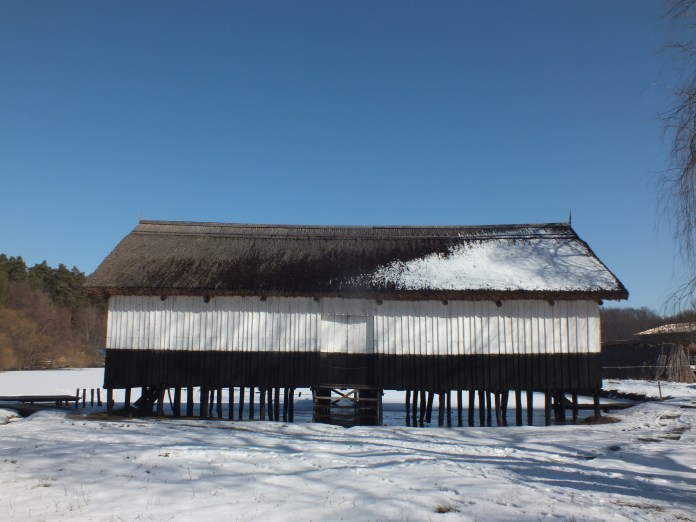
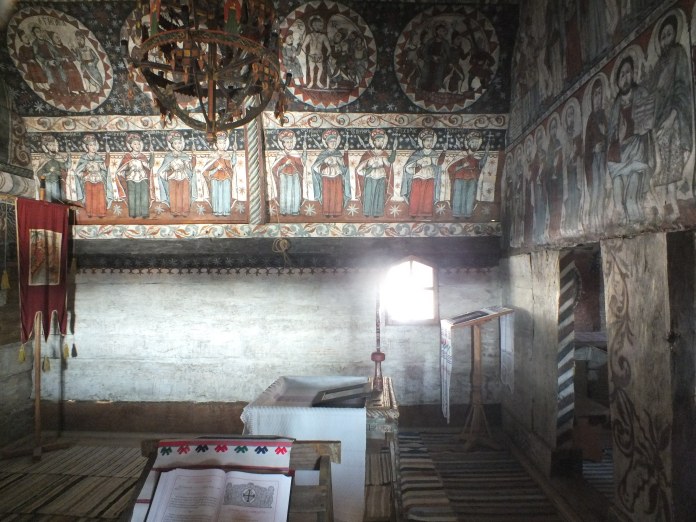
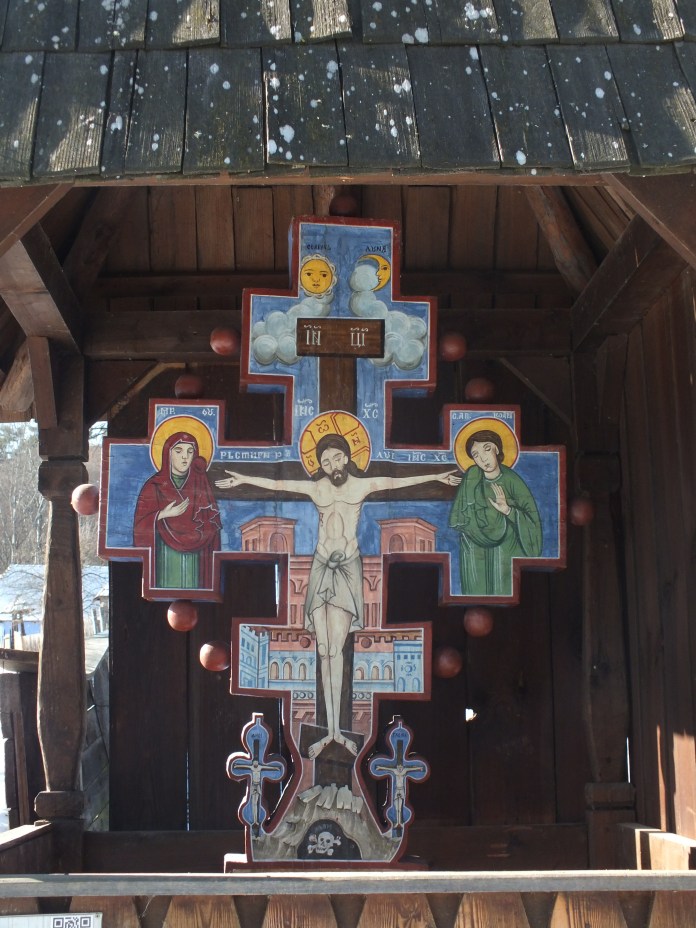
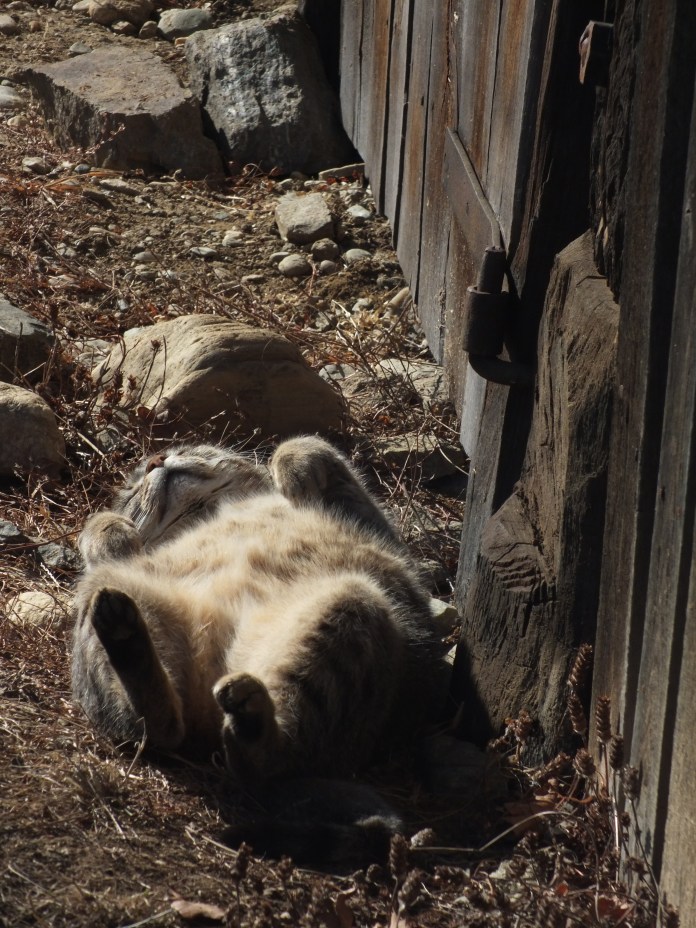
When I visited, the only sign of life, apart from stray cats and a solitary donkey, came from a transplanted wooden church which was amplifying a serice across the empty village. As I wandered around, this chanting and singing was accompanied by the beat of dripping icicles and the tinkle of falling icicles. Most of the houses were padlocked shut for winter, but I could climb up onto verandas and peer through windows into sparsely furnished rooms, admiring the technical mastery and beauty (so fain) of the houses. Further away, in a large frozen lake stood buildings on stilts, their blackened wooden stilts tapered precariously thinly at the surface of the ice.

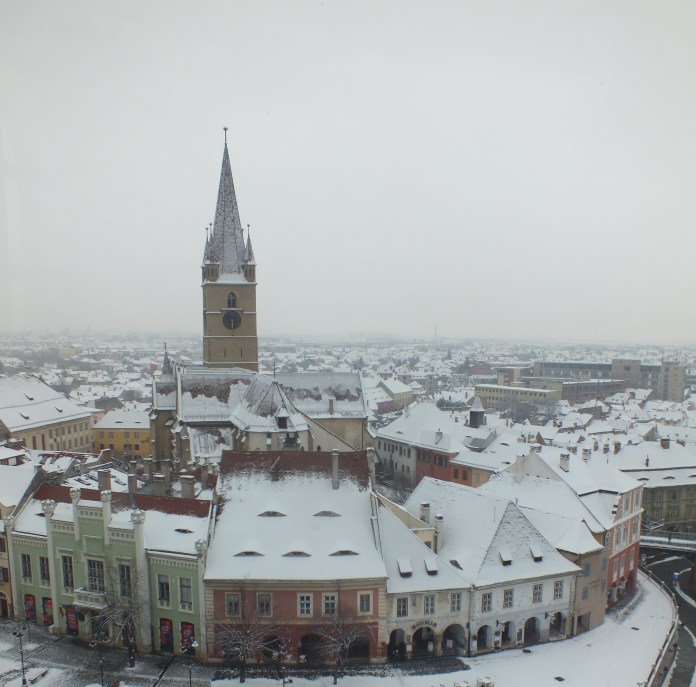
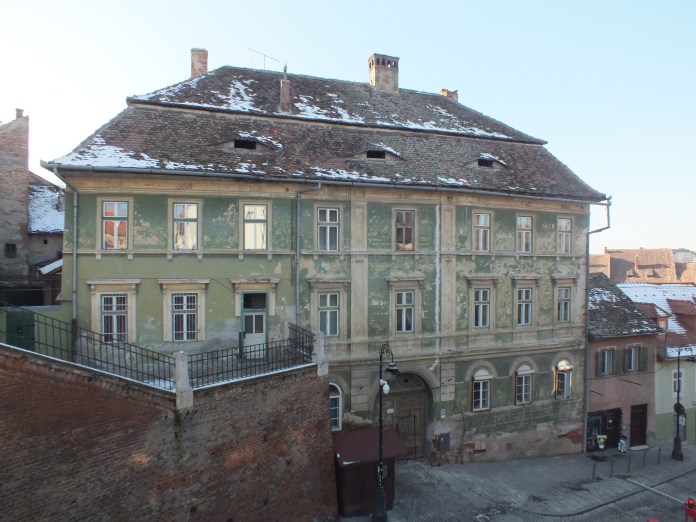
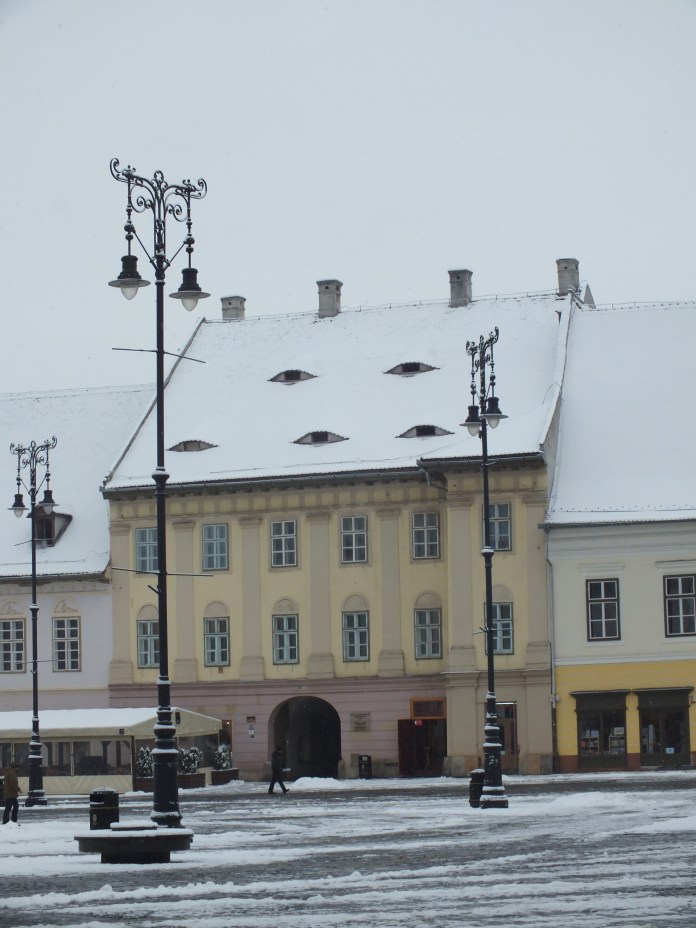
Everywhere in Sibiu seemed frozen and asleep, with Christmas gone and spring not yet arrived. The museums were mostly closed for periods that coincided with my stay.  An ice-rink in the middle of the central square stood empty most of the time, occasionally enjoyed by a child, and once by an elegant grandmother far outshining her granddaughter. Only the eyes in the roofs, which normally gaze sleepily out over the city under hooded lids of roof tiles, seemed awake, transformed by the snow into a dark, bright stare.

Standard

Bucharest

DSCF1285

The blog is back. This new journey starts with a bus ride from London to Bucharest one unseasonably warm January night. The bus is full of Romanians returning home to renew their papers or stock up on jam, but there are two other young English people on board who have decided to take a principled stand against flying. Our journey takes us across France, Belgium, Germany, Austria, Hungary and finally Romania, but by Frankfurt a heavy fog settles that stays with us for the rest of the way.

Punctuated only by 10 minute breaks at motorway service stations every few hours, the ride is smooth and dozy. Gradually people start to unwind. A man insists on spending the entire journey sleeping in the aisle, and nothing anyone can say and no amount of people stepping over his sleepy corpse will move him. One of the drivers bids a passionate and highly unprofessional farewell to a passenger in the morning, and by the afternoon has seduced a new one (he does this journey twice a week). There are only four people left on the bus for the final leg of the journey, most of which is spent trying to work out who the undocumented extra passenger is: it is not the old man wearing dirty flip flops and carrying a plastic shopping bag of clothes who got on in a frosty Budapest and mutters continuously in a strange mix of English, Romanian, Russian and German, but the smart young woman with headphones.

DSCF1051

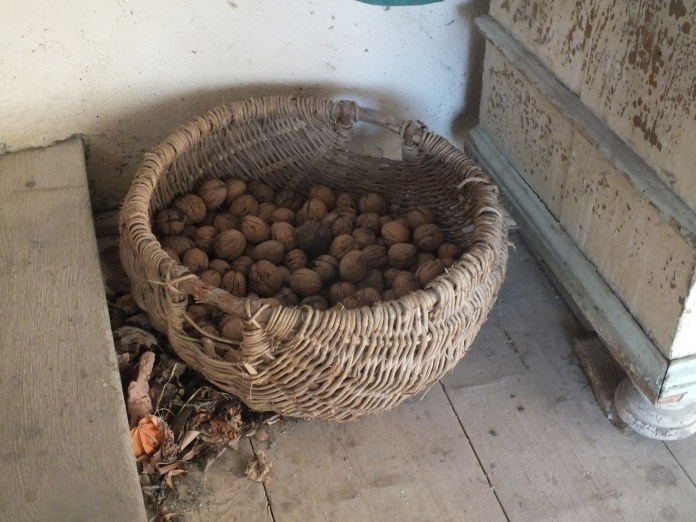
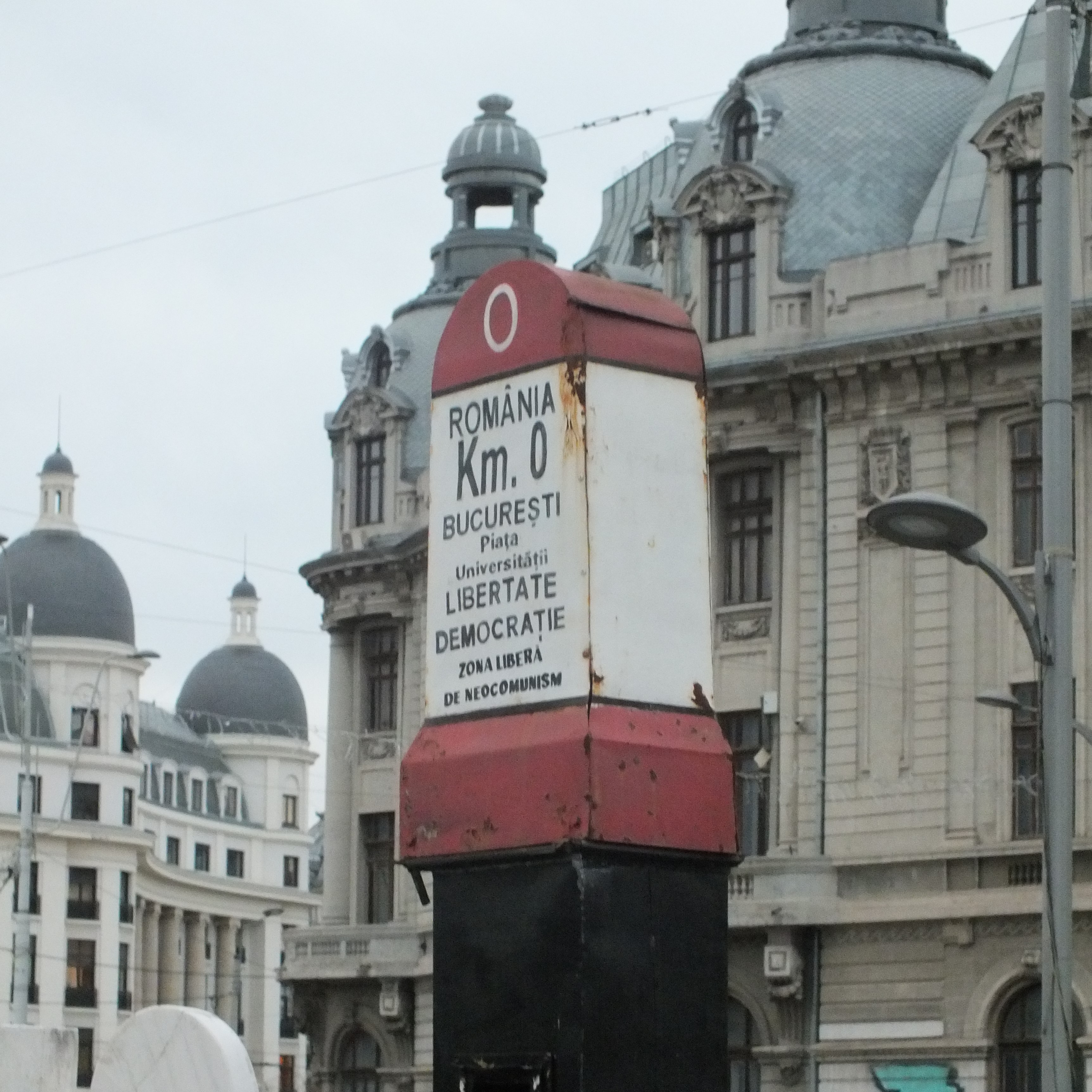
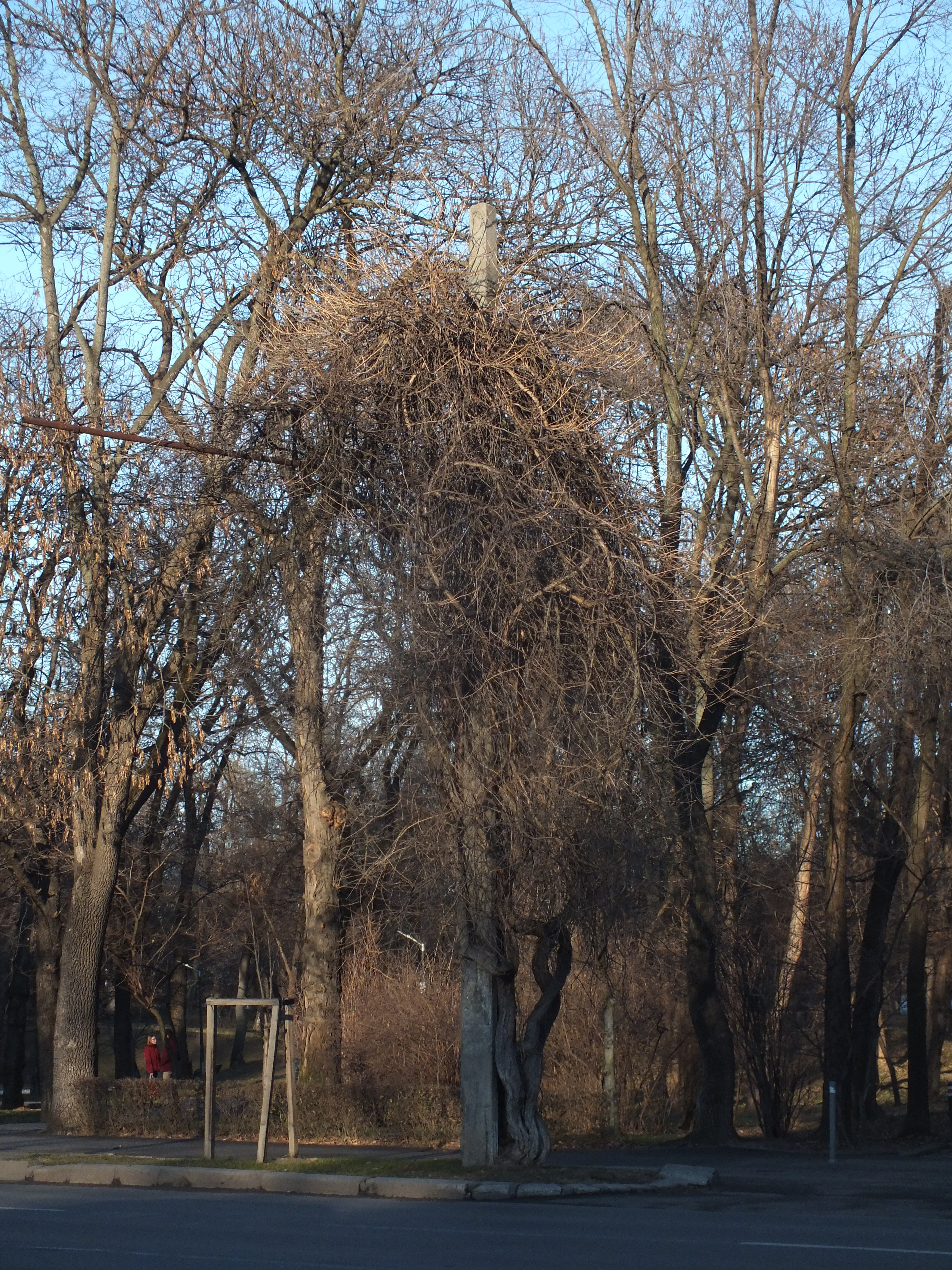
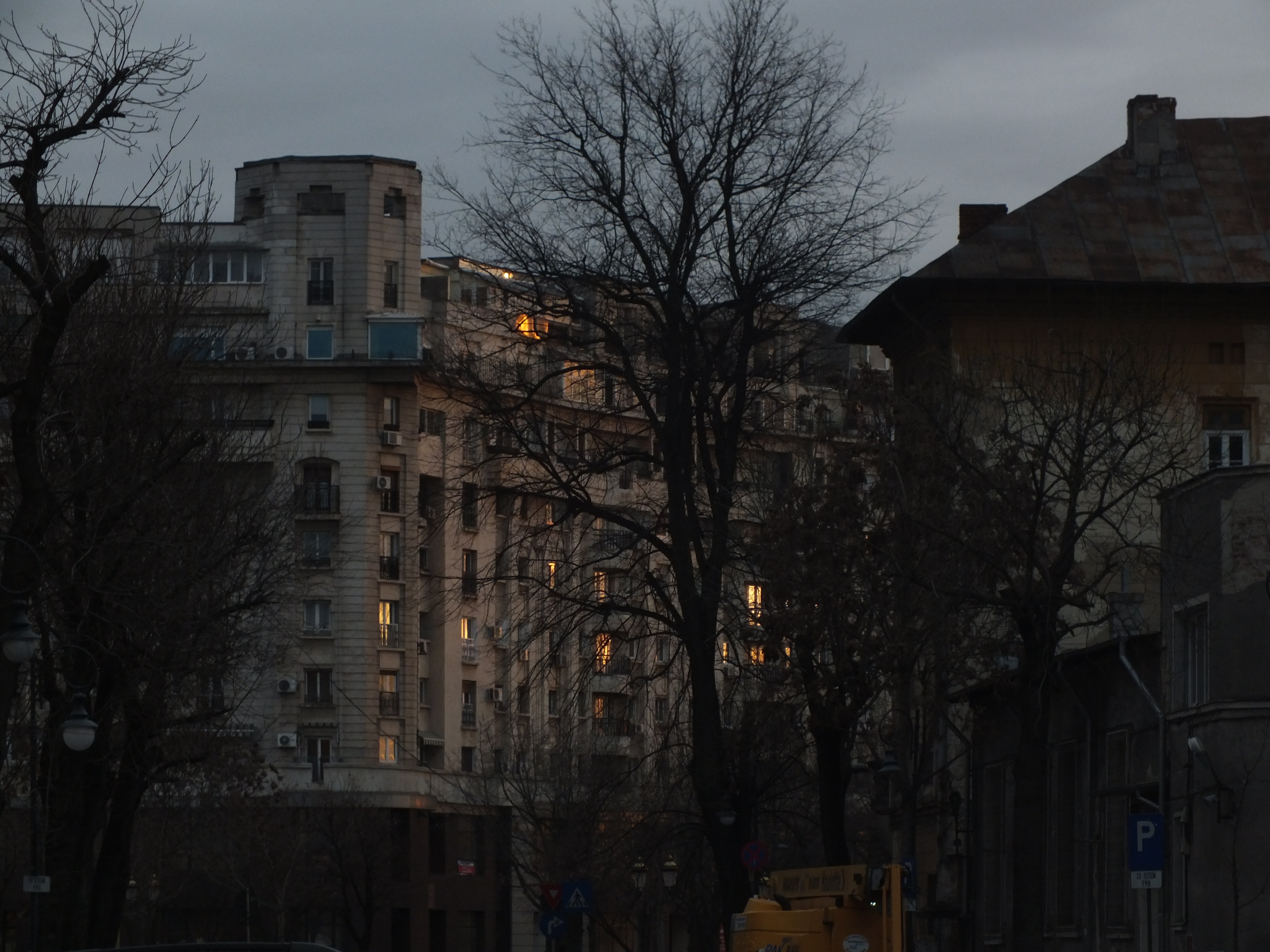
The Bucharest I arrive in is without snow. That it is almost twenty degrees above the average temperature has been accepted as a natural anomaly. Cars now rule the city: not in the chaotic noisy way they used to with horns and alarms, but with a choking jumble of double or triple parked cars that make every corner blind, block entire lanes of traffic and push pedestrians into the roads. As I wait for a bus, the only reassuring mode of transport, a taxi driver pulls over, opens up his boot, retrieves a thermos and starts cracking open walnuts with a glass bottle on a nearby bench.

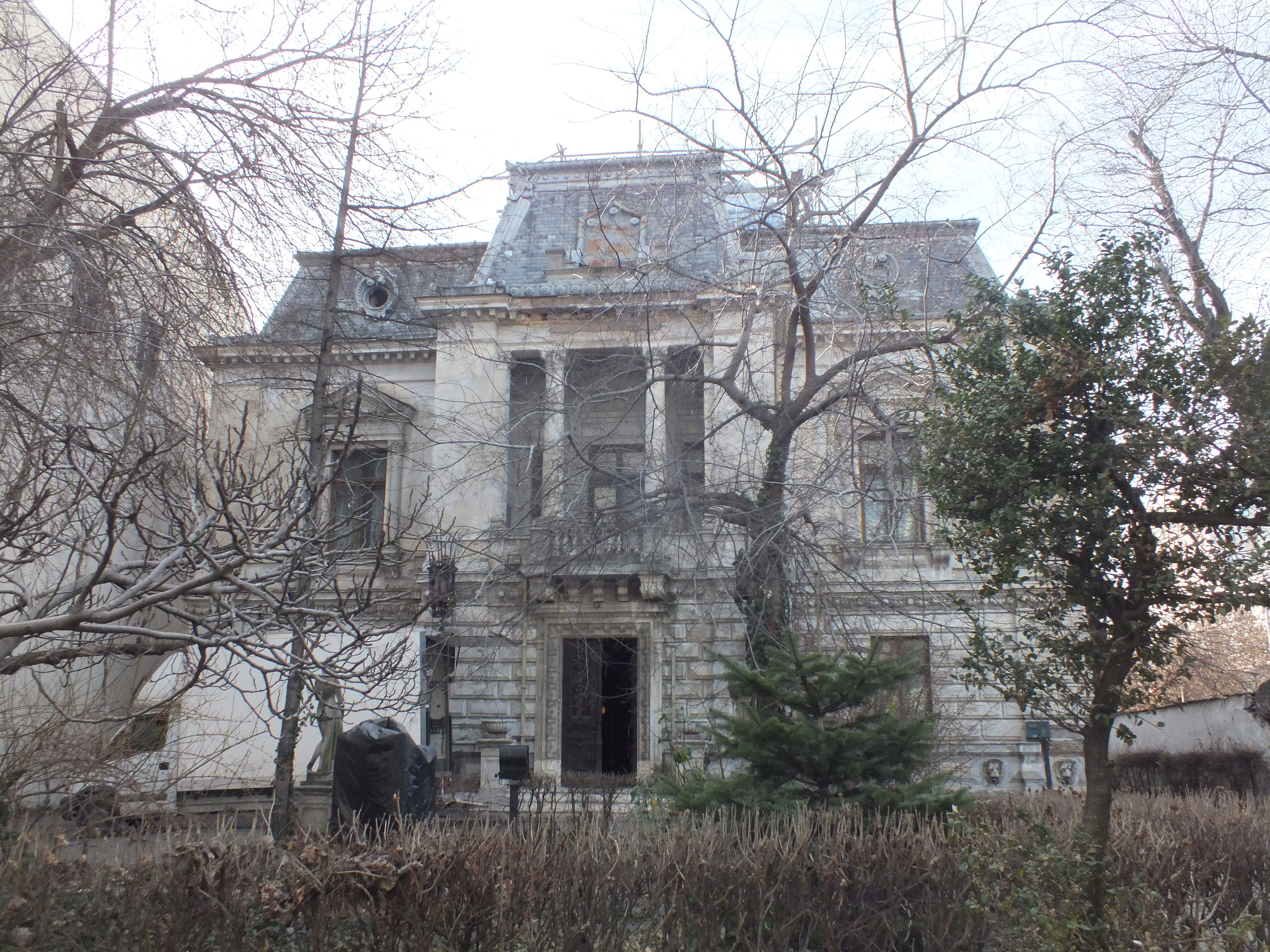
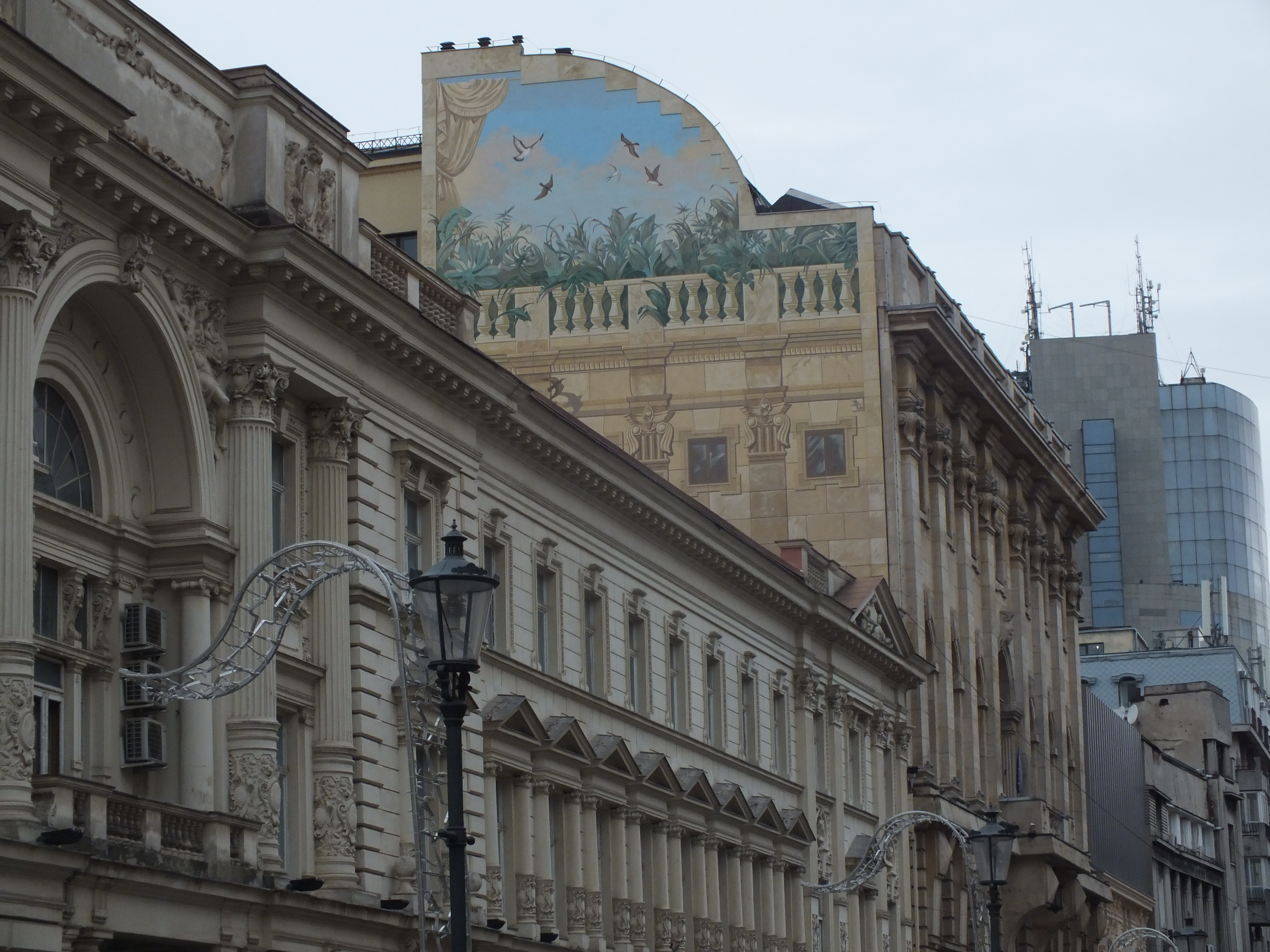
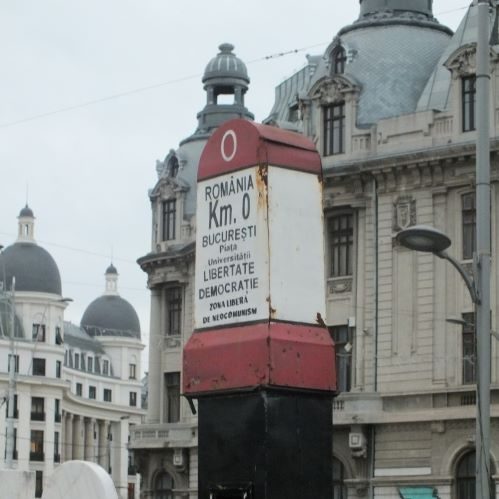
While the Italian facades and bars of Lipscani have been spruced up beyond recognition, streets of old crumbling buildings remain for sale, seemingly forever unsold, awaiting their collapse before new blocks can go up in their place. Round red plaques warn passers by that these buildings are dangerous after earthquakes. The night of Brexit, Bucharest experiences its biggest earthquake in a year, and in the apartment in Colentina we gild picture frames with gold leaf.

I have been trying to reactivate my memory, so I walk and walk. The smell of fresh concrete and placinta cu mere at Piata Victoriei metro station awakens new memories, but the changes in once familiar streets are enough to unsettle any confidence in those memories. I have a new moment in time to capture and remember. So this is what this blog will do over the next few months, as I prepare to become a student of history, memory, the past – and who knows what else.

DSCF0976

DSCF1218

DSCF1248

DSCF0772

DSCF0944

DSCF0852

DSCF0727

DSCF1244

DSCF1001

DSCF1265

DSCF0804

DSCF1081

Standard