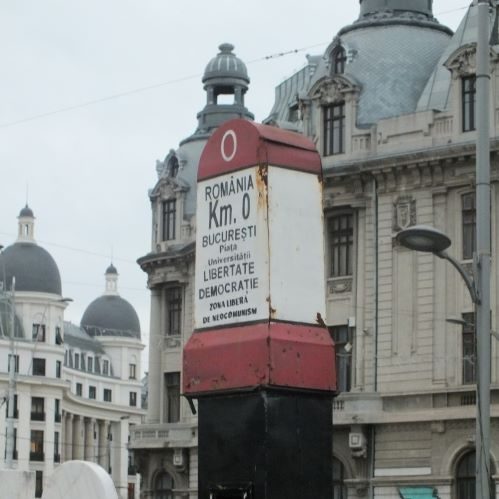
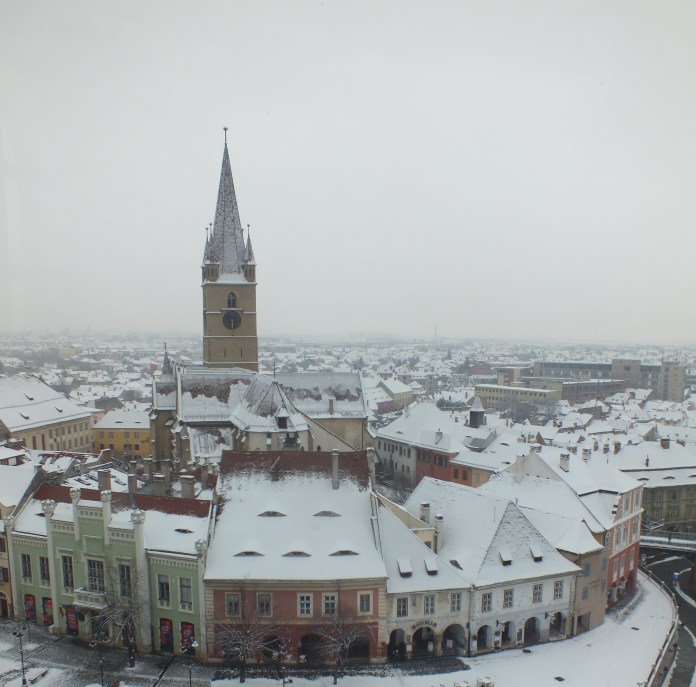
At last snow fell, the night before I left Bucharest, and the media reaction rivalled English snow hysteria. But when I got off the bus mid-way across the Carpathians on the way to Sibiu, I realised I had forgotten what cold felt like: the pinching in my nose, the wind up my sleeves and down my collar and through my socks, the feeling that my clothes were so useless I might as well have been naked. And it was barely -3.
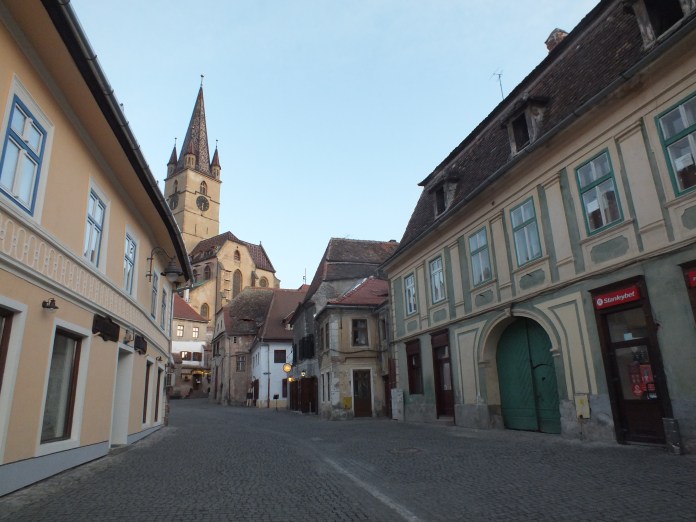
Sibiu loudly asserts a European identity. Its selection as European capital of culture in 2007 symbolised Romania’s entry into the EU, cultivating a globalised medieval history of centuries of European migration and cultural exchange. The German-speaking Saxons of Transylvania, a community that includes the descendants of the lost children of Hamelin, and their history dominate the city’s landmarks. Church notice boards and tourist information panels are in German, Friedrich Schiller gets not only a book shop but a Piaţa dedicated to him, and manhole covers are impressed with both the names of Sibiu and Hermannstadt, the city’s Saxon name. My bus driver had blond hair and blue eyes. Even the parking system seems German in its efficiency.
Sibiu seems to have embraced a kind of transcendent European identity: in the building that once housed the Museum of Saxon Ethnography (and perhaps still does, but no information is provided), there is now hosted a virtual museum where you can interact with videos about European art masterpieces and watch virtual reality documentaries about subjects so far removed from anything else in the museum or city (such as polar bears) that they seem designed only to show off the fact that they have funding from the EU. The museum switches between Romanian, French and English without any logic or translation, creating a kind of distant metalanguage that floats above any real place. I felt a true citizen of Europe.


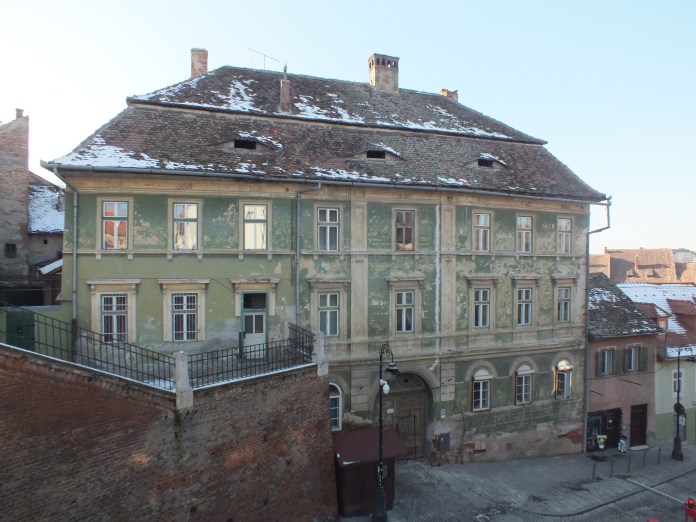

Sibiu also cultivates its imperial past, not only in historic monuments like the Brukenthal Palace but in other living ones such as the Hotel Römischer Kaiser. More hidden are the traditions of the crafts guilds from the 14th century, though tourist shops sell the usual but beautiful painted bowls of Horezu, intricately decorated hollow eggs, carved spoons, and rough, soft cotton shirts decorated with embroidery and handmade lace.
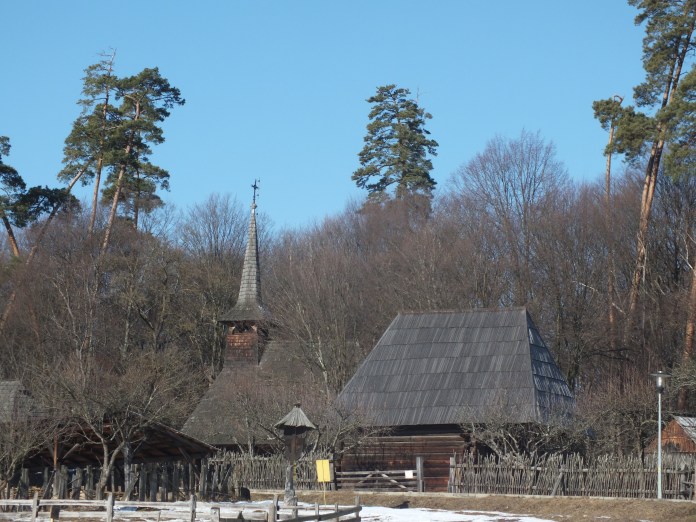
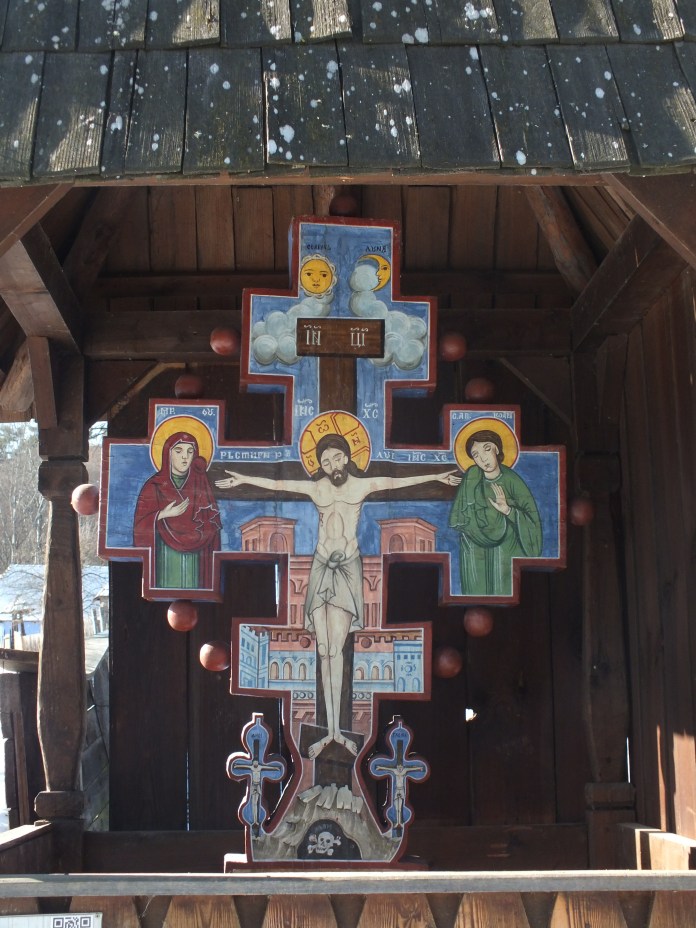
The craft traditions are best seen at the ASTRA museum – firmly a Romanian museum – which houses one of the largest open-air ethnography museums in Europe (at this point, it is hard to imagine a world beyond Europe exists). Old houses built in traditional styles from across Romania have been carefully transported and reconstructed in the park, and are now arranged in ungeographic but attractive clusters.

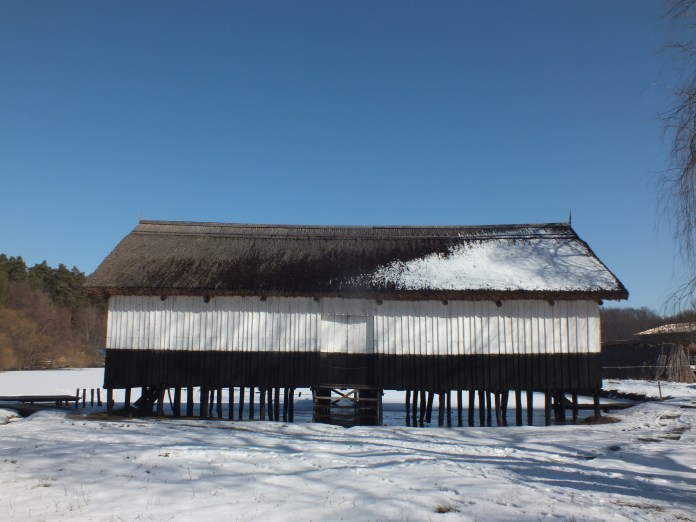
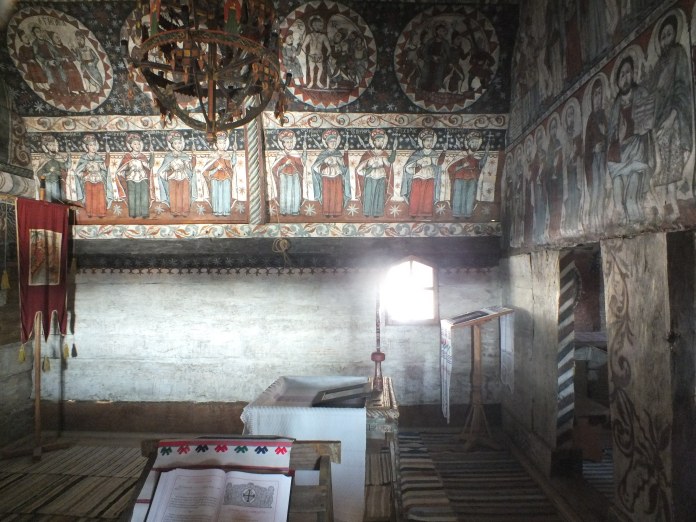
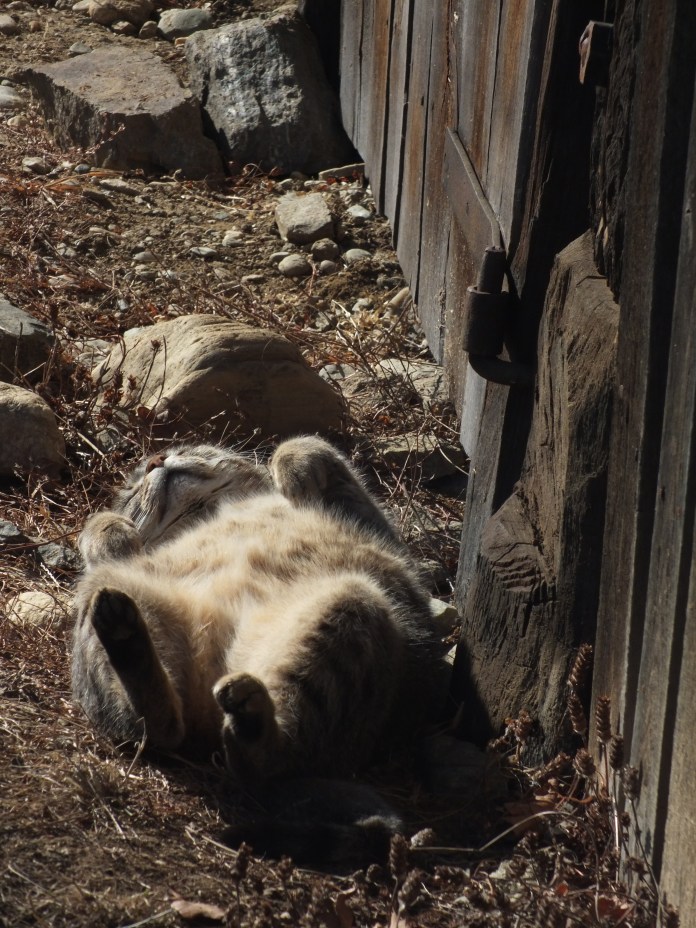
When I visited, the only sign of life, apart from stray cats and a solitary donkey, came from a transplanted wooden church which was amplifying a serice across the empty village. As I wandered around, this chanting and singing was accompanied by the beat of dripping icicles and the tinkle of falling icicles. Most of the houses were padlocked shut for winter, but I could climb up onto verandas and peer through windows into sparsely furnished rooms, admiring the technical mastery and beauty (so fain) of the houses. Further away, in a large frozen lake stood buildings on stilts, their blackened wooden stilts tapered precariously thinly at the surface of the ice.
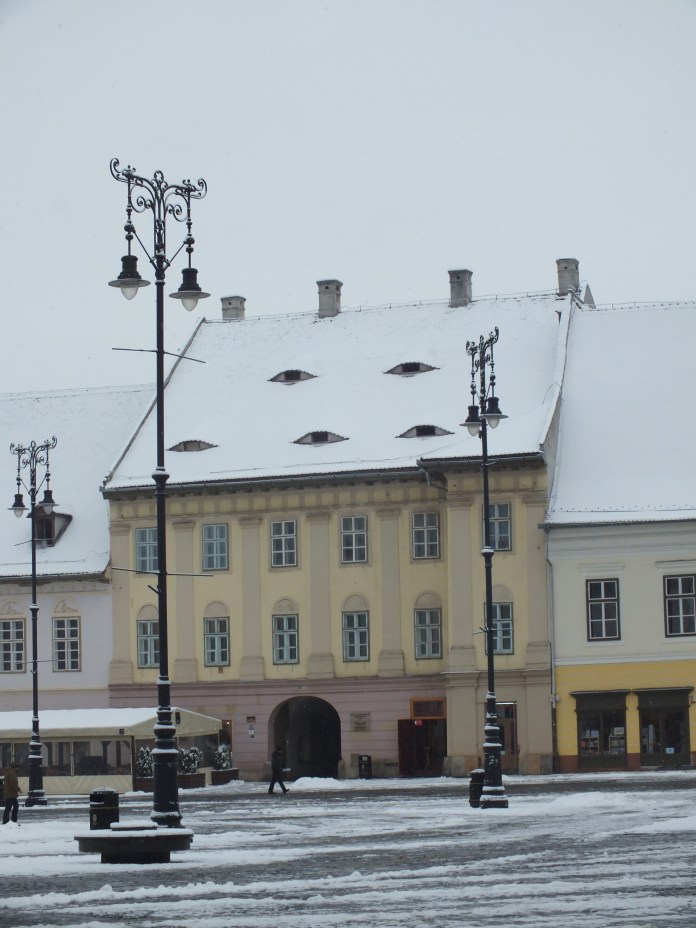
Everywhere in Sibiu seemed frozen and asleep, with Christmas gone and spring not yet arrived. The museums were mostly closed for periods that coincided with my stay. An ice-rink in the middle of the central square stood empty most of the time, occasionally enjoyed by a child, and once by an elegant grandmother far outshining her granddaughter. Only the eyes in the roofs, which normally gaze sleepily out over the city under hooded lids of roof tiles, seemed awake, transformed by the snow into a dark, bright stare.


 Km. 0
Km. 0 
Hello, my dear. Great to have your posts to read again.
LikeLike