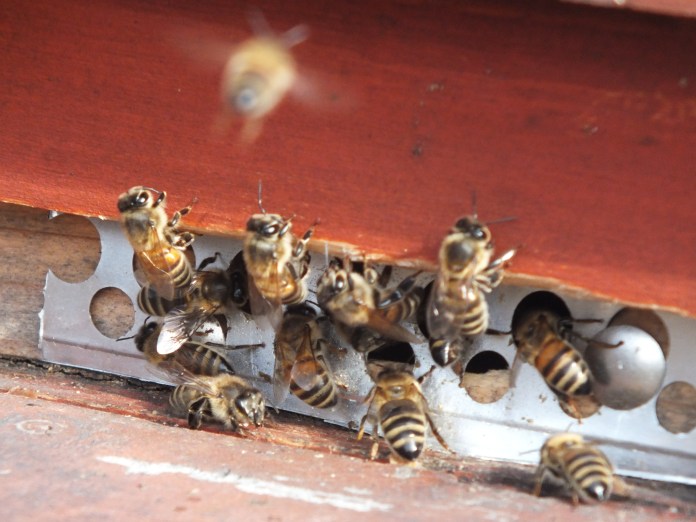
We work without gloves, opening up the hives and measuring the strength of each brood. Willi brushes aside bees with his fingers so gently it looks as though he is stroking them, sometimes picking them off the old queen cages one by one, at other times scooping them up by the handful and dropping them into another hive. I stay as still as possible while bees land on my hands; I bring my hand closer to my face to watch them, the skin on my hand becoming an unfamiliar barren landscape on which the bees’ elongated bodies pulsate, as though they are expecting something to happen.
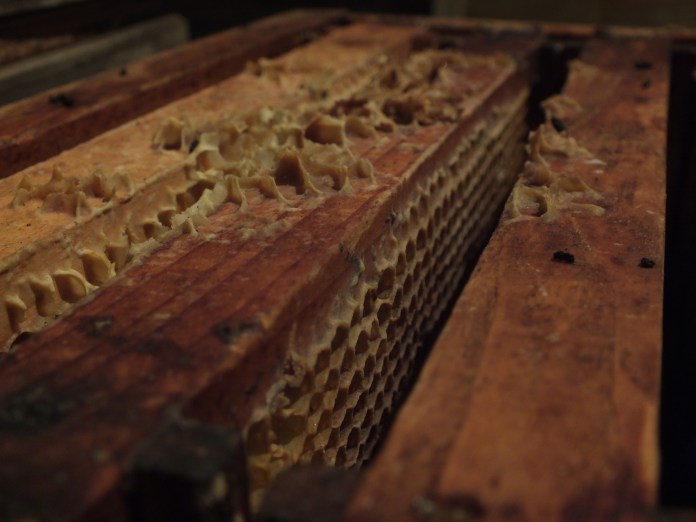
I do not know what Willi sees when we open up a hive. What I see are frames of wax that range from a pale yellow to a deep black, and lots of bees – sometimes calmly huddled in tight circles, sometimes flying in a fast, muddled chaos, disoriented by the overcast sky. But Willi knows the families before we have even opened them and what it is that he is trying to cultivate in them, and he responds to each one with affection, disappointment, anger, irritation, satisfaction and hopefulness as we work our way through the 300 hives.

I move slowly, focussing intently on the task and walking in an unnatural way to avoid angering the bees on my legs. But the buzzing, smoky atmosphere is frequently interrupted by Willi’s Sia ringtone, and as he answers his phone and chats to a new shop that wants to sell his honey or a fellow beekeeper who wants his advice, he carries on lifting and pushing frames and flicking bees out of the way in a relaxed, mindless way.

We establish a rhythm, replacing mouse-infested old bases with newer mouse-proof ones, inserting insulation frames to keep the brood warm, removing dead hives (this year was a bad year – around 30% lost) and making notes. We also undertake bee eugenics with queens who have bred with the black bee, a stronger and more aggressive bee than the Buckfast bee.
This begins at one unremarkable hive which Willi recognises before we have even opened it, and which prompts the first murderous pronouncement of the day: he wishes to find the queen and kill her. Willi removes each frame and inspects each one slowly until he finds her. He picks her out and triumphantly holds her up right in front of my eyes, before squeezing her dead with his fingers.
Further on, the situation in another hive is less clear: we need to add a swarm to strengthen the bee numbers, and we want to keep the best queen, but first we must check that there is a second queen to replace the first. Willi picks up the first queen and hands her to me; she struggles so lightly against my fingers, as I hold onto what feels like wriggling eyeballs, that I am not sure whether I am about to crush her or release her. Eventually the second queen is found. For a few long silent seconds, I ignore the unspoken fact that one of us must kill my queen. But then Willi, in a single, swift gesture, takes her from me, pinches her and tosses her dead body over his shoulder. The new queen is installed in the brood, and the rest of her hive unceremoniously tipped out onto their new home.
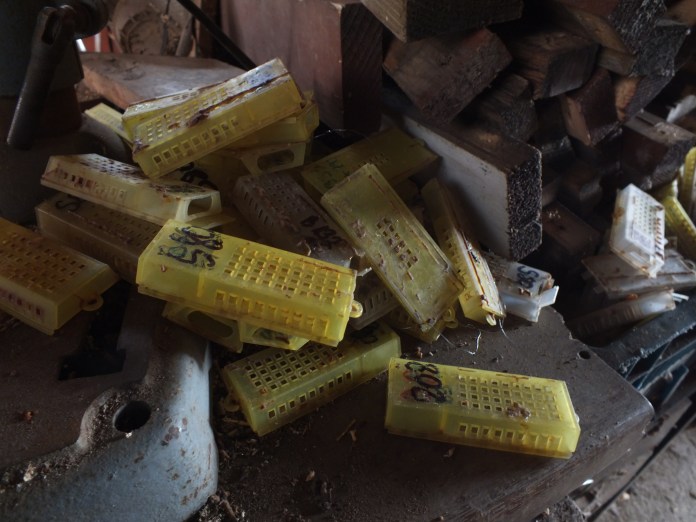
My grasp of genetics is not good enough to understand what is going on with these queens. The notes that I am making are not the unique IDs of each queen, but her genetic lineage. Some new lines will be in-bred for a year to strengthen a particular characteristic, but afterwards they will join this big and complicated family tree. Each year, Willi takes selected queens and drones to a controlled mating station in the mountains, where there is no risk of the queen encountering any other drones. Other queens are artificially inseminated in Austria or Germany and driven over to Romania, placed in little yellow plastic cages and wedged between wax frames. Sometimes the bees are just left to fight it out over the queens themselves.
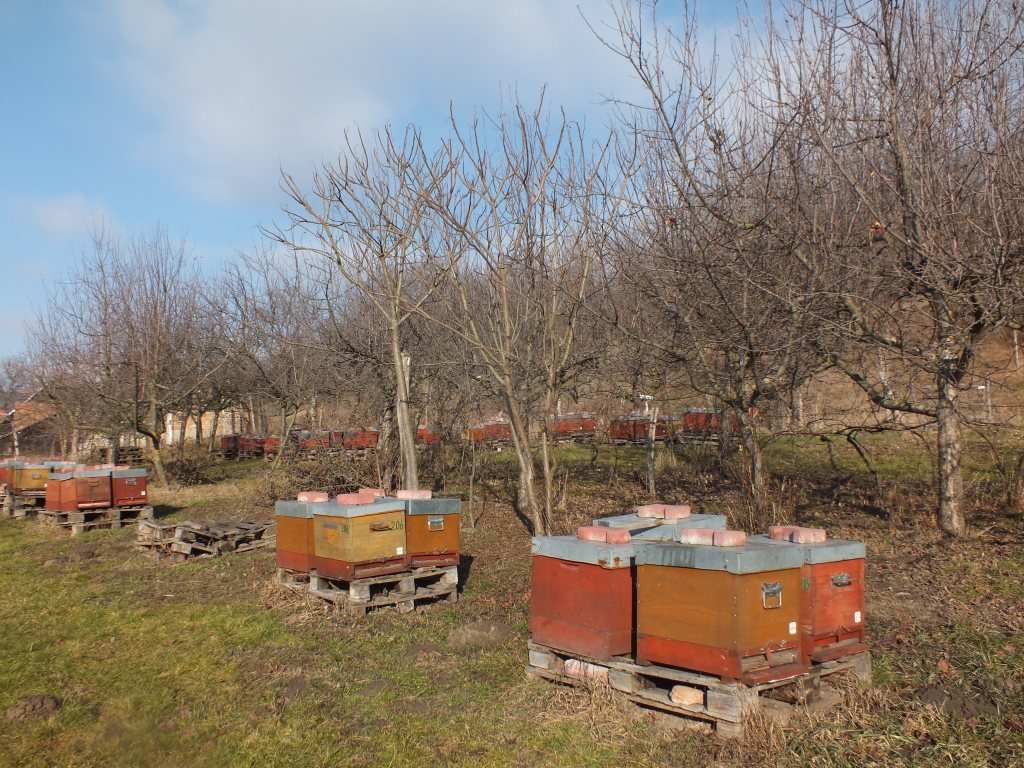
The conditions are not ideal, but pressure to get through all 300 hives before spring starts means that we need to work in colder weather. This means that the bees are attracted to the warmth of our bodies and they settle on us, covering us in small spots of orange poo.
It is hard to tell whether Willi ever gets stung. My first sting comes on my second day, as we are changing the bottom of a busy hive. I feel a long slow stabbing pain in my leg which begins to spread and burn. However, having previously made a fuss when a bee got trapped inside my face net, I now feel the need to prove my beekeeping aptitude by staying silent and refusing to show any sign of having been stung. The pain just becomes one of the many sensations I am hyper aware of in that moment.

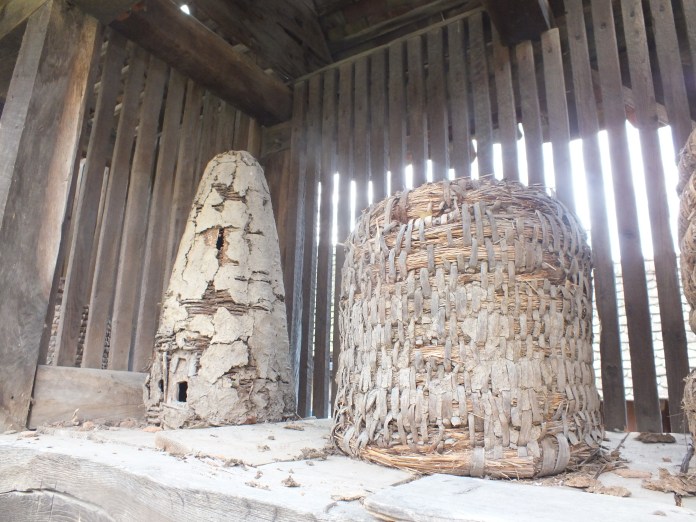
The life of a beekeeper is nomadic. Not from ancient tradition, like the transhumance of shepherds, but as a result of the 19th century commercialization and industrialisation of honey production. In replacing the older practice of bee hunting, beekeeping has domesticated, technologized, and controlled bee populations, and increased honey yields almost fivefold. This is not hobby beekeeping, but nor is it highly commercialized: it is a small organic local honey business, producing around 8 tonnes of honey a year.
The season from April to September is marked by the sequence of flowers the beekeepers will follow: first rapeseed, which will provide protein for the development of bees, then acacia, lime and sunflower. 170 hives at a time will be loaded onto a truck and driven by night – 300km south to the Danube for acacia, 300km west for a second flowering of acacia, 500km east to the Black Sea for sunflower. The hives are weighed to monitor the daily honey production, and are moved on once the production begins falling below a certain level, or enough honey has been collected.

This method is not without problems: use of neonicotinoids on sunflowers has killed many hives, and declining bee populations has led many farmers to increasingly use self-fertilising seeds, which in turn deprive bees of nectar. Neonicotinoids are banned by the EU, but up to this point Romania has had derogations permitting their use – this year will be the first year without the derogation for sunflower. (Willi explains it like this: the French protest against neonicotinoids and ban them in western Europe, and then buy cheap sunflower oil from Romania.) The early spring this year will also, Willi suspects, kill the acacia flowers and mean no acacia honey this year. But when a honey year is good, it is very good.
At the moment, the hives are scattered around the countryside nearby. Land and houses are so cheap that if Willi finds a good location, he can afford to buy an abandoned house just to keep the bees in the garden. He also uses empty land next to an old Saxon monastery, and the ruins of a communist dairy. But finding safe locations can be tricky: this year several of his hives were attacked by bears, while others were attacked by an irate neighbour who blocked the hive entrances with expanding foam.
There is saying here – what is good for the bee is bad for the beekeeper. Bees look after themselves: they keep their hives clean, they manage their own temperature, they find their own food and water, they find a new home when they need to. It is our interfering, our desire for honey, that puts them under pressure and increases their vulnerability to diseases. But bees continue to do what bees do. Now, they are just starting to bring the first pollen of the year back to the hive – large, pale yellow lumps of hazelnut pollen. For all the beekeeper’s efforts to control and support the hives, it’s the bees who stay in charge.


 Km. 0
Km. 0 