Alba Iulia

‘There’s no culture here, only history,’ says the young man showing me around the hostel in Alba Iulia. But what a history it is. An entire nation’s history encapsulated in one city: the Capital of the Soul of all Romanians.

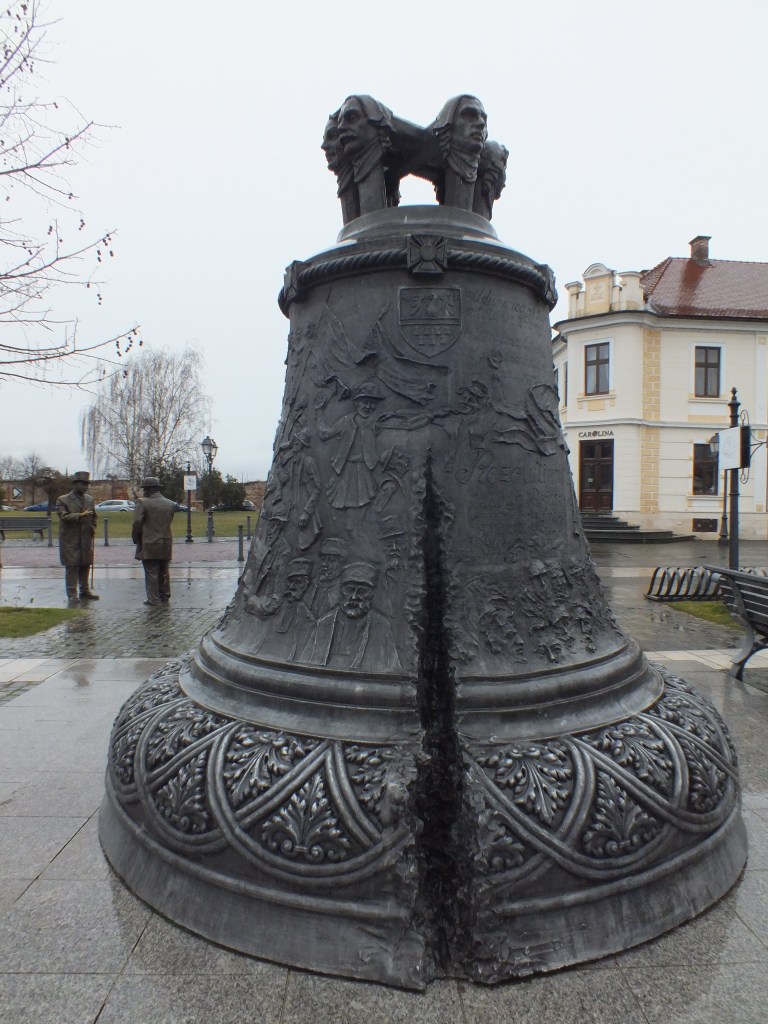
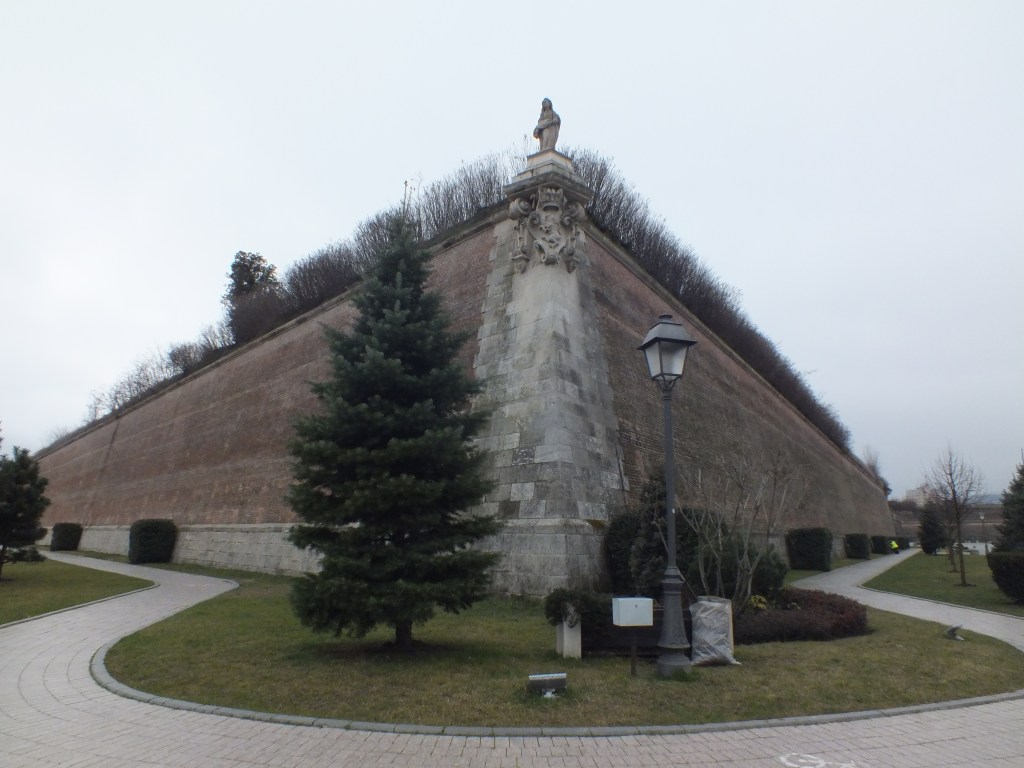
Alba Iulia is a mythical city with a seven-pointed star fortress, lying in the Mureș Valley where the Apuseni Mountains and the Târnavelor Plateau meet. Here the Daco-Roman origins of Romania are tangible: remains of Roman columns, tombs and inscriptions are stored in cluttered arcades, and archaeological excavations of Roman streets are exhibited under scuffed glass walkways. More fragments can be found in the National Museum of the Union, where quotes from classical sources testify to the existence and bravery of the Getae and Dacian peoples. And neoclassical gateways, bronze Roman soldiers guarding the streets, and carved depictions of the great battle between Dacians and Romans attempt to keep this memory of a fierce people alive.
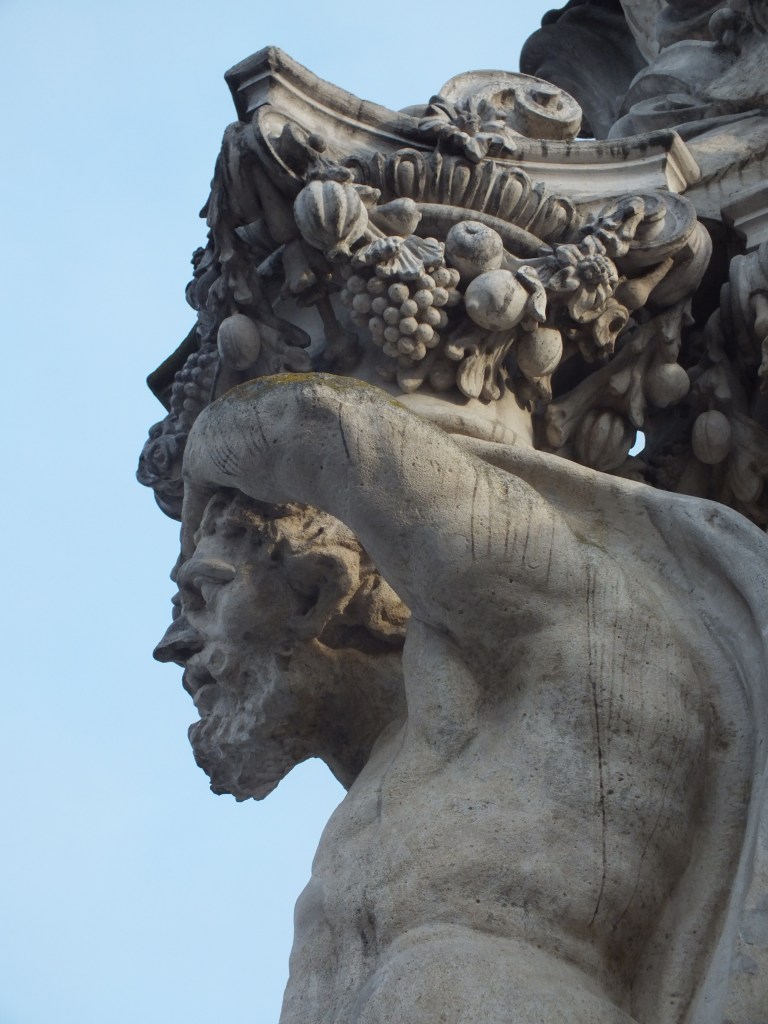
It is hard to get a sense of a city in the cold rain, when no one but statues brave the streets and not even the cafes can face opening. So the only thing I am left with, that I can communicate with, is this history.

If the Dacian spirit is reborn in anything, it is in the struggle for liberation fought by Romanians and captured within the history of Alba Iulia. The fight for recognition of the Romanian people – for centuries enslaved as serfs and excluded from exercising any form of political power, a majority governed by non-Romanian minorities – centres symbolically on the figure of the Romanian peasant. A tall, imposing obelisk outside the citadel walls commemorates the peasant revolt led by Horea, Cloșca and Crișan, who were executed in Alba Iulia’s central square and extolled by French revolutionaries.

And then liberation becomes unification. The story of Romanian unification seems drawn to Alba Iulia with a magnetic quality. From Michael the Great’s arrival into the city in 1599 and brief rule over the provinces of Transylvania, Wallachia and Moldova – a fleeting but foundational moment of unity – to the declaration of Greater Romania in 1918, the city acts as a kind of national repository, and attracts nation-building activities like the 1922 coronation of King Ferdinand and Queen Marie. It turns the city’s present into a re-enactment of the past: even the 2018 centenary of Greater Romania, with its celebratory banners still plastered around the city over a year later, has passed into an ever-present history. Alba Iulia bears this history like a scar, a memory that is stubbornly and proudly visible.

Over time the River Mureș has drifted away from the city, and now vegetables are grown at the base of the fortress. I do not know what has happened to the revolutionary, emancipatory spirit of the city. In the Coronation Cathedral, portraits of King Ferdinand and Queen Marie dominate the western wall, although the Catholic Ferdinand refused to be crowned in an Orthodox church and preferred to set the crown on his head with his own hands. And now, every hour, the cathedral politely waits for the Hungarian Catholic cathedral next door to ring its bells first.

But then a new guest arrives at my hostel one night, a Hungarian-speaking Romanian photographer, who has returned from photographing bacteria under microscopes in Oxford and is now working on a documentary series on orphanages across Romania. I am puzzled at first, because he speaks to the manager in English, but it turns out that even his poor, broken English is better than his Romanian. It is a strange contrast to the myth of Alba Iulia, where unity and nationhood shout loudly, but in the end cannot connect two citizens of the same country, whose only resort is an alien language.

Standard

Hamba III

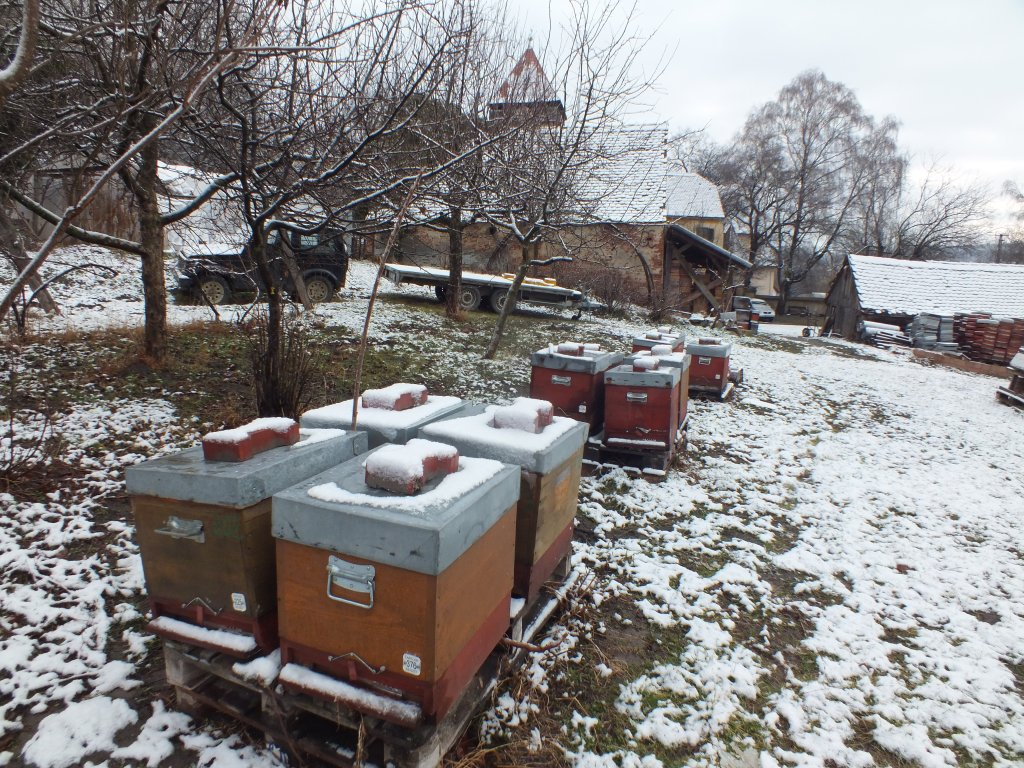
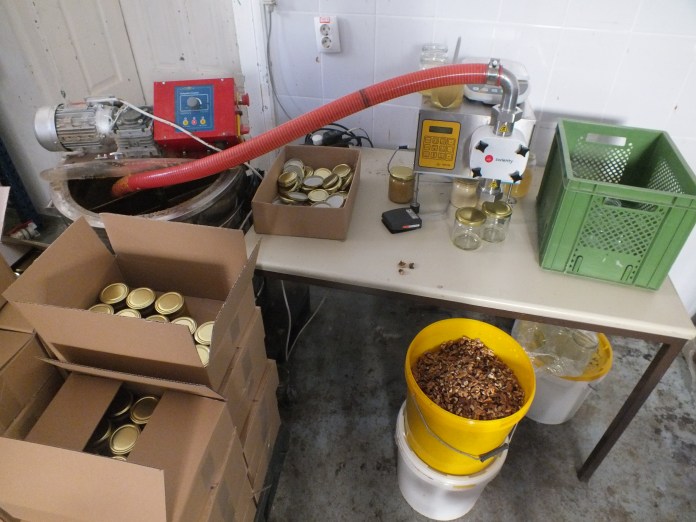
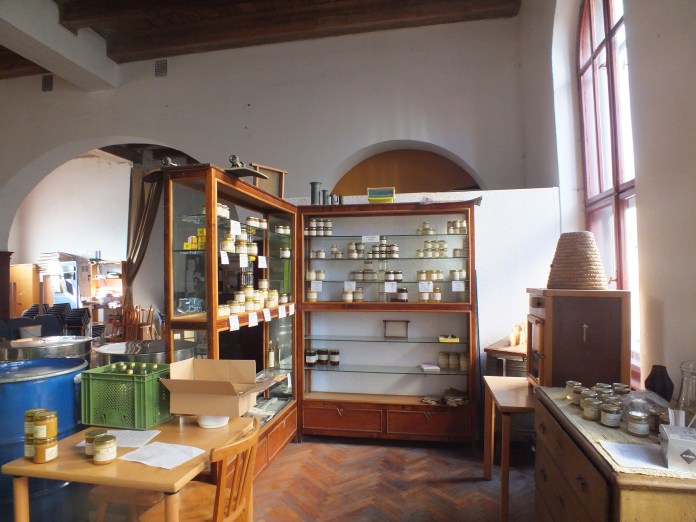
There are fourteen jars of honey on the counter by the kettle, and another eight inside the kitchen dresser. For breakfast we will drizzle acacia honey over muesli, or spread rich, dark honeydew honey – collected by bees from the sap excreted by aphids – on rye bread, or perhaps we will try a spoon of sharp, fruity buckwheat honey. After dinner we might compare French, Italian and German chestnut honeys, though it requires the experienced beekeeper’s tongue to detect that the smoother Italian honey has been dried, maybe to delay fermentation, or to compensate for collecting the honey before it has matured. For Willi, who once spent a summer in the chestnut forests of southern Germany, the authentic taste of chestnut honey is unmistakeable. Yet the best honey is a mysterious, black, Italian, treacle-like substance with the distinctive bitter flavour of coffee as it melts sweetly in the mouth.

But here I am guilty of an English obsession with flavour.

Romania is a leading authority in apitherapy, and developed some of its most important research and remedies during the years of communism. Willi sells it to us with his own story, which sounds too good to be true. One Christmas, his central heating exploded and burned his leg through to the flesh; not wanting to go to hospital at Christmas, he applied some honey to the burn and after three weeks of honey dressings, his leg had healed perfectly. Another anecdote is prompted by the discovery of a plastic bottle of homemade wine hidden in the corner of the larder, given to Willi by a grateful neighbour after he came round with a deep cut and was given a tincture of propolis (the sweet, amber, antibacterial substance secreted by bees to prevent foreign objects like mice from contaminating the hive) to put on the cut, which again healed perfectly. Everything has concentrated goodness. Bee stings are good for rheumatism, pollen helps indigestion (the soft, sandy fresh pollen is infinitely preferable to the dried stuff sold in shops), honeydew honey helps with bronchitis and respiratory problems. It goes on for books and books.

This is all a world apart from the commercial bargaining of the global honey wholesale market, in which a kilo of honey costs something like: €10 from the UK, €2.50 from Romania, €1.50 from Ukraine, and 70 cents from China. Here, the story of honey is one of hypocrisy and corruption. The biggest honey consumers are in the West, yet most honey is produced outside the West, where loose regulation, long transport routes and ingenious substitutes obstruct transparency and ensure low prices. For the Western consumer the result is perfect: high standards of Western beekeeping and expensive honey exports, and cheap honey whenever desired.

Willi’s distrust of such globalisation comes from his own experiences working as an organic certifier for a French company and witnessing the rampant corruption. But it also comes from the subsidies offered by the European Union and the Romanian State to encourage beekeeping, which have artificially and unhealthily inflated the numbers of hives across Romania and made a few people very rich. This distrust seems to reflect, on the one hand, a deep, vindictive hatred of anything connected to the state, and on the other, a bitter antipathy to multinational companies that suck money and life out of eastern European countries.

So like bees that swarm to survive, leaving behind infections and doing away with unproductive queens, Willi has left the old communist beekeeping association with its out-of-date advice and register of ghost beekeepers, and has set up his own association. This has provided him with a network of like-minded beekeepers working organically. But he struggles to convince them to sell their honey directly to customers rather than the wholesale market, which bleeds beekeepers dry but retains some kind of elusive hold over them.

Willi is an example of entrepreneurship at its most principled: anti-state, anti-corporate, independent, honest, and integrated into a local economy in which money does not simply disappear. But in the end it all depends on the thing at the centre of it all: honey. It doesn’t need enhancing and it doesn’t need marketing. People will always want it.

Standard