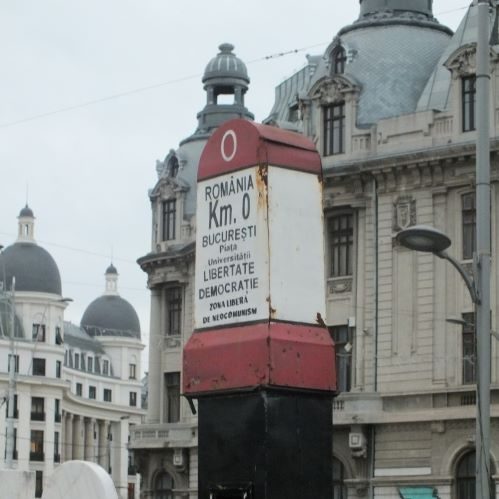

‘There’s no culture here, only history,’ says the young man showing me around the hostel in Alba Iulia. But what a history it is. An entire nation’s history encapsulated in one city: the Capital of the Soul of all Romanians.
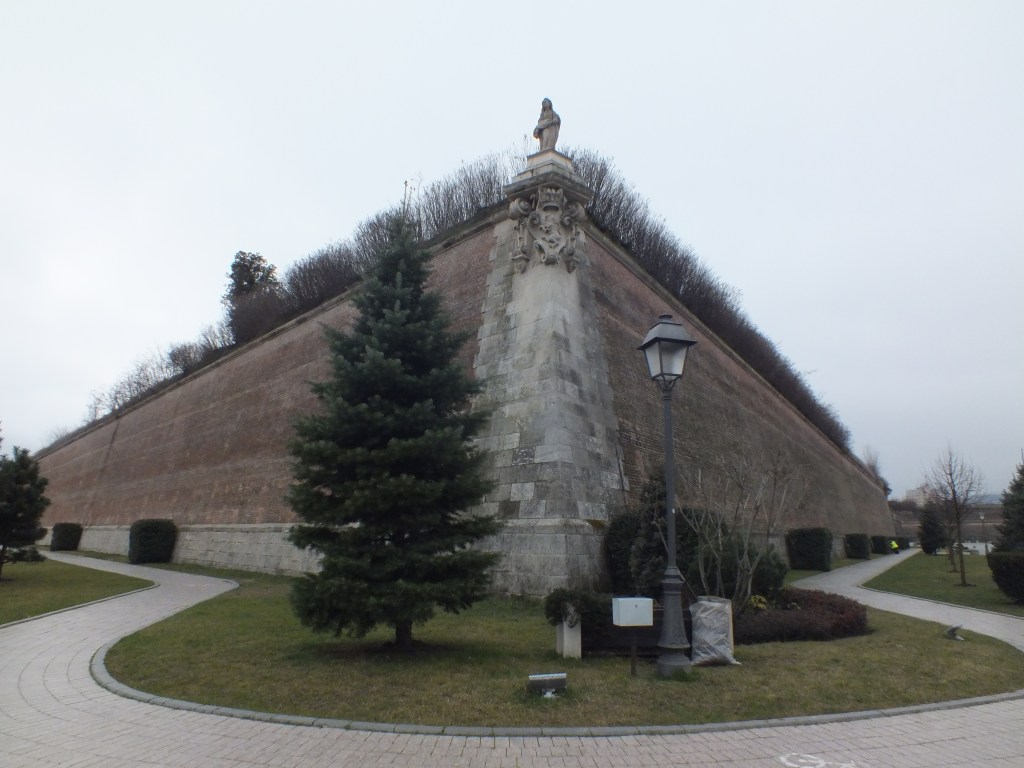
Alba Iulia is a mythical city with a seven-pointed star fortress, lying in the Mureș Valley where the Apuseni Mountains and the Târnavelor Plateau meet. Here the Daco-Roman origins of Romania are tangible: remains of Roman columns, tombs and inscriptions are stored in cluttered arcades, and archaeological excavations of Roman streets are exhibited under scuffed glass walkways. More fragments can be found in the National Museum of the Union, where quotes from classical sources testify to the existence and bravery of the Getae and Dacian peoples. And neoclassical gateways, bronze Roman soldiers guarding the streets, and carved depictions of the great battle between Dacians and Romans attempt to keep this memory of a fierce people alive.
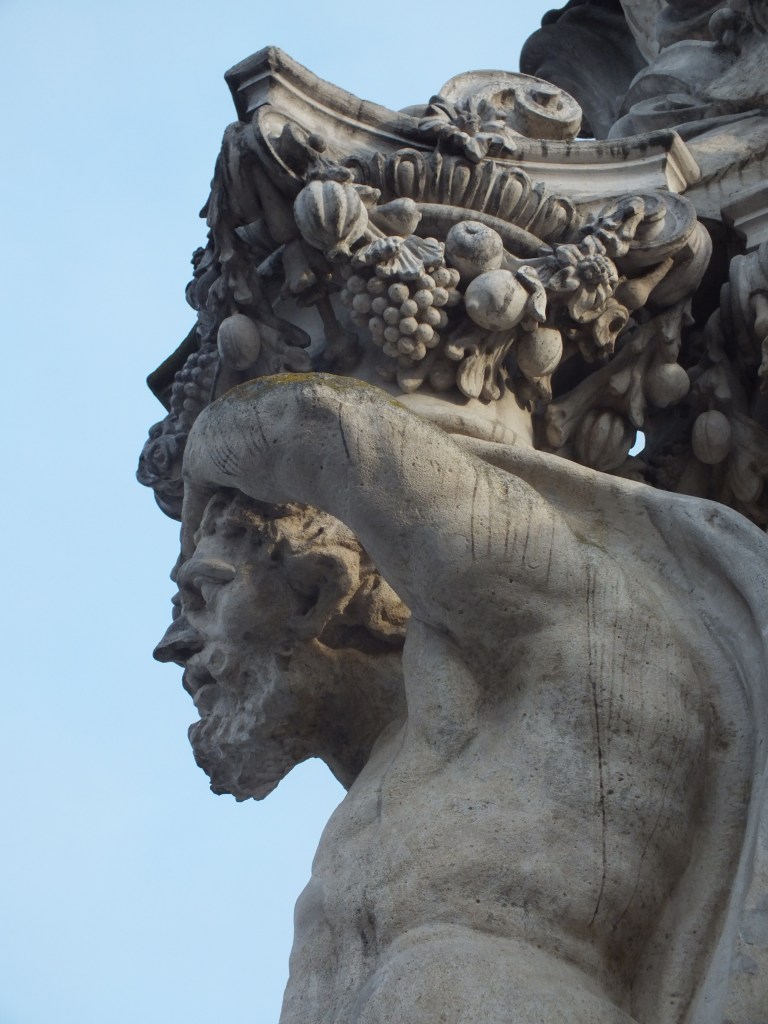
It is hard to get a sense of a city in the cold rain, when no one but statues brave the streets and not even the cafes can face opening. So the only thing I am left with, that I can communicate with, is this history.
If the Dacian spirit is reborn in anything, it is in the struggle for liberation fought by Romanians and captured within the history of Alba Iulia. The fight for recognition of the Romanian people – for centuries enslaved as serfs and excluded from exercising any form of political power, a majority governed by non-Romanian minorities – centres symbolically on the figure of the Romanian peasant. A tall, imposing obelisk outside the citadel walls commemorates the peasant revolt led by Horea, Cloșca and Crișan, who were executed in Alba Iulia’s central square and extolled by French revolutionaries.

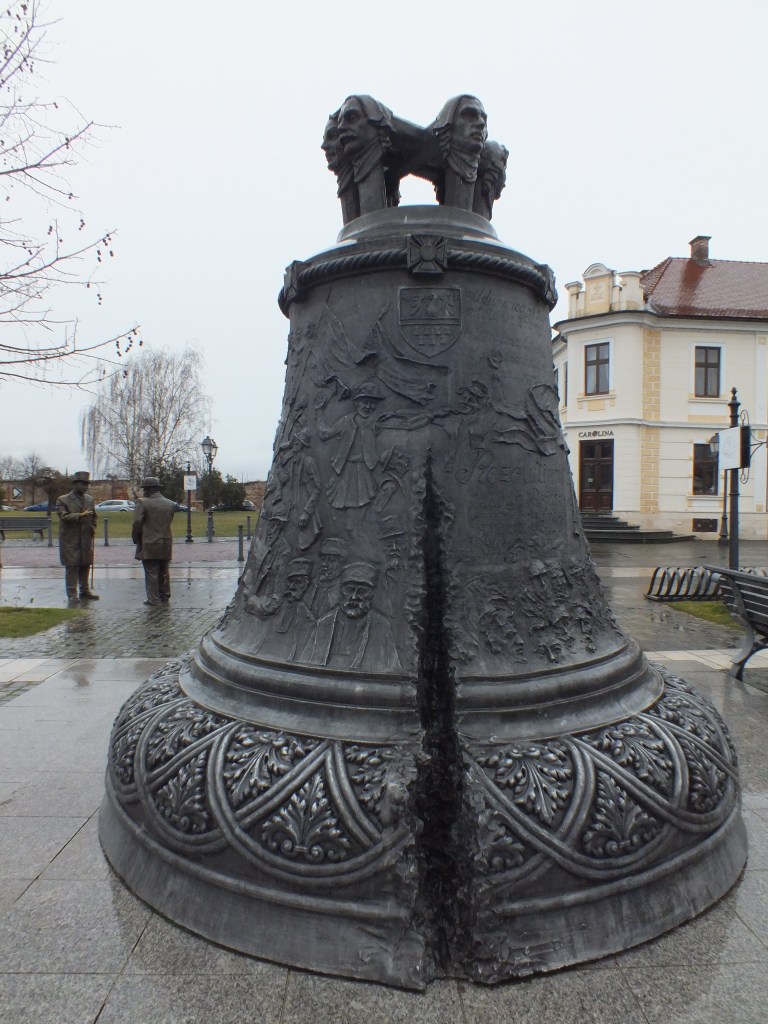
And then liberation becomes unification. The story of Romanian unification seems drawn to Alba Iulia with a magnetic quality. From Michael the Great’s arrival into the city in 1599 and brief rule over the provinces of Transylvania, Wallachia and Moldova – a fleeting but foundational moment of unity – to the declaration of Greater Romania in 1918, the city acts as a kind of national repository, and attracts nation-building activities like the 1922 coronation of King Ferdinand and Queen Marie. It turns the city’s present into a re-enactment of the past: even the 2018 centenary of Greater Romania, with its celebratory banners still plastered around the city over a year later, has passed into an ever-present history. Alba Iulia bears this history like a scar, a memory that is stubbornly and proudly visible.

Over time the River Mureș has drifted away from the city, and now vegetables are grown at the base of the fortress. I do not know what has happened to the revolutionary, emancipatory spirit of the city. In the Coronation Cathedral, portraits of King Ferdinand and Queen Marie dominate the western wall, although the Catholic Ferdinand refused to be crowned in an Orthodox church and preferred to set the crown on his head with his own hands. And now, every hour, the cathedral politely waits for the Hungarian Catholic cathedral next door to ring its bells first.
But then a new guest arrives at my hostel one night, a Hungarian-speaking Romanian photographer, who has returned from photographing bacteria under microscopes in Oxford and is now working on a documentary series on orphanages across Romania. I am puzzled at first, because he speaks to the manager in English, but it turns out that even his poor, broken English is better than his Romanian. It is a strange contrast to the myth of Alba Iulia, where unity and nationhood shout loudly, but in the end cannot connect two citizens of the same country, whose only resort is an alien language.





























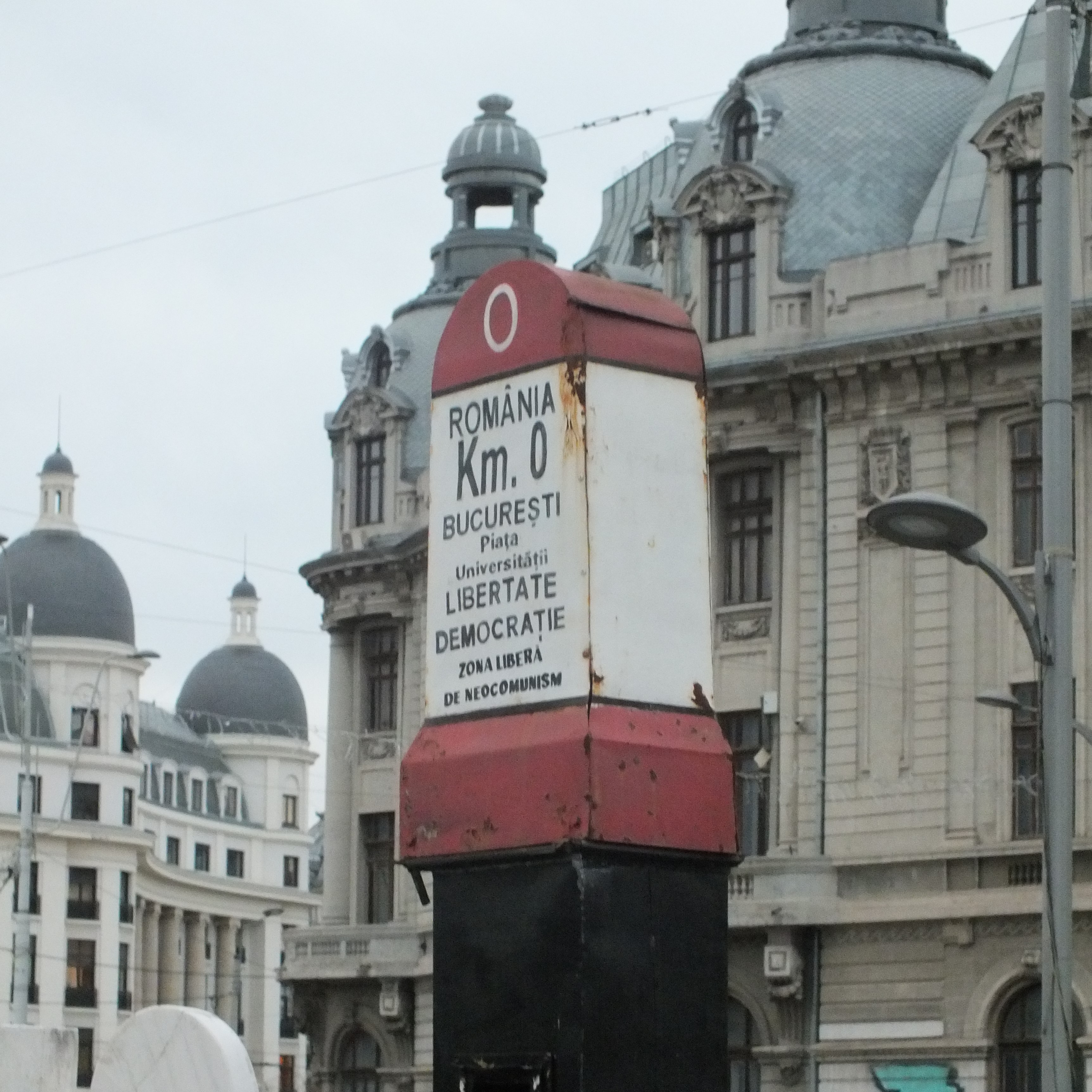



































 Km. 0
Km. 0 