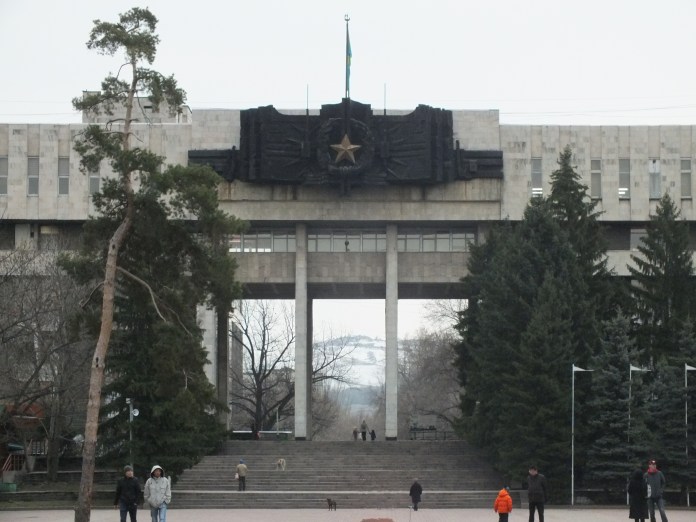
Almaty

I arrived in Almaty on a dark, rainy night and took an unmarked taxi to the hostel where I’d arranged to meet my sister. A Kazakh man was climbing the gloomy staircase, carrying, he told me, beer for us. Sophie had befriended the entire hostel and everyone seemed to know who I was. Around midnight we headed off to the next door Turkish-Russian-Kazakh restaurant to meet her friend Yusuf, and then came back for beer with Ilya, the Jazz flautist from the staircase. The following day we were booked in for Yusuf’s English lesson, given by Gulya who lived in our dormitory.

We were the only tourists in the hostel: most people had moved to Almaty for work and were living there indefinitely. Ilya had spent his first three days living in Almaty train station before finding a barista job, which paid $7 a day (that’s almost as much as we were paying for a night in the hostel). When we turned in at 3am, he said he wasn’t able to go to sleep because he wouldn’t be able to wake up in time for work at 7am. I never saw him again.
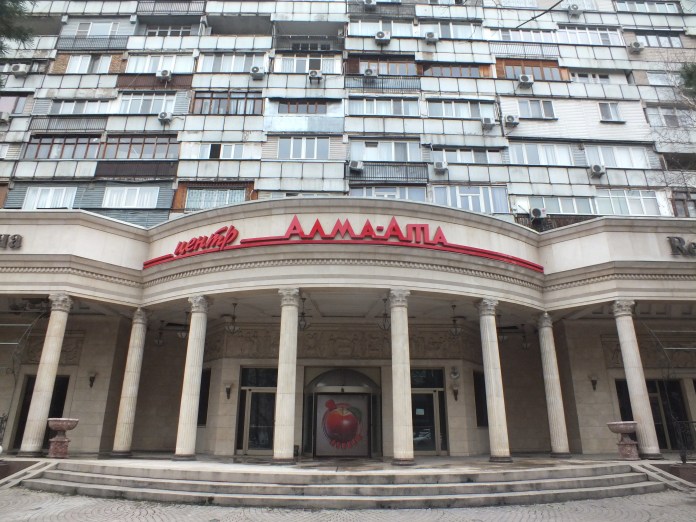
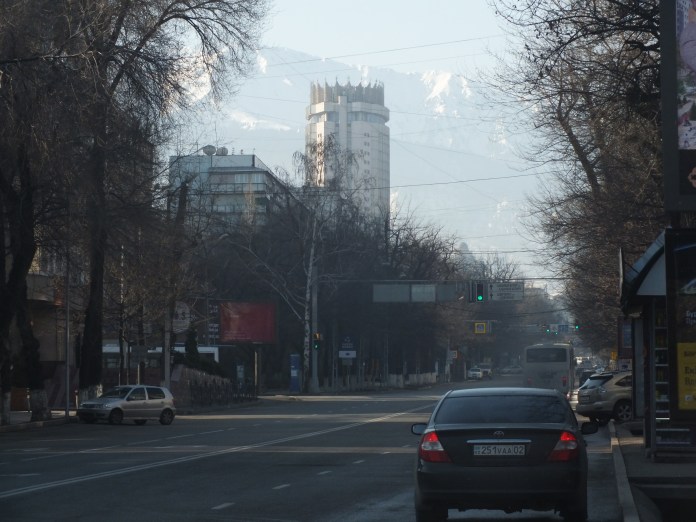
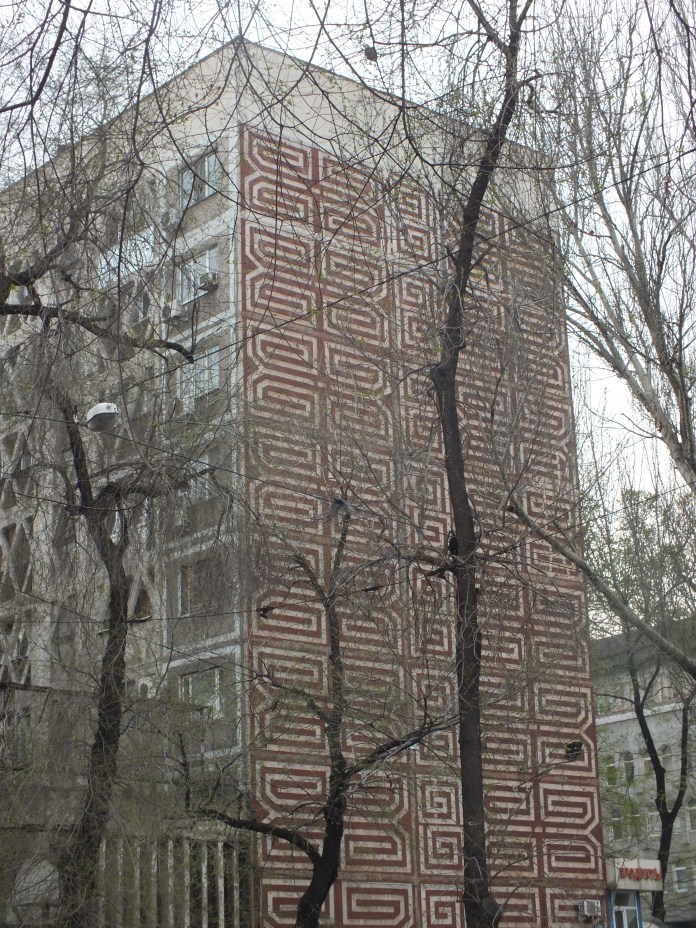
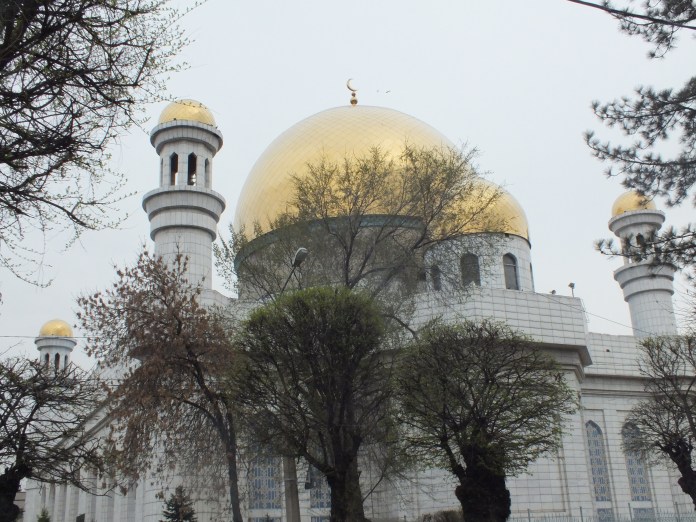
By daylight I was surprised at how pleasant a city Almaty is. There is a surprisingly large amount of surviving Tsarist architecture: small, pretty, pink and green buildings with white ornamentation that make you think of dolls houses or castles in winter wonderlands. Even the Soviet-era blocks have simple bits of decoration that give them individual character and make any walk varied and interesting. What could be a grey concrete grid of a city is in fact a pleasant network of streets, almost always tree-lined, and often with pedestrianised side-streets linking the wide, busy avenues with grand views into the mountains.
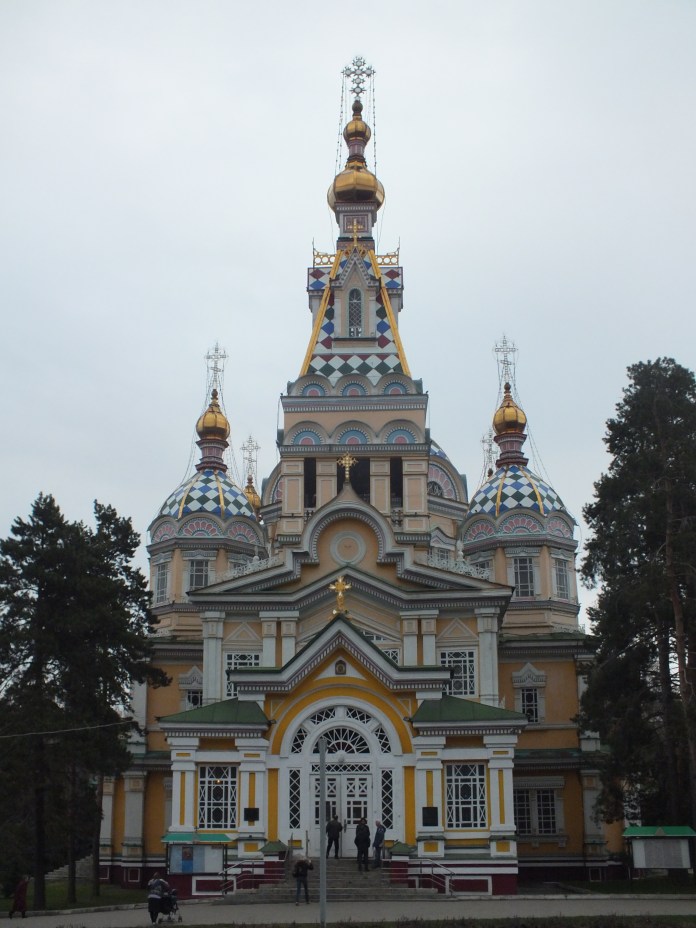
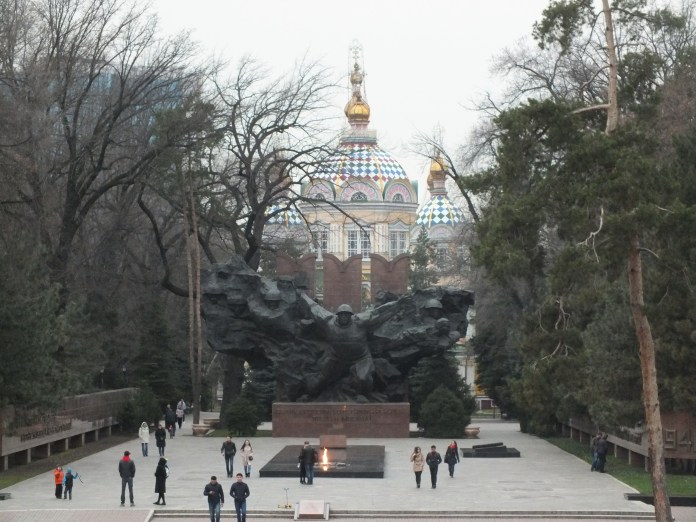
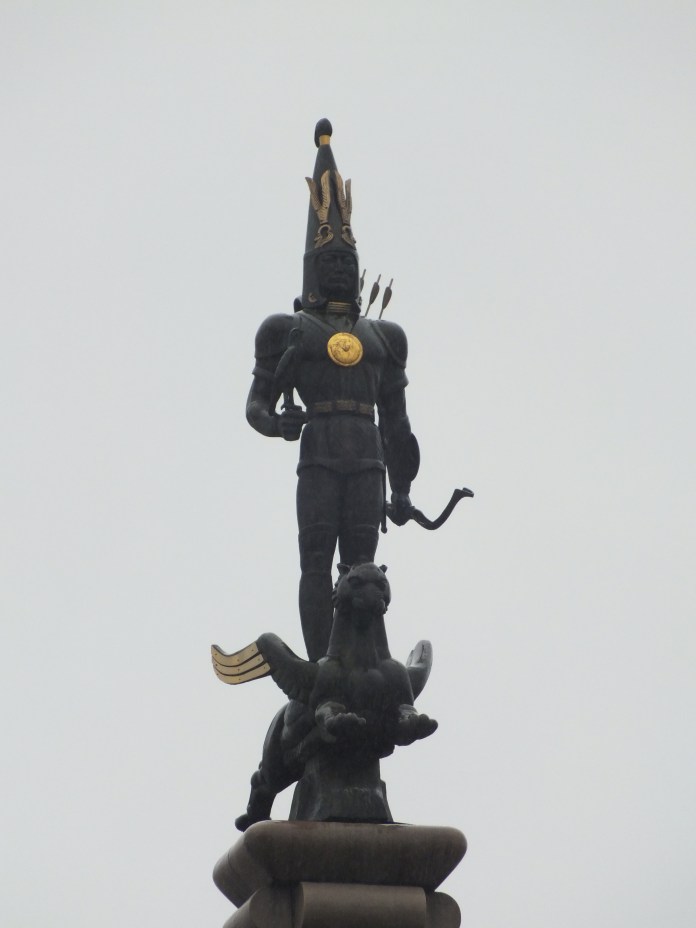
In the centre of Almaty lies Panfilov Park, which is dominated by a large Russian Orthodox cathedral made entirely of wood and painted in bright colours. A terrifying Soviet war memorial looms out over passers-by behind the cathedral (which thankfully overshadows the sculpture). It depicts the Panfilov heroes, three times larger than life and with impossibly chiselled cheeks and muscles. The accompanying quote glorifies Moscow and is a reminder of just how Russian Almaty can feel, with its banyas, blinnayas, ballet and borsch. In fact, there is even concern about the survival of the Kazakh language because Russian is so widely used. But I wasn’t expecting Almaty to also feel so European, to have so many dainty little cafes, American films and western luxury brands. It all feels a very long way from the once nomadic life of the steppe.
We decided to go to the opera house, an ornate and gilded building where all the workers were dressed in smart blue and gold trouser suits. I do not understand how it is possible for one nation to produce so many beautiful and glamorous women – it made me feel very ridiculous and inferior, sitting on my little blue and gold chair in walking boots and a fleece. Our tickets for Birjan and Sara, a traditional opera about love between two dombra players, cost £2, but there were so few people that we were allowed to sit anywhere in the stalls we liked. Sara sang about Birjan, ‘my proud hawk, nightingale of the steppe’, and Birjan died surrounded by his three great loves: his mother, Sara (‘my steppe glow’), and his dombra (Kazakhstan’s national instrument, a traditional wooden two-stringed instrument). With his dying breath he sang a lament for his homeland and for his song that would live on in Kazakhstan. At the end the small audience all clapped in time together, a very sorry sight. But it was so much fun that we immediately bought tickets for the opening night of a ballet adaptation of Anna Karenina. The star of that performance was very much the three year old boy who stood on stage soaking up his applause, bowing grandly, admiring his new lego, who in the end had to be dragged off stage.

There are some good museums worth visiting in Almaty. The best is on Kazakh folk instruments, and it is housed in a wonderful old wooden building where you can listen to music played on the instruments. Other museums feel rather Soviet, with large empty marble halls, faded and dusty displays, attendants who tail you everywhere, and, invariably, photos of President Nazarbayev on the top floor, or even a whole exhibition on him if you’re lucky. But there were beautiful things: as a crossroads of the world since neolithic times, Kazakhstan has a fascinating archaeology and incredibly rich mix of cultures. There were fabulous ethnographic displays of traditional dress and yurts and, my favourite, a pair of enormous boots which looked just like a whole sheepskin wrapped around a foot.

We were wandering around the state art gallery, past paintings of eagle hunting and a very dashing Stalin, and found ourselves in a room of east Asian art. There was a TV crew set up and a producer came over, desperate for an interview with someone – anyone, apparently (though foreigners are always an excitement – in the whole week we were in Almaty, I could probably count the number of westerners we saw on one hand). Sophie neatly side-stepped the invitation by saying I would give an interview, so I went on Kazakh TV, reciting whatever the producer mouthed at me, saying how much I admired Chinese culture for having invented porcelain, gunpowder and paper.

On Easter night we went to the cathedral. As we approached Panfilov Park there were stalls selling circus toys, flashing balls and spinning toys thrown into the air, which gave the night a festival, even carnival, atmosphere. Hundreds of people were overflowing from the building and the service was being screened outside, while inside the priests would occasionally turn to the camera and shake incense at us through the lens. Everyone carried baskets with painted eggs and decorated kulichs, with candles which, when burned too low, would be removed from the kulich and stuck into the soil of the cathedral garden. Priests would regularly venture outside, accompanied by soldiers, to drench us in holy water, joining in everyone’s laughter as they did so.

In the early evenings of our wanderings through the streets and parks, we would catch tanatlising wafts of chocolate and caramel and roasted nuts. We couldn’t work out where it was coming from until our final day, when at last we saw the ‘Rahat’ chocolate factory right in the centre, the other side of the bazaar. It was with pride that the many generous people we encountered, who gave us lunch and fed us on countless occasions, would bring out ‘Rahat’ biscuits and chocolate. For all the deliciousness of Russian sweets, or even the sweet goodness of an Uzbek tomato or Georgian wine for that matter, nothing was better than the shy smile of a Kazakh offering us Rahat.
Standard

Guangzhou to Urumqi

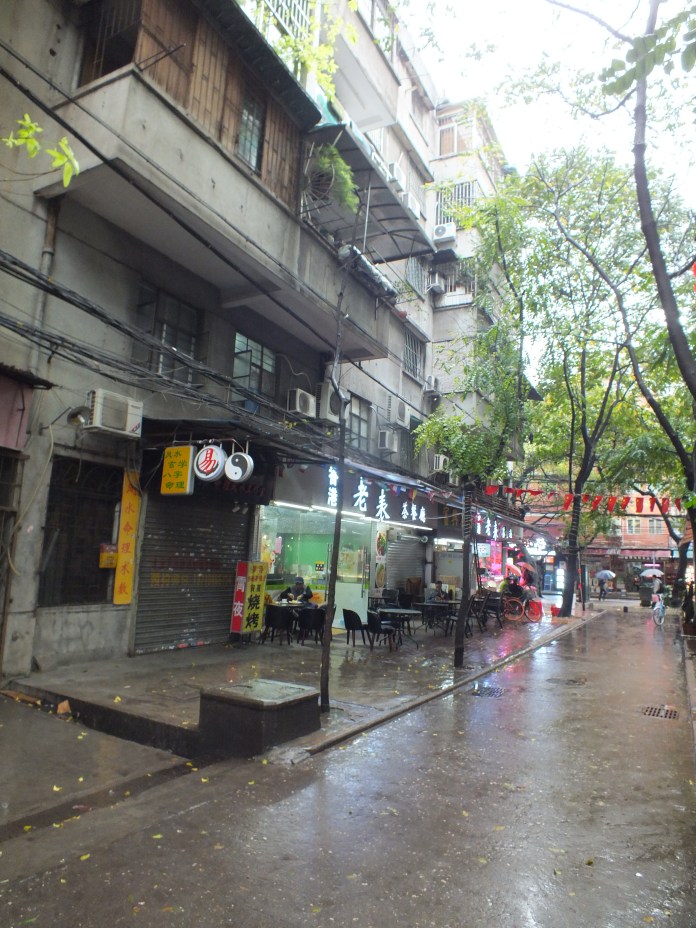
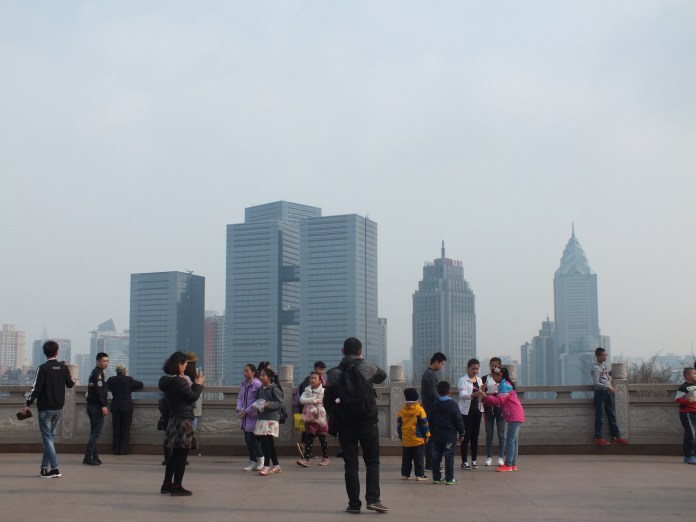
There was something strange about Guangzhou. An intensity of colour, in spite of the drizzle, and a vividness in the streets. With a jolt, I realised it was spring and the colour was the green of new leaves.

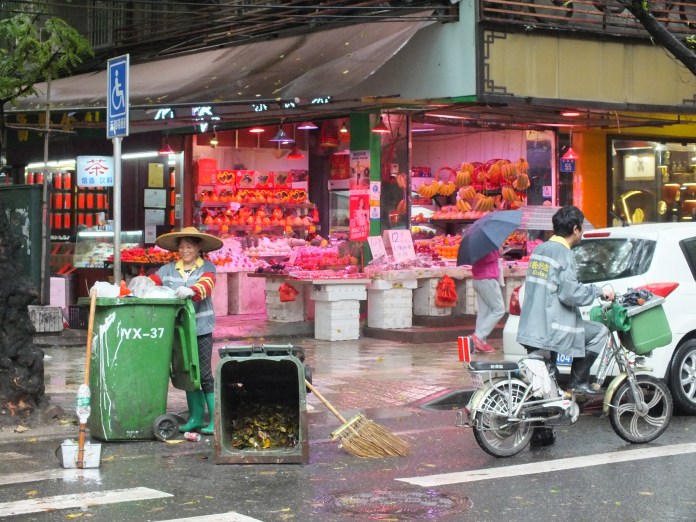
From the air the city seemed an ordered sprawl of tower blocks, between which were squeezed tiny tiled houses collapsing in on themselves and large warehouses with cracks running along their rooves. From the ground the city teemed and bustled. Women in conical hats swept the streets and rode bicycles laden with empty plastic bottles. Blackened repair shops sold gas rings, taps, light bulbs, cooking pots, plastic sheets and ropes.

At the train station crowds of people crushed through the gates into neatly formed queues at each entry point along the grey concrete building. In front of me waited a man whose only luggage was a wooden board and bucket: later I saw him sit down on the bucket and use the board as a table for playing mah-jong. The gates opened and everyone ran forward, pushing their children into small gaps, desperate to get to the train first.

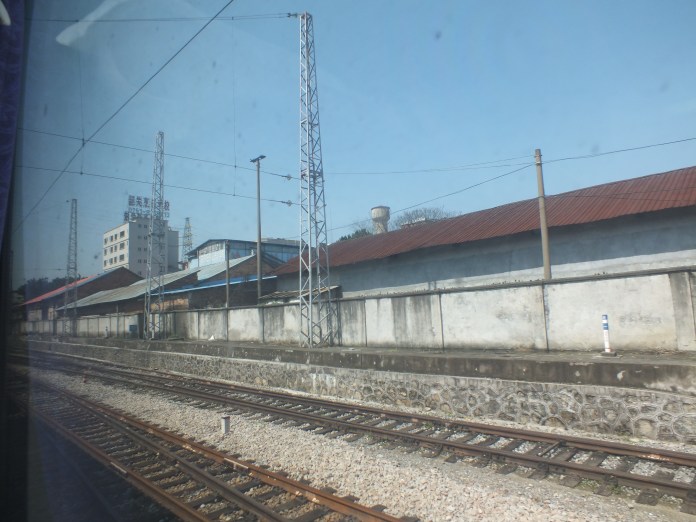
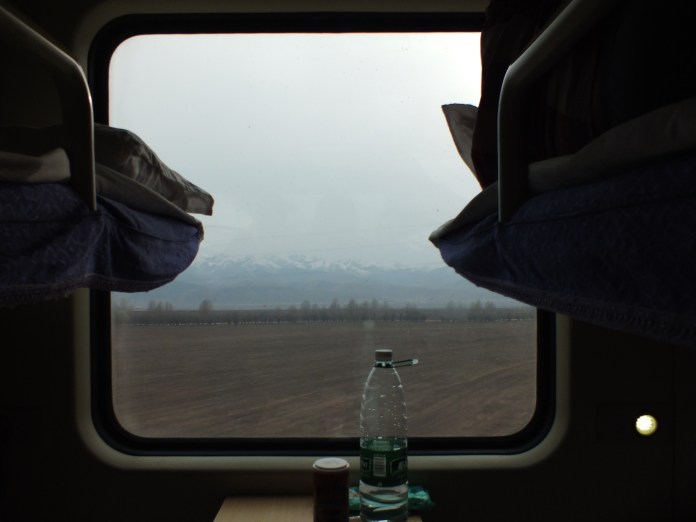
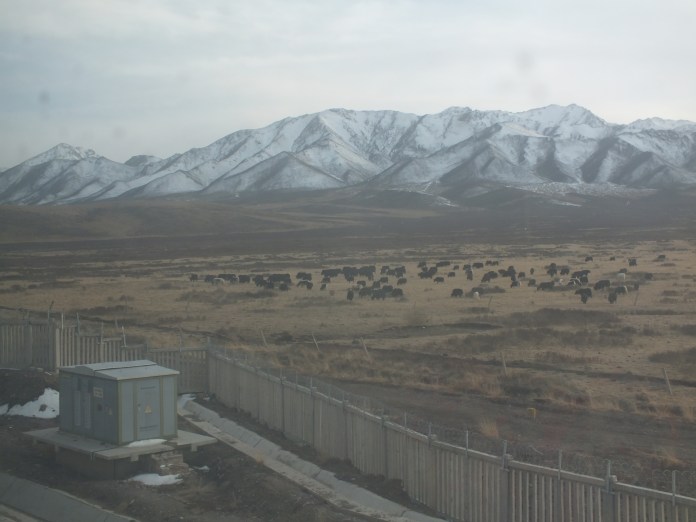
It took two days to cross China. The landscape turned from urban streets to suburban allotments, to fields where women ploughed with buffalo, and then to environmental catastrophe: for almost a whole day we passed mountainsides stripped of plants and replaced with fields, and now scarred by landslides and earth reinforcements. Finally we reached the beginning of the Tibetan plateau and we caught glimpses of spectacular snowy mountains, as well as yaks and temples strung with fluttering prayer flags.

In the far north west of China, in Xinjiang province, lies the city of Urumqi. Traditionally it is home to the Uyghur people, but has been flooded with Han Chinese in recent years, escalating ethnic tensions. Both Uyghur, written in Arabic script, and Mandarin are spoken. It is a beautiful but politically sensitive region, with sporadic outbursts of violence that have then been used to justify China’s nationwide security measures. In 2014 it took the Chinese government a week to announce that 96 people had been killed in a knife attack at a police station. This year a ‘great wall of iron’ was announced, and in April a ban on veils and ‘abnormal’ beards came into force.

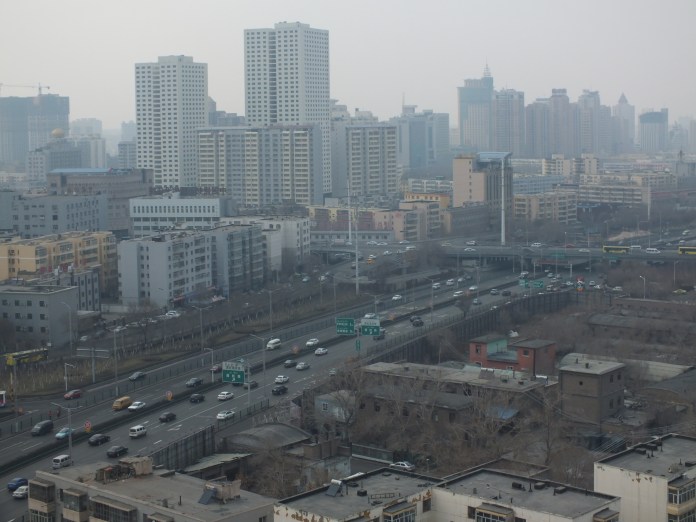
As I rode through the city on the wrong bus, I saw soldiers searching women’s hoods, convoys of tanks rolling through the streets, and armed police standing on street corners in groups of three, yawning and checking their watches. Every petrol station was locked off with barbed wire and cars were searched before and after entering. Prominent CCTV cameras photographed every vehicle and every pedestrian that passed. You couldn’t go through an underpass or enter a park without going through a metal detector and having your bag x-rayed. What was most scary was the normality with which every security measure was treated. Outside one street checkpoint a guard was shouting at a woman, holding his megaphone right in her face, and we all looked down and hurried past. On the street by my hostel another tank was parked. I felt too uncomfortable to take photos.

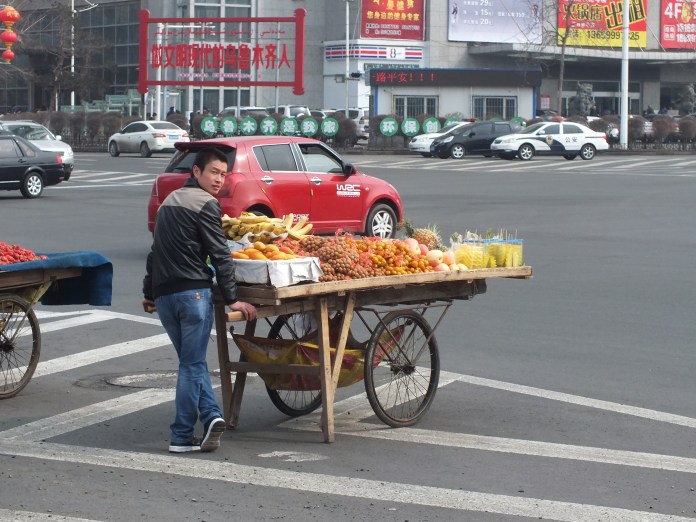
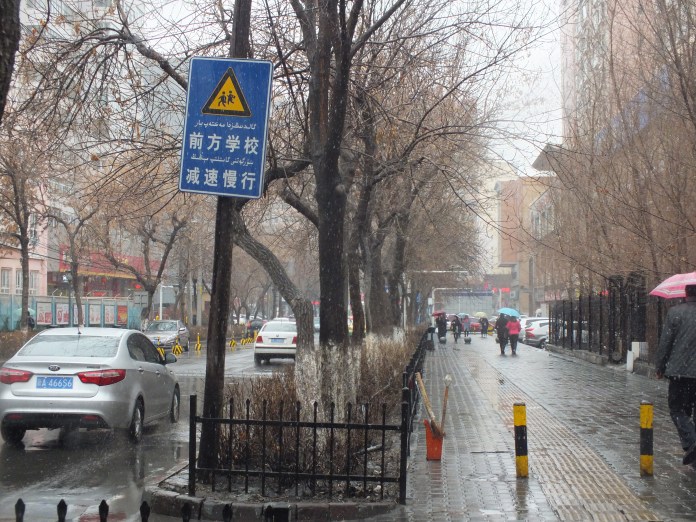
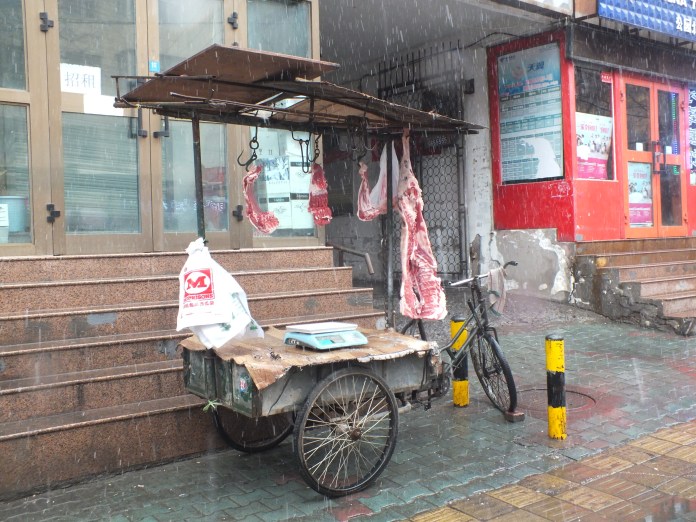
While I waited for a bus to Kazakhstan, I tried to see the city. I walked through the streets past slowly melting piles of soot black snow. It was cold and began to snow again, but there were still wheelbarrows full of strawberries, mulberries, fresh coconuts and decoratively peeled pineapples.

On Red Hill was an old complex of temples and pagodas which had been turned into an amusement park. Children and adults ate candy floss, rode bicycles through treetops and played shooting games. At the top of the hill, on the highest part, stood a police station, and we looked down through the metal railings onto the concrete jungle below and watched yet another convoy of tanks and armoured police vans drive past.

In my hostel dorm was a woman who lay in bed all evening and morning. She’d just broken up with her boyfriend and needed some time away. ‘You never see blue sky here – it’s the factories,’ she said. Today was Ching Ming, she told me, the day people mourn for dead family members and ancestors. Outside the snow fell onto a deserted school playground, and we stood at the window together, watching smoke rise from the grey concrete buildings into the eternally white sky.

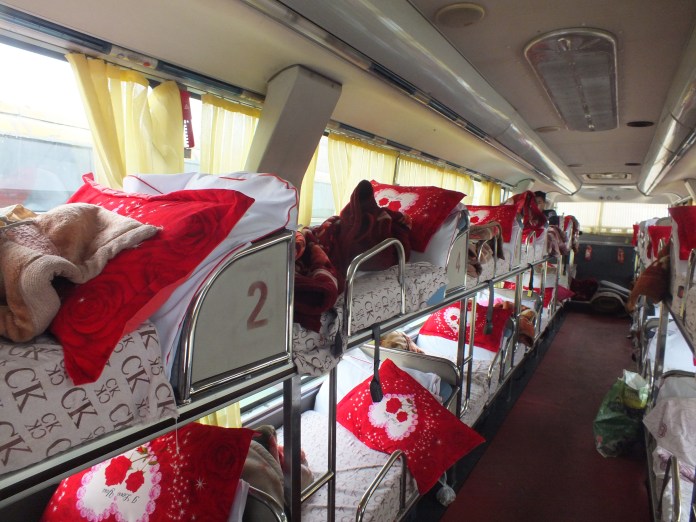
This was my bus from Urumqi to Almaty (a 30 hour journey, a mere 6 hours longer than advertised):

Standard

Singapore

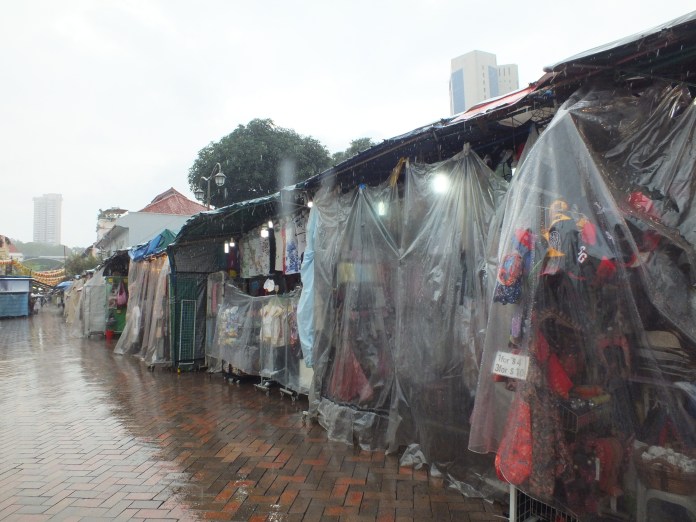
Half a day is not long enough at all to see Singapore, but – in what is beginning to feel rather like a tour of the British Empire – I had a go. It started raining as soon as I emerged from the metro and every shop was covered in plastic, so I decided to start with food. A classic breakfast is kaya toast (coconut jam and thick creamy butter between two slices of artificial white bread) accompanied by a cup of kopi, or coffee with condensed milk (Singaporean English is incomprehensible). The unfamiliar smell of durian wafted around. Small, pale yellow pieces of the fruit were expensive and smelled absolutely disgusting so I took the easy option of a durian milkshake. Out came a box of pureed durian and a waft of smelly feet. Closer to, the milkshake smelled of vomit and I struggled with the first few sips, but after a while I came to appreciate the delicate sweetness and the smell receded.

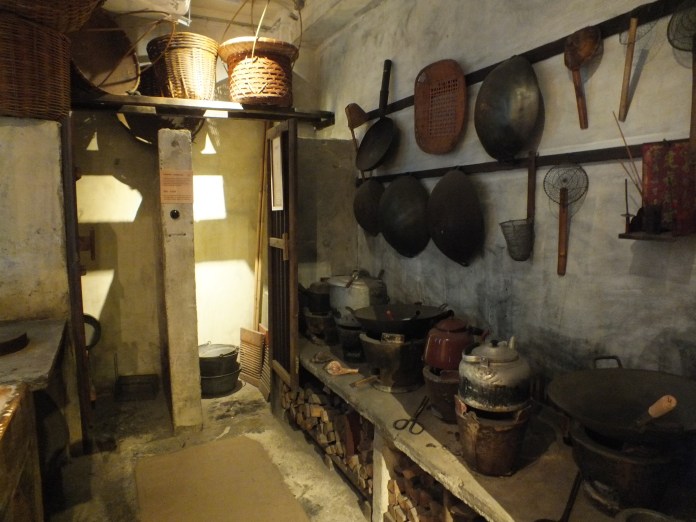
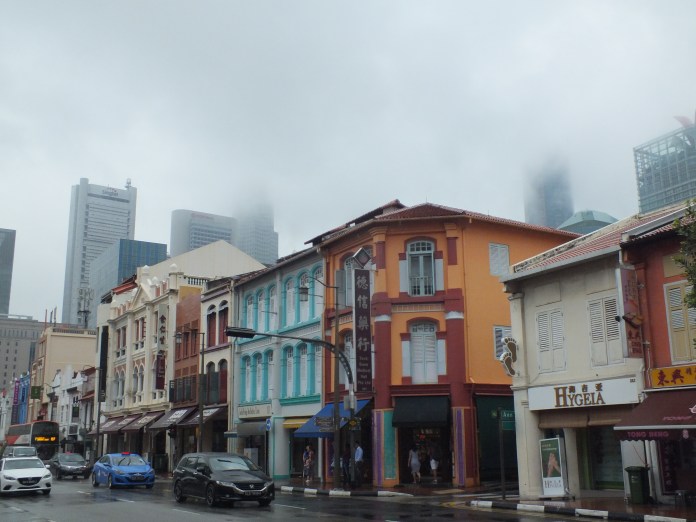
I hung around my hostel in Chinatown, wandering through street after street of sodden stalls selling tacky souvenirs and chocolate coated durian, until I came to a great little museum about the history of Chinese immigration to Singapore. It recreated the squalid living conditions of the area – each family shared one tiny room and were charged according to the size of their stove. The landlords and employers would encourage opium addiction in order to keep hold over their tennants and labour force. I found the Samsui women particularly interesting: identifiable by their blue tunics and big red hats, and often having made a vow of chastity, they worked on construction sites and did heavy manual labour. At the front of the house was the doctor’s room, where there was a hole in the floor through which you could see who was on the street below. It also allowed you to hoist up dishes of food from hawkers underneath, who would advertise what they were selling through a series of coded knocks. In the basement was a small memorial to the city’s death houses, places where people went to die away from home because dying at home was considered inauspicious. (How different are modern retirement homes?).

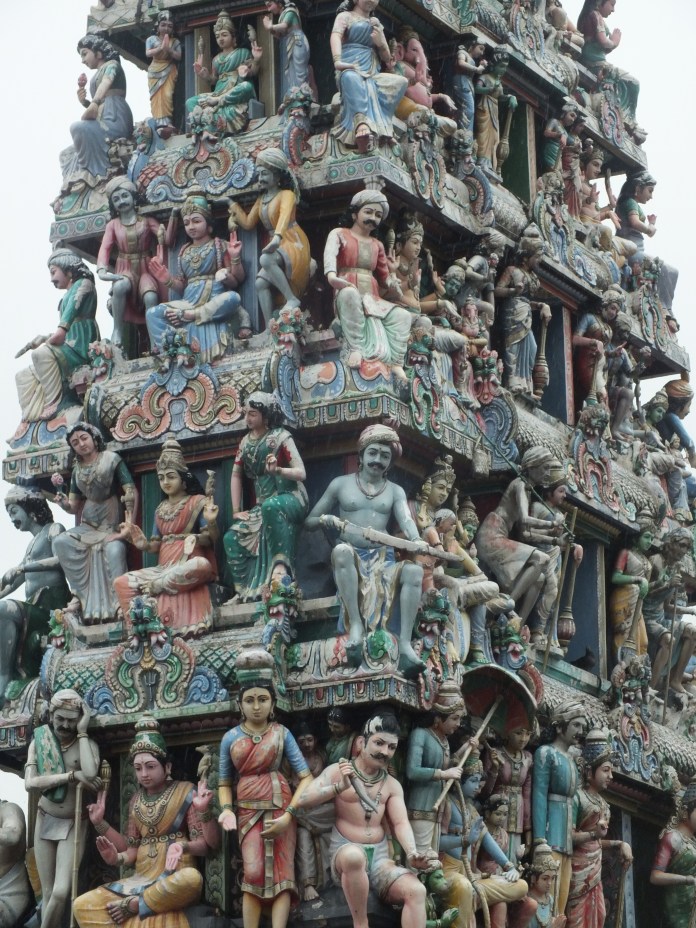
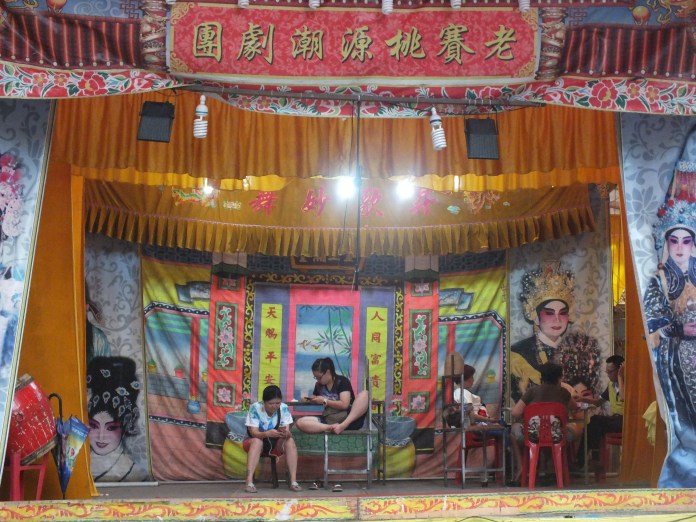
Singapore has such a mix of cultures. On the street where I stayed was a mosque, a hindu temple and a buddhist relic temple, while further around the corner I came across a synagogue, an Armenian church and a taoist temple. Inside the last temple I found a tent with a stage set up for Chinese opera; on stage singers in full make up were playing mahjong, while behind the curtain they sat sewing costimes.

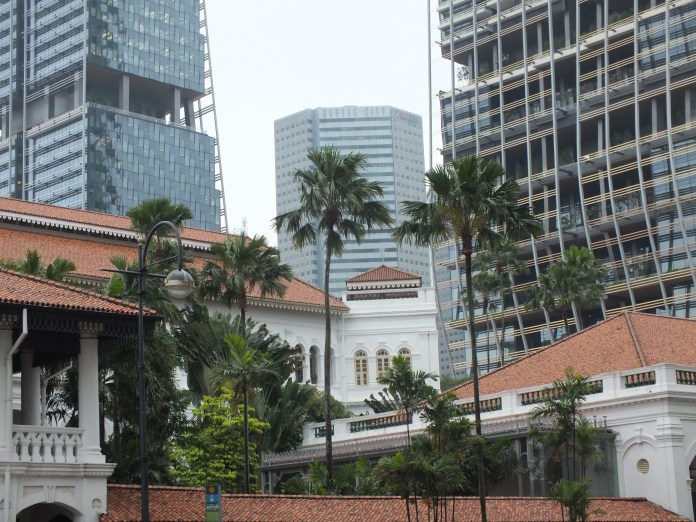
This mix is also visible in the juxtaposition of architecture, with colonial buildings that make you think you’re walking the streets of London brushing alongside buddhist dragons and futuristic skyscrapers. Many of the buildings are vertical gardens, making even the most urban areas feel pleasant in the tropical heat.

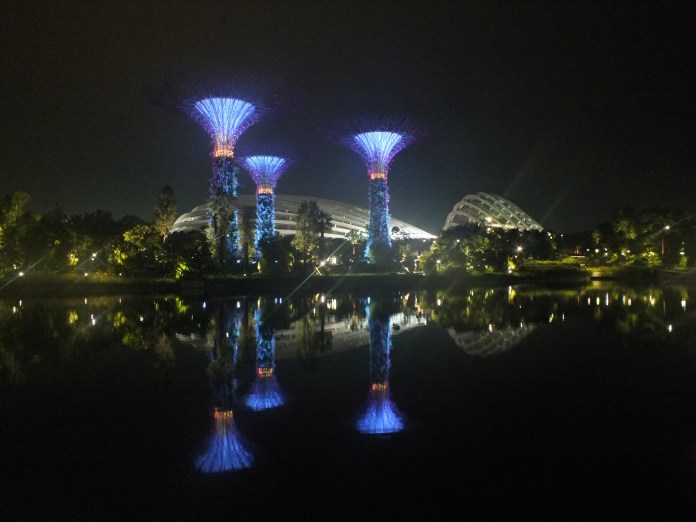
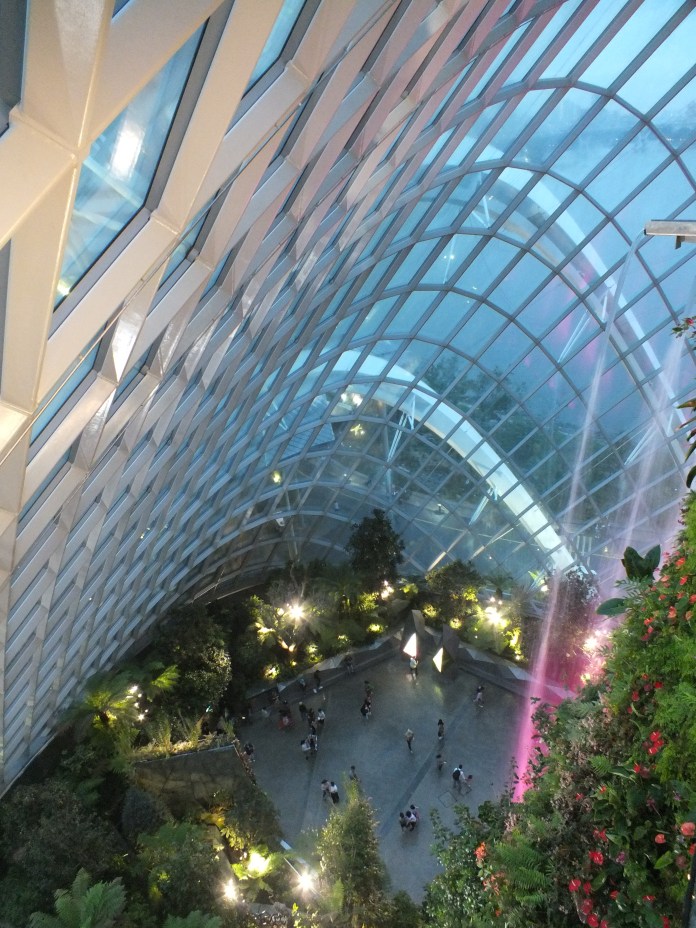
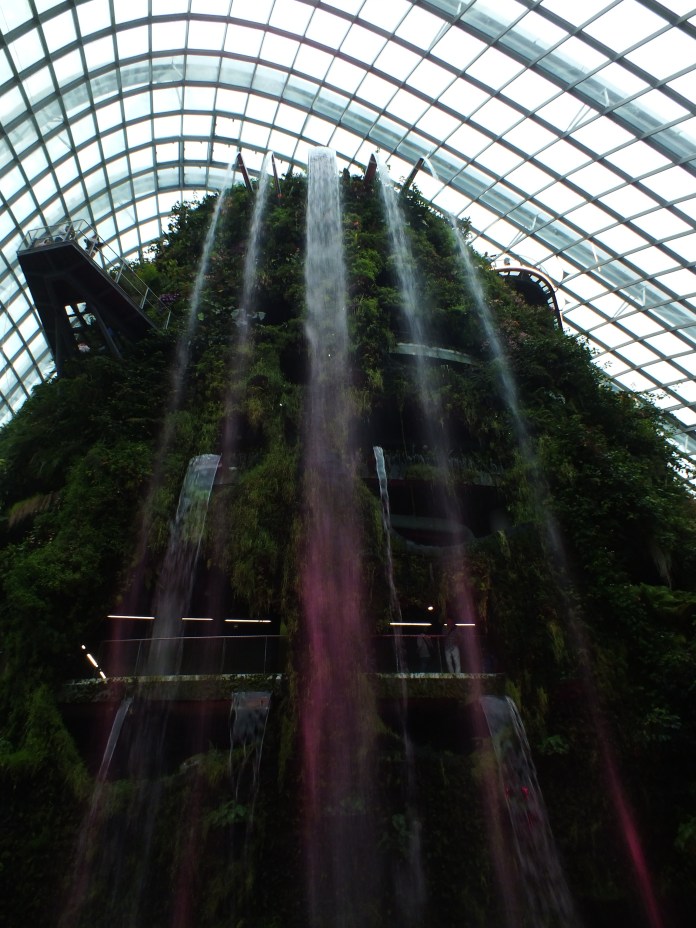
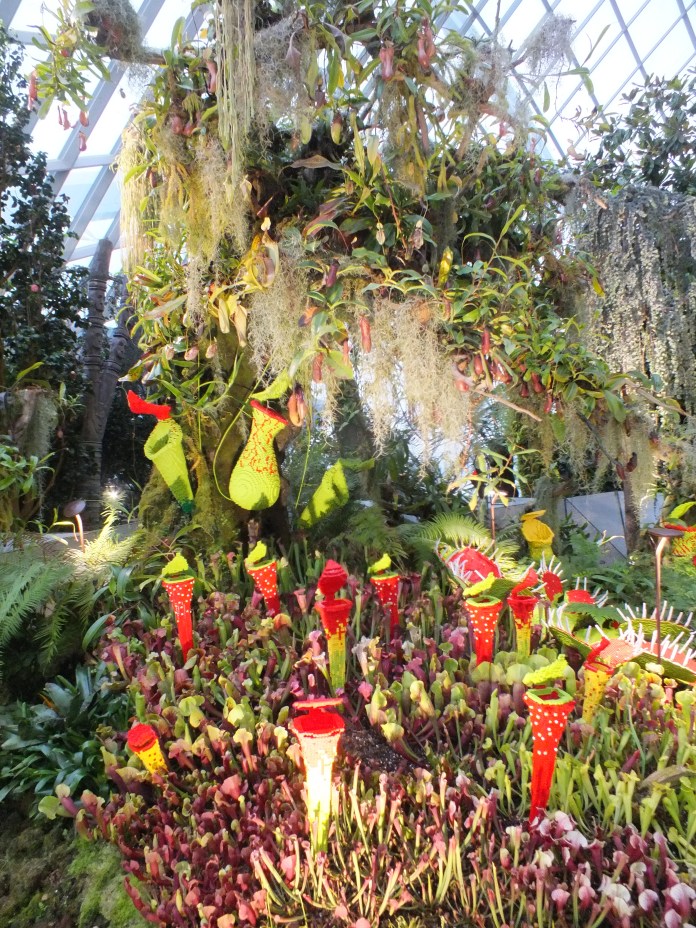
So, feeling in a mood for gardens, I went to the Cloud Forest at Gardens by the Bay, a botanical and climate change-themed amusement park. Inside a glass dome they have managed to create an artificial tropical mountain forest, complete with a 35m tall waterfall lit up in neon pink. Somehow a 200 year old forest has been established, recreating the beautiful, highly specialised natural environments that exist at different altitudes. Cloud forests are so highly adapted to their particular environments that they are especially vulnerable to climate change (rising sea levels, for example, pushes the cloud level higher) and are being destroyed at a higher rate than any other tropical forest. The dome was a very strange mixture of the real and the artificial: lego venus flytraps were dotted among real ones, carved wooden animals hid between the foliage and there wasn’t a single insect buzzing around. And that’s what Singapore felt like: exciting, often beautiful, and full of bizarre surprises and contradictions.

Standard

Uluru and the Top End

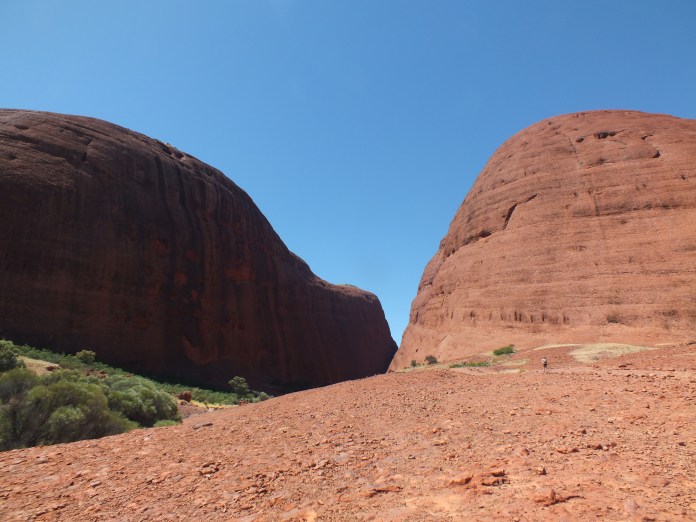
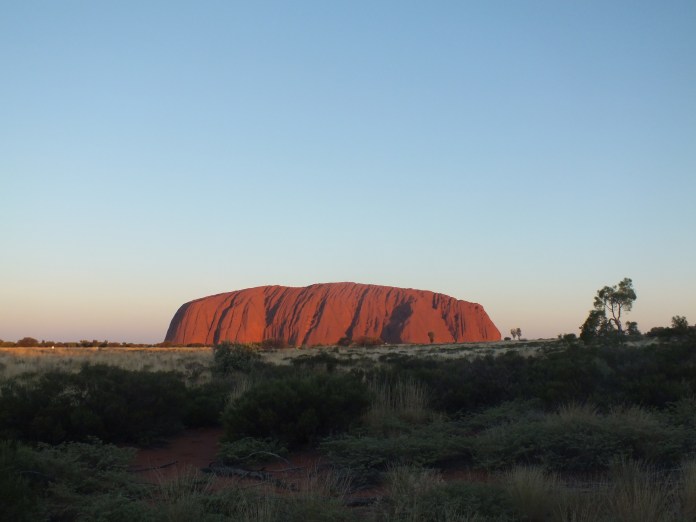
It was my last week in Australia. I’d been persuaded to see Uluru – not the magic glowing rock it’s sometimes made out to be, but a majestic and powerful creature of the earth – and began my journey north. From the bus I watched the landscape grow green and lush. Along the roadside were termite mounds ranging from tennis ball bumps to full-size snowmen creatures dressed in old t-shirts. Dark grey clouds appeared and glowered until late afternoon when it poured torrentially for five minutes, and I realised I hadn’t seen rain in over a month.

Stepping off in Darwin I was hit by the humidity: it was a physical resistance, like swimming through the air. In the hostel my air conditioning was mistakenly set to 26 degrees (which felt freezing) and I woke to find the floor and walls covered in a sticky layer of condensation. But now it’s only the end of the wet season – I can’t imagine what it’s like at Christmas.

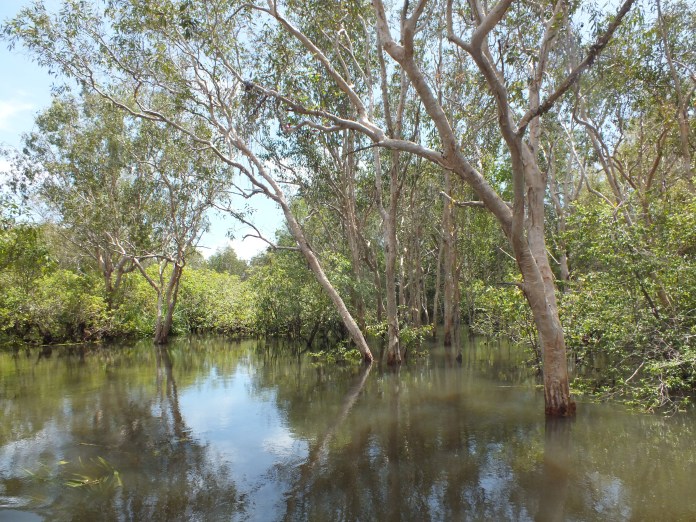
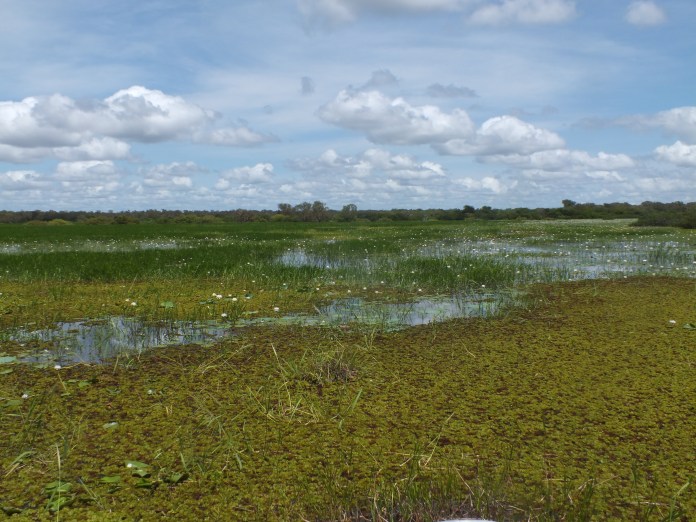
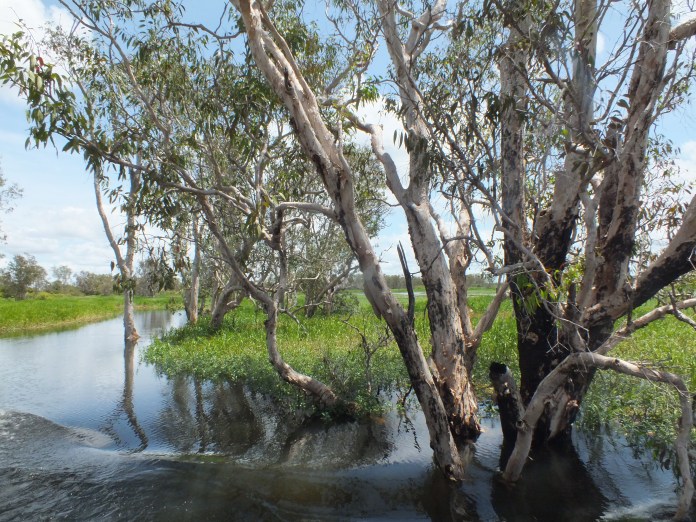
Since it’s the wet season it was harder to visit Kakadu, the massive national park in the top end of Australia. In fact, it was mostly underwater. I took a river cruise through parts that are dry land for the rest of the year. ‘Try to imagine my aunty standing underneath that tree fishing’, our guide said, pointing to a small bush – the few branches of the tree that still remained above water.

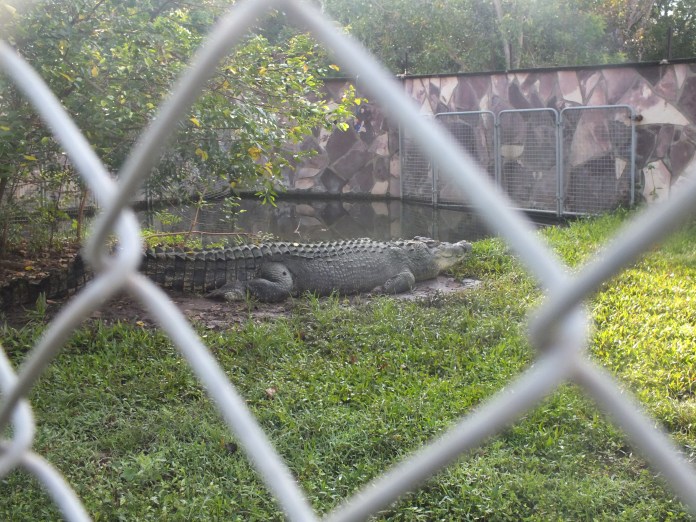
The water is beautifully tranquil, but murky and lethal. Before we set off in the boat we were given the compulsory lifebelt safety talk, but it ended with the instruction to never even think about using one since there are about 10,000 salties just waiting to eat you. It was very reassuring. The words of our guide kept on going through my head: ‘Remember, you’re no longer top of the food chain’. In the end, though, the closest I ever came to seeing a crocodile was the one caged in a roadside inn we passed, and the skull of the second largest croc in the world (the largest skull is in – where else – Russia). Instead we saw lilies, electric blue kingfishers, plump magpie geese, and lots and lots of still water.

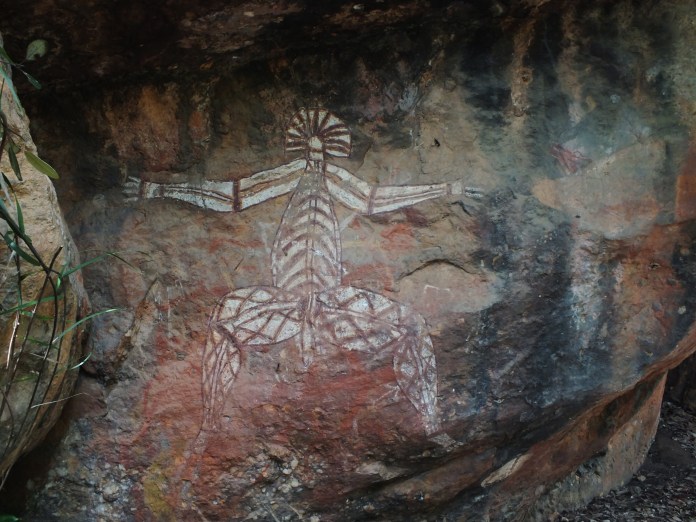
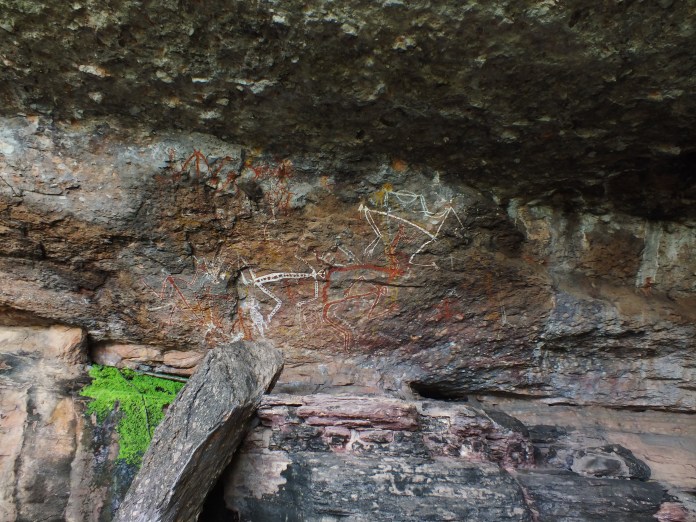
Kakadu is also home to some of the oldest rock art in the world. We saw a monster, painted in x-ray decorative style, who bashed women to death with a yam, a painting intended as a warning for women to stay near the camp. I thought the most interesting drawings were a series of very basic stick figures with balls for joints. They are a warning that this is sickness country and that if you stay your joints will swell up. Thousands of years later it was discovered that Kakadu sits on one of the world’s largest mines of uranium and what people were experiencing was radiation poisoning from the water.

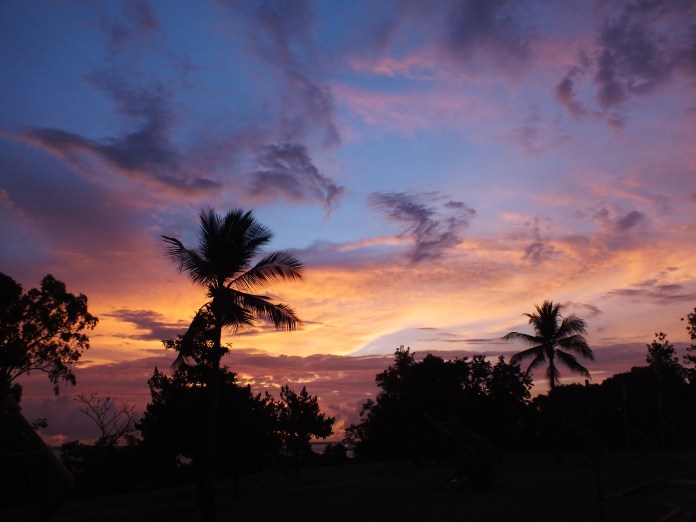
The small city of Darwin wasn’t quite as exciting as I hoped. I don’t know what I was expecting, maybe the old frontier town older generations talk about. It’s a quiet city, not unattractive, with a prominent WW2 history. The military presence is strong and Asia does feel very close – closer than Sydney or Melbourne. It did feel quite different from other places, with its massive bats, fragrant air, beautiful but untouchable water and spectacular sunsets.

It was a good place to say my goodbyes. On my last night a howling wind woke me up, and then the rain hit. It pummelled the sundeck and sunshade, making the swimming pool churn and knocking the potted palms over. Lightening bolts flashed like strobe lightning (frequent enough for me to get the photo below) and the thunderclaps rolled on for ages, sounding like atomic bombs. I woke again at 2am to catch my airport bus, but ten minutes before I had to go I realised I’d left my passport in the library photocopier (in a stupid fit of attempted organisation). I ran to the police station, but no help there, so ran to the library and hammered on the door until a security guard opened up. They looked at me very suspiciously, but went to have a look and returned, passport in hand! I sprinted back through the debris of the storm, only now feeling the humidity of the night – and even caught my airport bus on time. And it was in that hot, sweaty panic and the calm silence after the storm that I bid farewell to Australia.

Standard

Yuendumu

DSCF3318

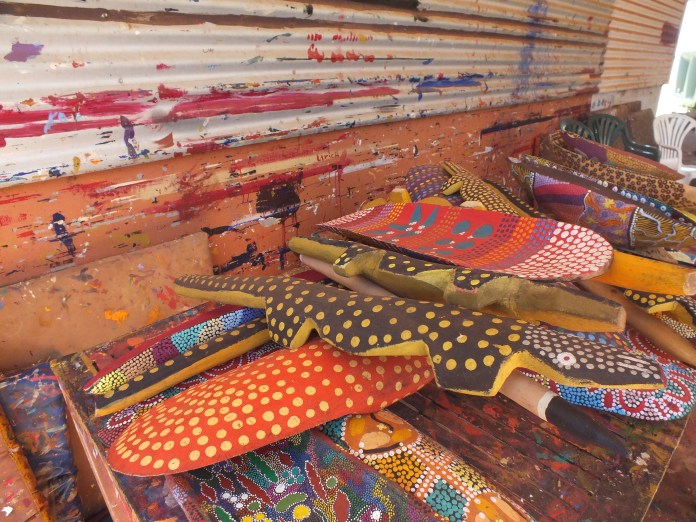
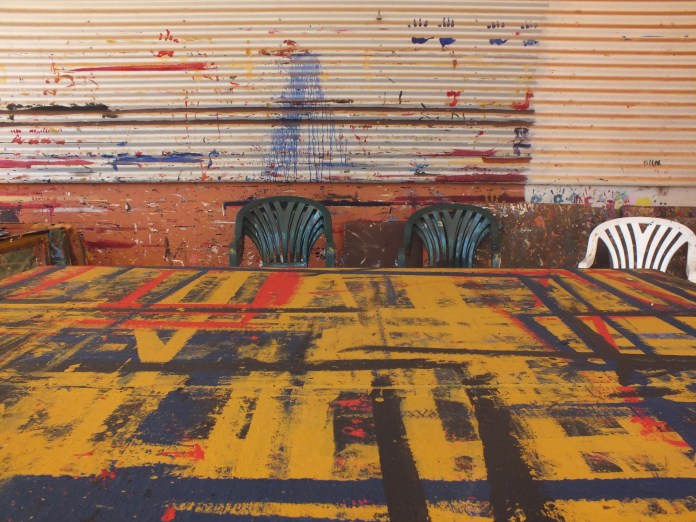
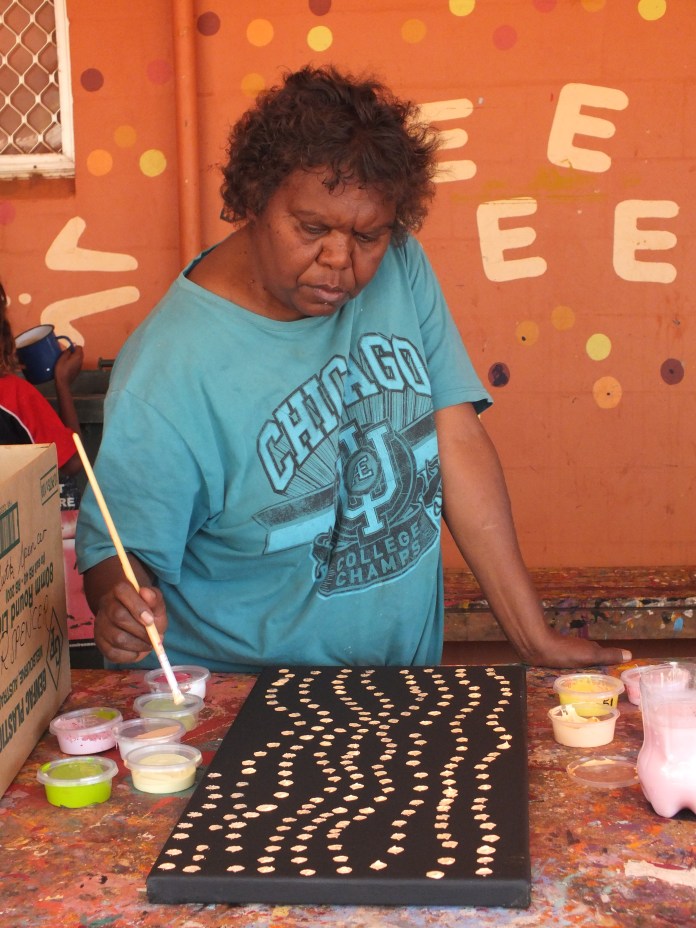
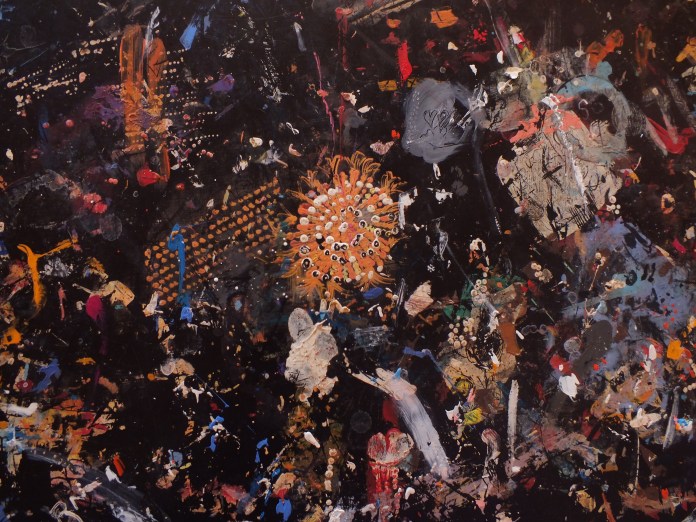
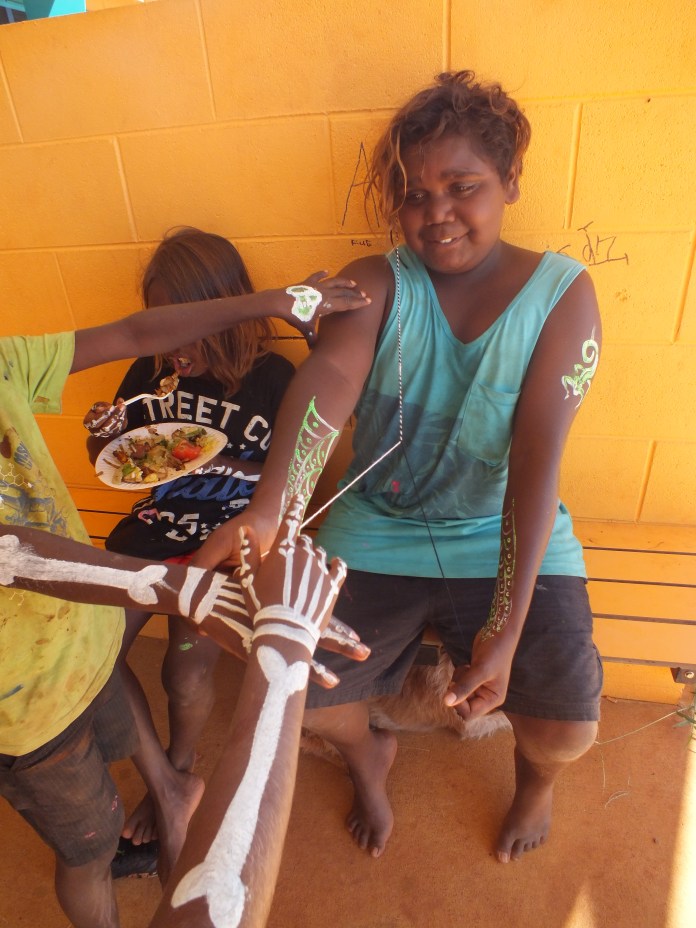
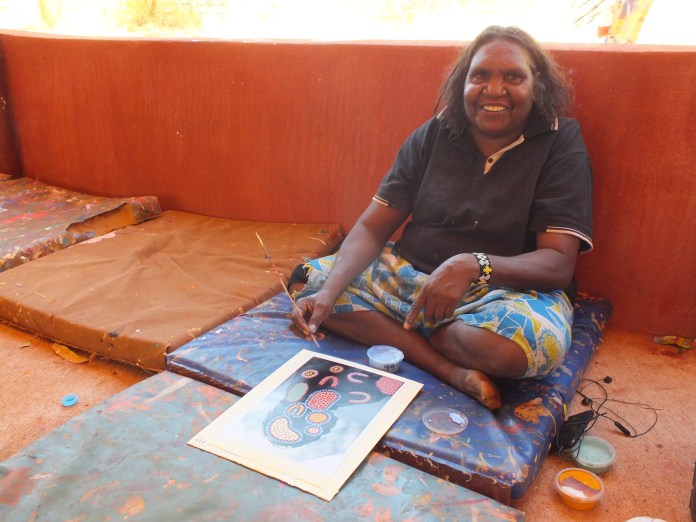
The aboriginal town of Yuendumu is well known, between its brawls and occasional riot, for its art centre. As with almost every service or organisation in the community, which appear to be run exclusively by white people and makes the town seem (to an outsider’s eye) divided into white providers and aboriginal users, this art centre employs young white Australians and welcomes volunteers from around the world. They need as many workers as possible because the scale of production is practically industrial. Anyone in the community can come and paint, and on the whole it seems to be a way to earn money rather than the practice of a traditional culture. The works are usually traditional, depicting a story or dreaming from the land around, yet sometimes it is the non-indigenous staff who teach the aboriginal artists how to paint a particular image. It is an intriguing collaboration and meeting of cultures, and often seems driven entirely towards economic success. And they are very successful: every day we sent paintings off across the world.

In the week I spent there, we primed and prepared canvases, made up pots of paint, tagged and unpicked paintings, processed artworks, and tidied the gallery, all day long. But much of the work was fetching cups of tea for the artists, handing out sandwiches, moving pots of water and cushions for them, or microwaving their lunch. I felt uncomfortable doing a lot of this: was this demanding behaviour an expression of long overdue entitlement, or laziness, dependence, or even resentment? There were big cultural differences on every level, even between our western expectations of politeness and friendliness, and aboriginal ways of communicating and socializing. But my time here was too fleeting to get to know people, to go beyond superficial encounters and cautious eyes. It was, nevertheless, an extraordinary and rewarding week, and among the most magical, dramatic and strangest I’ve ever experienced.

DSCF3295

Next door to the art centre lived an ancient lady called Rosie. She was frail and thin with wild white hair, and would stand at the fence watching us. One afternoon she beckoned me over, gripping the fence tightly, peering through the wires, and pointed upwards towards the branches. She told me to listen, and we stood there looking at each other and listening to the birds over the barking of dogs and music from a distant radio: ‘baby bird… there… not that one – that one… baby bird – there… there…’

The first night I arrived, I was taken to visit her by Juliana, a Columbian woman who had an amazing skill for getting on with everyone. It was dark and Rosie was sitting outside her house on a metal box. Inside I saw bare painted concrete walls and no furniture besides the metal sink. Around her neck was a necklace of seeds and a big wooden cross. She started talking, moving between English and Walpiri, telling us about her old land, the missionaries, and the family that had left her. She wanted us to know the Walpiri words for everything and kept translating for us. ‘I’ll give you a skin name’ she said to me. ‘Naparrula’. There are 16 skin names, and they form a very complex system for determining who you can marry.

Rosie talked and talked and talked, with her sandwich uneaten in her hand. We tried to get her to eat, but no matter how much she insisted ‘I’m hungry’, the sandwich lay uneaten in her hand. She wouldn’t let us go. She grabbed hold of Juliana’s wrist with one hand and her breast with the other. ‘Lampurna, lampurna’, she repeated, taking hold of her own breast. ‘Milk, same word. We all women, black and white’. As we tugged away, Rosie pulled Juliana’s wrist harder and looked up. Her hollow face was lit on one side as though in a film. ‘Pray for me’, she croaked. She looked up at us, and let us go.

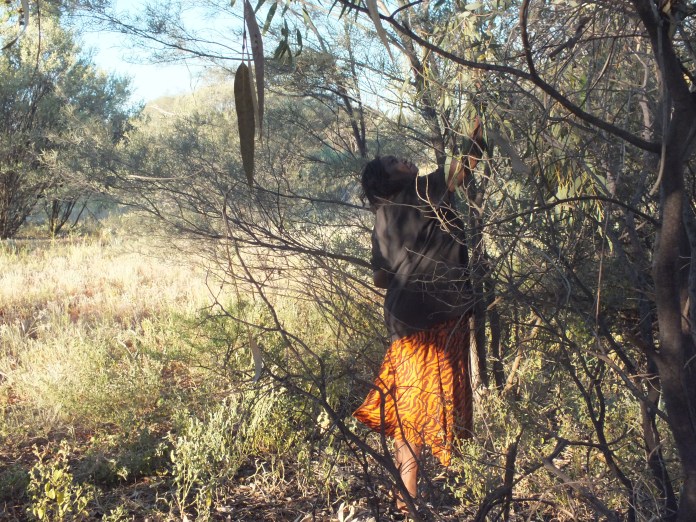
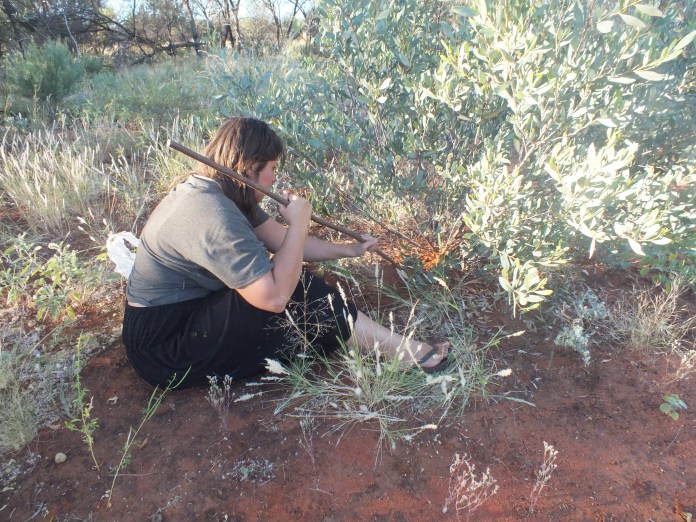
It was the older women who were the most open and generous. Dorothy was a healer, and she took us hunting for bush tucker. Inthe evenings we drove around in the art centre’s ex-army land rovers, whose wooden benches in the back were cushioned only by the dogs that piled in with us. Off the roads, we started wandering through the bush. We looked for shells of insects underneath bushes, and started digging among the roots of the wittchety bush for grubs. We searched the vines in trees for the elusive green fruit of the bush banana. Suddenly, walking past one big tree we bumped right into gnarled pale grey balls hanging from the branches: bush coconuts. If you crack open the coconut there is a large sweet juicy worm you can suck out, some pink fly eggs (a bit of extra fibre), and the hard white flesh of the coconut which is slightly bitter.

DSCF3346

DSCF3343

DSCF3376

DSCF3218

Another day, while we were working in the gallery, a wailing started next door. Someone was crying. Within seconds others started joining in, shrieking and moaning, hugging each other, shaking hands, tears flowing freely. Painting immediately stopped and everyone got up to join the crying for the rest of the day. That afternoon the sounds of wailing and moaning gave the town a haunted atmosphere. A few days later, as we drove out of town, we passed a sorry camp: a collection of mattresses lying outside on the sand where people were sleeping.

DSCF3284

Among the volunteers at the art centre was an Irish ceramicist. It was suggested we go out and find some clay to have a pottery class, so, taking Dorothy with us, we drove to a dried out creek and started digging in the hard earth. We suddenly stopped. Dorothy was looking very uncomfortable. You cannot remove stones from the ground because they are sacred, but you can take away earth. We weren’t sure about clay. Nor was she, it seemed. Although she said it was alright, there was something uncomfortable about the whole thing. But we took the lumps of clay, soaked, strained and dried it out, and ended up with a beautiful reddish brown clay. The plan was to fire it outside in a bonfire the following week, so I’ll have to wait and see how it went.

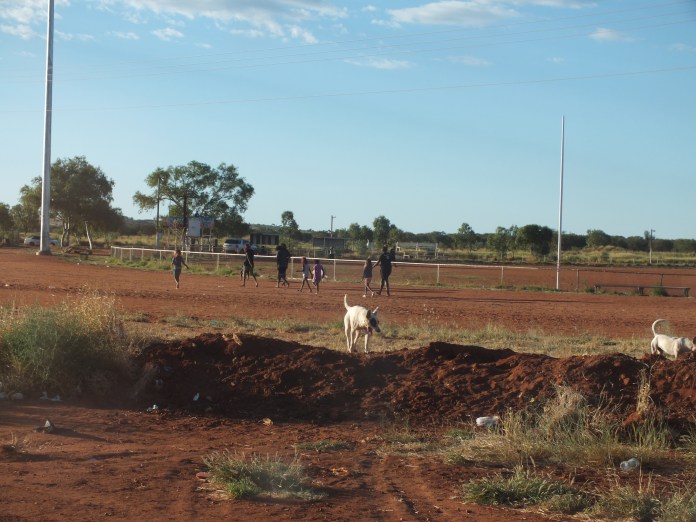
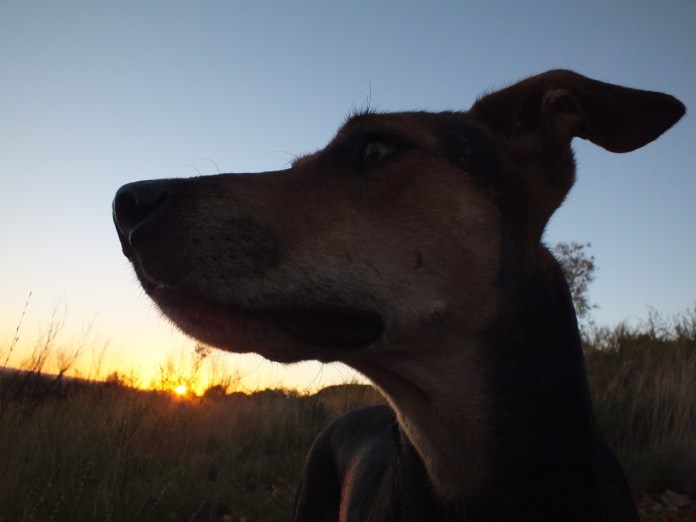
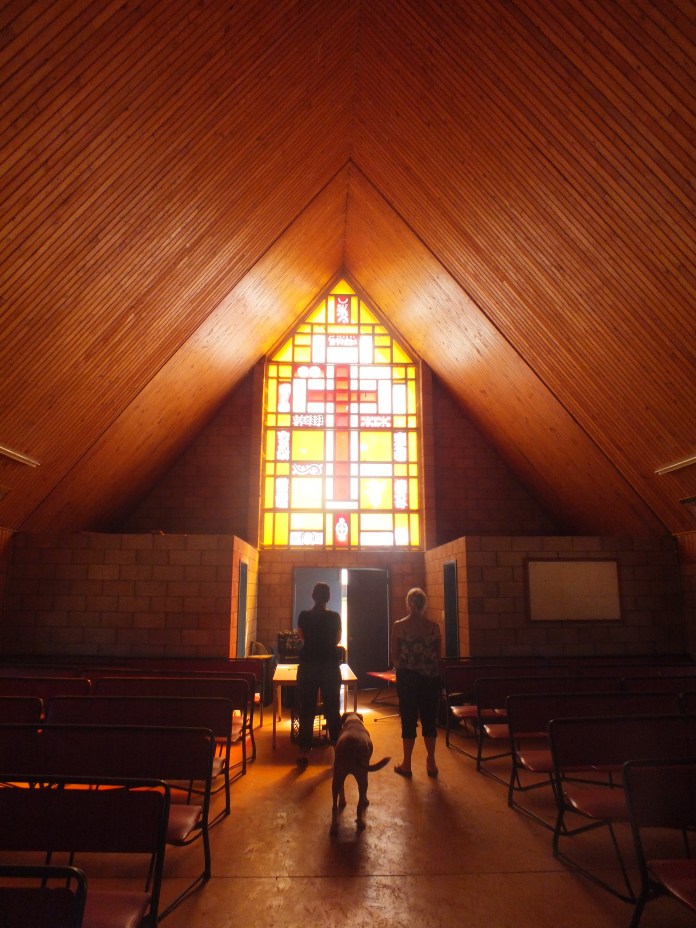
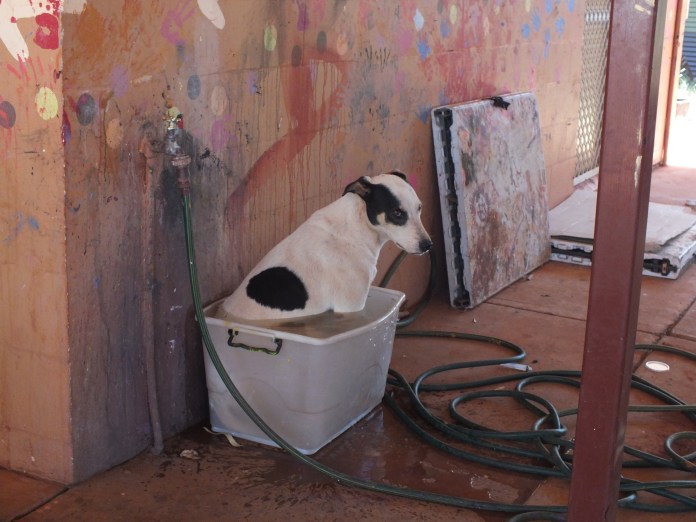
The town itself was dusty and dirty but had a great sense of community. Passers by would engage you in conversation, even if their dogs weren’t quite as friendly. Every time we walked out our gates and barbed wire fences we would be accompanied by at least three dogs, who essentially protected us from unwanted attention. The dogs went everywhere, even into the old Baptist church with its beautiful paintings and strange faith which combined Christianity and dreamtime. They sat on the paintings which had just been sold for thousands of dollars. They took me through the bush at sunrise, seemingly aware of the traditional belief that if you don’t ask for permission, you get lost. They fought in the dust as we lay on the dirt by a bonfire, stargazing. They had their parties while we had ours, revelling in the illicit pleasure of alcohol in one of the few houses with an alcohol permit. There was Ben the dingo, the most graceful and fastest dog of them all, Rosie, who was unaware of how fat she was and would knock you over in eagerness, and Daisie, who couldn’t go five minutes without a cuddle.  And there was Blackie, Kira, Ziggy, Raya, Plummie…

I wish I’d had more time to get to know people, to get to know the culture, to learn Walpiri, to understand the stories of dreamtime in the paintings and the landscape. But it would take more than a lifetime.

DSCF3283

DSCF3398

DSCF3425

DSCF3328

DSCF3406

DSCF3381

DSCF3313

DSCF3370

DSCF3336

DSCF3304

DSCF3323

DSCF3464

DSCF3459

DSCF3319

Standard

Mt Dennison

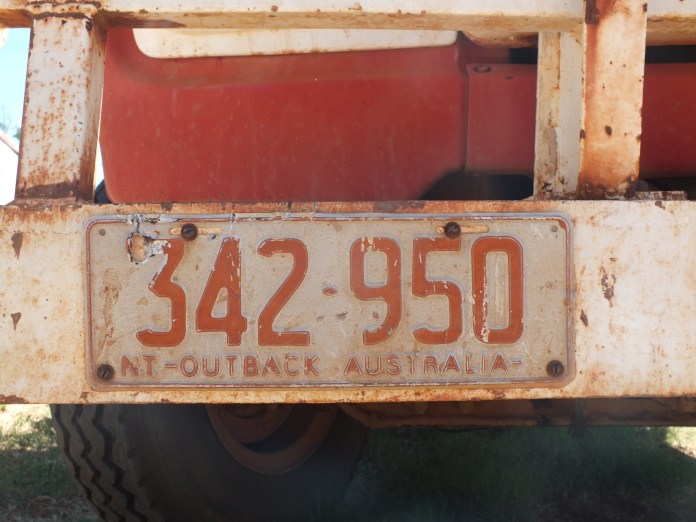
The Red Centre. The Outback. The Central Desert Region. Vast horizons, cloudless skies and never-ending straight roads draw me here. I want to know what life there can be in such an inhospitable environment. Heading north west out of Alice Springs, towards the Tanami Desert and the vastness of Western Australia, is the small aboriginal town of Yuendumu. Most of the remote communities in the Northern Territory are serviced by an amazing bus service called the Bush Bus, which acts as a kind of motorized walkabout for locals who don’t have the 4x4s of cattle stations or the government. On the bus I stuck out as the only white passenger, repeatedly questioned about where I was going and who I was seeing, though I could barely understand the broken English which intermingled with indigenous languages. Along the way we stopped off in Yuelamu, a closed community off the main road, and it was the first time I’d been in a fully aboriginal town. There are only about 100 residents, and you need a permit to access the land, but there was a lot of activity: people wandering along barefoot, driving their suburban cars along dusty red roads (I wondered how they’d managed to bring those cars here), children playing in an old playground strewn with cans, plastic bags and blankets. Women came out to greet the bus with their babies. It felt a quiet place, remote and yet somehow crowded.

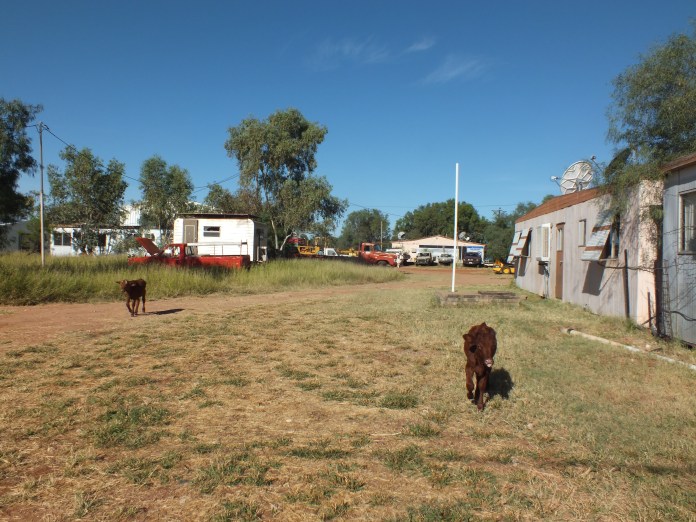
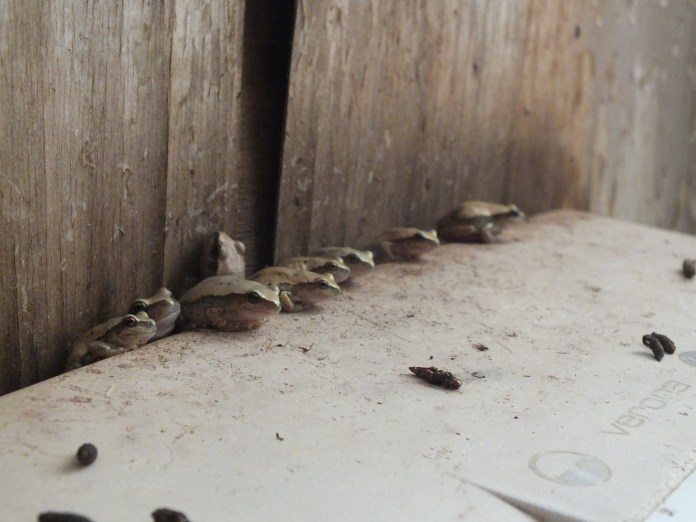
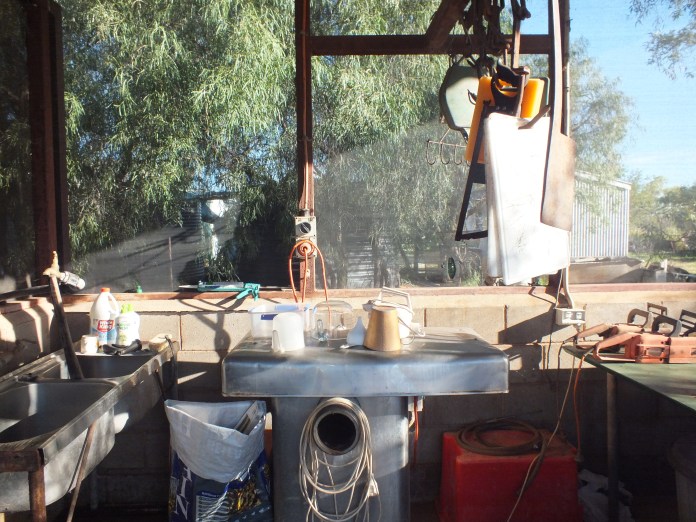
35km from Yuendumu is Mt Dennison, a cattle station 300km north west of Alice Springs. The station is 3000 square kilometres – 60km between the furthest points, or a one hour drive across – and says it has 5000 cattle. It was hot. I was shown to my own little house, which had no air conditioning and was even hotter. The bathroom was infested with frogs and the peeling walls, broken cupboards, patched lino floors, mismatched bedding, everything, was covered in gecko droppings. I tried to use the toilet in another volunteer’s bathroom, but it stood at a 45 degree angle and there was a big hole in the floor, so I simply had to make friends with the frogs – I would get no sympathy here. The next morning our electricity wouldn’t come on. ‘Welcome to the outback’ said Dianne.

DSCF3023

DSCF3065

Dianne runs this family cattle station, but she is widowed and her six children have left home so she now manages the place alone, helped only by one employee and an uneven trickle of volunteers. I asked if she felt isolated here. ‘No, the bitumen extends almost all the way to Yuendumu! And it’s only three hours to Alice.’ These distances are starting to seem small even to me.

Breakfast was at 6.30am and work started at 7am. Every morning we had a beautiful sunrise over the fields of long grass, and as soon as the sun was up, work began. In these semi-desert conditions, watering the garden was a major job. They’d had a lot of rain over the summer, but nothing for the last month. I managed eight hoses simultaneously, flooding each plant and tree for up to 20 minutes each. But weeding was wonderfully easy in the sandy soil. By 11am it was too hot for me to work outside: on several occasion the (admittedly not terribly reliable) thermometer read 44 degrees – and it was always hotter inside my room… I could have watered the plants with my sweat by that point. My pale Tasmanian skin gave me an excuse to go inside.

DSCF2914

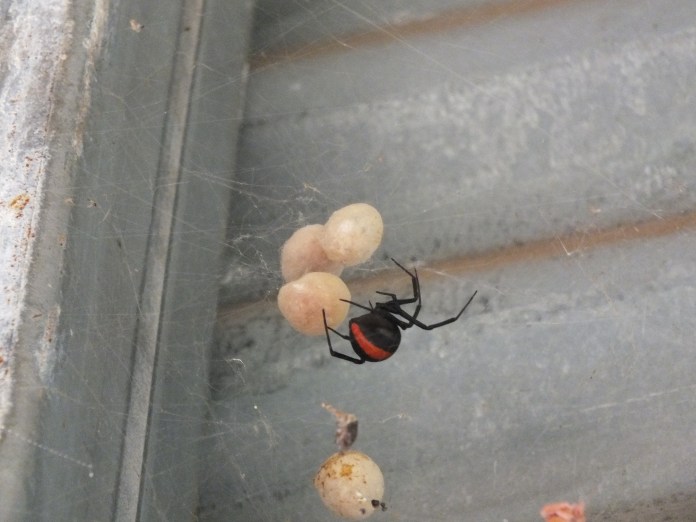
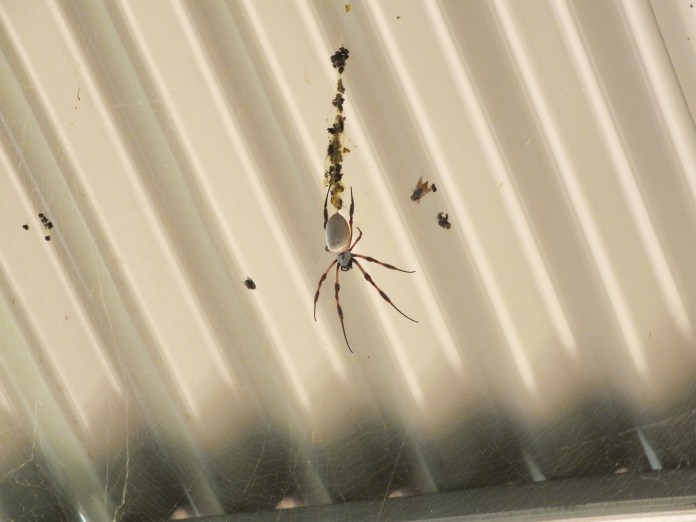
I cooked for the boys and cleaned the decaying homestead. From the garden at this time of the year we had an endless supply of chillis, lemons and limes, while the various cool rooms were piled high with crates of milk, apples, butter, peppers and beer. The freezers were filled with steaks, salted beef, stewing beef and sausages, and the pantry was so well stocked it would rival any shop. Housework here was not simply about appearances or creating a pleasant living environment, but was a matter of safety. Poisonous spiders were allowed to live over the barbecue, but not underneath chairs or on the hat stand. Centipedes in the house had to be crushed and disposed of. Grass was a fire hazard and had to be cut.

DSCF3158

DSCF3141

I was surprised that I actually saw any cattle at all. They live completely independently, partly due to the nature of the land and partly because a lot of work simply hasn’t and isn’t being done. Many of the fences have collapsed, meaning the cattle can’t be managed and simply roam free alongside the wild horses. The exceptions to this were the ones who were hand reared as calves and now choose to spend the rest of their lives around the homestead. It was my job every evening to make up the powdered milk and feed the calves using an old beer bottle. They were aggressive and fought for the bottle, head-butting each other and me, stamping on my feet and trying to wedge themselves between my legs or between me and whichever calf I was trying to feed. But by the end I realised that if I stuck my fingers into their mouths, they would suck on them and keep quiet (while cutting off most of the blood from my fingers). It was very cute to watch.

The actual number of cattle, I was told by the one man employed there, was probably closer to 12,000 than 5,000. He was aboriginal (and ‘becomes more and more blackfella the older he gets’) and spoke a beautiful type of rippling, fluid English I’ve never heard before – real Australian slang as only aboriginal people seem able to master with complete dexterity. Even the simplest affirmative answer had to be extended to ‘Yeah bloody eh’. He had incredible stories of the old musters on horseback, sleeping in swags, roaring up fires for hot baths, living on dampers and camp cakes. He taught me about fencing, road building, paddocks, traps, types of cattle, or how to use animal tracks to find water in the outback. When he and Dianne chatted during smokos, I could just about follow, but dinner conversation was beyond me – I just sat back and enjoyed the sound of their speech.

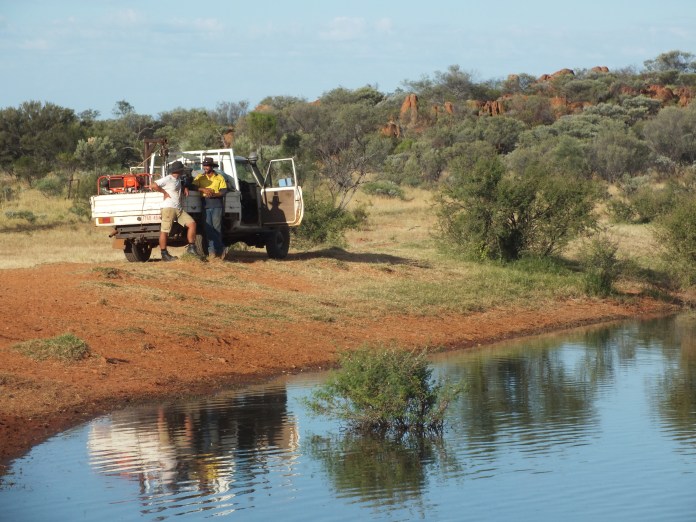
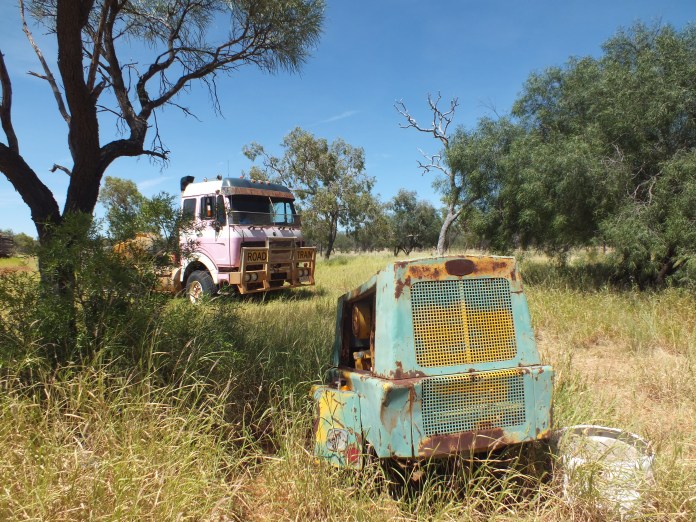
My favourite times were when we went driving across the station. Going to the tip was like going on a journey through time, from rusting cars from the 1950s to typewriters with clumps of grass growing through the keys, collections of washing machines, mountains of tyres, and pile after pile of metal poles, wheels, screws – anything you needed could be found there. We drove to where the roads and fences were being rebuilt, where herds of wild horses galloped past in clouds of dust and cattle scattered in terror as though they’d never seen such monsters before. Three of us squeezed into the front seat of a truck to go and see a dam, which we found by turning off the road at some unmarked but apparently significant point and driving right over bushes, trees and broken fence lines. I hadn’t expected the landscape to be so beautiful and to have so much character.

DSCF3113

DSCF3086

DSCF3124

DSCF2956

I loved living and working here so much. I loved the heat and being spoilt for sunrises, sunsets and the majestic Milky Way every single day. I loved getting up early and working hard, showering several times a day under water that refused to turn cold in a vain attempt to cleanse myself of red dirt. I loved the afternoons spent inside the cool homestead, drinking icy lime sodas, being domestic or doing patchwork, and listening to a calm Englishman’s voice reading Smiley’s People, while outside in the sweltering heat the grasshoppers and lizards and cockatoos carry on living, just as they always have.

DSCF2923

DSCF3039

DSCF2967

DSCF3139

DSCF3072

DSCF3081

DSCF2947


Standard

Adelaide

DSCF2870

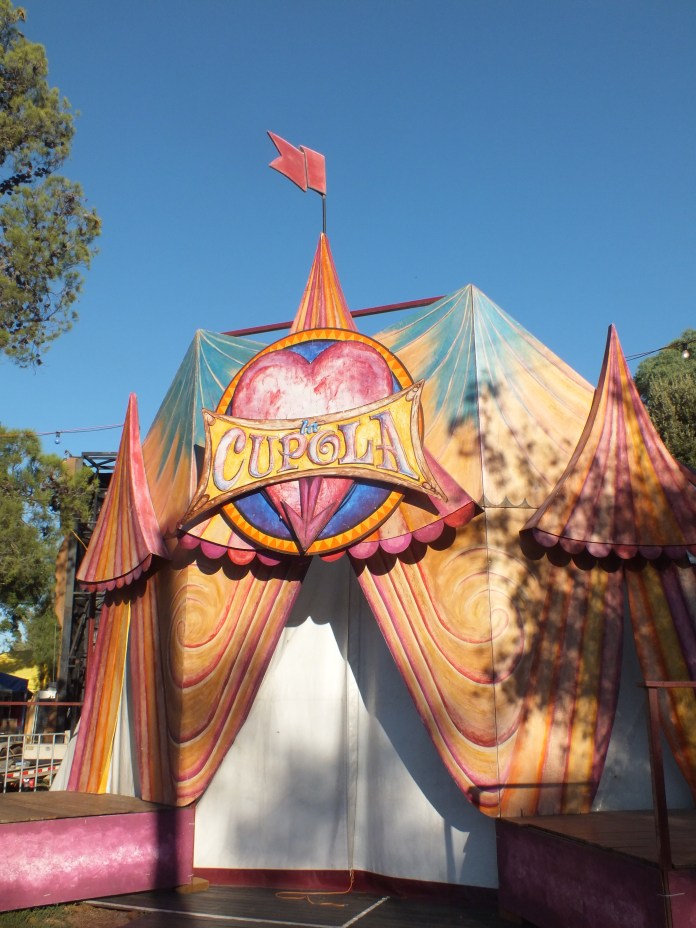
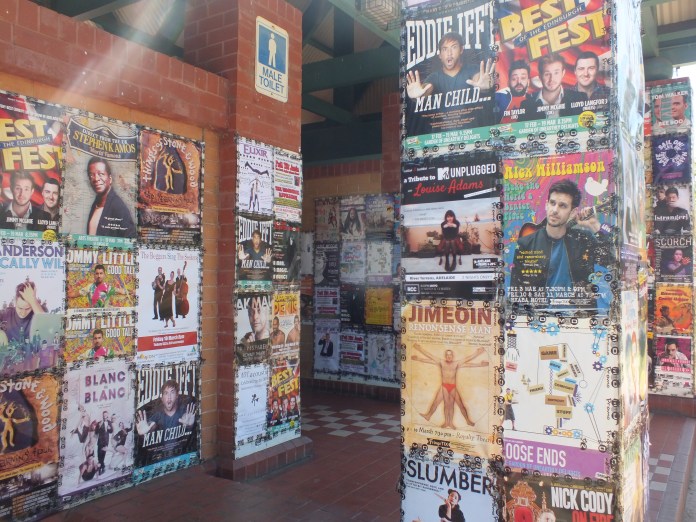
Mad March is the time to be in Adelaide! It’s the end of summer, the heat is easing off, the crowds are out and everything is ON. There’s the Festival proper, things high brow and serious, and the Fringe, and then there are all the other events – in just the 5 days I was there we had Clipsal (car racing which drowns out the opera) and Writers’ week. But it’s the Fringe that dominates, with venues like the tantalizingly-named Garden of Unearthly Delights and (slightly more peculiarly named, and a little less exciting) Royal Croquet Club. Giants on unicycles and glittery women in tutus desperately flyered, vouchers for free champagne were thrust into our hands, and the beautiful coolness of evening was accompanied by twinkling lights in the trees.

DSCF2836

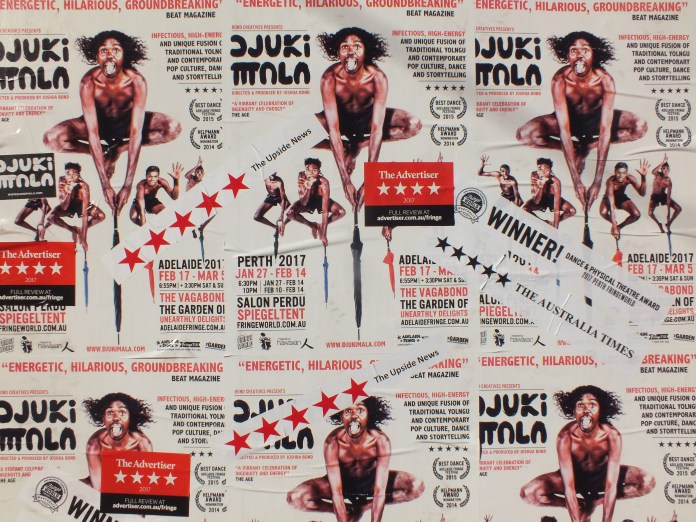
So, the best thing (and sadly, if I’m honest, only thing) that I saw: Djuki Mala. The aboriginal Youtube dance sensation. It started with traditional dancing, what looked like an imitation of animals and hunting with spears. The audience clapped politely with a slight air of disappointment, until all of a sudden bright lights came on, the music changed and the dancing became frenetic. We now had Singin’ in the Rain and Michael Jackson. The audience cheered wildly – this was what everyone came for. The dance was a mash of as many styles as possible: hip hop, break dance, tap, techno, aboriginal, and all sorts of other things. They looked like they were having so much fun. One of the dancers had his tongue stuck out the whole time and looked totally mad. In between dances were videos from Arnhem Land describing the stories of the group. The whole performance was funny, exuberant, energetic, feel good entertainment.

DSCF2863

The other really fun thing was a virtual reality arcade: I sat on a stool wearing goggles and travelled on rollercoasters, took part in a seance and got stabbed in the eye, saw a blue whale swim right past, and was eaten by a spooky black ghost.  It was completely immersive and tiring, but if this is the future of cinema, bring it on!

There’s so much to see, and I do enjoy things for free – but I wish I had money to do more things.

DSCF2851

DSCF2852

DSCF2846

DSCF2842

20170306_184437

20170306_184629

20170306_183934

Standard

Tongariro and the North Island

dscf2467

Given that three quarters of New Zealand’s population live on the north island, hitchhiking here is – if it’s possible to believe – even easier than on the south island. I set off from a suburb outside Wellington and was picked up before I’d even stuck my thumb out by a man bearing a grudge against the English for stealing his girlfriend thirty years ago (she preferred Chiswick over him). He asked me to give the place a good kicking from him.

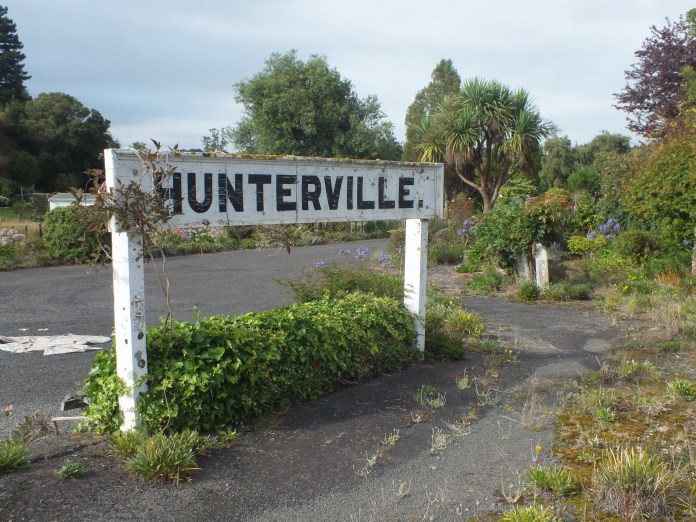
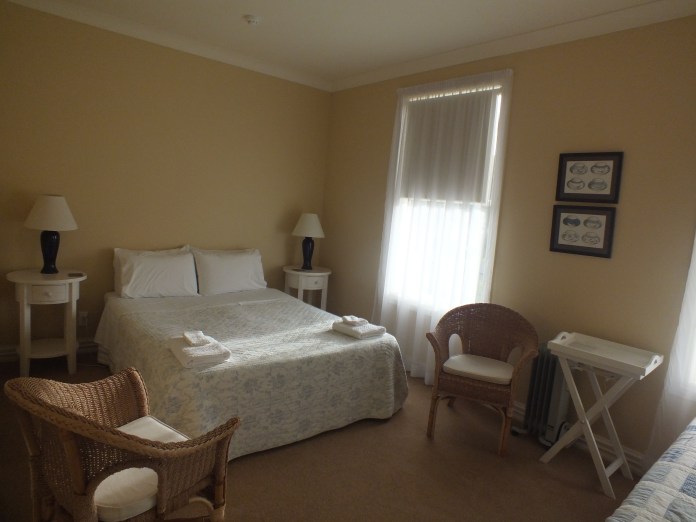
Several rides later I was left standing in a particularly awkward spot, and a car pulled over thinking I was going somewhere quite different. The driver, ‘CJ’, realised my problem and offered to drive me to a better spot. Then offered to go the long way round to her town. Then offered to take me all the way to the next town. And then offered to drive me right the way to my campsite. After half an hour we turned off onto a small gravel road, over a wooden bridge and into a beautifully lush, deserted camping ground. But CJ wasn’t happy leaving me there, and insisted she would pay for a hotel room for me. She was middle aged and absolutely tiny, so I thought I’d be alright accepting – and did so in a state of grateful disbelief. Back in Hunterville we found an old railway station which had been turned into a boutique hotel, and she paid for my room and breakfast. I felt so bad that I tried to thank her by buying her a drink, but she then bought dinner! We sat in the bar watching the farmers drink and looking at photos. She found the whole thing hilarious and a great adventure. There were three things in her life: horses, dogs, and planes (she worked at the flying school and knew them all). I suppose it was an adventure for her – and me.

So I spent a night in luxury! I was the only guest in the hotel and had everything to myself: the rooms and corridors with thickly carpeted floors, understated wallpaper and fluffy towels, the rose garden and a country kitchen downstairs. I couldn’t read behind the polite face of the owner – who knows what she was thinking.

Hunterville is the sort of place the army stops off at for 10 minutes to use the toilets. There were statues of sheep outside the town hall, the museum was only open on Friday afternoons, and the shop windows displayed posters for some sort of extreme man-dog festival.

dscf2243

dscf2225

dscf2235

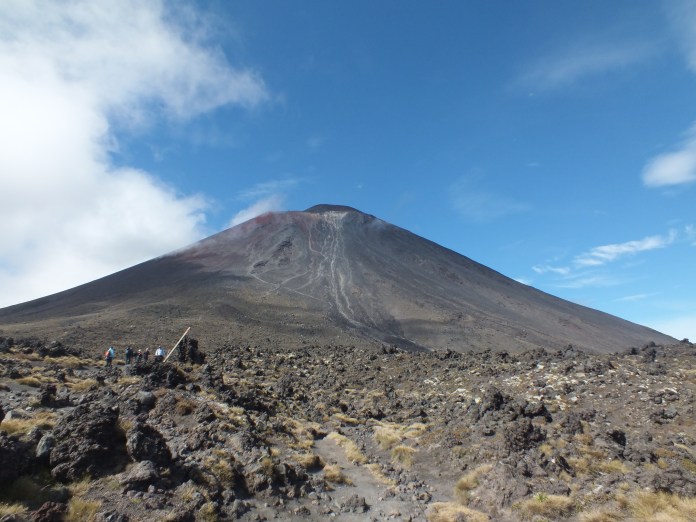
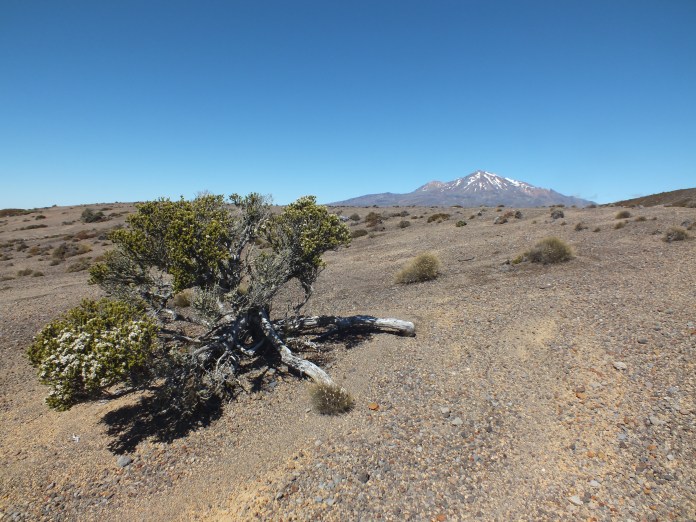
I carried on north, lured by the volcanoes of the Tongariro National Park. Mt Tongariro, Mt Ruapehu and the wonderfully unpronounceable Mt Ngauruhoe (aka Mt Doom in Lord of the Rings) are considered embodiments of ancestors and their stories by Maori. They are sacred, but were given to the government in the 19th century as a way of protecting them. Part of the park will soon return to management by the local iwi, but for now it’s just run like a national park (though one with dual world heritage status).

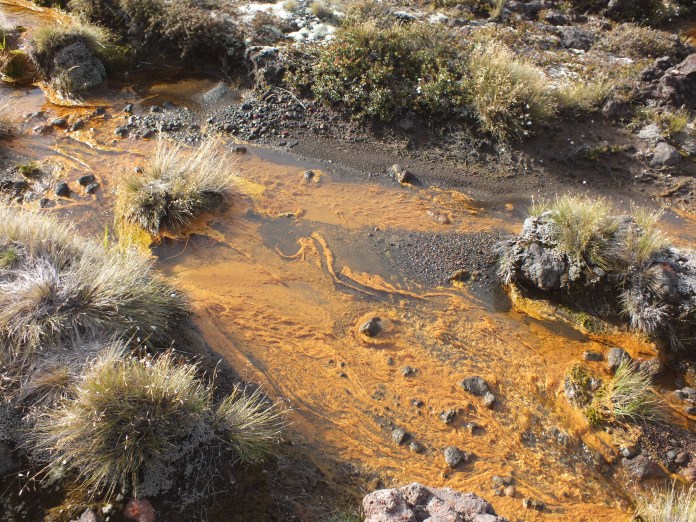
The volcanoes are still active and the last eruption was in 2012. Every evening during my walk we would sit down for a hut talk and be told what to do in case of sudden volcanic activity. There were maps dotted around highlighting the areas that have been affected by volcanoes in the past 27,000 years, meaning they are still hazard areas. But it was clear that, despite the enormous devastation of the landscape around us, everyone is desperate for an erruption. Flows of rocks and lava have created a kind of desert moonscape, leaving behind slopes of pumice and sulphuric streams. The scenery is dramatic enough to make it New Zealand’s most popular day hike, so it shouldn’t have been a surprise to pass walkers with Lord of the Rings music blaring out their phones while crossing these barren mountains, but it was.

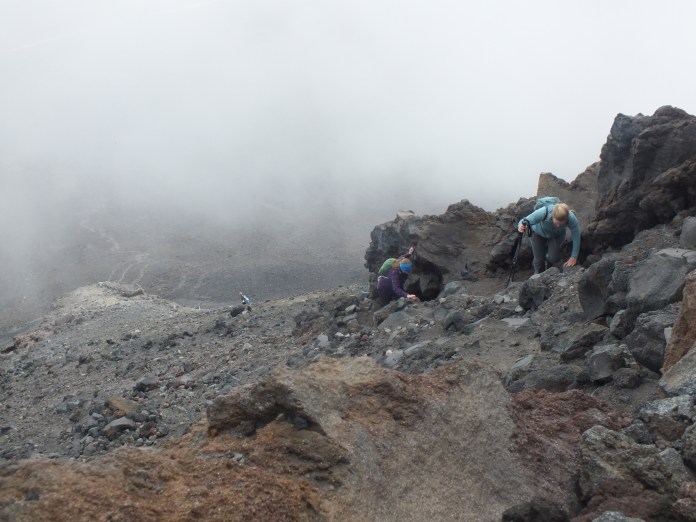
We’d had the best long range weather forecast of the year and Mt Ngaurruhoe stood so close. I teamed up with a Belgian and a Swiss girl to walk, and talked to a ranger about how best to climb the volcano. It was a steep two hour climb up a 45 degree ridge of rocks, and by the time we got to the top we were in cloud. But we could still sit on the bright red rock and peer inside the volcano to see the crater. It was all solid and stable, but felt incredibly alive.

The descent felt even more alive. Skating down the scree was fun, without a doubt, but dangerous, especially when there were other people below. Each footfall would dislodge hundreds of small rocks, but it was the big rocks I hadn’t prepared myself for. I watched a large stone slip so slowly, willing and not quite believing it would carry on. But it sped up and suddenly the rock was tumbling down and everyone was screaming out to people below, who leaped out of its way. Seconds later the rock had disappeared somewhere out of sight. But one of the men who had jumped aside had fallen over, hitting his head on a rock and badly cutting his knee. I went to see if he was alright and made sure he got down safely, but nothing could get rid of the feelings of guilt and horror at having almost killed this man. It was one of the most terrifying moments I’ve had, watching the rock bounce down the mountain towards everyone. A reminder of how dangerous mountains are, even on the best of days. And what happens if you climb a mountain that is so sacred to local Maori that some won’t even look at it.

dscf2369

dscf2398

dscf2403

A few days later, still recovering from the drama and intensity of the volcanic landscape, I was walking alongside the highway, trying to behead as many flowers as possible because I’d stupidly headed away from the nearest town and there wasn’t a single lay-by to start hitchiking. I was cursing myself, but had a feeling that such bad luck would pay off soon.

Sure enough, when I eventually found a suitable spot I was picked up in under a minute. Soon afterwards, just as I was waving goodbye to the driver, and turning the wave into an out-turned thumb, a van immediately pulled over. The driver was a middle aged Maori man. He was working, transporting high-end art and other expensive objects in this unmarked white van, which was actually alarmed and couldn’t be left out of sight. It was slightly hard to believe, but we really did go to a museum and I helped him by periodically checking on the van and unloading some paintings at the back gate. He knew all about the large public artworks around the city and had stories of how he’d packed and delivered them all. He also had stories of working for millionaire collectors who would fly him in their helicopters to install artworks on their private islands, stories of how to look after $60,000 crates of wine, and of being the innoccent intermediary (never a spy) between feuding galleries.

As we were discussing where I could pick up my next lift, he announced he had a one chance offer – I could spend the night at the hotel he was staying at (no ulterior motive he promised) and it would be paid for by his business. It meant having to go in the opposite direction down to Rotorua, but he was heading up to Auckland anyway and would be able to take me right the way there. It was a very tempting offer.

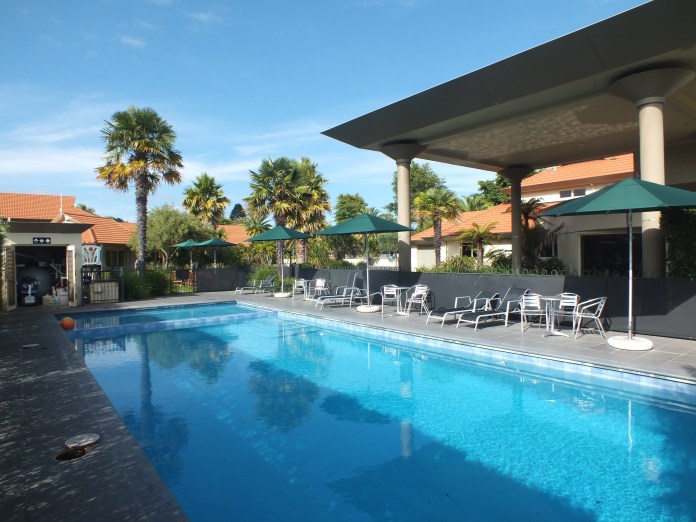
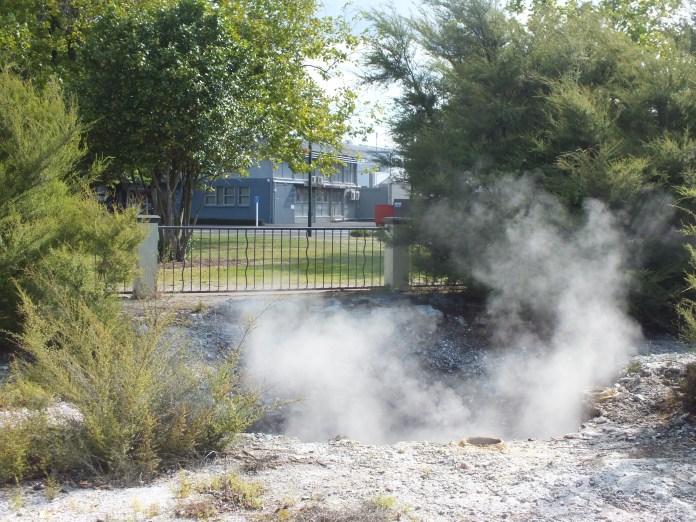
Rotorua is the centre of geothermal activity in New Zealand so the whole place stinks, and in the public gardens there are lots of pools of steaming, bubbling water and mud. It was very atmospheric and felt quite healthy. We arrived at the hotel, and it turned out to be a 5 star spa resort. I had my own suite and personal spa, with complementary bottle of wine. We had an expensive takeaway for dinner and some excellent New Zealand Sauvignon Blanc and Pinot Noir. The following morning I went for a morning swim in the pool, sat in my dressing gown in the sunshine drinking coffee and reading the newspaper, and then went out for a very fancy brunch (the most delicious eggs florentine) – all paid for by the business of course.  I was dropped off right in the centre of Auckland, and I checked into my hostel where the bed was unmade and only a brown, stained pillow sat on the bed, pipes gurgled all across the ceiling, and overloaded extension cables were strewn across the beds and floor.

So that was the end of hitchiking, and I’m glad it was because it really couldn’t have got any better than that.
dscf2639

dscf2771

dscf2724

dscf2455

dscf2379

dscf2397

dscf2393

dscf2358

dscf2549

dscf2776

Standard

Motueka

dscf2144

Maori legend tells of the great ancestors arriving in Aotearoa/New Zealand from Polynesia by canoe.  Over 1200 years later, I’m sitting in the kitchen of a family descended from Uruao, the first man to settle in the city of Nelson. Opposite me sits a large, dark-skinned woman with an intricate tattoo covering her right arm. Her grey hair is pulled back into a loose bun, and she would be the epitome of the kindly grandmother were it not for the fiery words being spat out. She is describing the confiscation of her iwi’s (tribe) sacred land by the Church of England, which used it to build an orphanage where ‘malnourished’ Maori children (including her father) would be brought. Twenty years ago, seeing the land finally returning to the iwi, the former pupils, now white-haired, wept. Today the orphanage is rumoured to be haunted with the sound of children crying.
She goes on to describe how her father fought in the First World War, but, unlike other pakeha (non-Maori) soldiers, received no farmland on his return. The kitchen in which I am sitting is his family land, handed through the generations. It is reasonably large, but houses three families. Outside, everyone’s children (with Maori names like ‘Tane’, which translates as ‘god of the forest’) play among the chickens and orchards.

The matriarch of this family is feisty, astute and wicked. She’s married to a European and says this is the only way to beat the white man. They continually shout at each other (‘why you looking at me like that?’), but say that the only way to deal with differences and problems is to talk about them – and they really can talk.

She explains the work she does for the iwi as a board member: after the establishment of a special body in 1995 to deal with Treaty of Waitangi claims, the various iwis put forward their claims for land, repeatedly. Eventually, land began to return to their iwi, piece by piece. Not always the same land, not always good land, but still land. I start getting lost when she goes into details of leases and commercial redress. Once they received this land, they created an iwi incorporation to manage it: a financial, commercial arm of their work funds the other cultural and social arms of the trust. The Maori board members are businessmen and lawyers, and work hard to earn money. Some of the trusts are enormously wealthy, but this one is relatively small – worth a mere $250 million. She describes how the trust gets phone calls from pakeha outraged that their elderly parents now have to pay thousands of dollars for their leases when previously they only paid a few dollars a year. The trust is sympathetic, but it’s not their concern: the commercial arm must operate commercially if it is to survive. It’s harsh, but I can’t argue without bringing up the obvious hypocrisy.

dscf2736

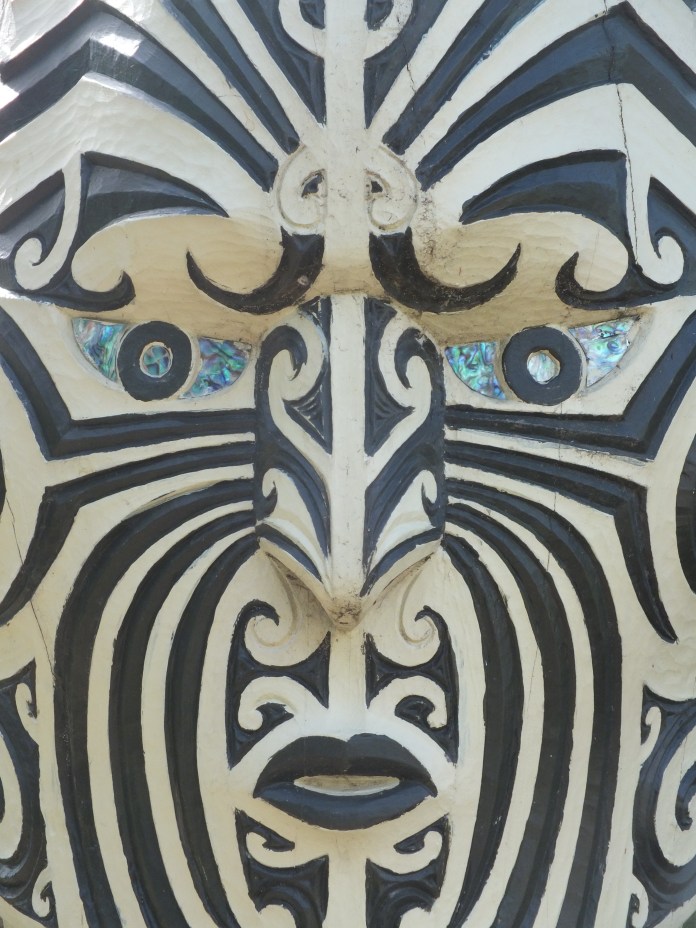
I was taken to the Marae, the tribal meeting ground, and was formally welcomed alongside a group of visitors sent by the government to discuss proposals for a new Maori Land Service. The ceremony was all in Maori and I was pulled through it by holding hands with another woman. We entered and sat on one side of the room. The chair opened the meeting and a man got up to introduce us, after which the women of the local iwi stood and sang. Then someone from the visitors got up and said something, and the women in our group stood and sang. The welcome closed with a prayer, an envelope was surreptitiously handed around the room with money from the visitors, and we were greeted with the hongi, an exchange of the breath of life by touching nose with nose. We drank and ate, and then the real business of the hui (meeting) began. Although everyone could speak Maori, they clearly found it easier to speak in English.

The proposal presented to unify all Maori land services into a single entity is a good one in principle, but the details are controversial, to say the least. Everyone spoke, very articulately, and we broke into smaller groups to discuss specific scenarios. It felt entirely democratic – the way politics should be. Except that all the suggestions were rejected (it couldn’t be government run, and it couldn’t be run be current Maori organisations) and no one could come up with any better suggestions – they just refused to choose between two unlikeable options. The poor man in charge was left with nothing positive. But it didn’t help that he was who’d had to reveal that the iwi chiefs had met and agreed on one proposal without consulting or informing anyone else, which put everyone in a bad mood. The whole discussion and situation was extremely hard to follow, especially with all the Maori words and acronyms, and without understanding the tensions between groups, trusts, tribes, families and personalities, and all their histories. Yet the atmosphere was warm and open, and the discussions were practical and very engaged.

At the end, in typical Maori fashion, we drove the man leading the discussion back to our house because he was the estranged husband of the matriarch’s sister, and father to the troublesome niece who was now being tamed by boarding school. The next morning I was told in great detail  about his lurid love life and bitter divorce.

The six days I spent living with the family was great fun, and eye-opening. They were incredibly friendly but formidable: intelligent, clued up, resourceful, passionate, and relentless. The way they’re ruthlessly pursuing their agenda, training their own armies of lawyers and businessmen to fight from within, and completely integrating European and Maori values, is undeniably impressive. Since that week I’ve met and talked to other Maoris who tell slightly different stories. This is just one I experienced and was moved by.

dscf1578

dscf1541

dscf2657

dscf1550

dscf2813

dscf2808

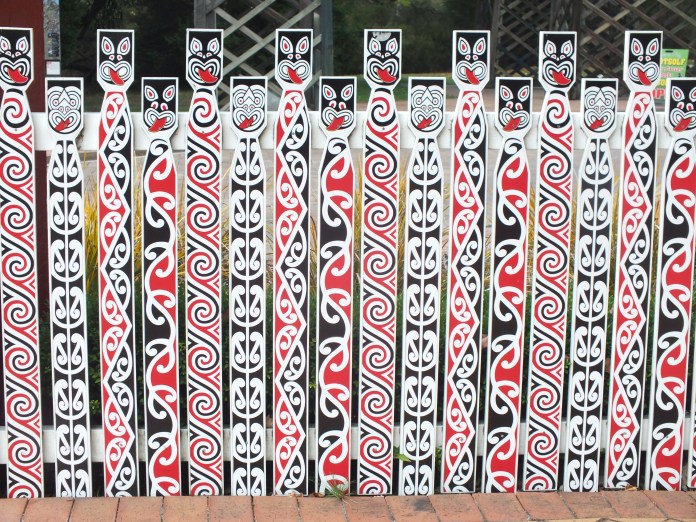
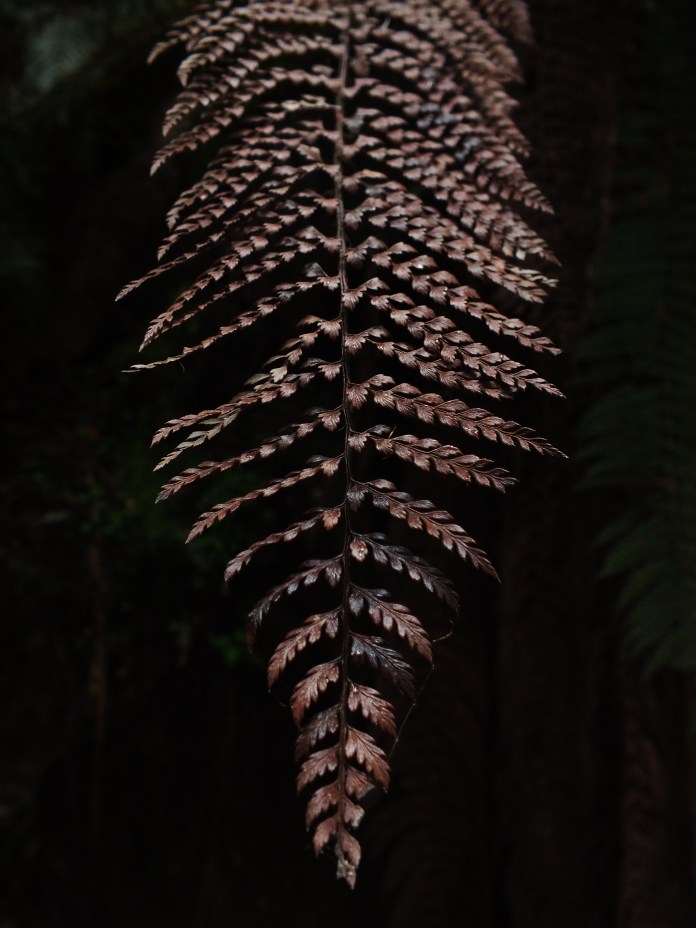
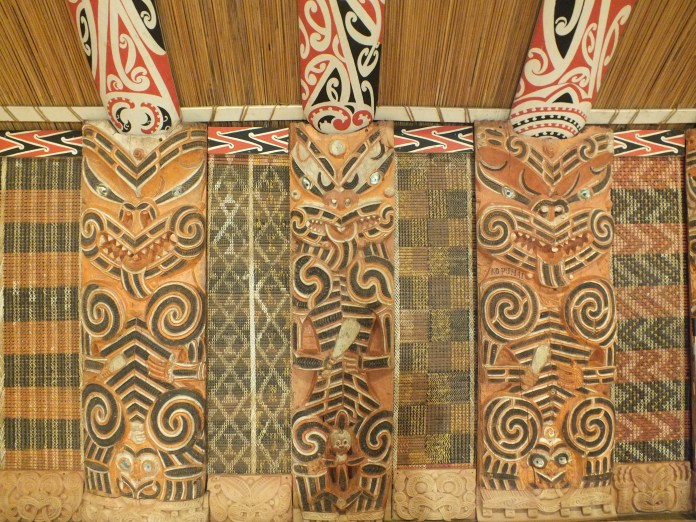
I wasn’t allowed to take photos of the marae. These photos were taken in Rotorua, Auckland and on my walks.

Standard

Fiordland and the West Coast

dscf1533

Hitchiking is famously easy in New Zealand, but it’s also a competitive sport since there are so many people doing it. Luckily there are enough friendly people to pick us up. Nearly all of my lifts have been from tourists, which is slightly disappointing, but good for photo stops. I’ve had lifts from a Chinese couple who couldn’t speak English and would stop in the middle of the road to photograph sheep, young working-holidayers who wanted to tick off ‘picking up hitchikers’ from their bucket list, two Czechs whom I bumped into five times, a German who talked about EU politics incessantly (fifth item lost: one earring), a Californian ‘hippy-redneck’, and so many others in between.

dscf1498

Hiking here is known as tramping, and what a tramp I’ve become, camping for weeks without a shower or clean clothes (I’m surprised anyone still gives me a lift). Everything is so expensive that when a German giving me a lift offered to let me sleep in his car (we’d already spent two days together – he wasn’t a total stranger), I was very happy to lie across the front seats. That simple act of generosity, however, had infuriating consequences. I’d thought we were sleeping by the public toilets so, disgusted by their smell, I took my boots off and put them under the car. But we were actually going to sleep somewhere less obvious, and so drove off… leaving the boots behind, of course. The following morning the boots were gone. Those lovely comfy brown hiking boots that have been the affectionate subject of so many photos. I wandered around barefoot in the rain, asking every person and vehicle I saw, going into every motel and backpackers and campground, but still NO BOOTS!!! Sixth item lost (this one was hilarious, but hurt).

As we drove the 60km to the next town I wondered if I really needed shoes in my life. This journey was supposed to change me: maybe I could now be one with nature, my connection with Mother Earth pure and direct. It would be much healthier, and I might even turn into a Hobbit. But there was the good old voice of German reason next to me (are you eating enough vitamins to stay healthy?). Finally arriving in Westport, I bought a new pair of boots (pale blue, so now I look a total dork) and was, in fact, absolutely delighted to be well shod once more.

It felt like a turning point. I have reached a low, and could go no further. I, Iona, am a tramp no more.

dscf1728

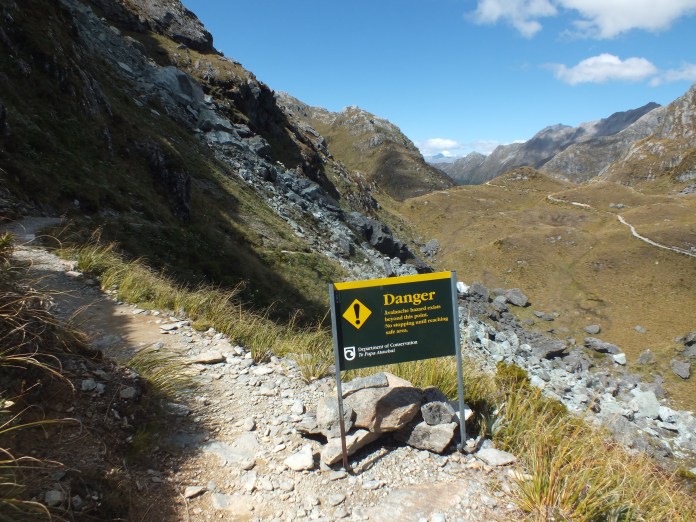
But I’m really enjoying tramping. I did one of the official ‘Great Walks’, the Routeburn, a three day alpine trek. The weather got more and more abysmal. By the last day, soaked to the bone with nowhere to spend the night, I was cursing all kiwis and wishing the rain would turn their already fuddled brains to mush, and thinking how New Zealand really was the arse of the world. The mountainside had turned into a continuous series of waterfalls which was feeling increasingly dangerous. A marked flood detour had become swamped and to get back to the track I had to clamber up the waterfall. Definitely exciting and one of the highlights of the walk, but tense.

dscf1708

I reached a hut and tried to dry myself. There was a group of people on a guided walk. What ponces. Their huts have sofas, en suite bathrooms, kitchens and spas. All they have to carry is their lunch. Every time I saw one of their luxury huts I just stopped and gaped and gazed in envy. It really felt like we were the lowest of the low next to them. But we all expressed our moral and physical superiority, and as we huddled around the stove we tried to convince ourselves that our experience was the more authentic. In doing so, I befriended an On the Road-reading Trump-refugee from Colorado who, in a moment of boredom in his tent two days before (having failed to bring any entertainment), had eaten all his food and was now starving. I gave him some oats, but nothing else. He had to learn his lesson.

dscf1491

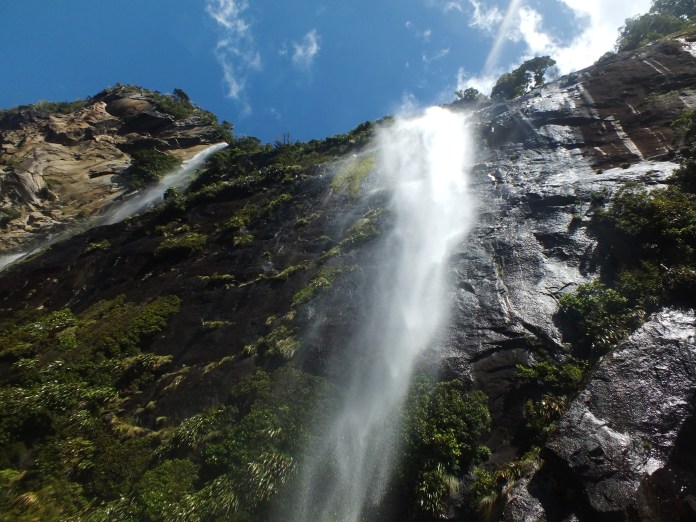
The weather improved. In the sunshine, everything is forgiven and forgotten, and it is heaven again. I hitched to the Milford Sound with my favourite Czechs (they just happened to be passing, and just happened to be going on the same boat trip – says something about how original my itinerary is). It was ridiculously overcrowded and buzzing with helicopters, but still really lovely: a fiord with mountains and waterfalls everywhere, and dolphins swimming and jumping alongside us.

dscf1740

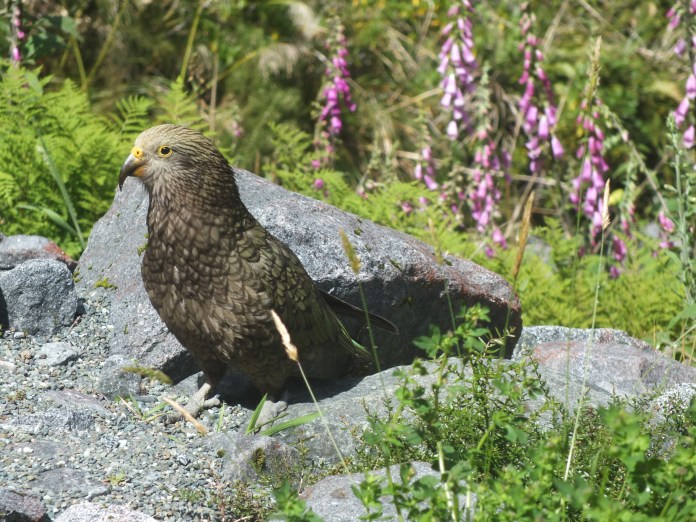
On the way back we stopped to watch keas, the only alpine parrots in the world. They are extremely friendly, inquisitive and intelligent, and you can even play with them. But because they are so endangered and tourists feed them, they do whatever they like. They enjoy eating rubber (and asphalt, apparently), and so they will jump on or inside cars and start attacking aerials, tyres, window frames and anything else. And all the owners, or usually hirers, can do is watch!

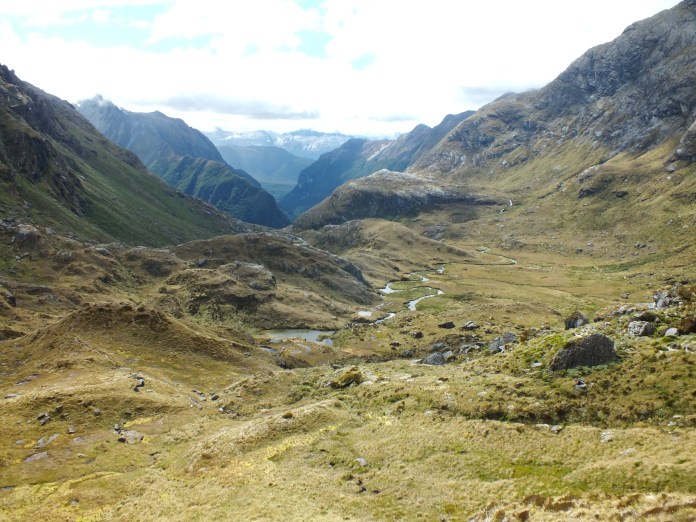
The following day the weather was even better. Still feeling annoyed at having missed the famous views of the Routeburn, I decided to turn back and do the whole walk in a day. It was 12 hours of walking (with pack) and I was quite hysterical by the end, but the views over the Southern Alps were totally worth it.

The view that first time round looked like this:

dscf1664

turned into this view:

dscf1939

Amazingly, at the end I managed to find a lift to a campsite. Three very blond Swedish girls then suddenly appeared and offered me dinner – it was like a miraculous angelic appearance, exactly what I needed, since all my matches were wet and my stove wouldn’t work. They were in Queenstown for the usual extreme adventure reasons. They each had their own challenge: one was going bungee jumping, one was getting a tattoo, and one was going on a date.

dscf1758

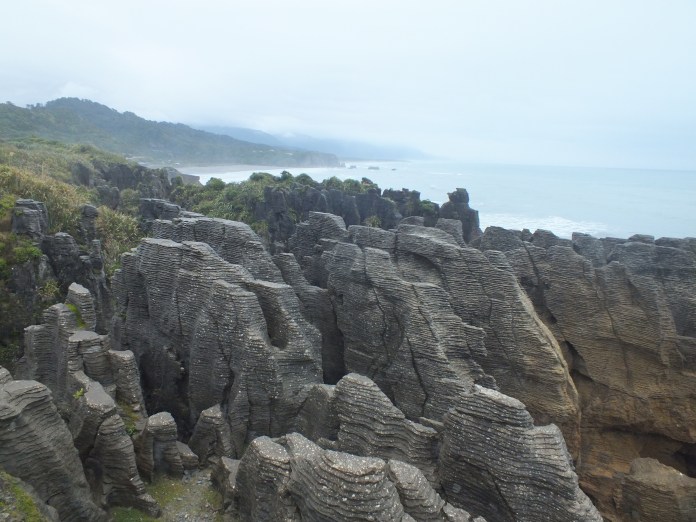
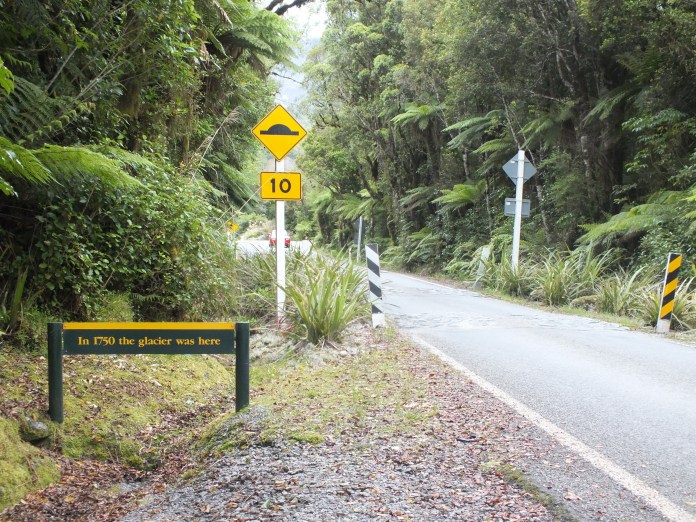
Carrying on along the West Coast I encountered weather, weather, weather. Rain, cloud, mist, wind, sun(burn), ice, rain, rain, rain. I went in search of glaciers (glayshers I should say) and passed depressing signs like ‘In 1750 the glacier was here’. Even in 2014 they were quite a bit closer.

dscf2015

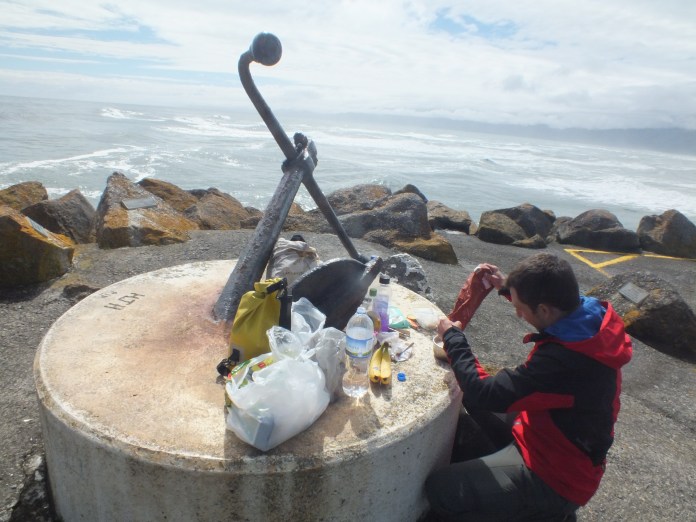
Being a tramp was fun while it lasted. I would get into a car and say, grandly, ‘Anywhere’. I would steal toilet paper from public toilets, even the soap from the sinks, would eat the leftover food on tables, and simply turn my socks inside out every morning. There were some beautiful moments – sitting drinking icy beer by a spectacularly blue lake of melted glacier, watching a hedgehog rummage through the rubbish in my tent, cooking pancakes by a lighthouse in the spray of waves from the Tasman Sea. But it’s tiring. Wandering the streets barefoot in the rain is too much for me. Maybe I’m a wuss, but it’s just not very fulfilling. I’m sure there are better ways to discover New Zealand.

dscf1966

dscf1950

dscf1838

dscf2082

dscf2038

dscf2086

dscf2025

dscf1801

dscf1632

Standard