Guangzhou to Urumqi

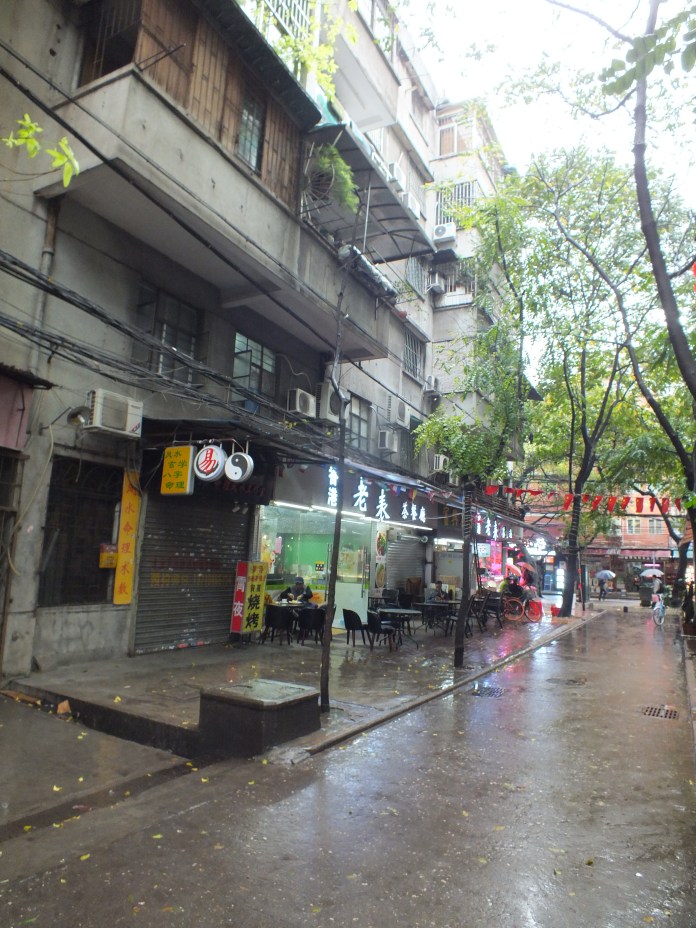
There was something strange about Guangzhou. An intensity of colour, in spite of the drizzle, and a vividness in the streets. With a jolt, I realised it was spring and the colour was the green of new leaves.

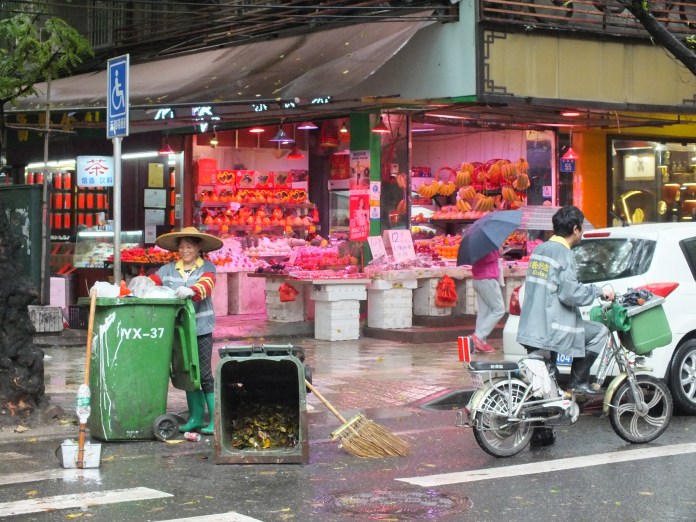
From the air the city seemed an ordered sprawl of tower blocks, between which were squeezed tiny tiled houses collapsing in on themselves and large warehouses with cracks running along their rooves. From the ground the city teemed and bustled. Women in conical hats swept the streets and rode bicycles laden with empty plastic bottles. Blackened repair shops sold gas rings, taps, light bulbs, cooking pots, plastic sheets and ropes.
At the train station crowds of people crushed through the gates into neatly formed queues at each entry point along the grey concrete building. In front of me waited a man whose only luggage was a wooden board and bucket: later I saw him sit down on the bucket and use the board as a table for playing mah-jong. The gates opened and everyone ran forward, pushing their children into small gaps, desperate to get to the train first.

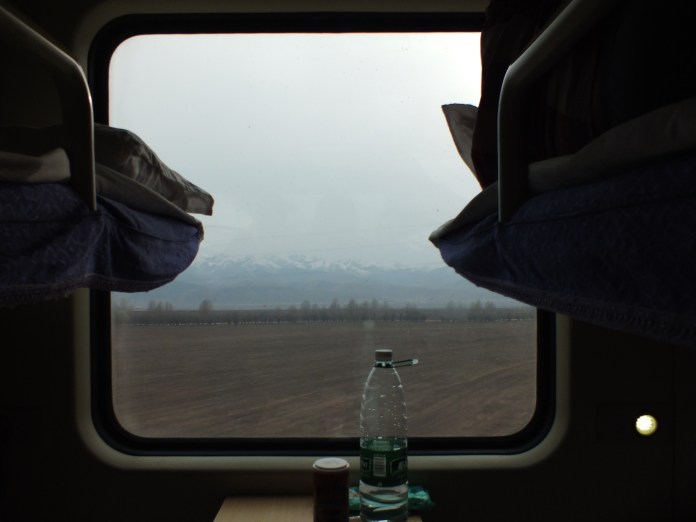
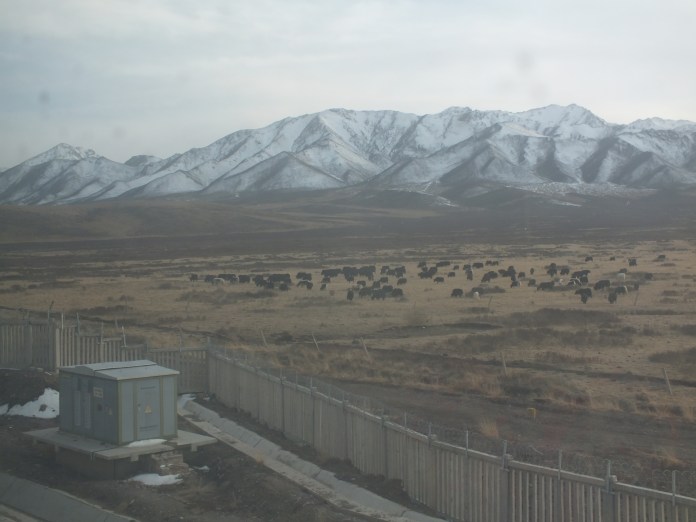
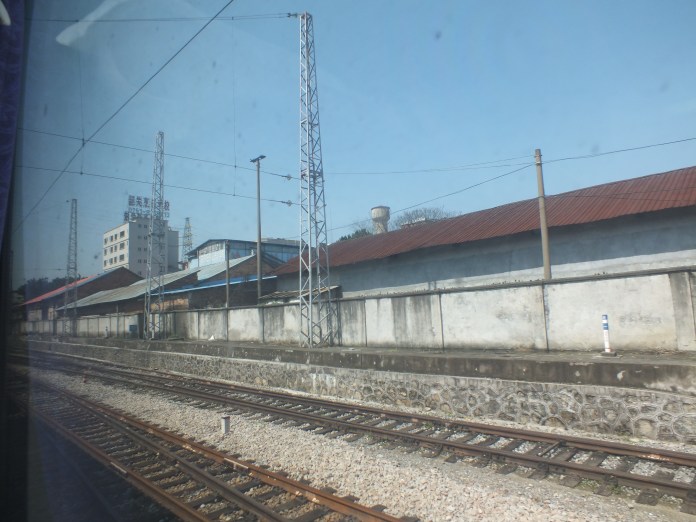
It took two days to cross China. The landscape turned from urban streets to suburban allotments, to fields where women ploughed with buffalo, and then to environmental catastrophe: for almost a whole day we passed mountainsides stripped of plants and replaced with fields, and now scarred by landslides and earth reinforcements. Finally we reached the beginning of the Tibetan plateau and we caught glimpses of spectacular snowy mountains, as well as yaks and temples strung with fluttering prayer flags.

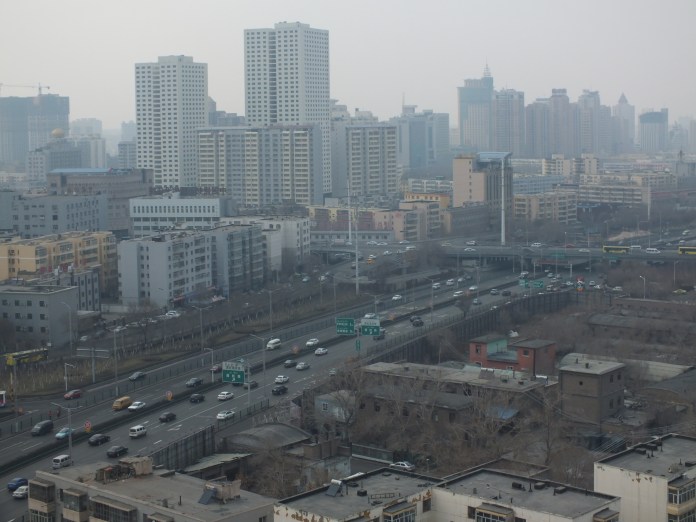
In the far north west of China, in Xinjiang province, lies the city of Urumqi. Traditionally it is home to the Uyghur people, but has been flooded with Han Chinese in recent years, escalating ethnic tensions. Both Uyghur, written in Arabic script, and Mandarin are spoken. It is a beautiful but politically sensitive region, with sporadic outbursts of violence that have then been used to justify China’s nationwide security measures. In 2014 it took the Chinese government a week to announce that 96 people had been killed in a knife attack at a police station. This year a ‘great wall of iron’ was announced, and in April a ban on veils and ‘abnormal’ beards came into force.

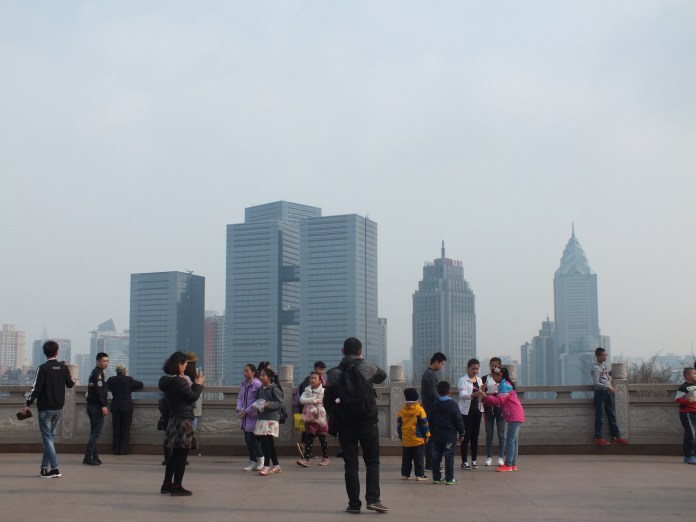
As I rode through the city on the wrong bus, I saw soldiers searching women’s hoods, convoys of tanks rolling through the streets, and armed police standing on street corners in groups of three, yawning and checking their watches. Every petrol station was locked off with barbed wire and cars were searched before and after entering. Prominent CCTV cameras photographed every vehicle and every pedestrian that passed. You couldn’t go through an underpass or enter a park without going through a metal detector and having your bag x-rayed. What was most scary was the normality with which every security measure was treated. Outside one street checkpoint a guard was shouting at a woman, holding his megaphone right in her face, and we all looked down and hurried past. On the street by my hostel another tank was parked. I felt too uncomfortable to take photos.
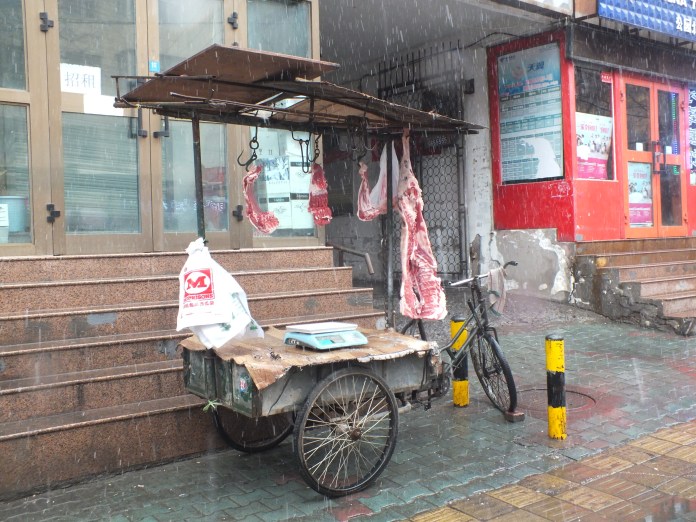
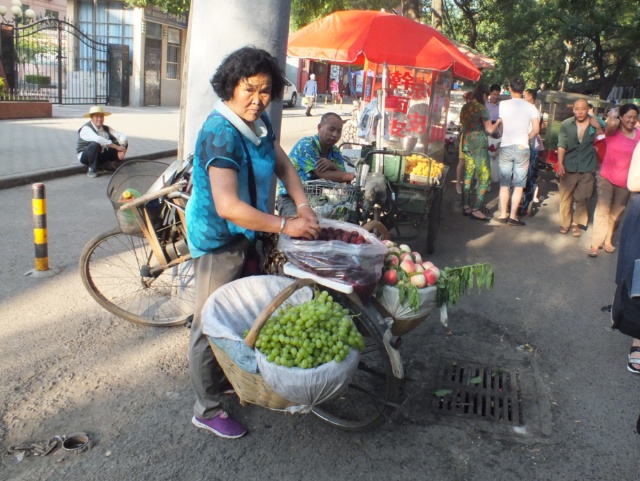
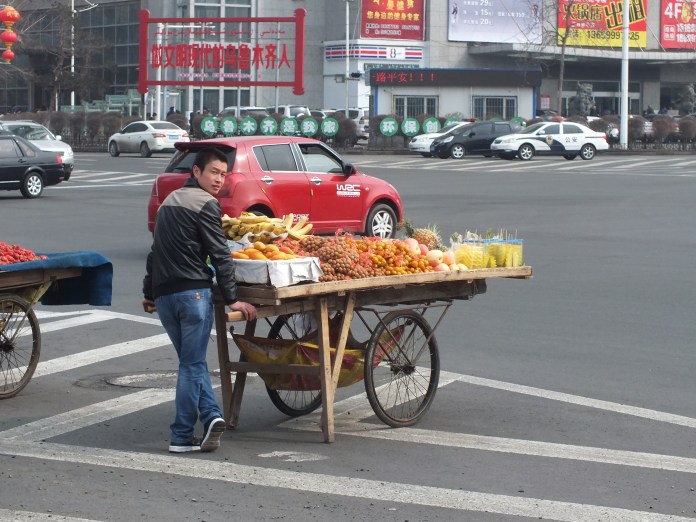
While I waited for a bus to Kazakhstan, I tried to see the city. I walked through the streets past slowly melting piles of soot black snow. It was cold and began to snow again, but there were still wheelbarrows full of strawberries, mulberries, fresh coconuts and decoratively peeled pineapples.

On Red Hill was an old complex of temples and pagodas which had been turned into an amusement park. Children and adults ate candy floss, rode bicycles through treetops and played shooting games. At the top of the hill, on the highest part, stood a police station, and we looked down through the metal railings onto the concrete jungle below and watched yet another convoy of tanks and armoured police vans drive past.
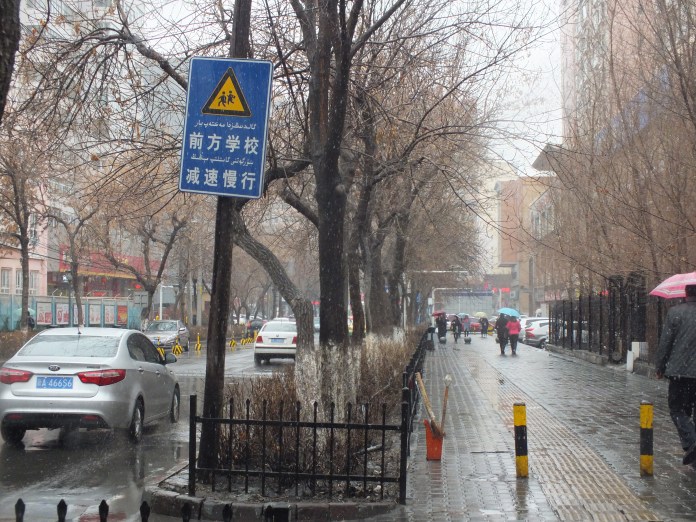
In my hostel dorm was a woman who lay in bed all evening and morning. She’d just broken up with her boyfriend and needed some time away. ‘You never see blue sky here – it’s the factories,’ she said. Today was Ching Ming, she told me, the day people mourn for dead family members and ancestors. Outside the snow fell onto a deserted school playground, and we stood at the window together, watching smoke rise from the grey concrete buildings into the eternally white sky.

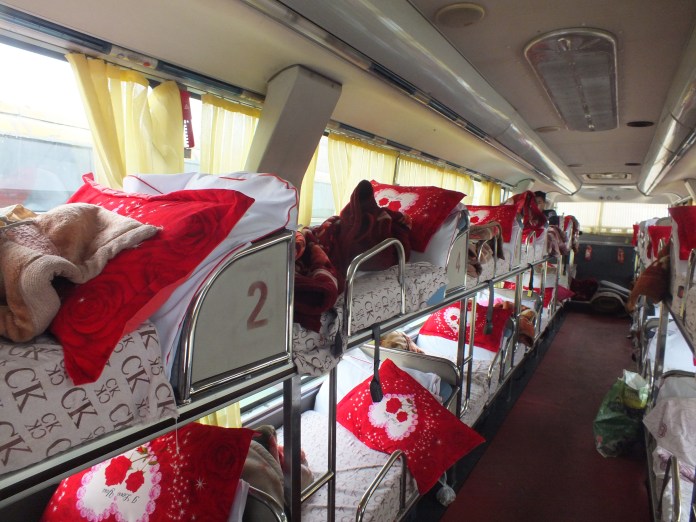
This was my bus from Urumqi to Almaty (a 30 hour journey, a mere 6 hours longer than advertised):
Standard

Xian

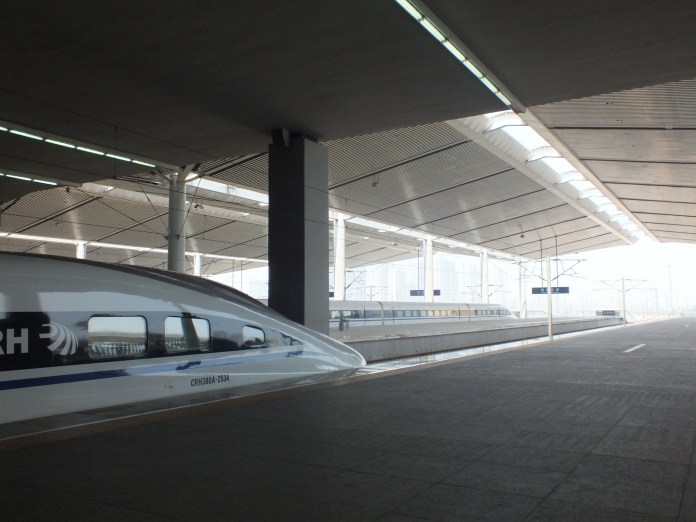
The bullet train took me to Xian at 305km/h, a six hour journey through fields and cities and construction sites rather than countryside.

5192016203916

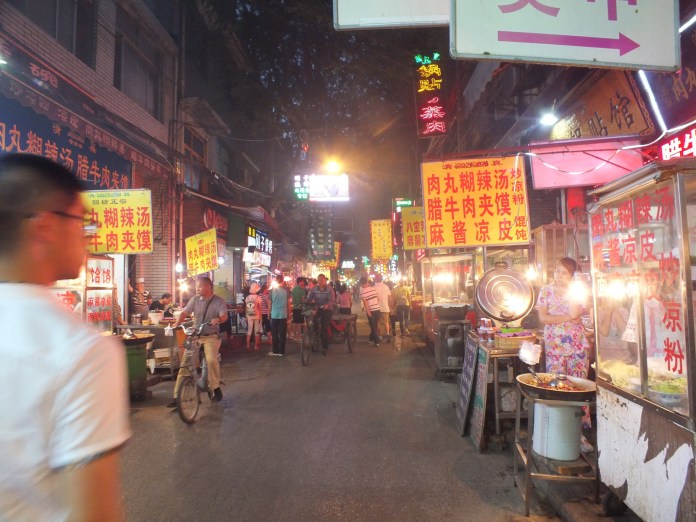
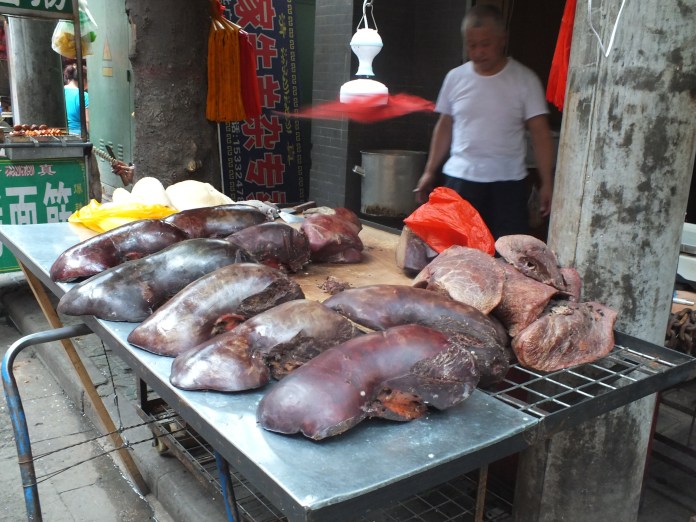
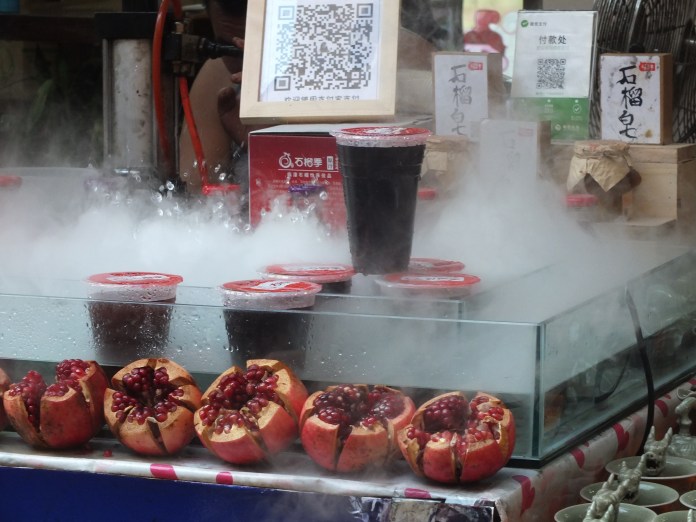
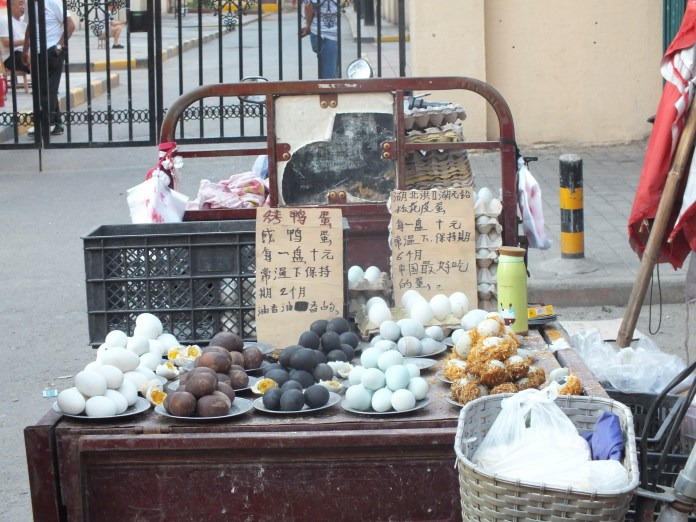
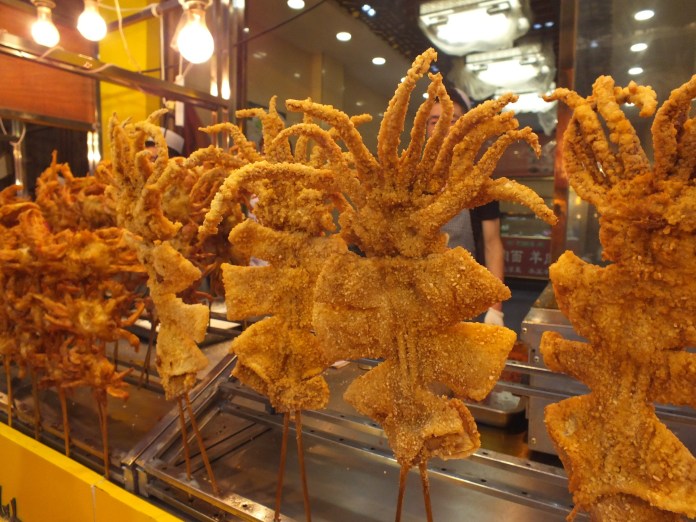
Xian was at one time the capital of China, and is one of the more pleasant cities (with a population of only 8.9m) – and the one visited by every tourist. The most exciting part was the Muslim quarter, a maze of streets lined with shops selling spices, dried persimons, walnuts, sweets, tofu, spiced breads, pumpkin cakes, fresh pomegranate juice. Women manned the stalls in headscarves, still looking very Chinese, and the call to prayer was amplified over the roofs. The road was covered in squashed tomatoes and cabbage leaves and the air was thick with smoke from the stoves, from which flames roared like furnaces. I couldn’t resist the deep fried squid on a stick (a whole one, flattened, like a giant lollipop).

5192016204754

519201620406

5192016204042

5192016204133

519201620448

5192016204340

5192016204526

5192016204431

5192016204634

5192016204551

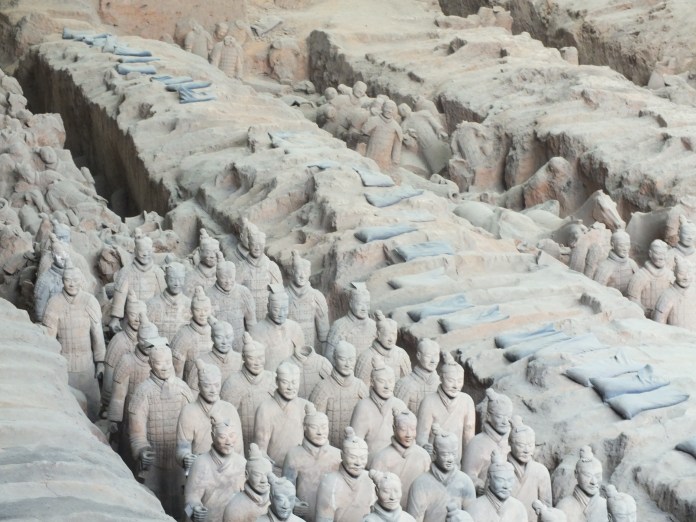
But the main reason for coming to Xian is to see the Terracotta Army. I went along with a history teacher from Shanghai and we spent a long time discussing the regional differences in facial features and dialects (she couldn’t understand any one unless they spoke Mandarin, and no one else can ever understand the Shanghai dialect).

5192016204921

5192016205119

519201620507

5192016205028

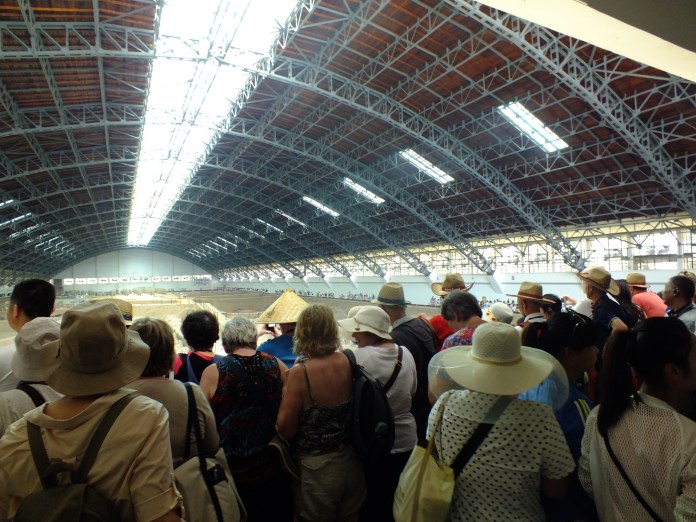
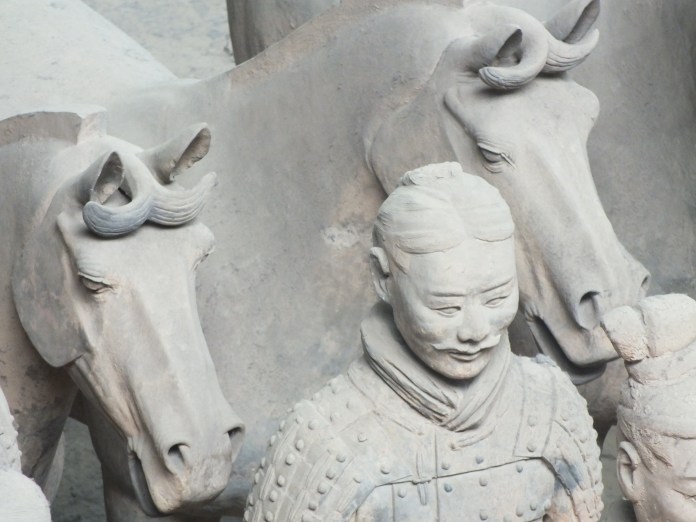
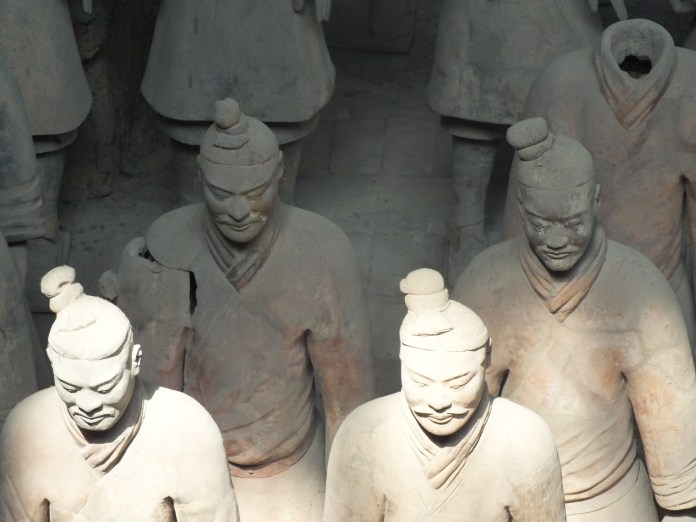
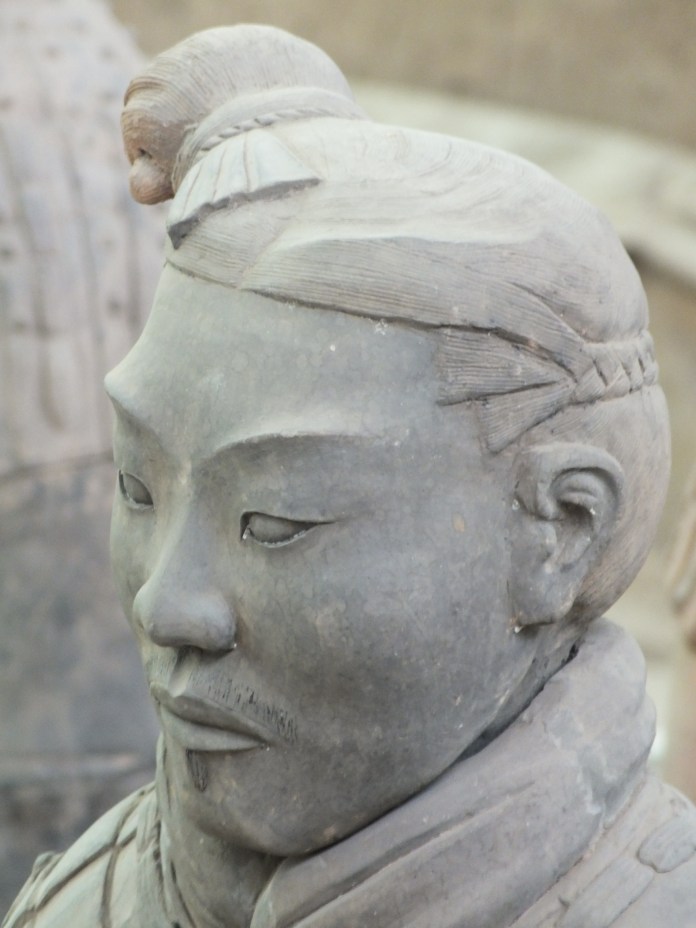
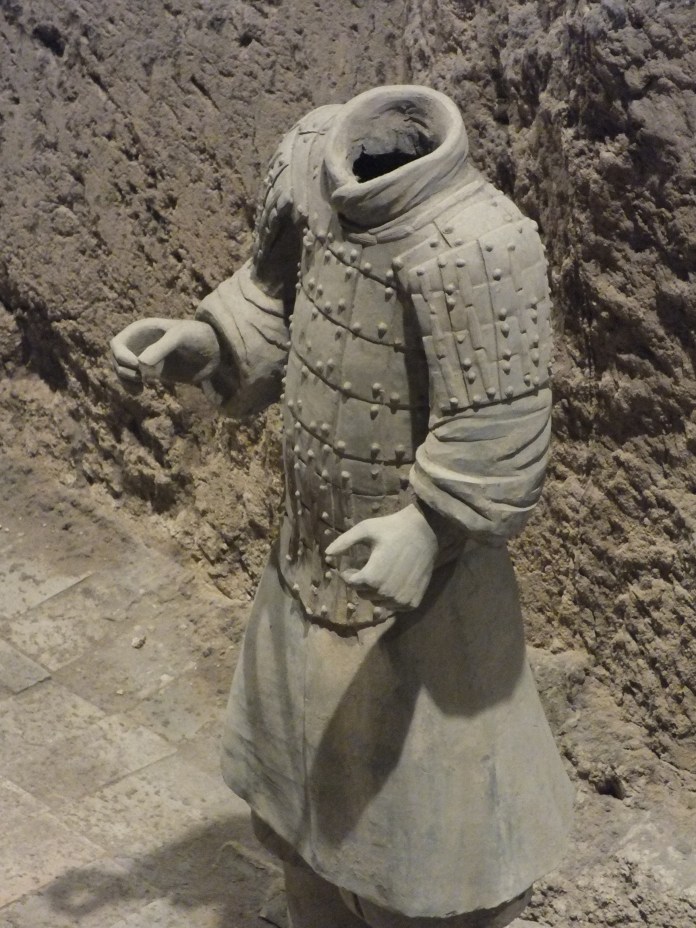
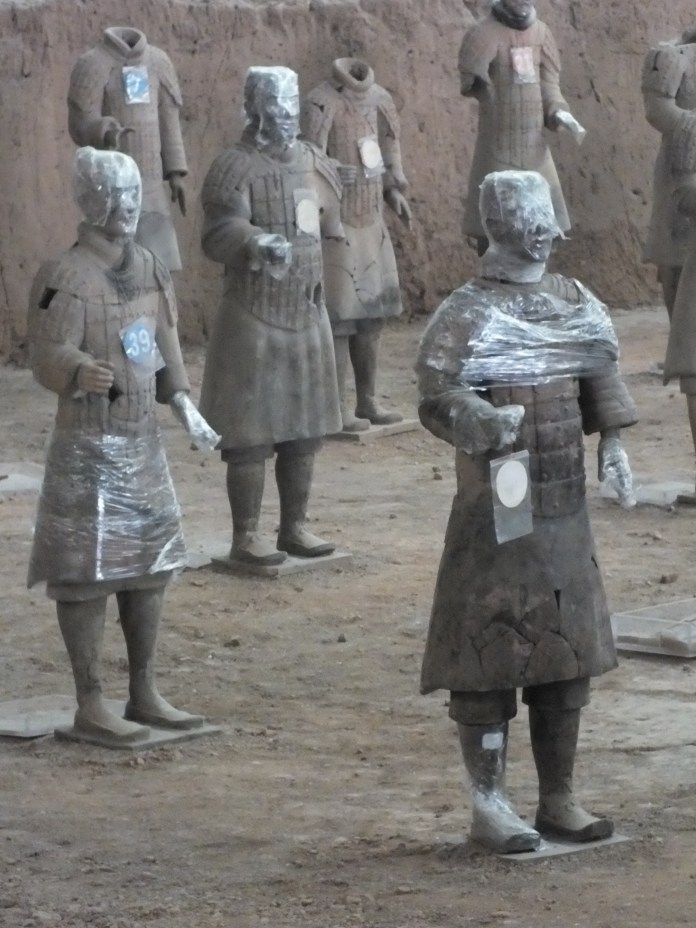
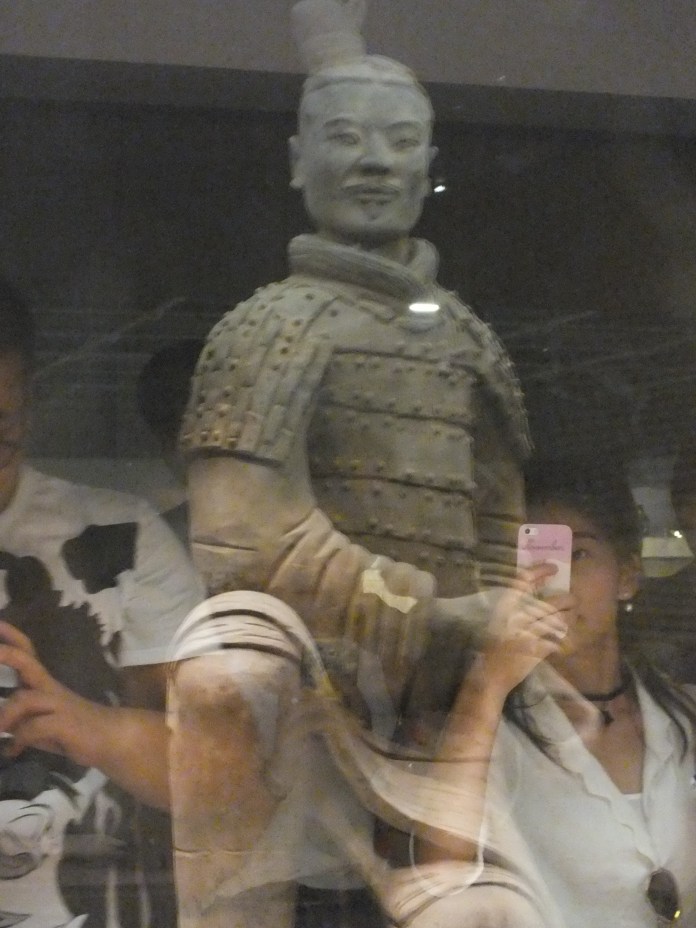
There were two armies: the army of clay and the army of tourists. We went backwards, fighting our way through to the front where we were confronted with the most impressive sight of hundreds of life size soldiers standing in line, ready to fight. Each one is unique, of varying height, posture, face type, expression, hairstyle and clothing. The soldiers were made in caves by coiling clay to create a hollow body, just an inch or so thick, and it took a team of ten or eleven craftsmen a month to make one soldier. They estimate there are about 8000 soldiers. Once they’d been fired in the caves, they were painted bright colours and given weapons.

5192016205429

519201620562

519201620537

5192016205643

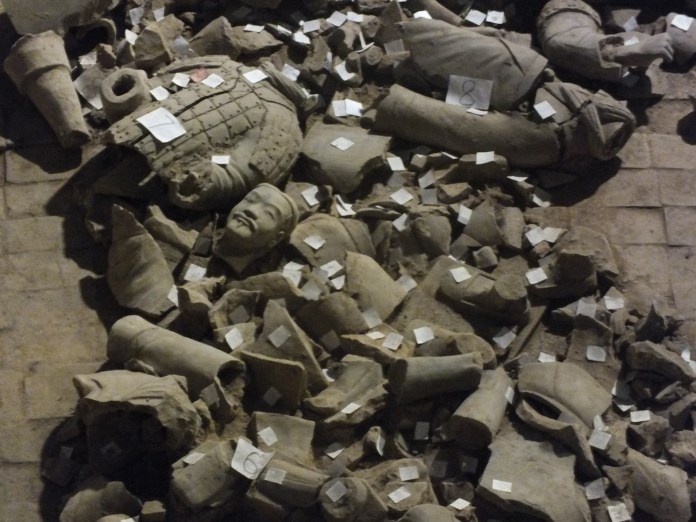
They were all so different you could spend hours just looking at their faces, like people watching. And they were so lifelike and full of character, with so much detail, that I felt quite upset at the sight of so many shattered torsos, broken hands and severed heads.

519201620577

Most of what you see are actually unidentifiable shards of pottery, and it’s essentially an archaeological site. The real hard work comes at the tomb of Emperor Qin, first emperor of China, which hasn’t even been excavated yet (they’re awaiting improvements in preservation technology). Legend has it that there were underground rivers of mercury. I’ll never know. What a con for tourists, but still a brilliant day out.

Standard

Ulaanbaatar to Beijing

Everyone says how hard it is to get train tickets from Ulaanbaatar to Beijing, so I did it the local way – and for a third of the cost.

5192016203052

No one will touch the Mongolian Turghrik outside Mongolia and even I can spot the fake notes. There were chaotic scenes at the train station as people exchanged bundles of notes on a scale I’ve only seen in gangster films. They were all going shopping in China, and my neighbour proudly (but I suspect wrongly) boasted that this was the longest passenger train in the world. I reached the Mongolian border the next morning and took a jeep across the checkpoint (for some reason it always has to be a jeep – it looked like an antique jeep showroom).

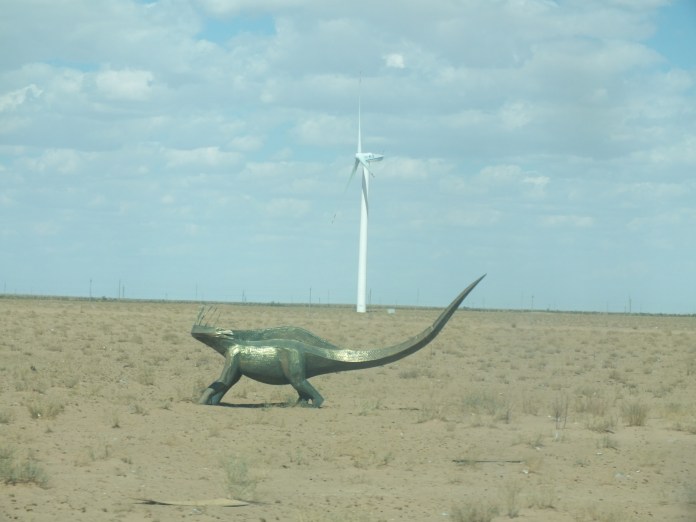
And then I arrived in Inner Mongolia. The landscape was identical, but it was completely different. The Chinese had managed to grow trees and plants, they had tarmac roads and had put up fences. But they also wrote using the old Mongolian script rather than in Cyrillic. And they had scattered the desert with metal dinosaurs.

5192016202810

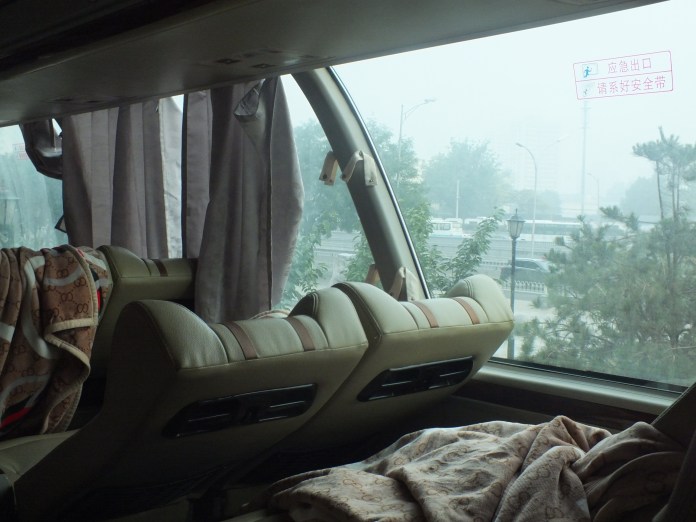
I took an overnight bus run by the Peaceful Passenger Company and woke up in Beijing at 5.30, covered in mosquito bites, to find the bus deserted. It was hot and, outside, through a white smog, I could make out skyscrapers; middle-aged women went by in lycra power-walking their dogs. For a while I wondered how to get off the bus, but someone appeared and showed me a map, and I set off into China!

5192016202719

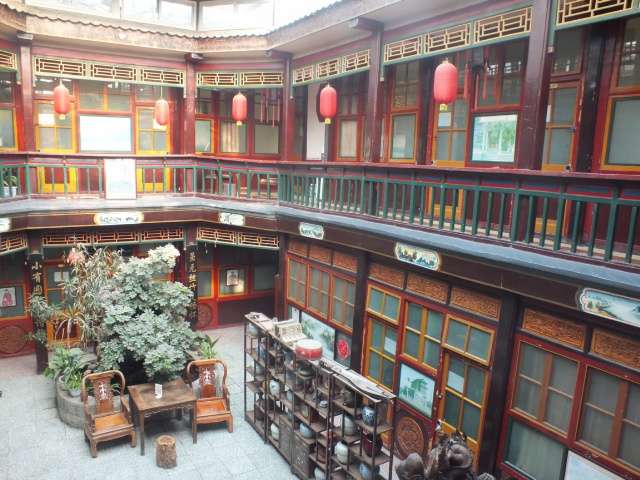
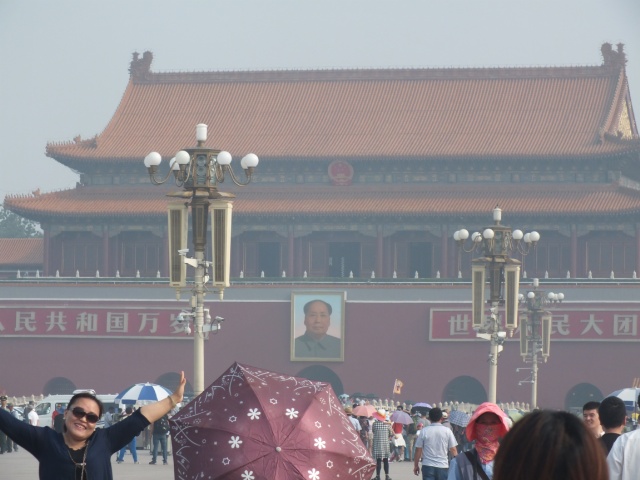
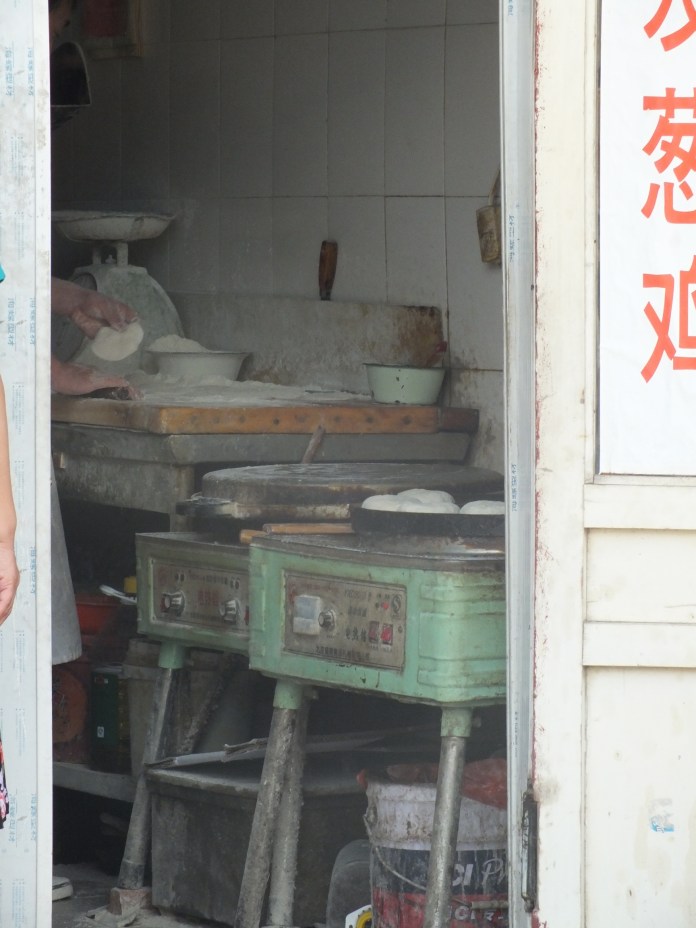
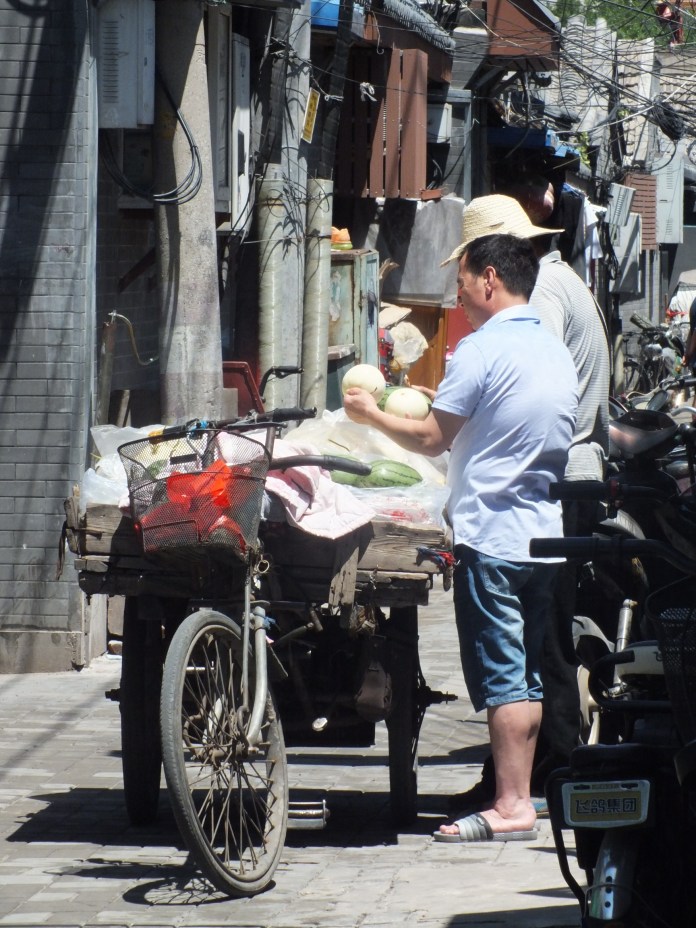
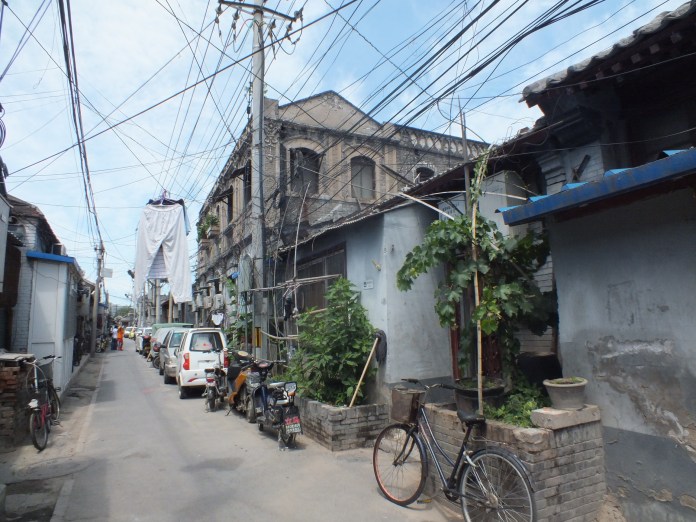
It was sunny but I couldn’t see the sun, and it looked misty although there were clear shadows. Rickshaws (trishaws, I should call them) rushed past pulling people and food, the trees were all in leaf, the subway was clean, efficient and in English. In the streets people stood cooking and steaming dumplings while families sat eating breakfast together. The hutongs, the narrow alleys, were just wide enough for a car, but were filled with flower pots and piles of bicycles; bikes would honk their way through the crowds. And there was fruit! Masses of melons, peaches, mangosteens, durian, cherries, lychees. My hostel was a small courtyard hidden away amongst this, with a fountain and goldfish pool, a large wooden dragon, and shelves of china bowls; overlooking everything hung a large faded portrait of Mao.

519201620154

5192016201531

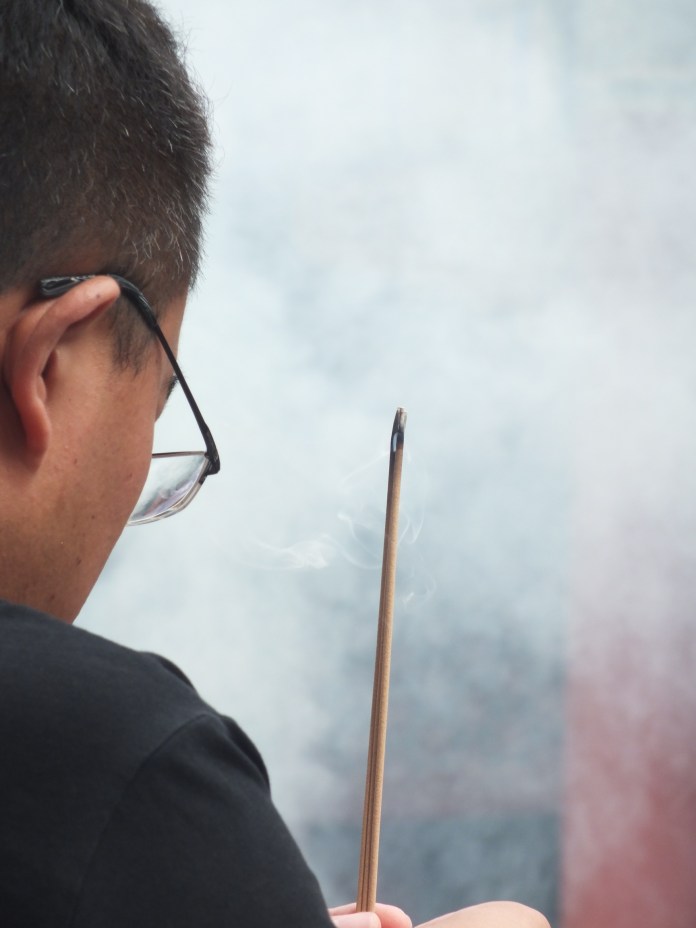
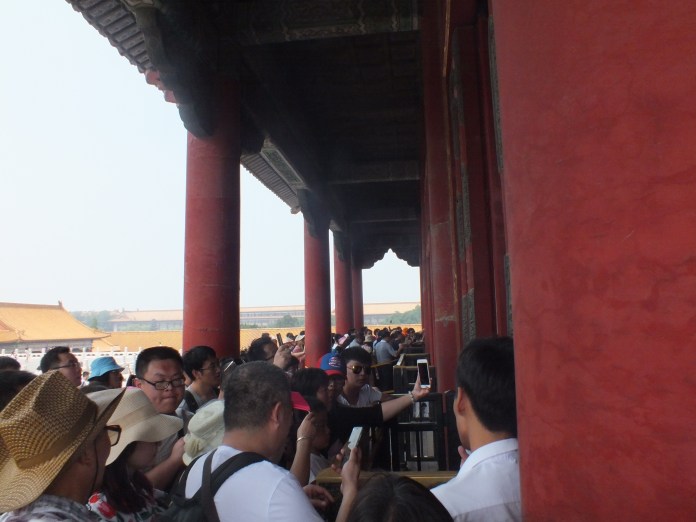
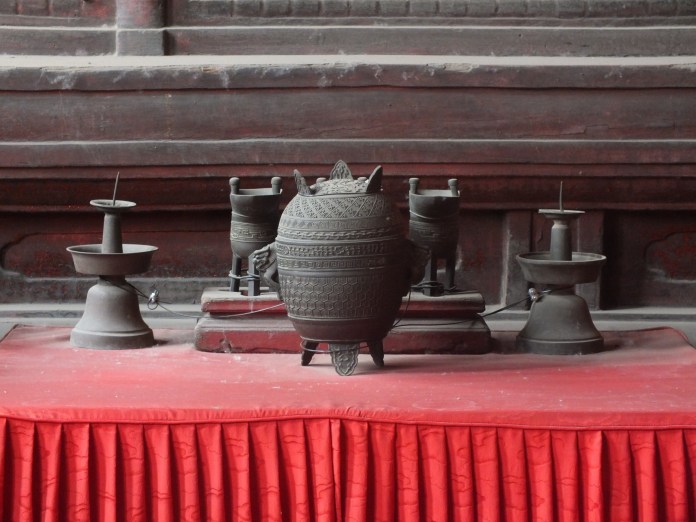
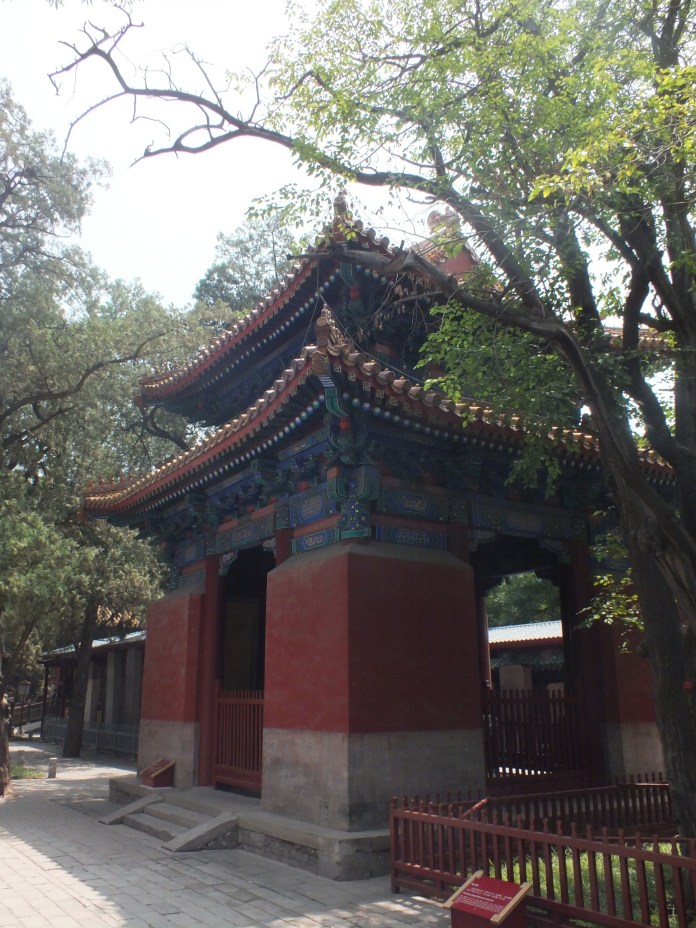
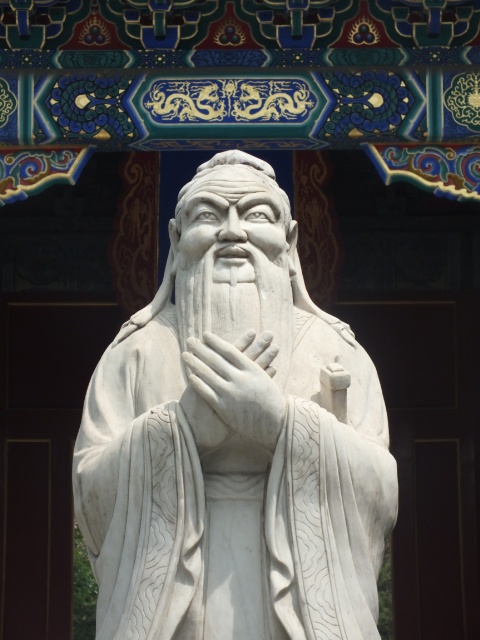
I decided that in China, of all places, it was acceptable to look like a tourist. I visited the Buddhist Lama temple with its heavy fog of incense, the temple of Confucius with its ancient cypress trees, the drum and bell towers, and the Forbidden City, which was so full of people there wasn’t much else to see.5192016202626

519201620136

Then I plucked up the courage to visit Mao (since Lenin hadn’t been available). I queued up with the masses of sombre Chinese and we were hurried along by teenage volunteers. People bought yellow flowers along the way and once we had walked up into the first room, they held up the flowers above their heads and bowed towards the statue of Mao, and then added them to the mountain of yellow flowers, just like they had offered incense to Buddha. The man himself was large with a round belly and a gaping mouth. I had a headache for the rest of the day.

5192016201325

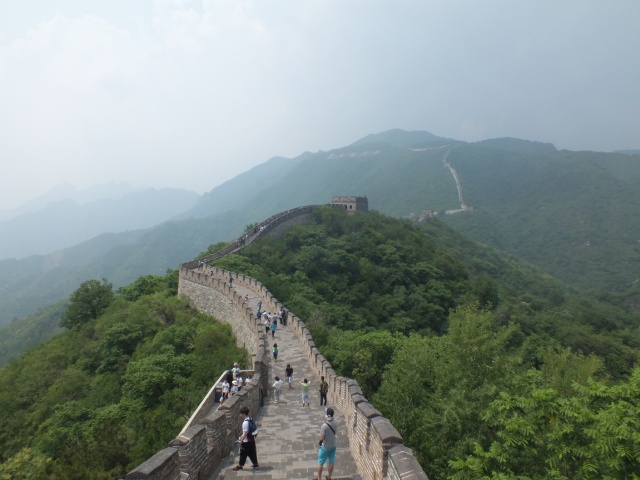
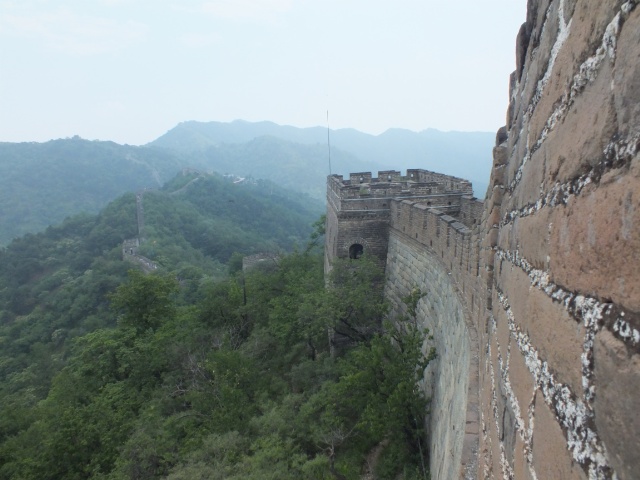
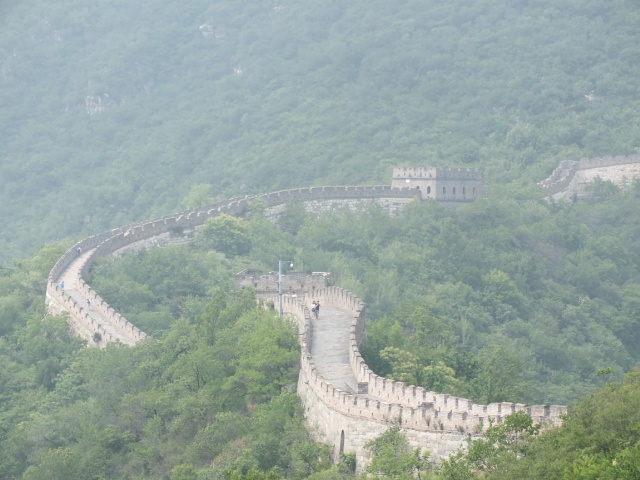
The next day I went to the Great Wall and fell for a taxi scam – it had to happen at some point I suppose. It was so hot I instantly sweated off all my suncream and by the time I’d climbed to the top I was plum purple. But the views made up for everything. It was perfect: thick green forested mountains, fruit trees, cool watchtowers and the great long undulating walI.5192016194353

5192016194733

5192016194257


I spent Saturday relaxing in the park along with most people in Beijing. Pekinese and poodles appeared fresh from the salons with ribbons in their fur, and a girl came up and said, in very faltering English, she’d like to be friends with me. We tried to have a conversation but didn’t really manage, so went and hung out in the fitness park instead.

5192016195413

5192016201628

519201620147


Against all expectations, I loved Beijing. Barring one revolting tofu breakfast, the food was delicious, the streets were always colourful and full of activity, and although it was mostly smoggy, the streets were pleasant and lined with trees, and most of the back streets were car-free. But after a few days I was getting really tired of having to show my passport everywhere, having my bag x-rayed and my water bottle scanned every time I went on the subway or to a public building. The fences on every main street, controlling everthing and stopping you walking in perfectly reasonable places, irritated me, as did the paternalistic messages. And no one seemed at all put out or annoyed.

519201619528

5192016202153


I also discovered how much I depend on Google: no gmail, no Google maps, no easy search. There are standard (albeit illegal) ways to overcome this, but I was a technological failure. Life was very tough. Even this blog was banned. I spent some time reading articles on Chinese dissidents to see how far I could get before being blocked: not very far, but, in English at least, further than I’d imagined.

5192016201928

5192016201947

5192016202432

5192016203330

519201620389


I barely saw anything of the city, but it was wonderfully strange and beautiful. I arrived with a basic grasp of Chinese history, but it was as though suddenly an entirely new culture had opened up.

5192016201835

5192016202231

519201620336

5192016202518

5192016201856


Standard