Charyn Canyon & the Lakes

Kazakhstan is vast and everything is very far away from everything else, so we needed to find a guide with a car. Andrei was a graphic designer when he wasn’t a guide and he often seemed to speak in Photohop English, speaking about the landscape using terms like layers, background, foreground, contrast, shadow, dimension, shape, focus.

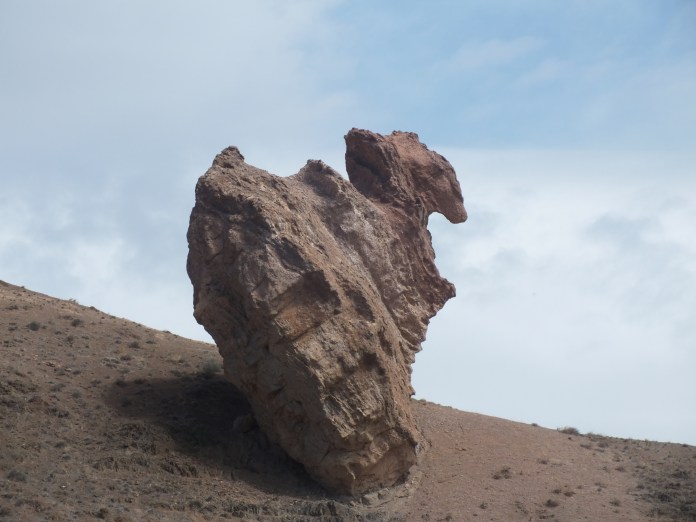
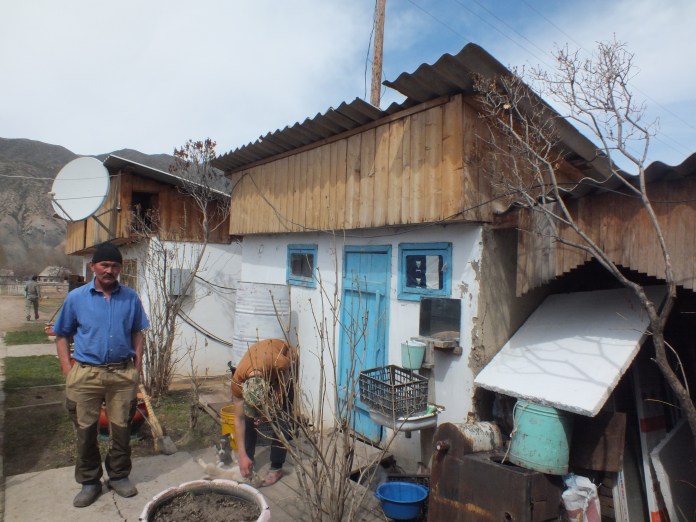
We drove east to Charyn Canyon (‘like the Grand Canyon, only prettier’ is how it’s advertised) and descended into the Valley of Castles. We were alone, apart from the occasional little eagle and steppe mouse. The rocks towered above, balancing impossibly. Andrei asked us what we saw in the rocks, and we all saw a squirrel crossed with a turkey.

At the end of the Valley of Castles we came to a fast-flowing river lined with sogdian ash trees, ancient and rare trees which were just coming into leaf. Andrei pulled out a picnic: a stove and coffee pot, and a Russian Easter kulich. No Kazakh walk is complete without cups of steaming tea or coffee, even if only drunk out of a plastic water bottle cut in half.

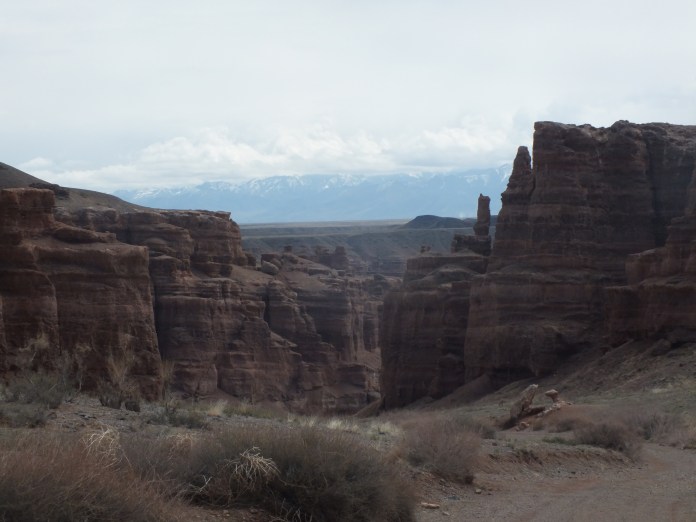
Andrei asked if we wanted to go extreme. It wasn’t really that extreme, but it was a proper little adventure across sandy slopes and steep rock faces. We climbed up around the back to reach the top of the canyon, where the view was spectacular. The canyon stretched out for 200km and behind it were snowy mountains in the background. We saw other people beginning to arrive as specks on the dusty road below.

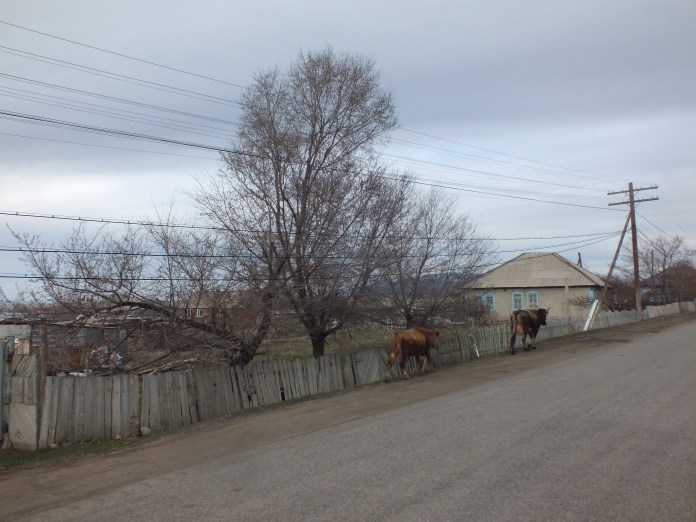
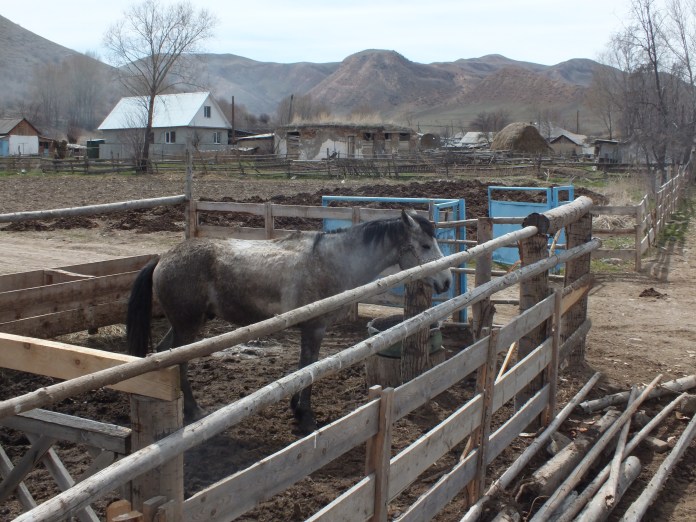
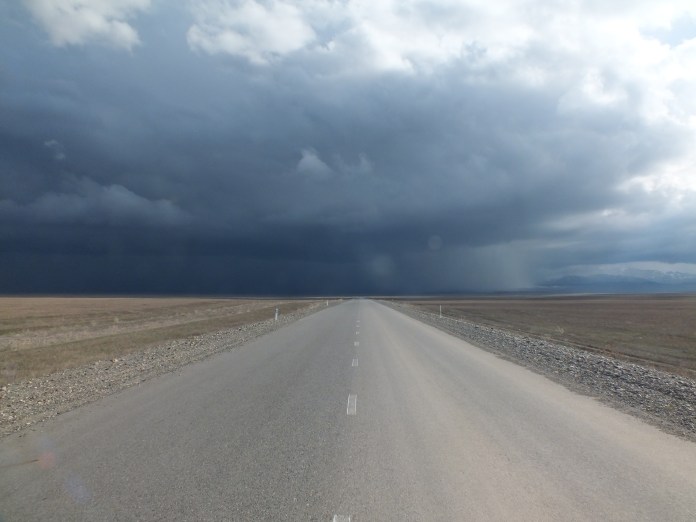
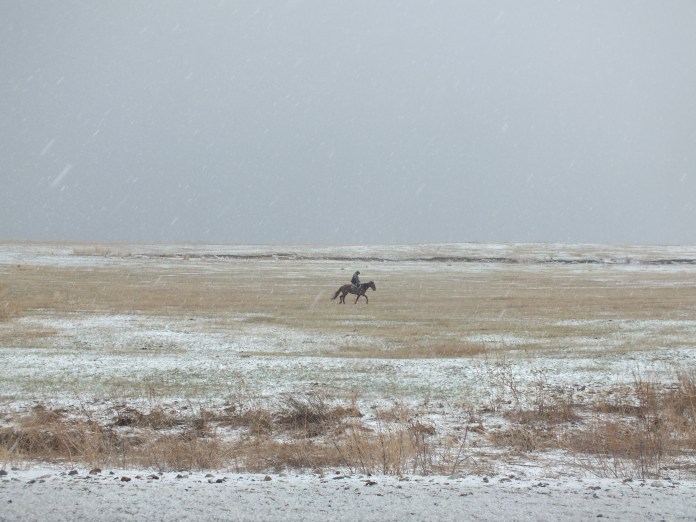
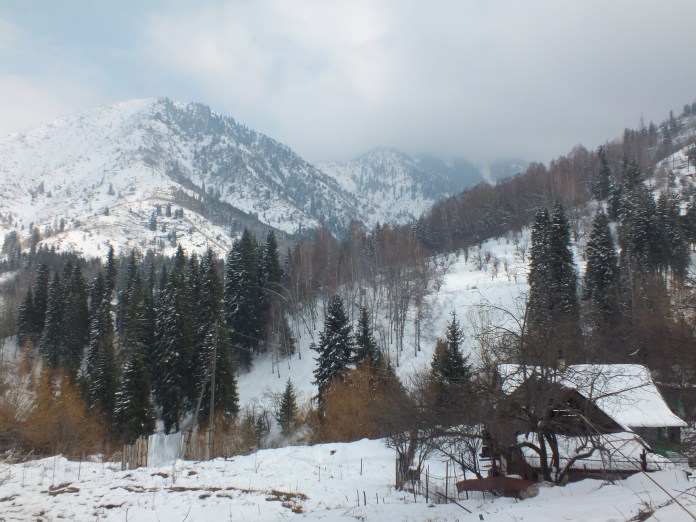
Afterwards, driving towards our guesthouse, an approaching storm turned the sky black. Hailstones the size of chickpeas beat down on the car, and the landscape turned white. A man galloped past, huddled in a duvet-like coat, while the poor animals stood looking miserable, covered in hail and snow. The villages we passed through were deserted and covered in a thin white blanket of snow, while smoke rose out of the grim and damp-looking wooden houses.
The storm had missed the village of Saty. We arrived at a smart wooden guesthouse and sat down with our host on a sofa next to the stove. ‘Why are you vegetarian?’ he asked Sophie. ‘Meat is power.’ There was no arguing with him. After warming up and sweating everything out in the tiny wooden banya, we returned inside and were presented with a noble Kazakh attempt at vegetarian food: a mountain of roast potatoes and a few carrots. But there also were glass bowls with the most delicious blackberry jam and plates of freshly made baursak, Kazakh fried bread. And more rahat chocolate of course.
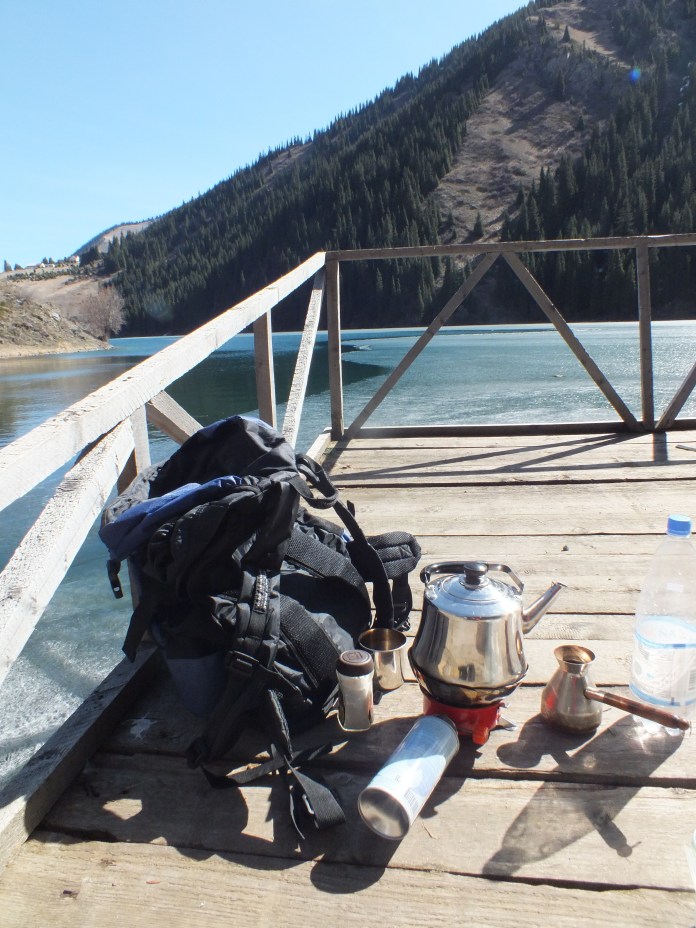
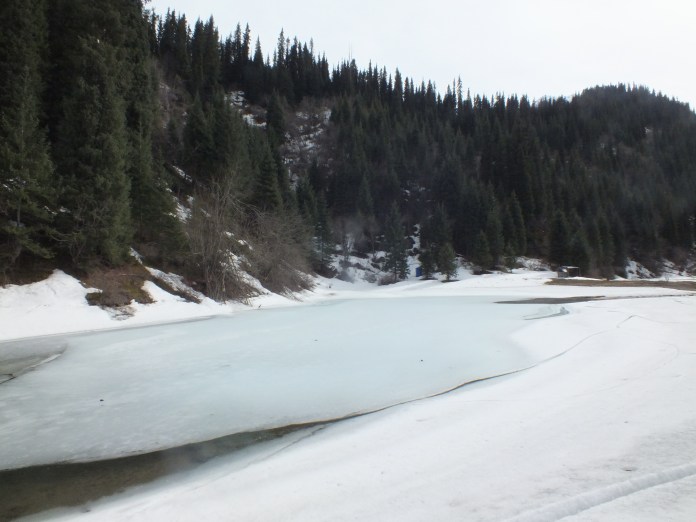
The following day we drove towards the Kyrgyz border, an area patrolled by guards on horseback with rifles slung across their chests, looking just like cowboys in westerns apart from their great padded coats. We showed our passports to enter into the mountains and arrived at Kolsai Lake. It glittered and sparkled in rainbow colours between fir-covered mountainsides. We walked to a part of the lake still frozen and sat on a jetty drinking tea, watching ducks fly overhead and listening to the deep, alarming, thuddering sounds of the ice sheet cracking.

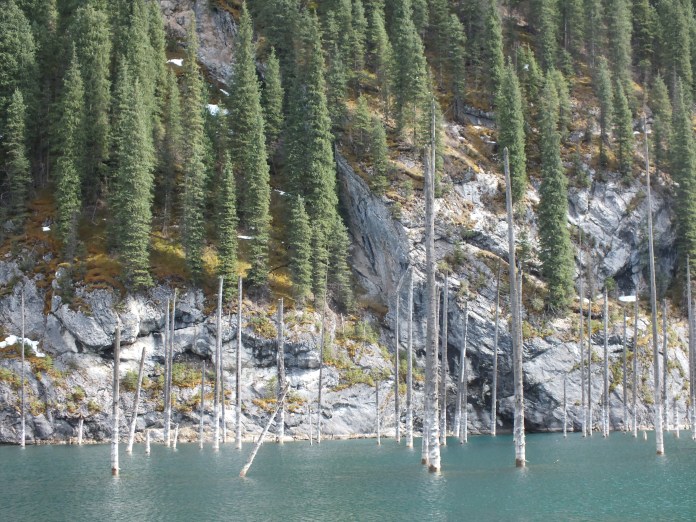
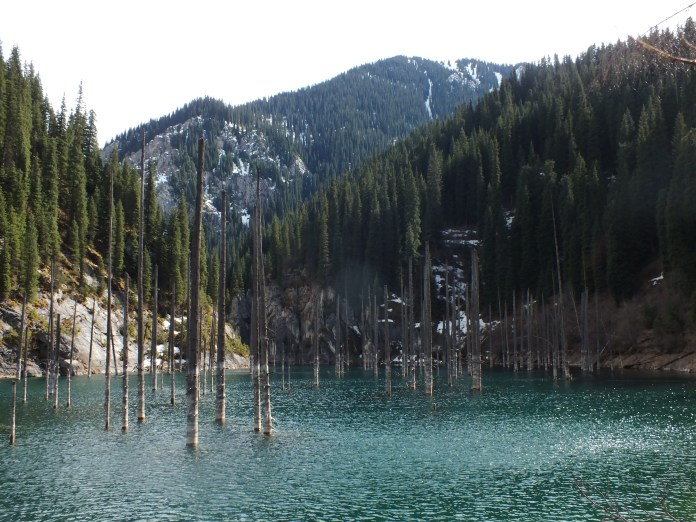
I think the most beautiful place we visited though was Kaindy Lake. Formed after a landslide in 1911 which blocked the river and flooded a forest, it is a haunting place. Skeletal, bleached tree trunks still stand in the water, utterly dead but together creating a strangely alive and alert atmosphere.
On the long drive home we listened to Andrei’s music: Armenian rappers boasting about being macho and women demanding big beards, a satirical Russian song about Barbie, Ukrainian bikers dreaming of freedom, a rapper’s remix of Borodin’s Prince Igor, and – best of all – a song I’ve been looking for since my trip to Georgia (in 2014!) about there being no train from Moscow to London.

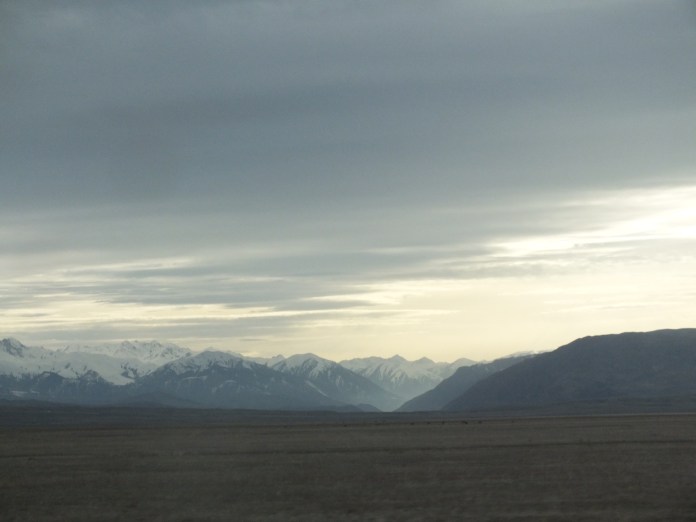
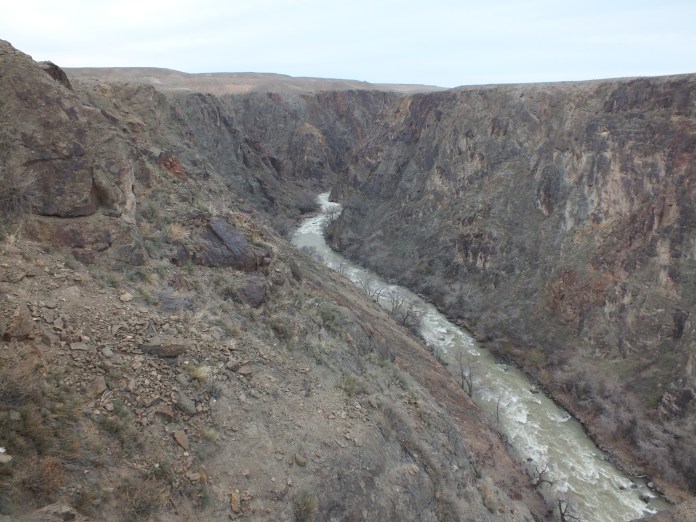
We drove across the vast, flat, open landscape, past distant snowy mountains over which the sun was beginning to set, watching an eagle briefly fly along with us, almost like a dolphin. As it grew dark, we passed along a deep black canyon in which raged a white foaming river, and once more returned to that flat, never-ending grassland, as we listened to a beautiful Ukrainian voice sing his love song to the sky.

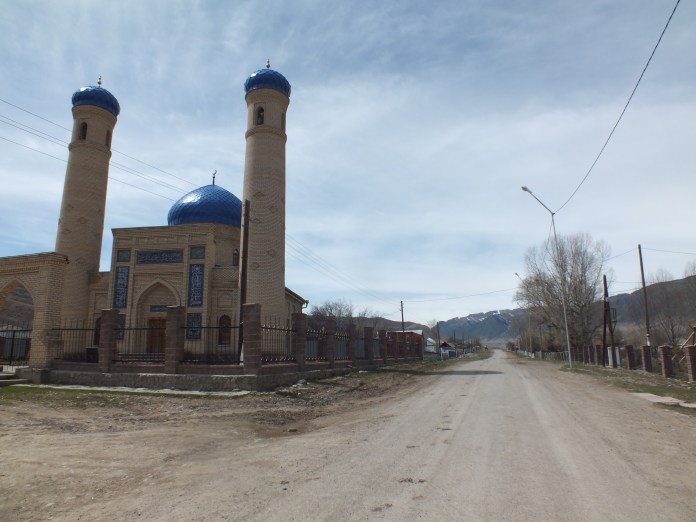
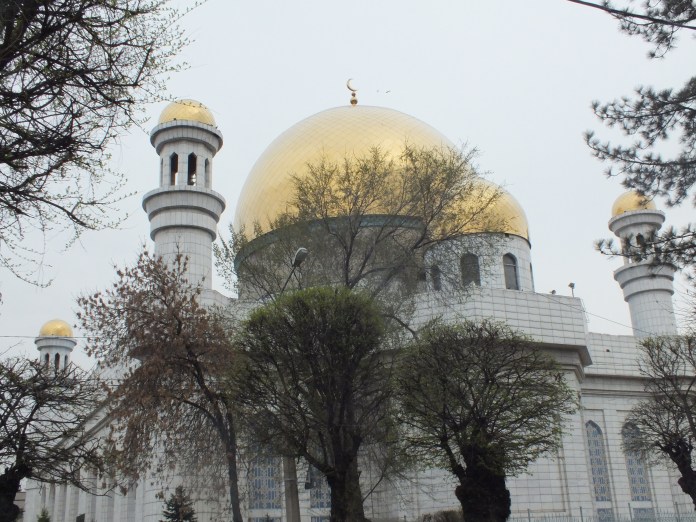
Kazakhstan was a strange place. Between the Russian dominance and Uzbek, Korean, Georgian, Ukrainian or American influence, it was full of contradictions: rough concrete houses and super-expensive shops, beautiful mosques and aisles full of vodka, developed cities and a yearning to live in a yurt and kidnap a wife.  Answers to questions conflicted: the stress in Kazakh is always on the first syllable said one man, but another told us it was always on the last syllable. Yes, it is still possible to visit the wild apple forests, but no, they were all cut down years ago. But come back in autumn – it’s really beautiful then, they promised.
Standard

Shymkent & Turkestan

Shymkent has long been called the Texas of Kazakhstan, a wild place full of crime and gangsters where everyone and everything is out of control. It’s 11 hours from Almaty, but only an hour and a half from Tashkent in Uzbekistan. ‘Be careful,’ we were warned in Almaty, ‘they’re not friendly like we are here.’

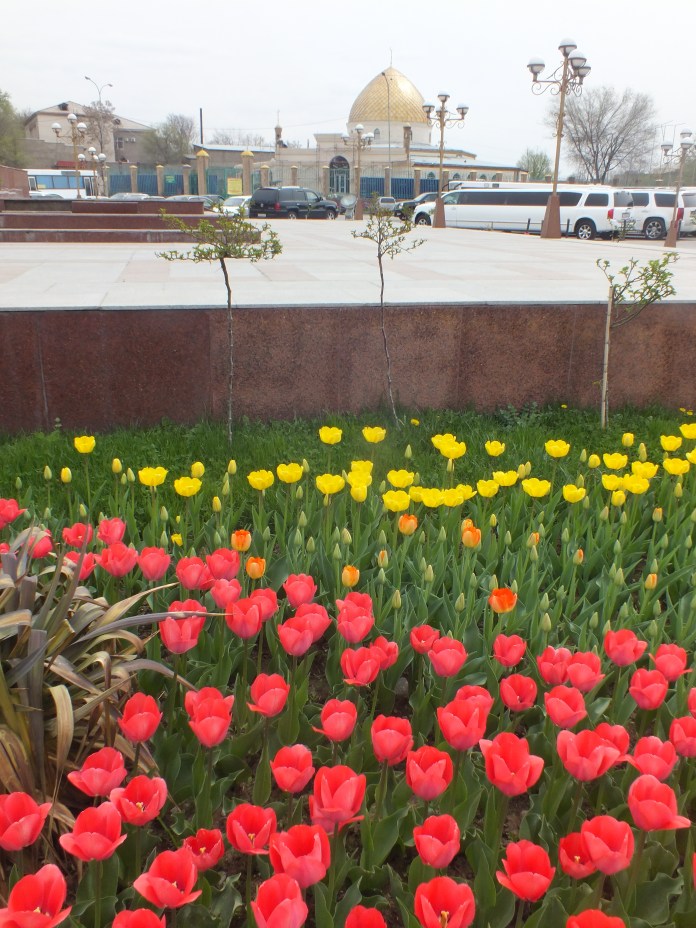
From the train we were met by our guesthouse owner, who offered to take us on a tour of the city. We were driven around night-time Shymkent, past the screams of a funfair, the mayor’s palatial official residence, and streets full of neon tulips (tulips, like apples, apparently originate from Kazakhstan).

‘What do they say about Shymkent in Almaty?’ he asked. An awkward silence. ‘You don’t need to worry about crime here. Everyone is much friendlier in Shymkent.’

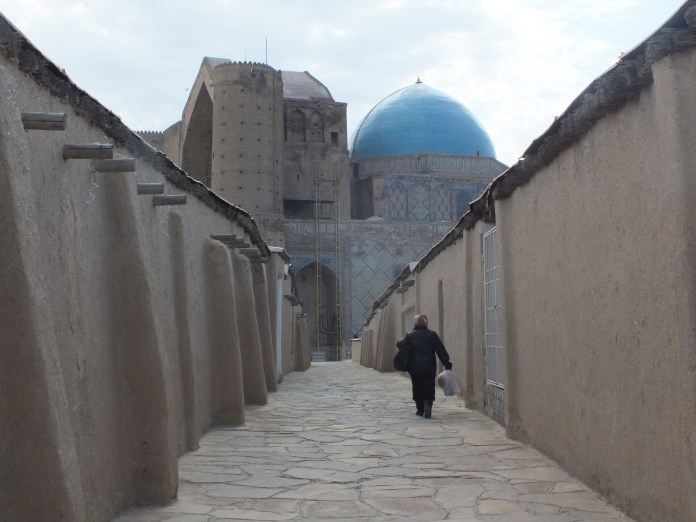
Southern Kazakhstan borders Uzbekistan and is in some ways closer to the settled culture of the Uzbeks than the nomadic life of Kazakhs. Unlike cities such as Almaty and Astana, which were largely built by Russian invaders, some of the towns in southern Kazakhstan still seem as though they belong to an ancient past. The most famous of these is Turkestan, which has been inhabited since the 4th century BC, but which became famous in the 14th century when Tamerlane ordered the building of a magnificent mausoleum to the sufi saint Khoja Ahmed Yassawi.

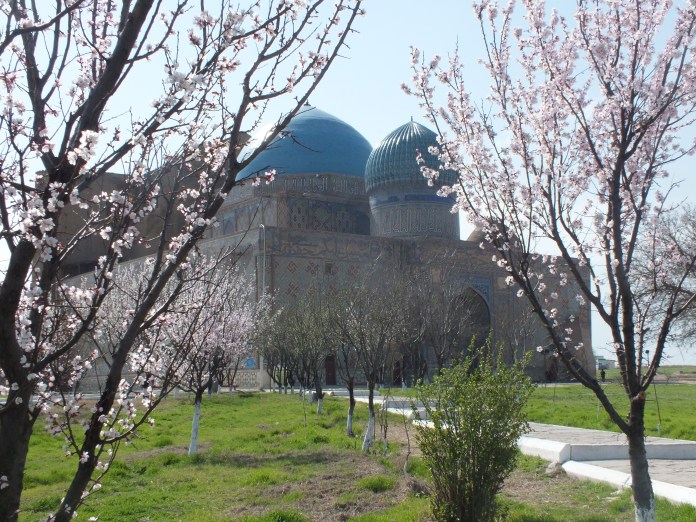
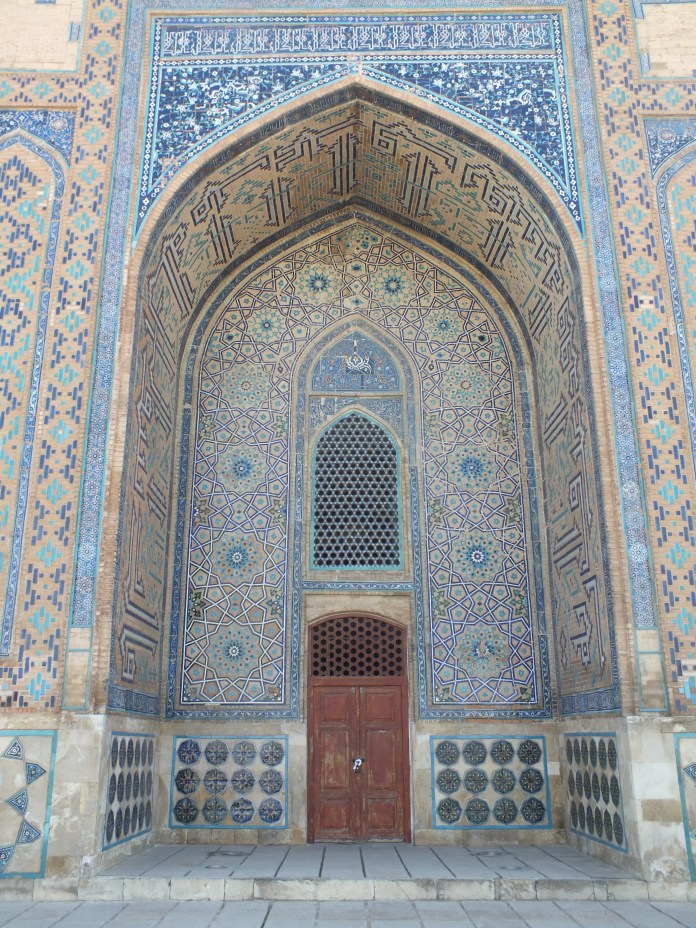
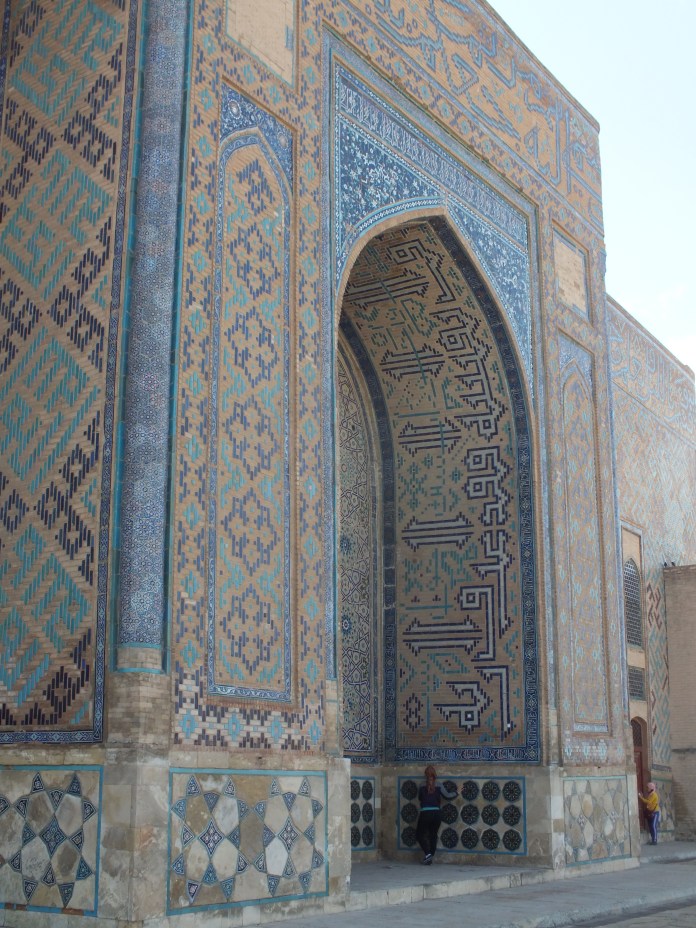
We reached the mausoleum through a stone archway and along a path lined with trees thick with blossom. From a distance, its colours looked dull, the air clouded by the dust that blows off the steppe. Close up, however, the tiled walls are bright and lively, exquisite in pattern and colour. Women walked slowly around the perimeter, both hands on the walls, head bowed, feeling their way as they prayed. Birds swooped in and out of their nests in the building, squeezing through the intricate geometric lattices. On the south-eastern side, the Mausoleum revealed its unfinished state: only bare brown brick remains, undecorated and with wooden beams still sticking out. It had a very different kind of beauty: austere, meditative, calm. This mausoleum is considered by some to be one of the three greatest pilgrimage sites of Islam, second only to the Haji (some even consider three pilgrimages here to be worth one pilgrimage to Mecca).

We found our way to the ticket kiosk and bought tickets at the rate for ‘citizens from the far abroad’. Inside the mausoleum was a large white hall with bare walls and scalloped ceiling, and a magnificent great cauldron in the centre, two metres in diameter and made of seven kinds of metal. Along a tomb-like corridor we found a wooden grille, through which we could see the green tomb of Yassawi. Pilgrims sat here on benches, praying and talking to family and friends.

Surrounding the main mausoleum were mosques, smaller mausoleums for other holy people, and a bath house. As we were looking at an old wooden column carved with calligraphy, on top of which perched a pigeon’s nest with tiny chicks, a group of teenage boys came up to us. Without a word, they stood behind us and one held up his phone to take a selfie with us. They went off looking happy, taking more selfies in front of the old Qurans.

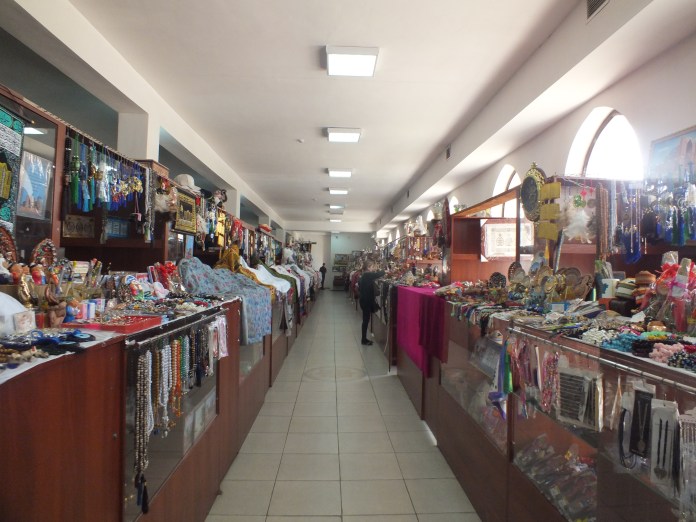
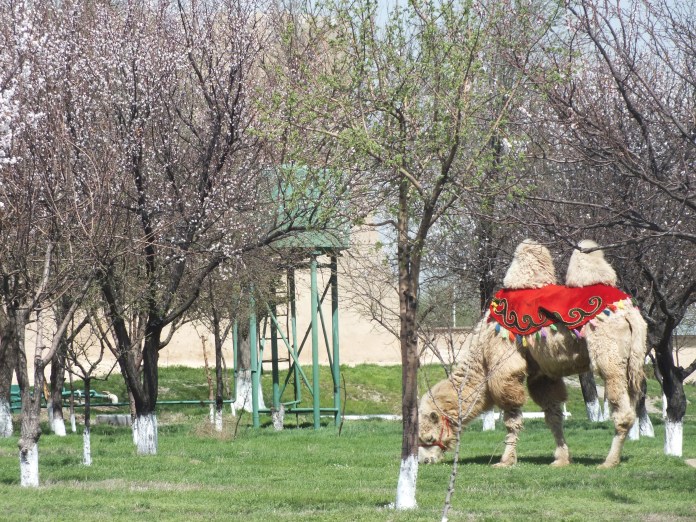
A camel sat on a carpet, waiting for tourists, but soon wandered off into the field of blossom. In the distance we could see the bright white mosque newly built by President Nazarbayev, glinting on the hazy horizon. In a canteen we found shubat (fermented camel’s milk) to drink, and then we hunted unsuccessfully through a hall of souvenir stalls, which was empty apart from a few stall owners hiding among their felt hats, miniature dombras and bracelets made of wolf claws.

On the bus back to our guesthouse, the conductor wanted to know what we were doing and where we were going. In between collecting bus fares, he would come back to us and resume a conversation through Google translate. It was a conversation often repeated, in restaurants, in the banya, on the train, with policemen, with printers, with shopkeepers: what are you doing in Kazakhstan? Tourists! Why do you want to come to Kazakhstan on holiday?! How much does it cost to come here? Where are you going? What are you doing? Are people friendly here?

The ethnic diversity of Kazakhstan is fascinating. Between all central Asian countries there has always been movement – Shymkent, for example, is the heart of Uzbek Kazakhstan – but Kazakhstan’s history makes it especially diverse. After the absorption of Kazakhstan into the Russian Empire and then the Soviet Union, it came to be known as a place of exile and forced labour. As well as the famous exiles such as Dostoevsky (who was interested in the ‘indigenous’ question in Kazakhstan) and Trotsky, thousands of people from North Korea to Ukraine were imprisoned in Kazakh gulags. Today, among populations of Russians, Koreans, Germans, Ukrainians, Belarusians, Uyghur, Chechens, Tartars and others, memories of this past are fading, or being deliberately ignored, and only the odd comment serves as a startling reminder.

In Shymkent we saw no trace of the wild west. The long Uzbek houses make parts of the town look like a village, with narrow streets through which men wander with trolleys, crying their wares. Drivers are astonishingly well behaved. We needed to print our train tickets, so we found a large copy centre where a group of young women and an old man sat. Walking into the room brought stares and the now familiar sensation of extreme self-consciousness, as though our mere presence would sustain conversation for the rest of the day. With much giggling they asked the usual questions (what are you doing in Kazakhstan! you came here on holiday?!), then refused to take payment, preferring payment in the form of English practice.

Another exchange took place in a canteen where we were having breakfast. We were approached by a kindly and distinguished looking gentleman who wanted to practise his English. Marat (like the Frenchman, he said, drawing a finger across his neck) was a wind power engineer who told us about his dream for Kazakhstan to be the largest producer of wind power. The more vodka he drank, the more enthusiastic he got about wind energy, and boasted that Kazakh wind turbines could be two and a half, later three, times more efficient than other countries. He’d won an innovation award in California and would be at Expo 2017 in Astana in the summer. I looked him up afterwards and he really had invented a wind turbine that was one and a half times more efficient than other types.

Marat told us that all Kazakhs must know their family members up to seven generations back, but that he could go twenty generations back. He insisted on getting more cake and tea, and taught us how to politely pour it out: the less full the cup, the more honoured the person is, and by the end we were pouring out thimblefulls to sip at every few minutes. He punched himself on his heart with pride every time he mentioned the word Kazakh. His greatest dream was not to build wind turbines or win prizes, but to retire and return to the heart of Kazakhstan, to live on the steppe with his horses, dogs and cows. For now, though, he could only wait for his lift to the windy plains of Otrar.


Standard

Medeu

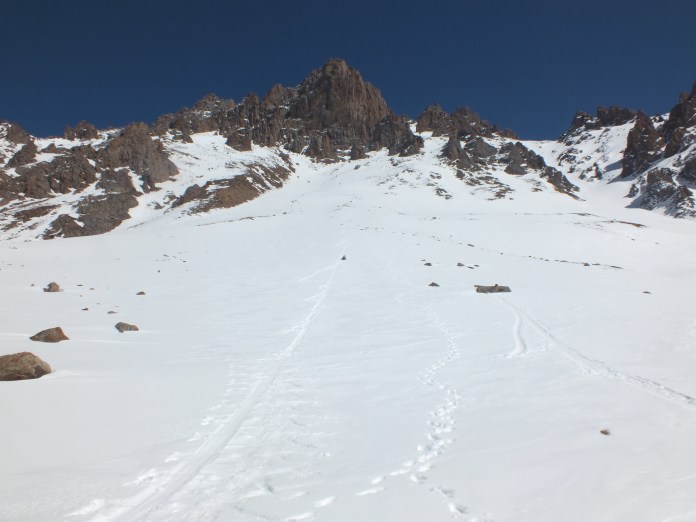
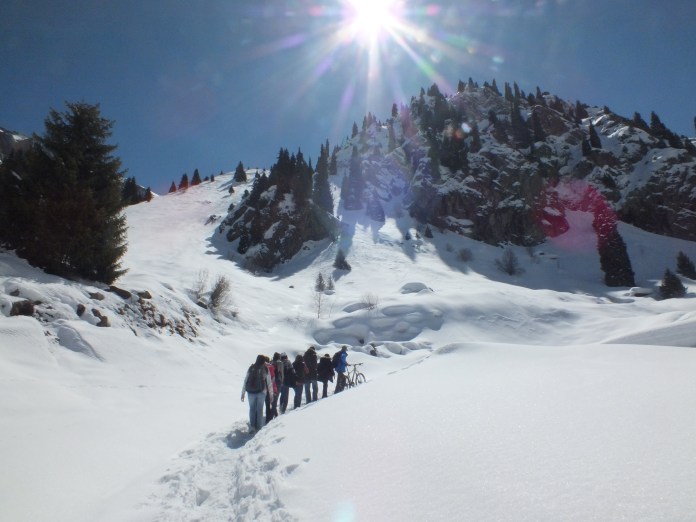
One of the best things about Almaty is how close it is to the mountains, and how easy it is to get there. Bus number 12 leaves from opposite the Hotel Kazakhstan – if in doubt, just follow the crowds with skis and snowboards – you give your 20p to the conductor, and twenty-five minutes later you’re in the Tien Shan mountains. Another twenty minutes and you can be whizzing down the mountainside. It’s a completely different world: American diplomats, international oil executives, rich Russian tourists, and the generally mega wealthy, trot around in goggles and ski boots, sitting at expensive European cafes and getting sunburnt.

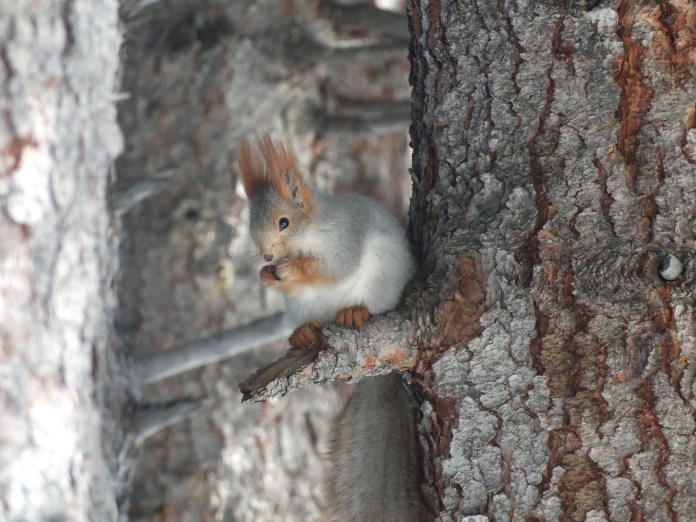
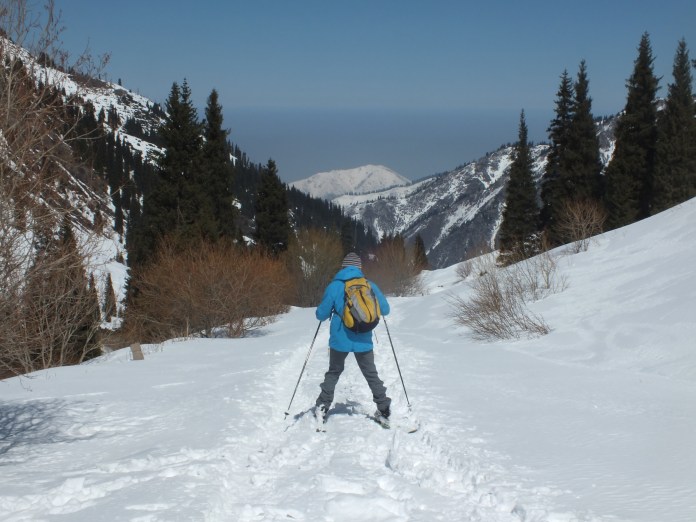
Away from all this the mountains are yours. One day we joined a group of Kazakh girls walking up to a frozen dam; they were feisty geology students, training to be the next generation of energy executives – some of them were the first ever female students in their fields. We stopped to look at a squirrel, a fluffy red and grey Kazakh squirrel with great tufty ears. Coca cola and boiled eggs came out, and the girls all burst into something between a traditional Kazakh song and a rap.

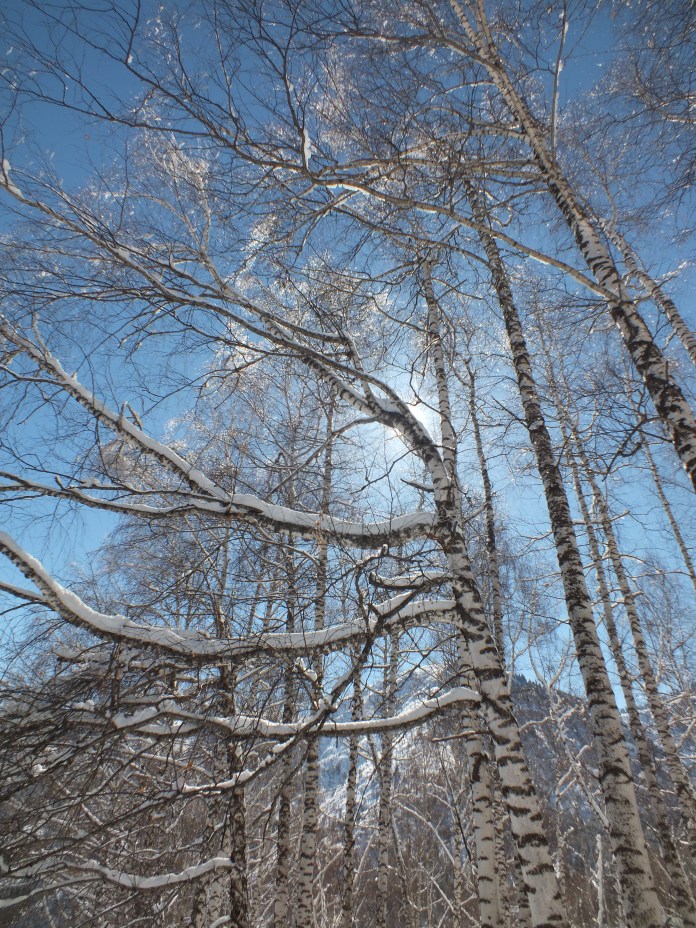
Up in the mountains, the sky was the most intense blue, almost dark grey, against the sparkling and blinding snow. The birch forests loked like something from a fairytale, branches heavy with snow and icicles, while further up fir trees huddled close together. Each day the sun grew stronger and our feet sank deeper and deeper into the snow. We passed a man carrying his skis up the mountain, and a surprisingly large number of bare-chested men walking in crampons – fewer clothes seemed to be the way to go. The weather was pure and intense, and the power of the sun felt stronger than in any other place I have been.

Going down, the tracks often turned into slides and we tobogganed down on our coats where we could. It was so much fun!! We finished our longest walk in the public baths in Almaty, where we circled between the Russian banya, Finnish sauna and Turkish steamroom. It got rather hot, and we probably should have followed the dress code of the venik woman, who wore a jumper and balaclava while she beat customers with branches of birch. But by bedtime I felt completely serene and strangely energised.
Standard

Almaty

I arrived in Almaty on a dark, rainy night and took an unmarked taxi to the hostel where I’d arranged to meet my sister. A Kazakh man was climbing the gloomy staircase, carrying, he told me, beer for us. Sophie had befriended the entire hostel and everyone seemed to know who I was. Around midnight we headed off to the next door Turkish-Russian-Kazakh restaurant to meet her friend Yusuf, and then came back for beer with Ilya, the Jazz flautist from the staircase. The following day we were booked in for Yusuf’s English lesson, given by Gulya who lived in our dormitory.

We were the only tourists in the hostel: most people had moved to Almaty for work and were living there indefinitely. Ilya had spent his first three days living in Almaty train station before finding a barista job, which paid $7 a day (that’s almost as much as we were paying for a night in the hostel). When we turned in at 3am, he said he wasn’t able to go to sleep because he wouldn’t be able to wake up in time for work at 7am. I never saw him again.

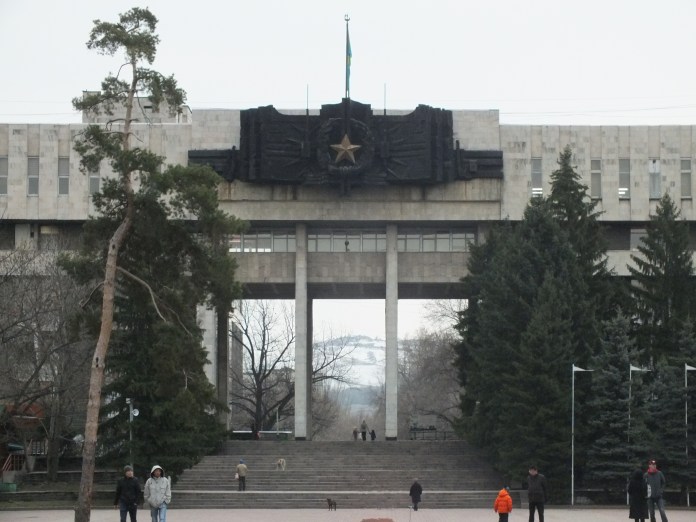
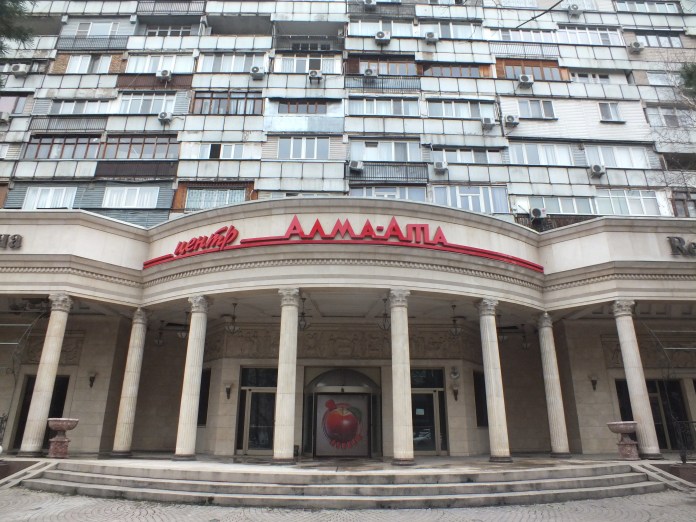
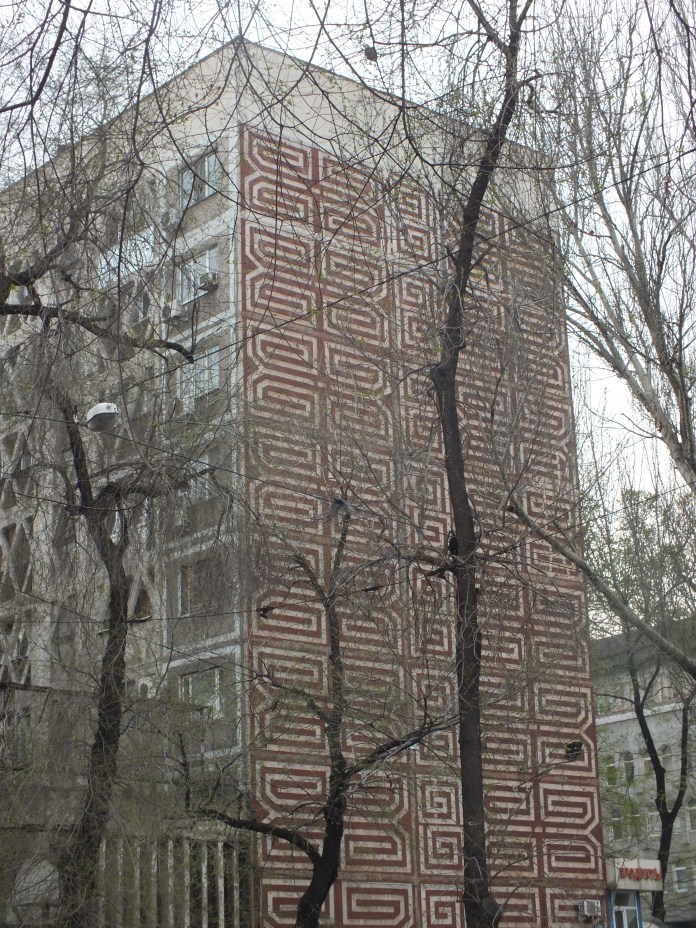
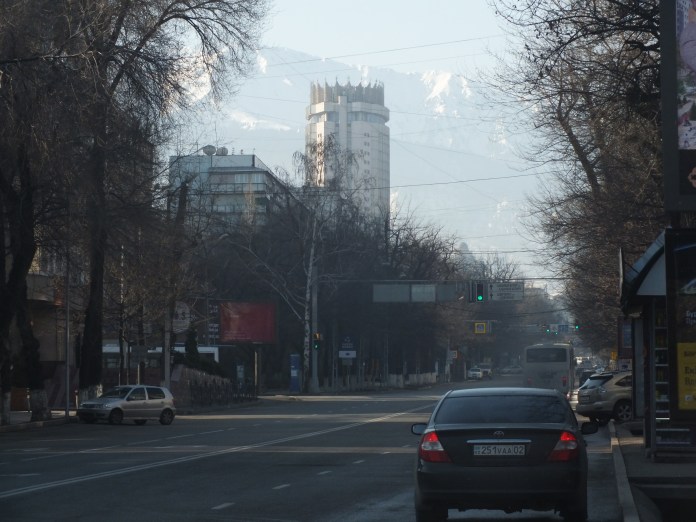
By daylight I was surprised at how pleasant a city Almaty is. There is a surprisingly large amount of surviving Tsarist architecture: small, pretty, pink and green buildings with white ornamentation that make you think of dolls houses or castles in winter wonderlands. Even the Soviet-era blocks have simple bits of decoration that give them individual character and make any walk varied and interesting. What could be a grey concrete grid of a city is in fact a pleasant network of streets, almost always tree-lined, and often with pedestrianised side-streets linking the wide, busy avenues with grand views into the mountains.

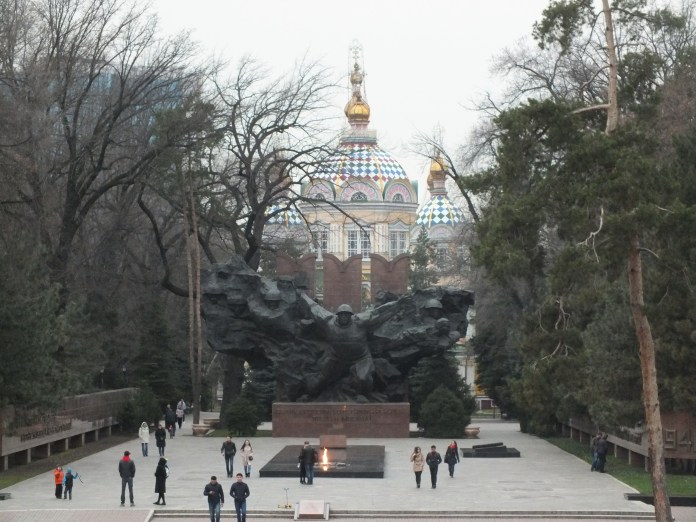
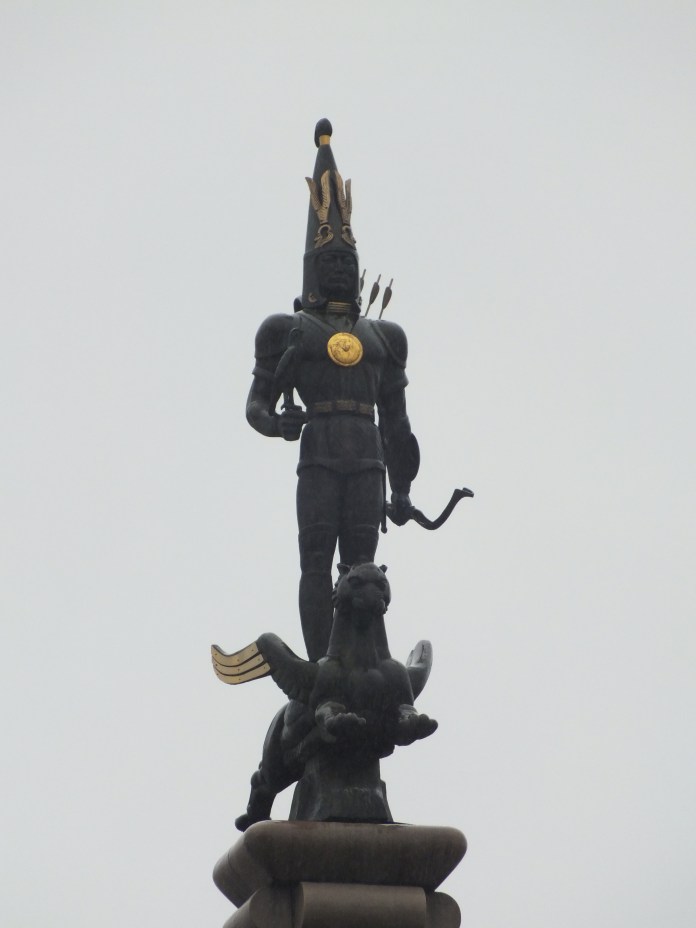
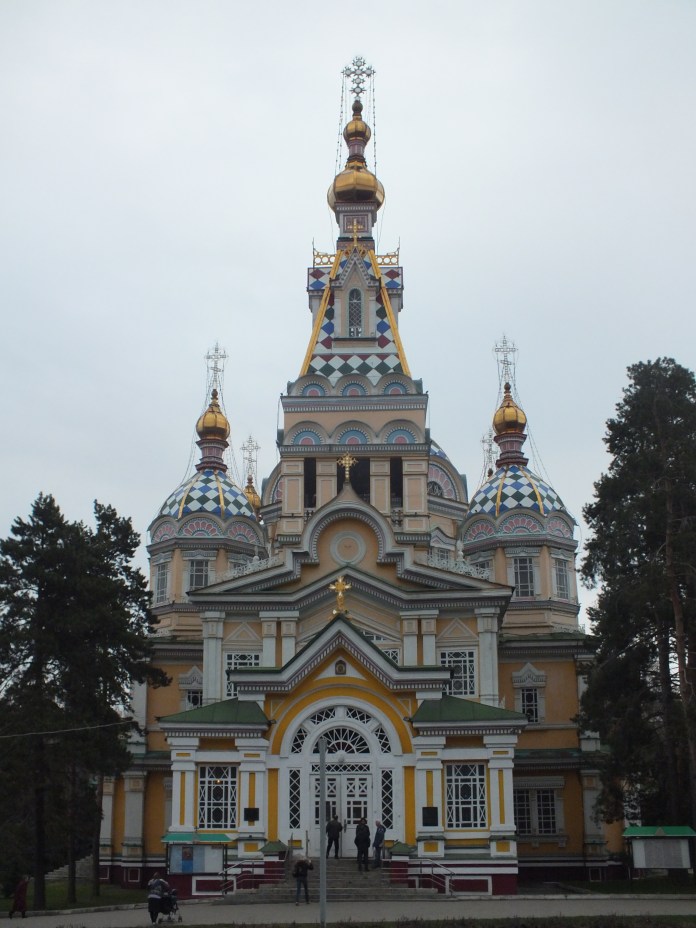
In the centre of Almaty lies Panfilov Park, which is dominated by a large Russian Orthodox cathedral made entirely of wood and painted in bright colours. A terrifying Soviet war memorial looms out over passers-by behind the cathedral (which thankfully overshadows the sculpture). It depicts the Panfilov heroes, three times larger than life and with impossibly chiselled cheeks and muscles. The accompanying quote glorifies Moscow and is a reminder of just how Russian Almaty can feel, with its banyas, blinnayas, ballet and borsch. In fact, there is even concern about the survival of the Kazakh language because Russian is so widely used. But I wasn’t expecting Almaty to also feel so European, to have so many dainty little cafes, American films and western luxury brands. It all feels a very long way from the once nomadic life of the steppe.
We decided to go to the opera house, an ornate and gilded building where all the workers were dressed in smart blue and gold trouser suits. I do not understand how it is possible for one nation to produce so many beautiful and glamorous women – it made me feel very ridiculous and inferior, sitting on my little blue and gold chair in walking boots and a fleece. Our tickets for Birjan and Sara, a traditional opera about love between two dombra players, cost £2, but there were so few people that we were allowed to sit anywhere in the stalls we liked. Sara sang about Birjan, ‘my proud hawk, nightingale of the steppe’, and Birjan died surrounded by his three great loves: his mother, Sara (‘my steppe glow’), and his dombra (Kazakhstan’s national instrument, a traditional wooden two-stringed instrument). With his dying breath he sang a lament for his homeland and for his song that would live on in Kazakhstan. At the end the small audience all clapped in time together, a very sorry sight. But it was so much fun that we immediately bought tickets for the opening night of a ballet adaptation of Anna Karenina. The star of that performance was very much the three year old boy who stood on stage soaking up his applause, bowing grandly, admiring his new lego, who in the end had to be dragged off stage.
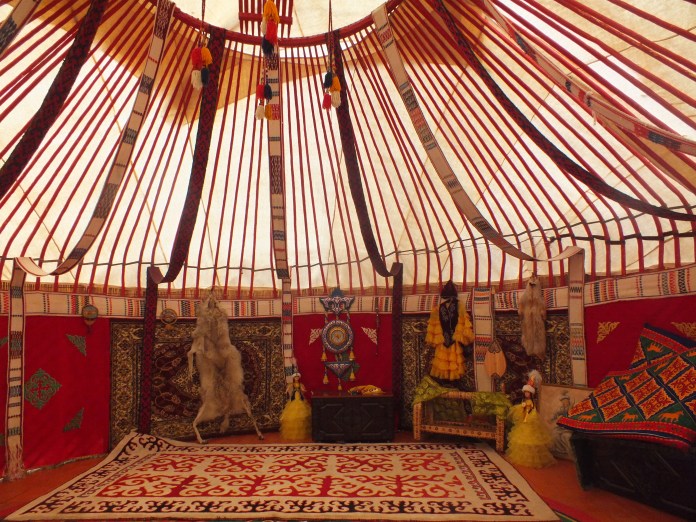
There are some good museums worth visiting in Almaty. The best is on Kazakh folk instruments, and it is housed in a wonderful old wooden building where you can listen to music played on the instruments. Other museums feel rather Soviet, with large empty marble halls, faded and dusty displays, attendants who tail you everywhere, and, invariably, photos of President Nazarbayev on the top floor, or even a whole exhibition on him if you’re lucky. But there were beautiful things: as a crossroads of the world since neolithic times, Kazakhstan has a fascinating archaeology and incredibly rich mix of cultures. There were fabulous ethnographic displays of traditional dress and yurts and, my favourite, a pair of enormous boots which looked just like a whole sheepskin wrapped around a foot.

We were wandering around the state art gallery, past paintings of eagle hunting and a very dashing Stalin, and found ourselves in a room of east Asian art. There was a TV crew set up and a producer came over, desperate for an interview with someone – anyone, apparently (though foreigners are always an excitement – in the whole week we were in Almaty, I could probably count the number of westerners we saw on one hand). Sophie neatly side-stepped the invitation by saying I would give an interview, so I went on Kazakh TV, reciting whatever the producer mouthed at me, saying how much I admired Chinese culture for having invented porcelain, gunpowder and paper.

On Easter night we went to the cathedral. As we approached Panfilov Park there were stalls selling circus toys, flashing balls and spinning toys thrown into the air, which gave the night a festival, even carnival, atmosphere. Hundreds of people were overflowing from the building and the service was being screened outside, while inside the priests would occasionally turn to the camera and shake incense at us through the lens. Everyone carried baskets with painted eggs and decorated kulichs, with candles which, when burned too low, would be removed from the kulich and stuck into the soil of the cathedral garden. Priests would regularly venture outside, accompanied by soldiers, to drench us in holy water, joining in everyone’s laughter as they did so.

In the early evenings of our wanderings through the streets and parks, we would catch tanatlising wafts of chocolate and caramel and roasted nuts. We couldn’t work out where it was coming from until our final day, when at last we saw the ‘Rahat’ chocolate factory right in the centre, the other side of the bazaar. It was with pride that the many generous people we encountered, who gave us lunch and fed us on countless occasions, would bring out ‘Rahat’ biscuits and chocolate. For all the deliciousness of Russian sweets, or even the sweet goodness of an Uzbek tomato or Georgian wine for that matter, nothing was better than the shy smile of a Kazakh offering us Rahat.

Standard