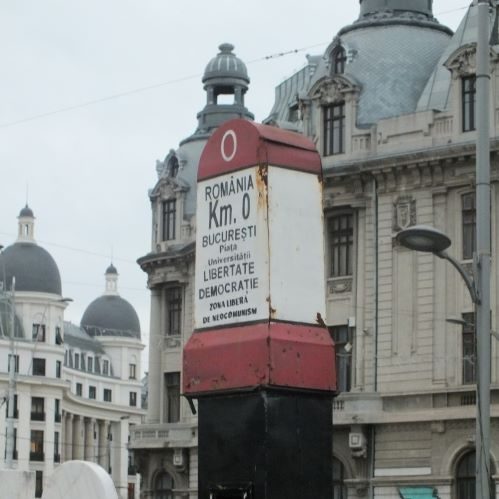
Having strayed 590 km from the Trans-Mongolian railway, I now had to cross the border in Altai. I knew it could be done, and I’d heard there was a bus – perhaps there is, but I never saw it.
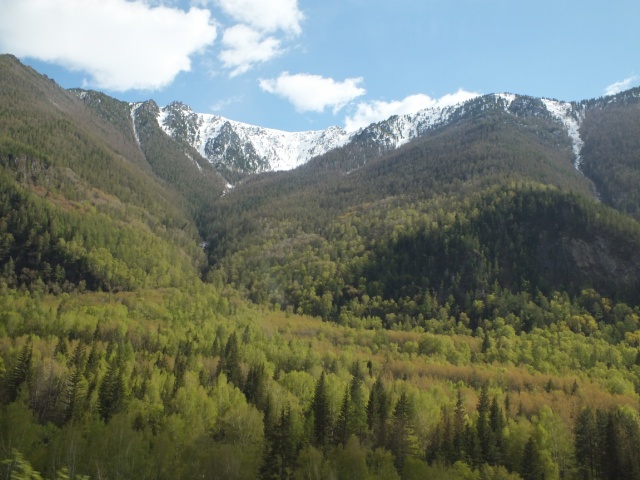
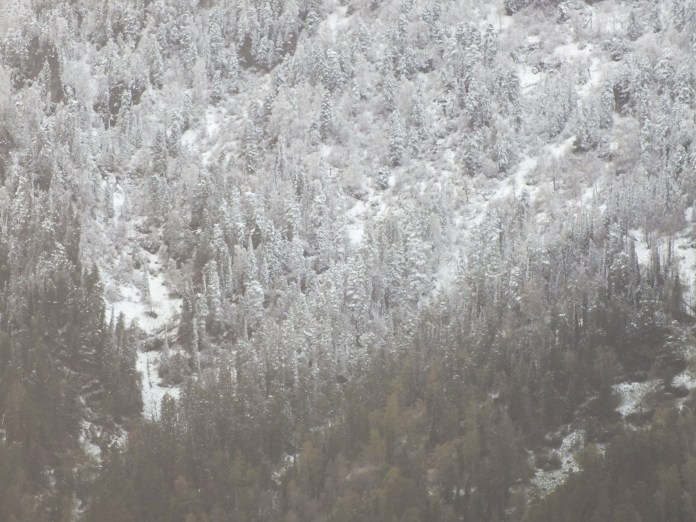
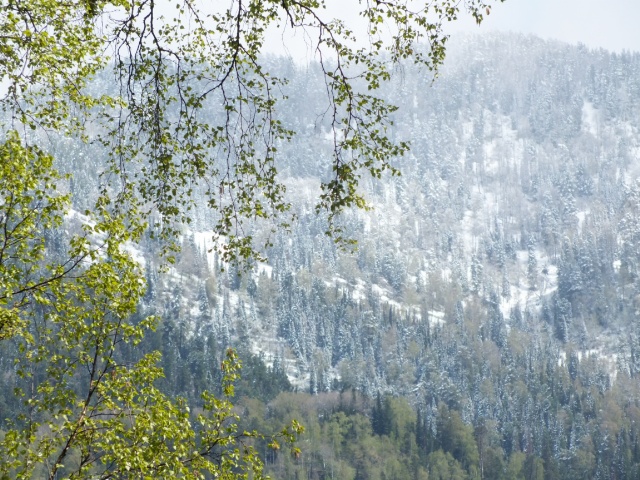
I took a shared taxi for the 460 km journey along the Chutsky Trakt from Gorno-Altaisk to Kosh Agach, a spectacular drive through snowy mountains and green valleys. My passengers were Russians, I gathered, but they looked very turkic and I simply could not understand what they were saying. Almost as soon as we had set off, one woman got out her vodka bottle and we stopped off to open up a shop for a plastic cup. Every time she drained the glass she would crumple it in her hand, more vodka spilling down her chin than her throat. A few comments were made sniggeringly and it was a struggle to keep her from sleeping on top of other passengers, but everyone was very helpful, opening the bottle for her, stopping at a river so she could clean herself, finding a shop for more vodka.
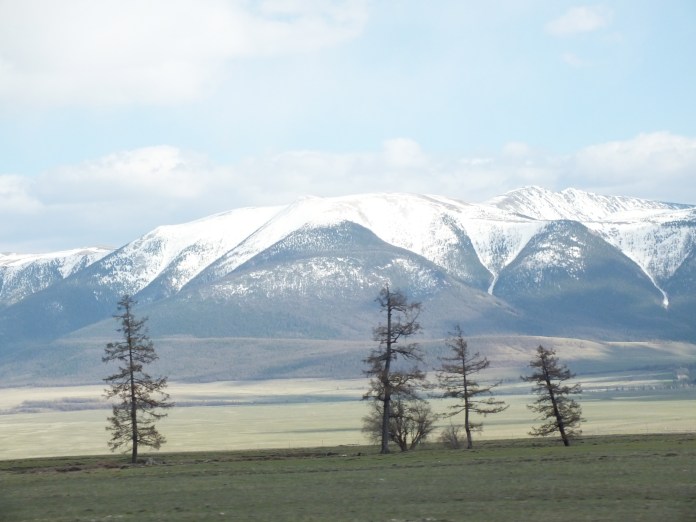
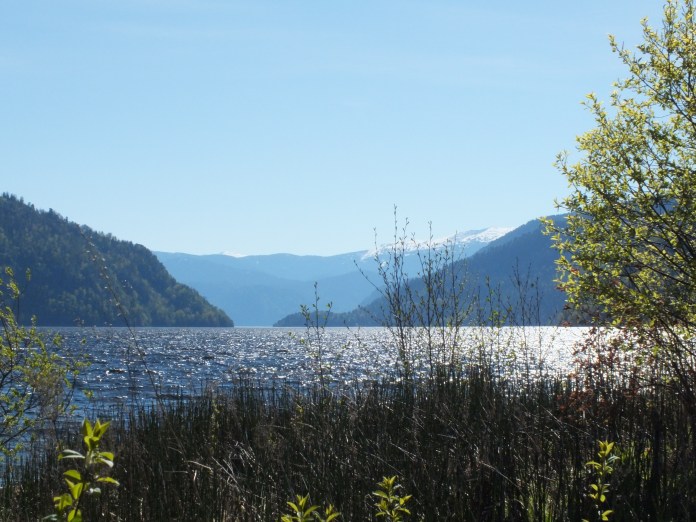
We passed the traditional hexagonal wooden houses of Altai, and more and more horses. Up we climbed through rocky passes, and then suddenly the forest and mountains stopped, everything turned brown, and we were on the plains.

Kosh Agach has a wild west feeling, more the end of Russia than the beginning of central Asia. The driver dropped me off at a cheap and depressing hotel (I felt very proud of myself for winning the argument over the price of a room), and I looked for a cafe for dinner. The cafes were either padlocked or their roofs had fallen in. One was open, but when I stepped inside the crowd stared and switched off the music. The cafe was closed someone said. Eventually I found somewhere with two items on the
menu.
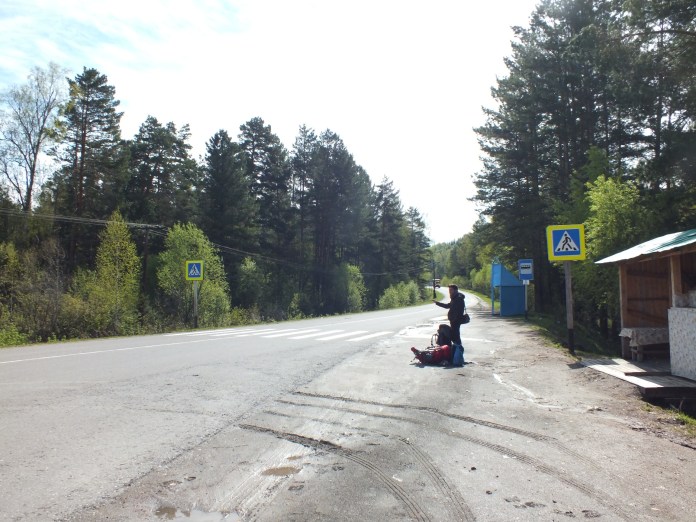
The next morning I got up early to catch the bus, but realised it was better to hitchhike than wait for a bus that I couldn’t trust would ever come. Lots of vehicles stopped for me, but when I mentioned Tashanta, the border village, they either shook their heads vigorously or asked for absurd quantities of money. They all wanted to know if I was alone and if I was scared. The best response, I found, was to stay silent and shrug my shoulders with a very slight smile. Eventually I got a lift at a sensible price (Are you married? Why not? Do you want children?).
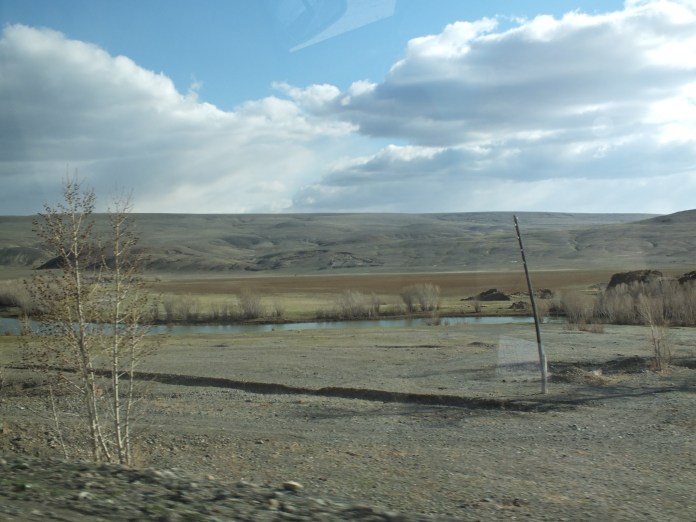
As I walked towards the border post I was stopped by two men in the road who asked for my passport and visa registration, and who told me to wait there for a car. The road was empty. Every 5 minutes or so some vehicle would come by, usually completely packed. After an hour, a man with a briefcase came over to chat and apologised for not having space for me, but gave me the name and phone number of a hotel in Olgii. A jeep stopped to tell me a Russian car was 5 minutes behind (no further explanation), but it never appeared. At last, a lorry stopped and took me through the gates.
Cars were stripped, lorries opened and jumped on, bags were searched, and everyone had to stand outside in the cold. For some reason I was allowed to remain in the lorry with the string of naked women and icons and watch everything happen. Another guard came to inspect my papers and practice his English.
Suddenly the lorry driver came running over clapping his hands and threw out my luggage, telling me to go to passport control. The woman there peered down her glasses at me and asked in another official. What was the purpose of my trip to Russia? I had a business visa and hadn’t a clue how far I was supposed to go along with this pretense. I ditheringly concocted a semi-plausible explanation about doing some work in St Petersburg (matters were complicated by my falsified visa registration claiming I’d spent a month there) and tried to explain I didn’t actually work for a business. What kind of work? I decided I could pass for an art historian doing research, but he didn’t understand. In retrospect, I should have said I was an administrator and just appealed to Russia’s noble administrative history. Where have you been in Russia? When? Who did you stay with? How did you meet them? What is the purpose of your trip to Mongolia? Where are you going after Mongolia? Do you want to come to Russia again (when? with his attitude, no!)? He whispered something about travelling to the woman – I’m sure he saw through everything – and left. Another official came in and together they went through every detail of my inviting business, and then the woman abruptly stamped and returned my passport with a beaming smile.
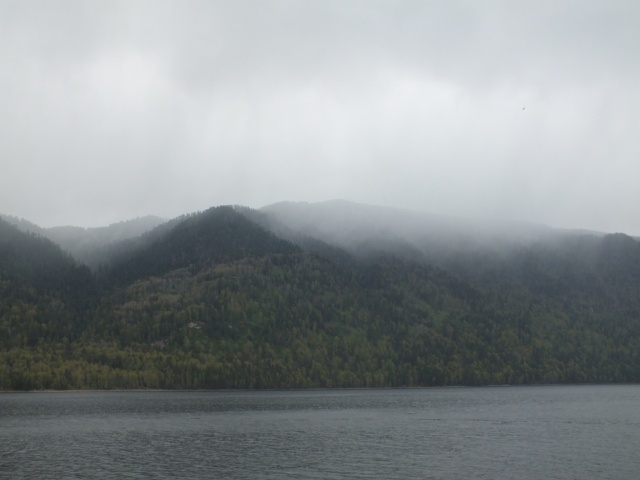
Back in the lorry, we were allowed to pass through into the 30km of no man’s land. It began to snow as we crawled along, the driver pointing out all the marmots running down holes. We reached a locked gate and a small sign with the Mongolian flag, and honked the horn to summon a guard to open the gate for us. On reaching the Mongolian border point, an immigration officer came up to me (now I was just a travelling student) and showed me up a staircase dripping with icicles and gave me an immigration form, even helping to fill it in for me (and overlooking my making up a host address in Ulaanbaatar). Then after asking about London, he told me his name, gave me his phone number, and told me I could take a lift to Olgii with him when he finished work in an hour. But the entire time I couldn’t quite see beyond the tufts of black hair coming out his nostrils. At that point the man with the briefcase reappeared and had clearly made some arrangement with the lorry driver, and I followed him into a jeep. The whole border crossing took 7 hours.

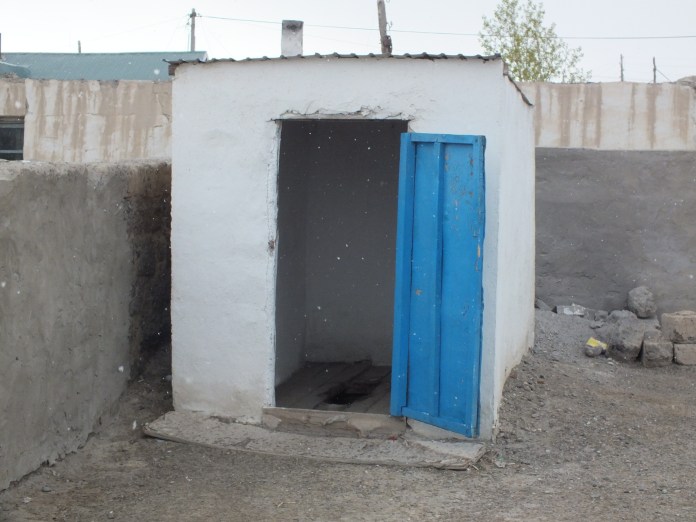
The Kazakh couple whose jeep it was drove just around the corner to a cafe for tea and buuz (steamed mutton dumplings). Out of a hatch leant a lady in a bright blue plastic hat, and they were all extremely friendly. But unable to take part in any meaningful conversation, I went outside to the toilet (a wooden floor with a plank missing – not even a nicely shaped hole! How luxurious Russian toilets were) and then chased a little girl around the car. The ladies in the cafe refused any payment.
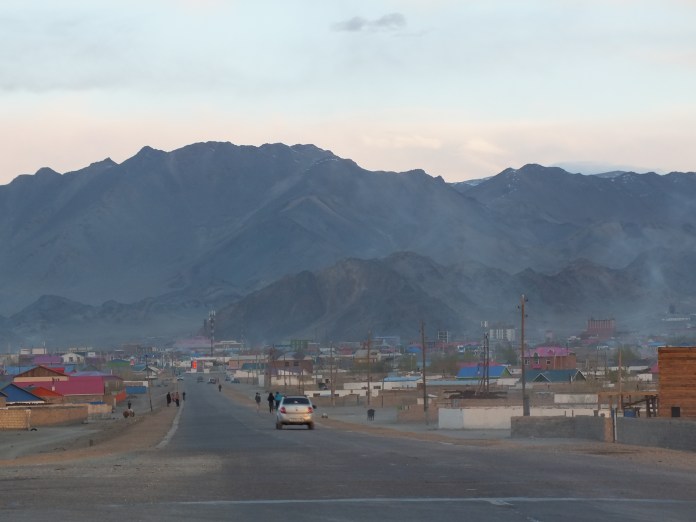
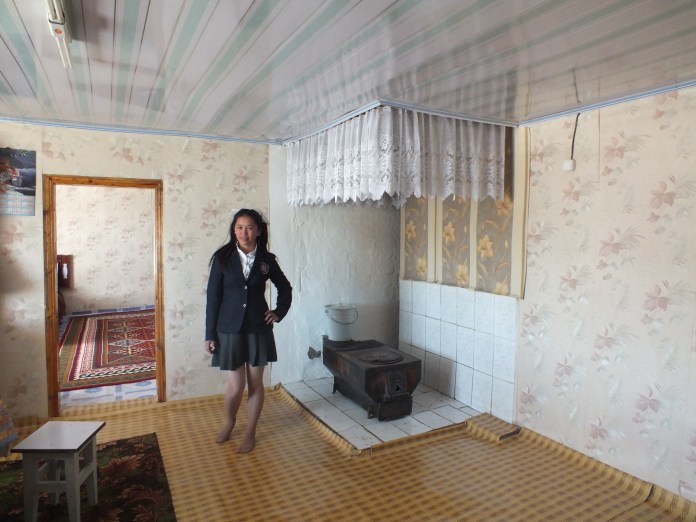
We arrived in Olgii late in the evening and I was passed to another car waiting on the road, inside which was a carefully manicured young woman with beautiful English. We drove off down a side street and turned into a courtyard with a ger and a flat-roofed, single storey, white, concrete house. They accepted my Roubles, and I was taken into the ger (just a tourist ger) for milky tea. Around midnight, another plate of buuz appeared.
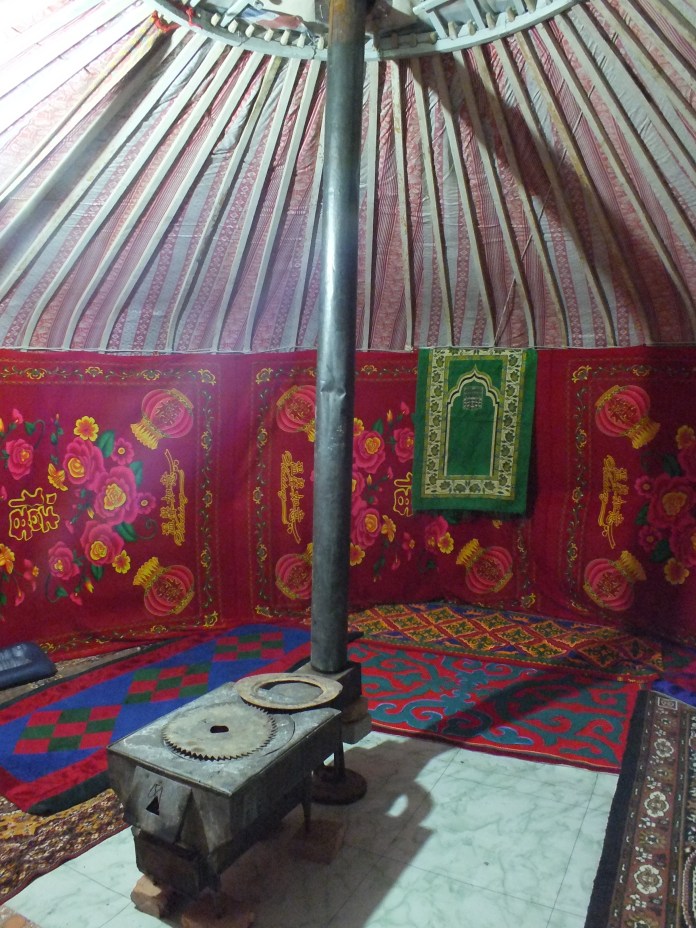
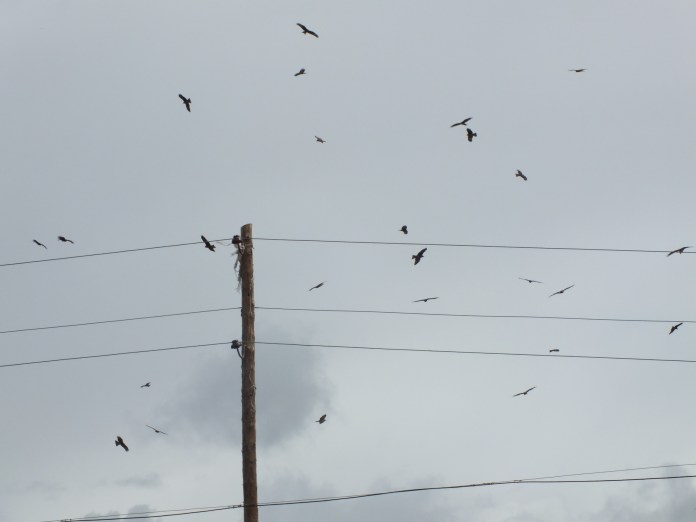
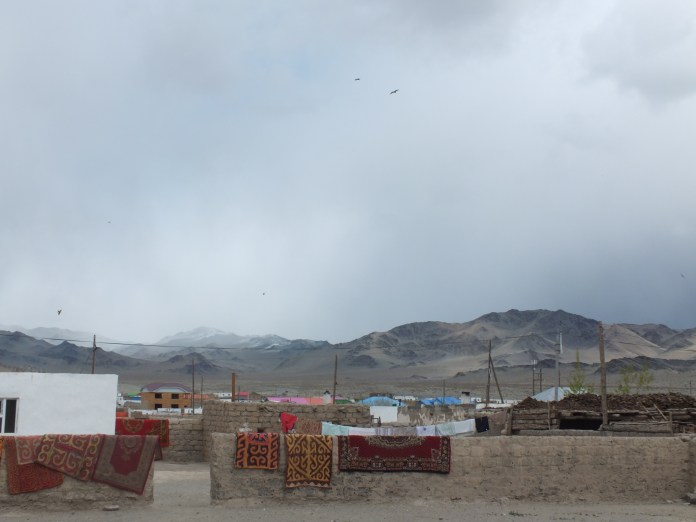
I spent two nights in Olgii with this Kazakh family. My attempts at getting them to teach me Mongolian were useless – the guidebook describes this region as the best preserved area of Kazakh culture. They spoke Kazakh, ate Kazakh food, taught Kazakh at school, went to the mosque, shopped at the bazaar, which sells everything from ger fabric to chewing gum, kept themselves clean and took off their shoes indoors. Cows wandered the streets and alleyways, a car drove past with a dead sheep tied to the back, a herd of horses was driven through the centre. The sky was full of eagles: this is the home of eagle hunting, though I didn’t get to see any. Every time I walked through the streets people would stare and shout ‘hello!’ or ‘I love you!’. On the roofs of the houses lay piles of drying dung.
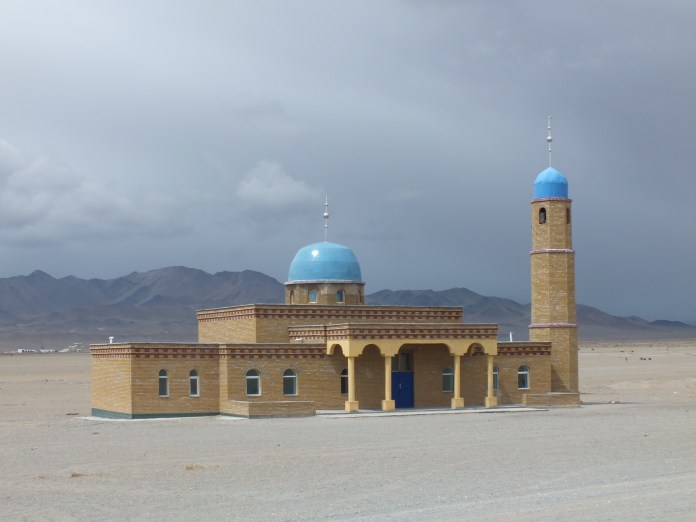
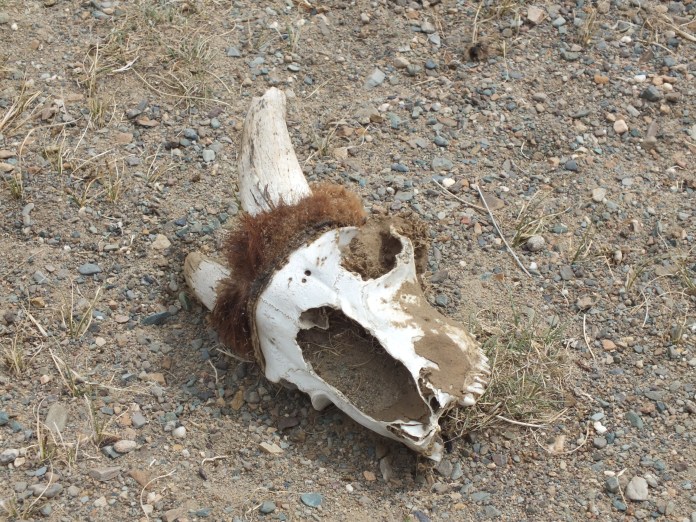
A short walk along the main road took me onto the steppe for the first time. It was littered with animal bones and plastic bottles.
It continued to snow and I sat inside with the Russian man with a briefcase, eating the extraordinarily tasty soft creamy butter. He had two tonnes of Altai honey stuck at the Russian border, and we waited out the snow together.




















 Km. 0
Km. 0 