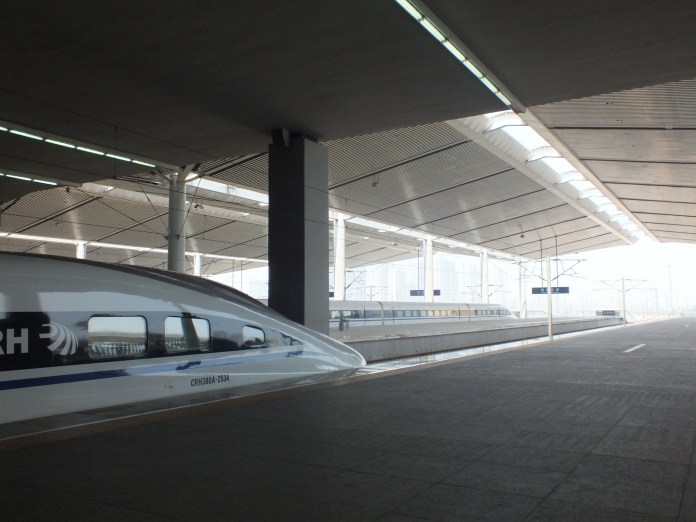
The bullet train took me to Xian at 305km/h, a six hour journey through fields and cities and construction sites rather than countryside.
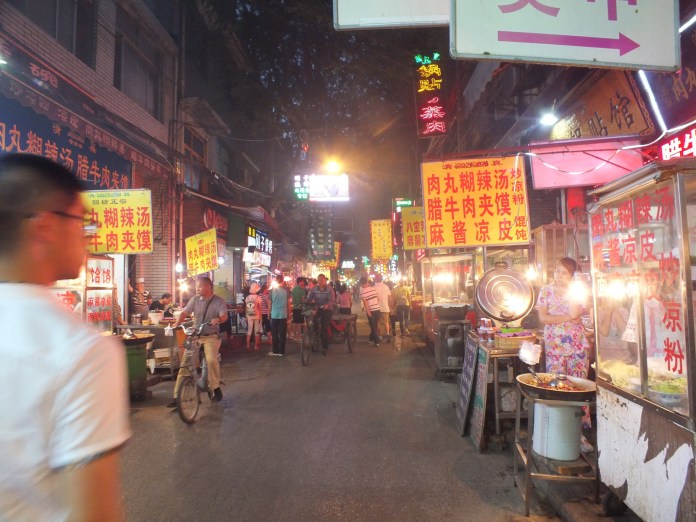
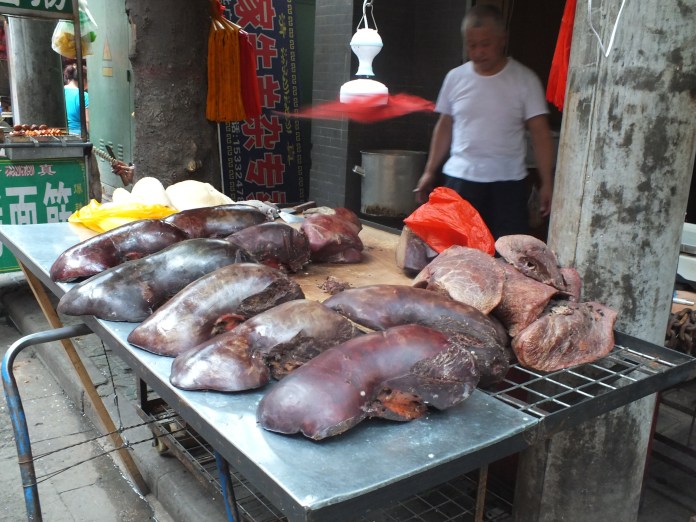
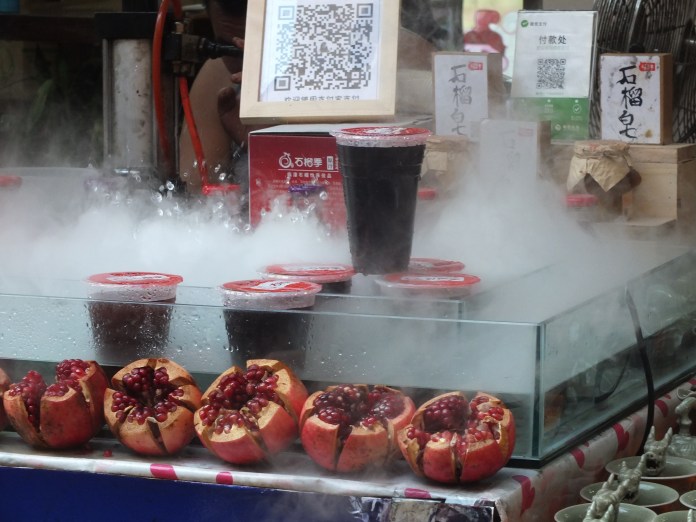
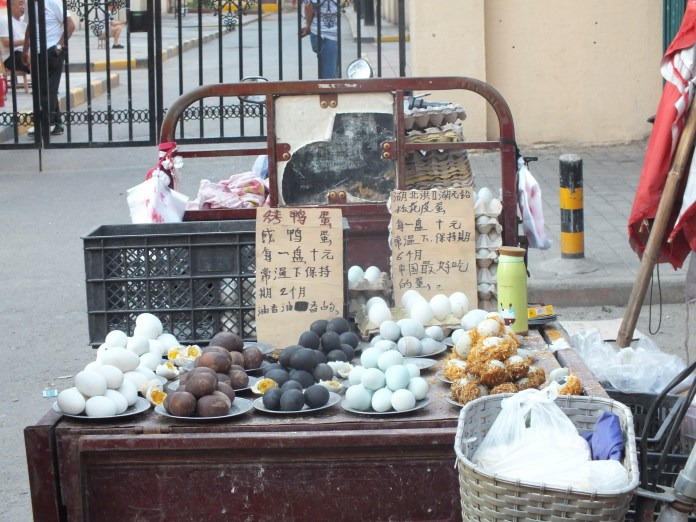
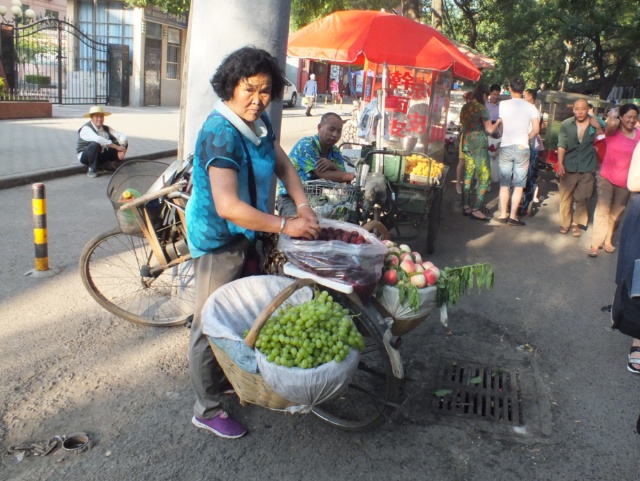
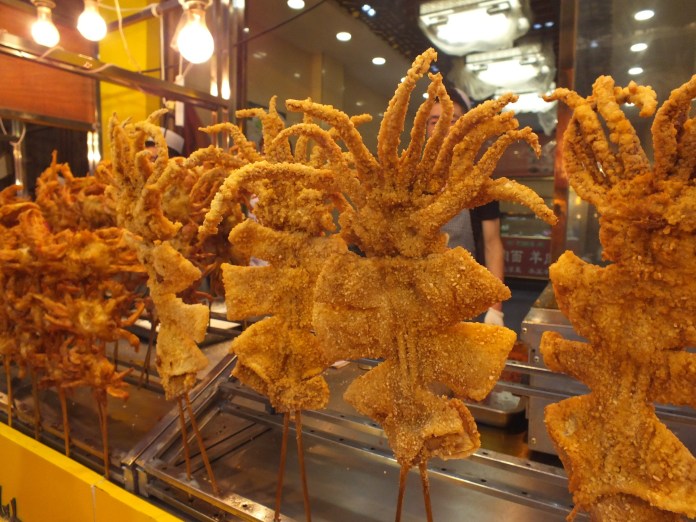
Xian was at one time the capital of China, and is one of the more pleasant cities (with a population of only 8.9m) – and the one visited by every tourist. The most exciting part was the Muslim quarter, a maze of streets lined with shops selling spices, dried persimons, walnuts, sweets, tofu, spiced breads, pumpkin cakes, fresh pomegranate juice. Women manned the stalls in headscarves, still looking very Chinese, and the call to prayer was amplified over the roofs. The road was covered in squashed tomatoes and cabbage leaves and the air was thick with smoke from the stoves, from which flames roared like furnaces. I couldn’t resist the deep fried squid on a stick (a whole one, flattened, like a giant lollipop).



But the main reason for coming to Xian is to see the Terracotta Army. I went along with a history teacher from Shanghai and we spent a long time discussing the regional differences in facial features and dialects (she couldn’t understand any one unless they spoke Mandarin, and no one else can ever understand the Shanghai dialect).
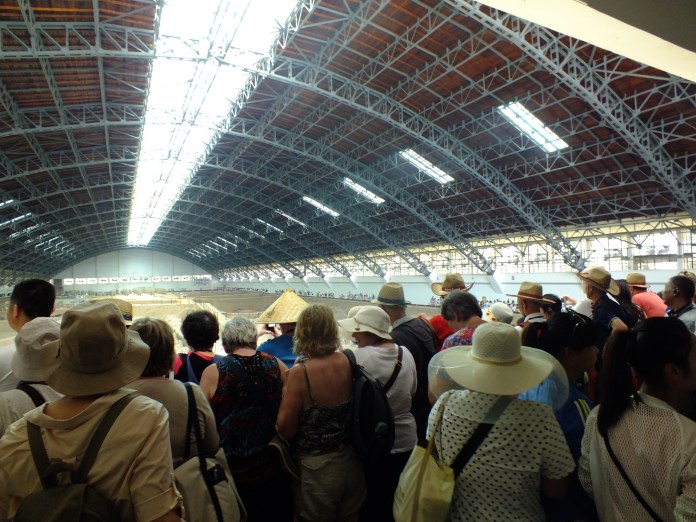
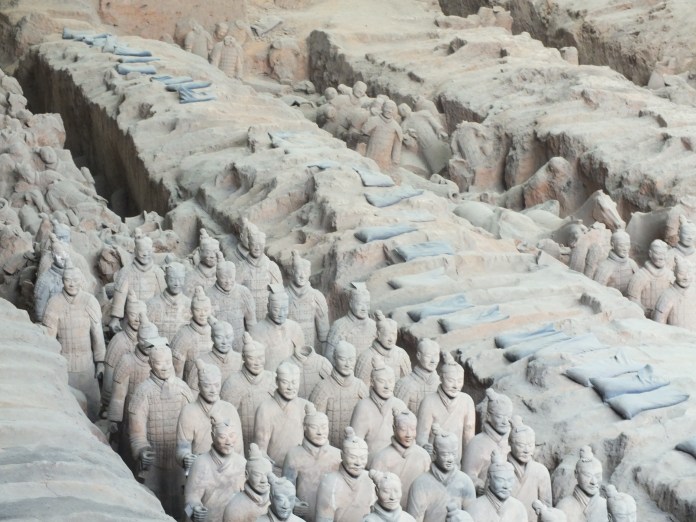
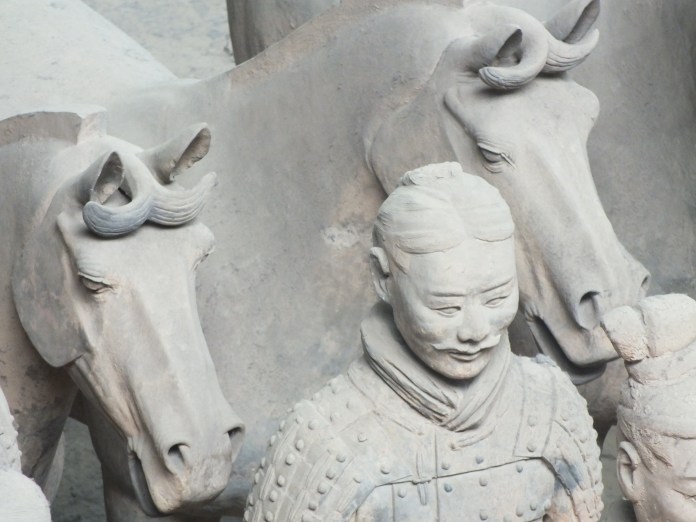
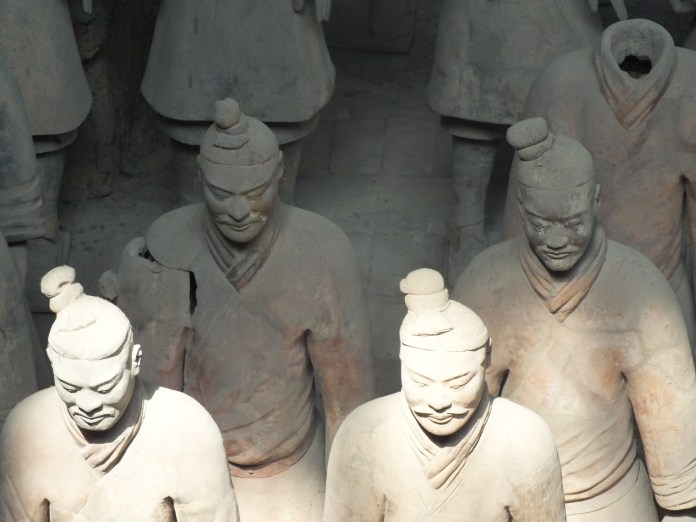
There were two armies: the army of clay and the army of tourists. We went backwards, fighting our way through to the front where we were confronted with the most impressive sight of hundreds of life size soldiers standing in line, ready to fight. Each one is unique, of varying height, posture, face type, expression, hairstyle and clothing. The soldiers were made in caves by coiling clay to create a hollow body, just an inch or so thick, and it took a team of ten or eleven craftsmen a month to make one soldier. They estimate there are about 8000 soldiers. Once they’d been fired in the caves, they were painted bright colours and given weapons.
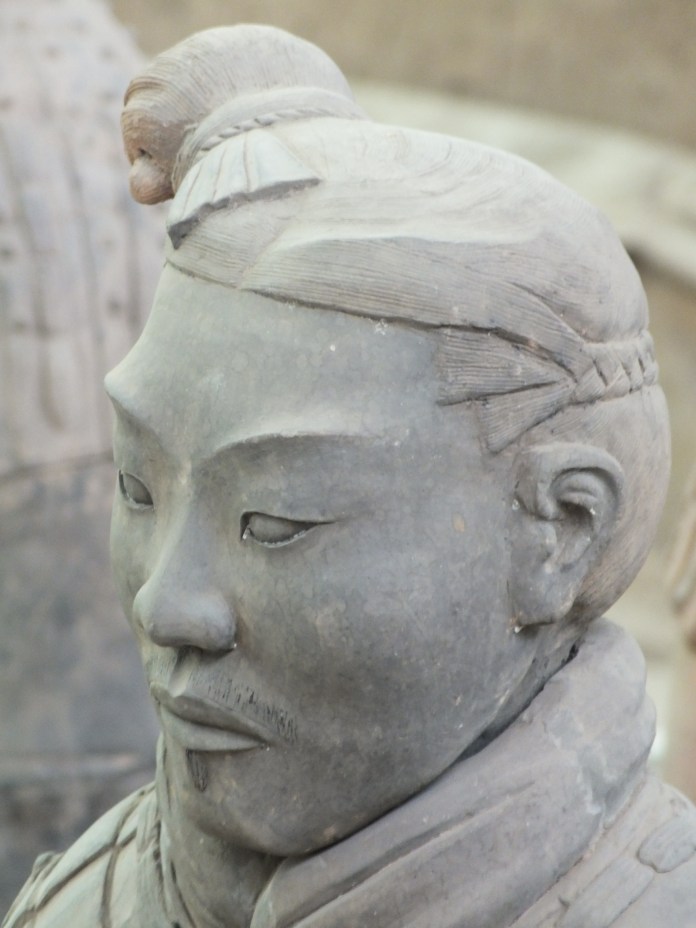
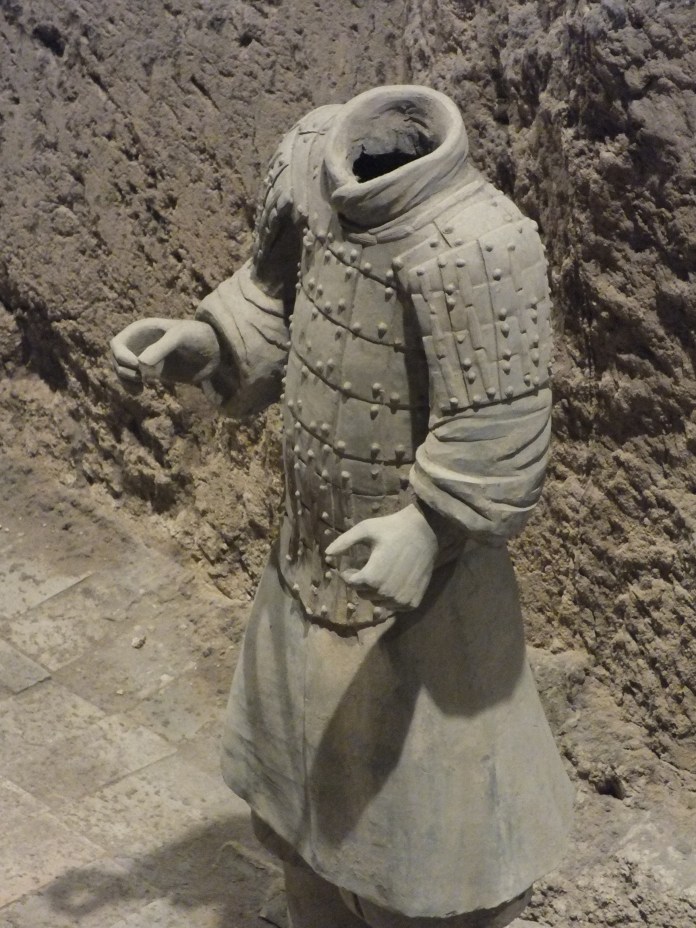
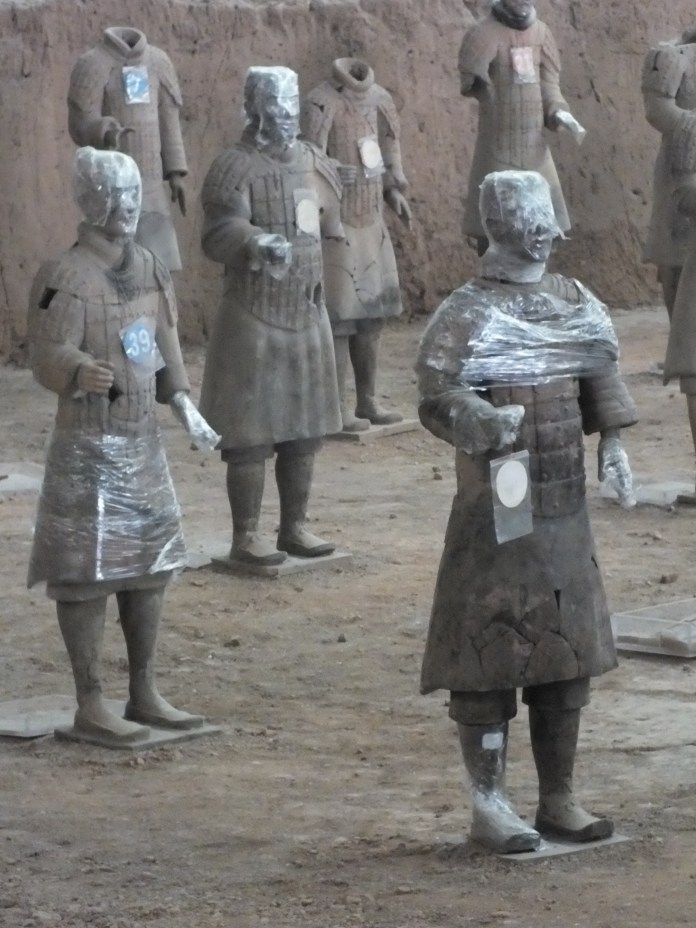
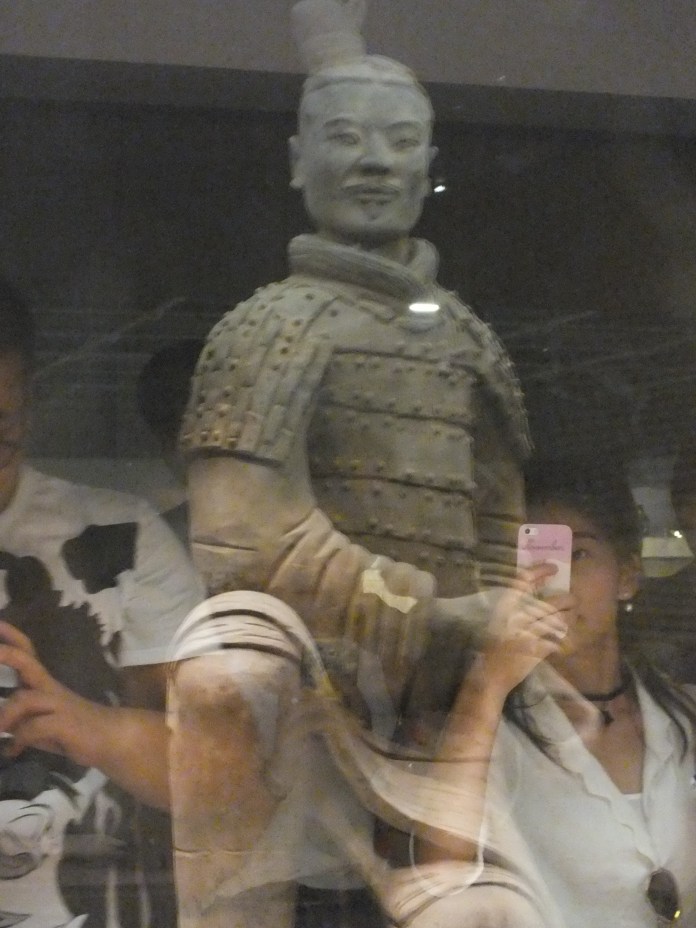
They were all so different you could spend hours just looking at their faces, like people watching. And they were so lifelike and full of character, with so much detail, that I felt quite upset at the sight of so many shattered torsos, broken hands and severed heads.
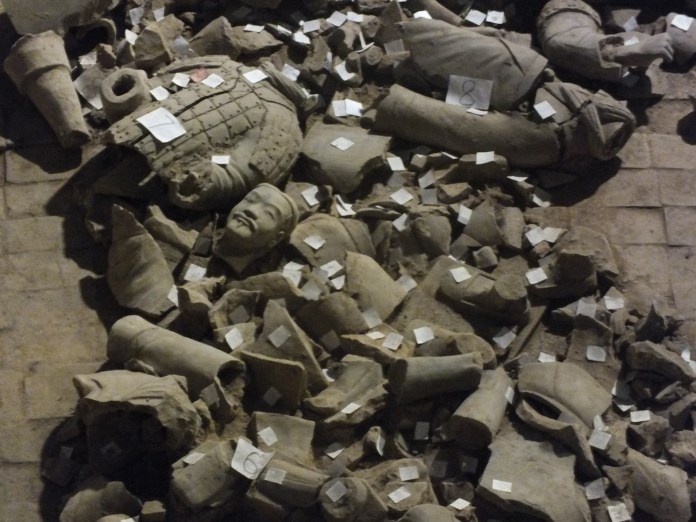
Most of what you see are actually unidentifiable shards of pottery, and it’s essentially an archaeological site. The real hard work comes at the tomb of Emperor Qin, first emperor of China, which hasn’t even been excavated yet (they’re awaiting improvements in preservation technology). Legend has it that there were underground rivers of mercury. I’ll never know. What a con for tourists, but still a brilliant day out.
 Km. 0
Km. 0 
Hi Iona, another fascinating bulletin ! I would really love to see the Teracotta Army, it must be quie an amazing sight . Once again your pictures are great.
As for the food, I particularly liked the look of the deep fried Squid on sticks, but generally I feel it would be safer to be a vegetarian in China !
Here in France it is mid summer’s eve and the Fete de Music which is very jolly ! We are off for a dinner and a spot of dancing under the trees.
Where next ? When do you hope to arrive in Tasmania ?
Enjoy your journey, keep us posted with your wonderful blogs
Carole 🇫🇷🍷🍾
LikeLike