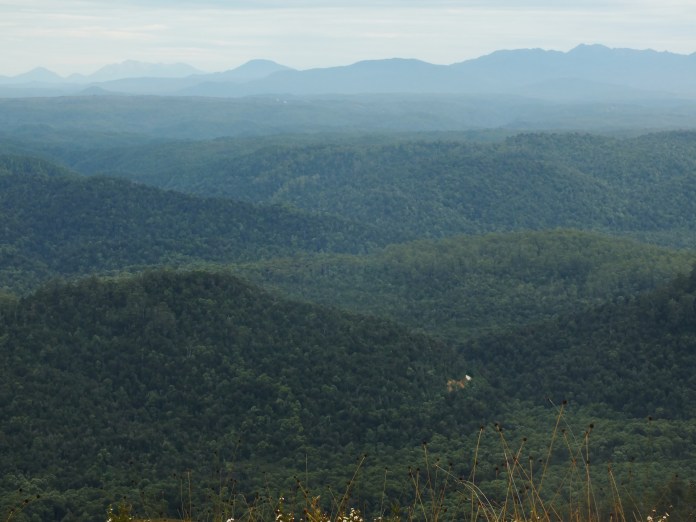
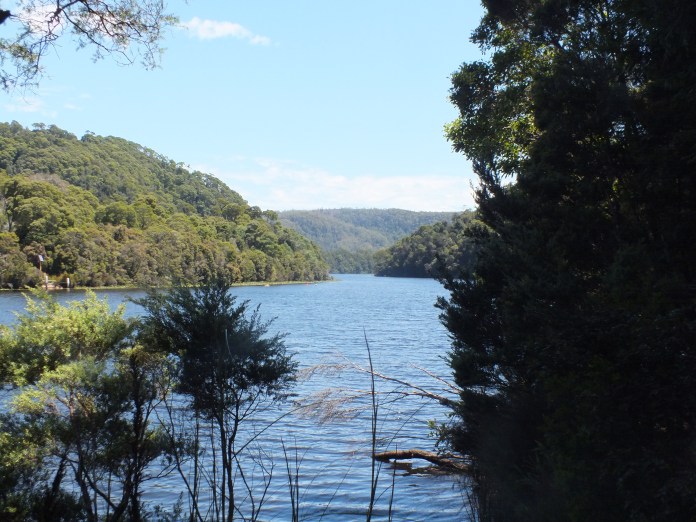
The Tarkine drive is slightly controversial, and I felt rather guilty for being able to drive straight through it, but it was so beautiful. We passed through forest for logging and fire damage before reaching the panoramic views of forested hills and mountains, and then descended into rainforest. We arrived at the ghost town of Corinna, an abandoned mining town which is now used as a ‘wilderness lodge’. The camping spots were idyllic, on the banks of the Pieman River and underneath giant manferns, but were absurdly expensive – just because they can be, I suppose. Fourth item lost: my watch (that was actually useful).
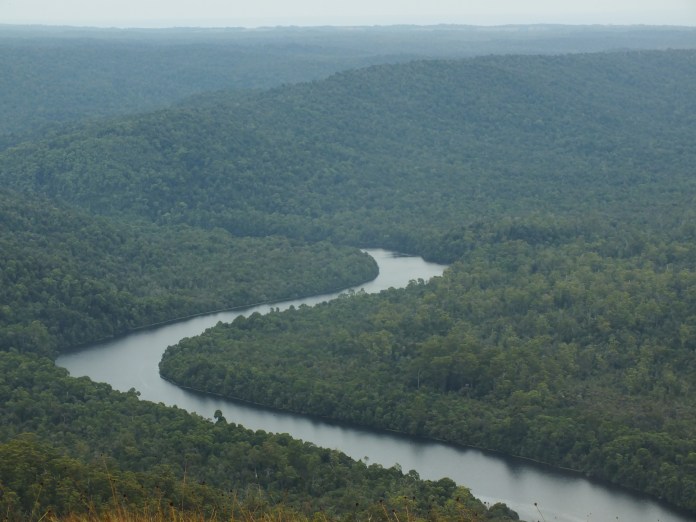
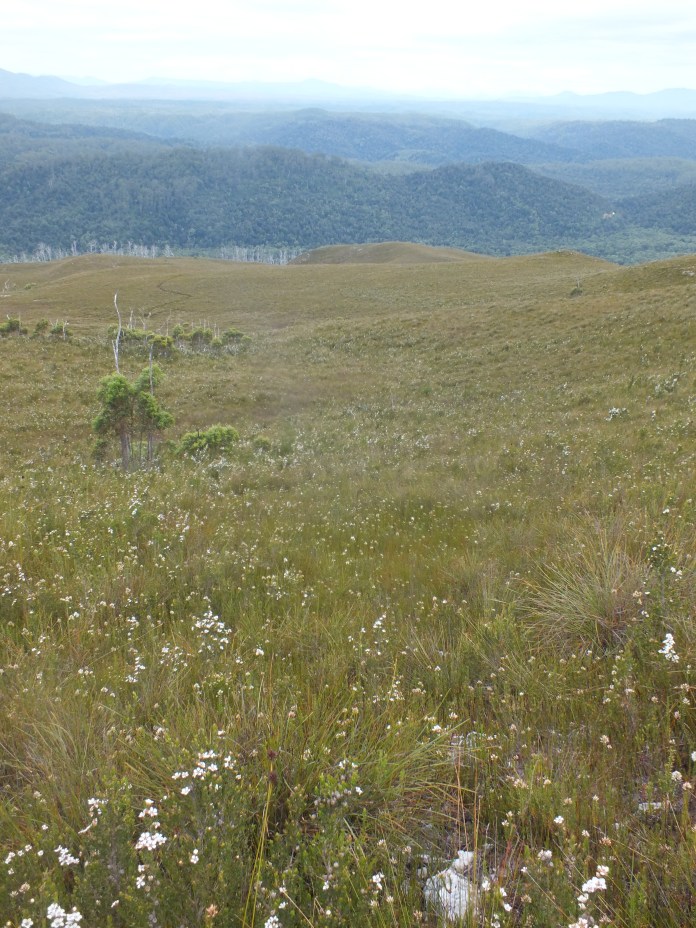
I went on a final walk with Melanie up Mount Donaldson, again posing for photos and mapping the route. We passed through thick bush and then climbed up to exposed mountainside covered in flowering tea trees, with incredible views of the Pieman River snaking through the forest.
Back in Corinna, I realised how stuck I was – in the middle of nowhere with no way out. Hitchiking wasn’t really going to work. I contemplated begging, and asked a few people, but nothing before the following day. Then, as I sat on a log (far away from the baby snake just spotted), another miracle: a Frenchman came up and asked if I was looking for a lift. He didn’t say he was going anywhere and said he could take me south to Zeehan or to a beach where there might be a nice sunset – all a little vague, and he looked pretty cocky and not someone I would get on with, but I badly needed a lift. While he packed up his car, I ran off to see the huon pines, Tasmania’s famous tree which is incredibly slow growing, hard-wearing and water resistant. They were decimated by logging, but not all were cut down. These ones survived because they had become misshapen through flooding. I’d expected something more ostentatious, massive moss covered trunks or something, but they were rather small trees, wizened and grey with little, unremarkable leaves. I guess that’s why the early loggers didn’t worry about cutting them down. Or perhaps it was just the anticlimax to six months of hype about the huon pine.

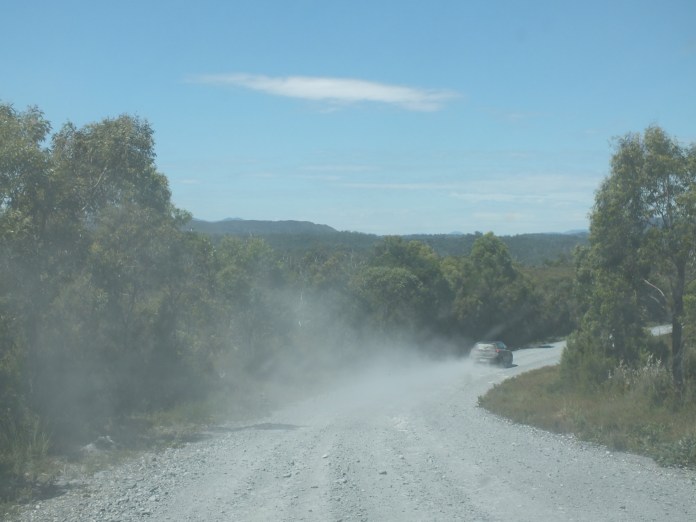
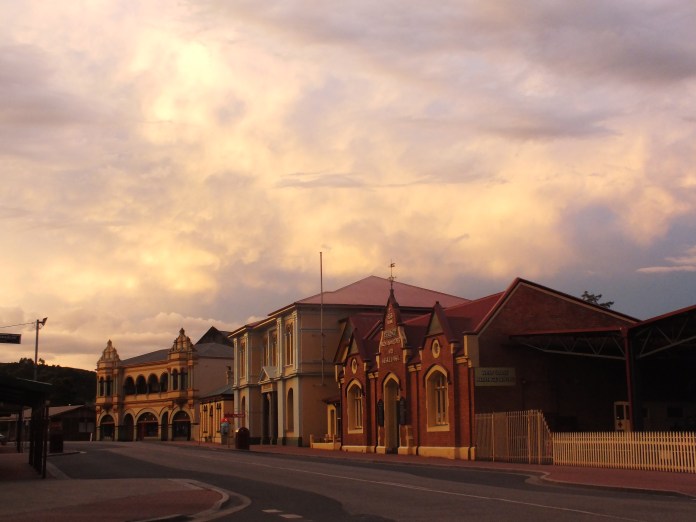
Back at Corinna, Julien had finished rearranging his car and bought a ferry ticket to cross the Pieman River. It was a squat platform more like a barge than a ferry, and was pulled across by a cable, taking one car at a time. Once we were were across, we were flying down the gravel. Julien had been in Australia for more than two years and had turned bushman, living in his car or tent, moving from one national park to another, roaming wild and befriending kangaroos. He’d only just discovered Tassie but had fallen in love with it. We arrived in Zeehan and stopped for dinner. Out came the french kitchen – garlic, knives, chopping boards, pans, avocado, grated carrot, pink rock salt. In minutes we had a feast. The sky which had clouded over now opened up to cast a pink light over the deserted high street, another relic of a bygone mining era. And then the clouds returned, the sky blackened, the wind picked up and a storm began. We pitched our tents right in the middle of town by the official monuments, but soon heard the sounds of drunk people shouting and crashing into things. We tried to avoid being seen, but were hardly going to be missed. However, they were the nicest, politest yobs I’ve ever encountered, telling us about their mining jobs, the glorious past of the town, and the story of the Pieman River (named after a convict baker in the vein of Sweeney Todd). And then they apologised for keeping us awake and left us in peace. They might as well have stayed though, because the storm which followed was terrible, blowing rain through my tent, shaking the fences and roves and making sleep impossible.
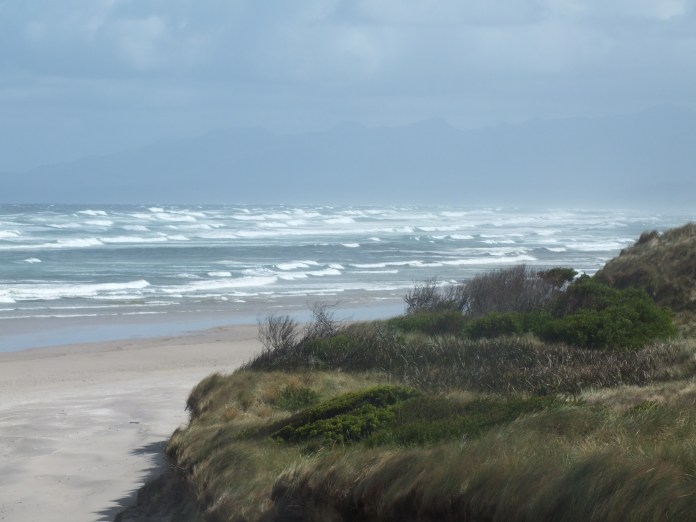
The following morning we scooted off quickly to have breakfast at a scenic lookout (out came the French kitchen again), then headed down to Strahan. The ocean looked rough: waves crashing as far as the eye could see, both ahead and to either side. The seagulls struggled just to stand still, doing funny little sideways walks when the wind got too strong. It was a spectacular sight.

My second lift of the day came from a local, who needed someone to talk to about his family crises. It felt like a therapy session. Then in Queenstown I had to wait the longest time so far (just over an hour) before getting picked up by a Swiss-German couple. They made me tie all my belongings together so I wouldn’t lose anything, then I squeezed into the front and the camper van spluttered on. It was very German, very funny, very interesting, and very exhausting. My final lift for the day came from a fisherman on his way home. He’d been out in the storm and was grateful to have made it out at all, but it was all fine and his crayfish had been safely delivered to Beijing. We went on various shortcuts and he pointed out all the local spots and pieces of history (towns that had completely disappeared and so on). And again, he told me all about his family and their divorces and upsets. So tiring. But what a great way to say good bye to Tasmania.

 Km. 0
Km. 0 
Iona: I am very amused and impressed by all that you have experienced in Tassie!! Well done. I shall SO look forward to hearing much more when you get back to England.
LikeLike