
The Red Centre. The Outback. The Central Desert Region. Vast horizons, cloudless skies and never-ending straight roads draw me here. I want to know what life there can be in such an inhospitable environment. Heading north west out of Alice Springs, towards the Tanami Desert and the vastness of Western Australia, is the small aboriginal town of Yuendumu. Most of the remote communities in the Northern Territory are serviced by an amazing bus service called the Bush Bus, which acts as a kind of motorized walkabout for locals who don’t have the 4x4s of cattle stations or the government. On the bus I stuck out as the only white passenger, repeatedly questioned about where I was going and who I was seeing, though I could barely understand the broken English which intermingled with indigenous languages. Along the way we stopped off in Yuelamu, a closed community off the main road, and it was the first time I’d been in a fully aboriginal town. There are only about 100 residents, and you need a permit to access the land, but there was a lot of activity: people wandering along barefoot, driving their suburban cars along dusty red roads (I wondered how they’d managed to bring those cars here), children playing in an old playground strewn with cans, plastic bags and blankets. Women came out to greet the bus with their babies. It felt a quiet place, remote and yet somehow crowded.
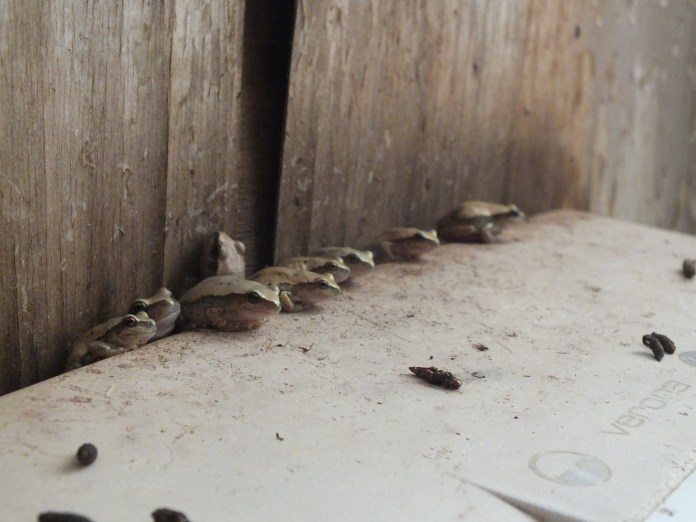
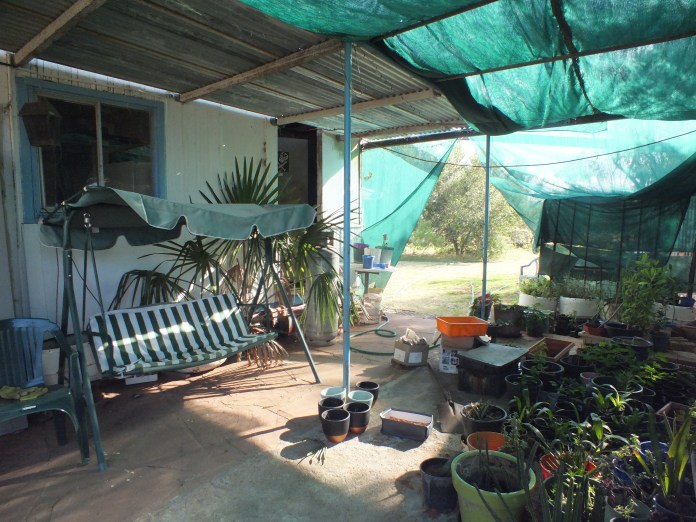
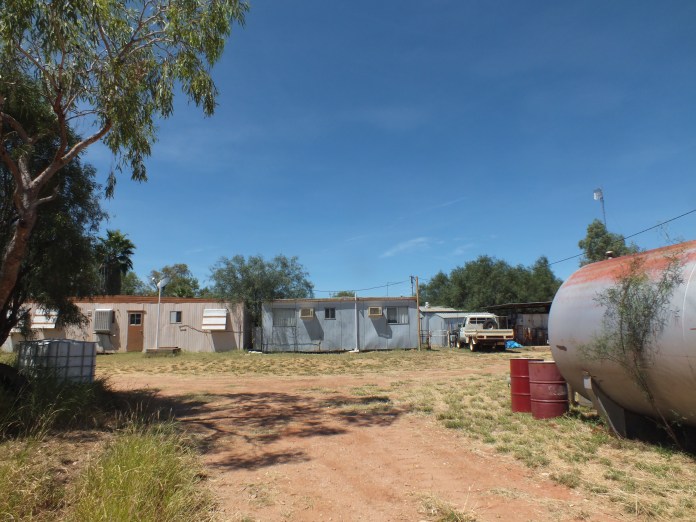
35km from Yuendumu is Mt Dennison, a cattle station 300km north west of Alice Springs. The station is 3000 square kilometres – 60km between the furthest points, or a one hour drive across – and says it has 5000 cattle. It was hot. I was shown to my own little house, which had no air conditioning and was even hotter. The bathroom was infested with frogs and the peeling walls, broken cupboards, patched lino floors, mismatched bedding, everything, was covered in gecko droppings. I tried to use the toilet in another volunteer’s bathroom, but it stood at a 45 degree angle and there was a big hole in the floor, so I simply had to make friends with the frogs – I would get no sympathy here. The next morning our electricity wouldn’t come on. ‘Welcome to the outback’ said Dianne.
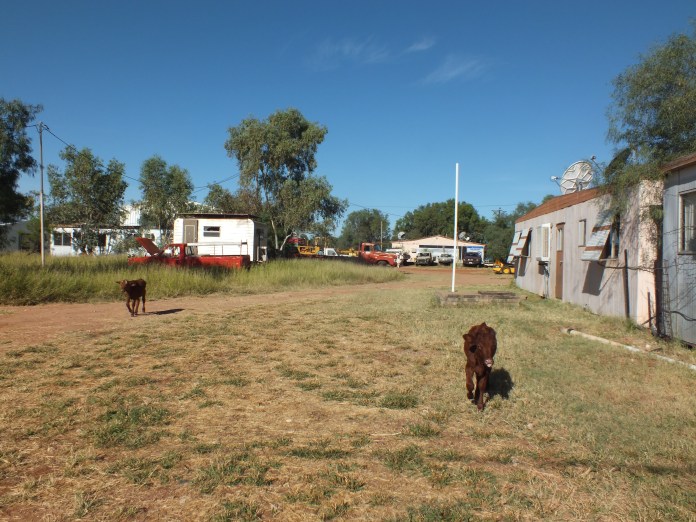
Dianne runs this family cattle station, but she is widowed and her six children have left home so she now manages the place alone, helped only by one employee and an uneven trickle of volunteers. I asked if she felt isolated here. ‘No, the bitumen extends almost all the way to Yuendumu! And it’s only three hours to Alice.’ These distances are starting to seem small even to me.
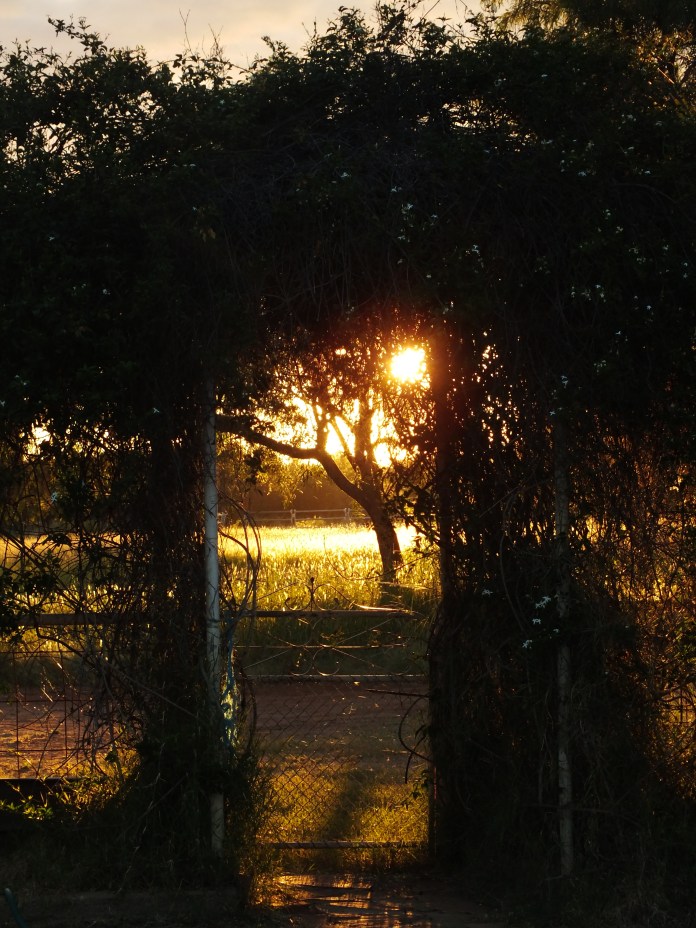
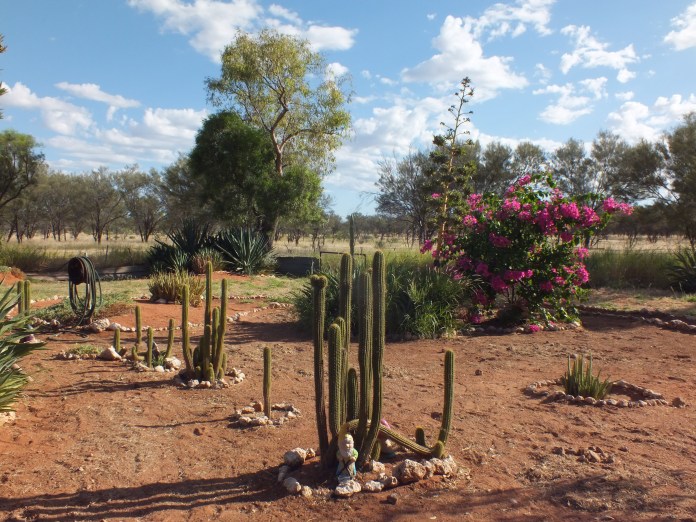
Breakfast was at 6.30am and work started at 7am. Every morning we had a beautiful sunrise over the fields of long grass, and as soon as the sun was up, work began. In these semi-desert conditions, watering the garden was a major job. They’d had a lot of rain over the summer, but nothing for the last month. I managed eight hoses simultaneously, flooding each plant and tree for up to 20 minutes each. But weeding was wonderfully easy in the sandy soil. By 11am it was too hot for me to work outside: on several occasion the (admittedly not terribly reliable) thermometer read 44 degrees – and it was always hotter inside my room… I could have watered the plants with my sweat by that point. My pale Tasmanian skin gave me an excuse to go inside.
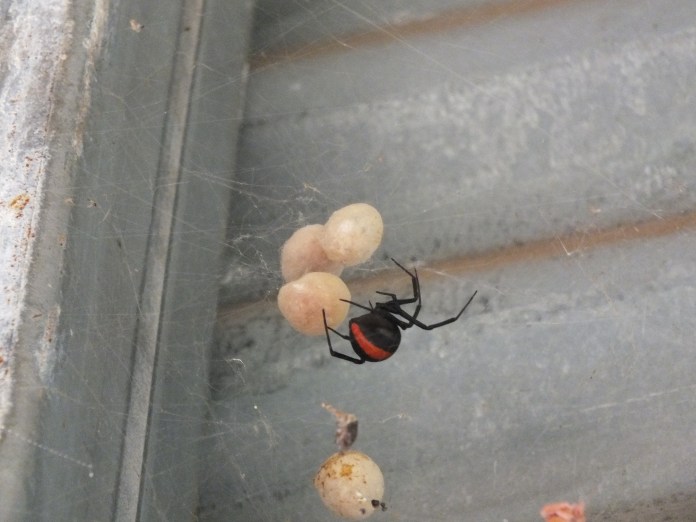
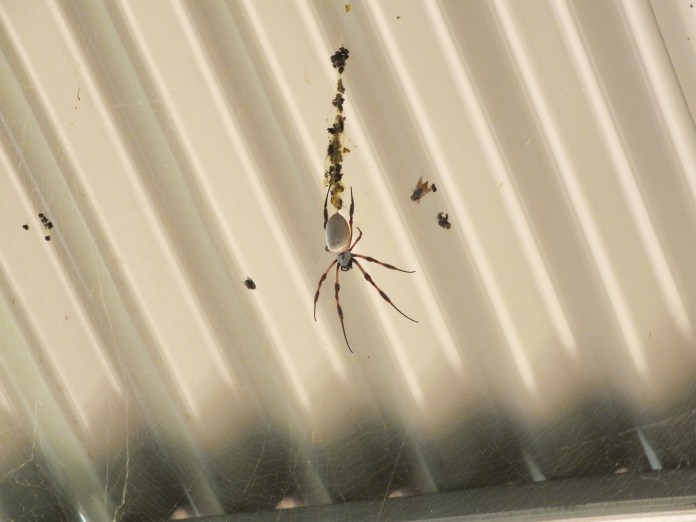
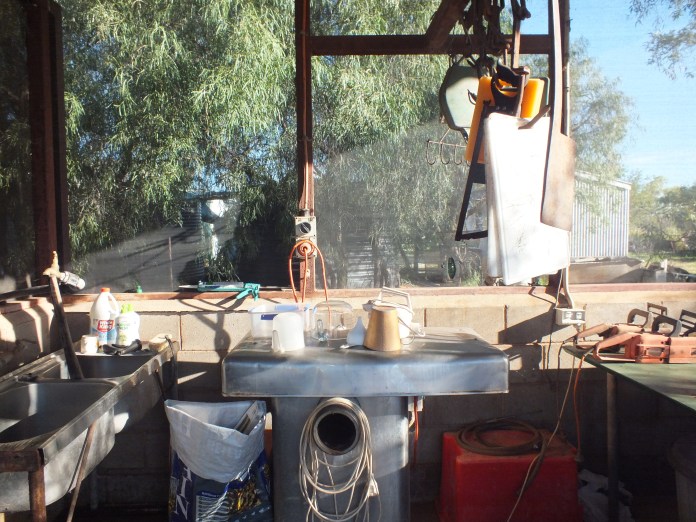
I cooked for the boys and cleaned the decaying homestead. From the garden at this time of the year we had an endless supply of chillis, lemons and limes, while the various cool rooms were piled high with crates of milk, apples, butter, peppers and beer. The freezers were filled with steaks, salted beef, stewing beef and sausages, and the pantry was so well stocked it would rival any shop. Housework here was not simply about appearances or creating a pleasant living environment, but was a matter of safety. Poisonous spiders were allowed to live over the barbecue, but not underneath chairs or on the hat stand. Centipedes in the house had to be crushed and disposed of. Grass was a fire hazard and had to be cut.
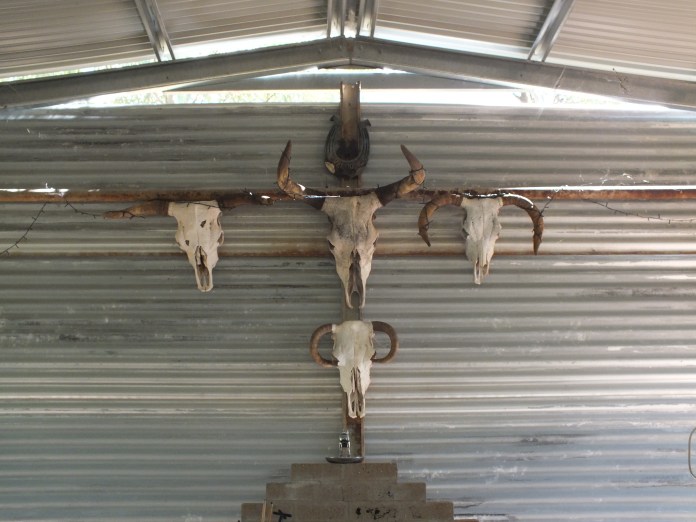
I was surprised that I actually saw any cattle at all. They live completely independently, partly due to the nature of the land and partly because a lot of work simply hasn’t and isn’t being done. Many of the fences have collapsed, meaning the cattle can’t be managed and simply roam free alongside the wild horses. The exceptions to this were the ones who were hand reared as calves and now choose to spend the rest of their lives around the homestead. It was my job every evening to make up the powdered milk and feed the calves using an old beer bottle. They were aggressive and fought for the bottle, head-butting each other and me, stamping on my feet and trying to wedge themselves between my legs or between me and whichever calf I was trying to feed. But by the end I realised that if I stuck my fingers into their mouths, they would suck on them and keep quiet (while cutting off most of the blood from my fingers). It was very cute to watch.

The actual number of cattle, I was told by the one man employed there, was probably closer to 12,000 than 5,000. He was aboriginal (and ‘becomes more and more blackfella the older he gets’) and spoke a beautiful type of rippling, fluid English I’ve never heard before – real Australian slang as only aboriginal people seem able to master with complete dexterity. Even the simplest affirmative answer had to be extended to ‘Yeah bloody eh’. He had incredible stories of the old musters on horseback, sleeping in swags, roaring up fires for hot baths, living on dampers and camp cakes. He taught me about fencing, road building, paddocks, traps, types of cattle, or how to use animal tracks to find water in the outback. When he and Dianne chatted during smokos, I could just about follow, but dinner conversation was beyond me – I just sat back and enjoyed the sound of their speech.
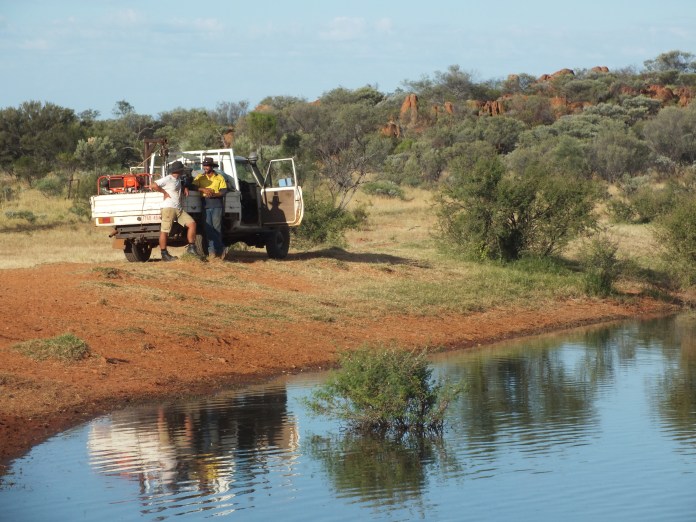
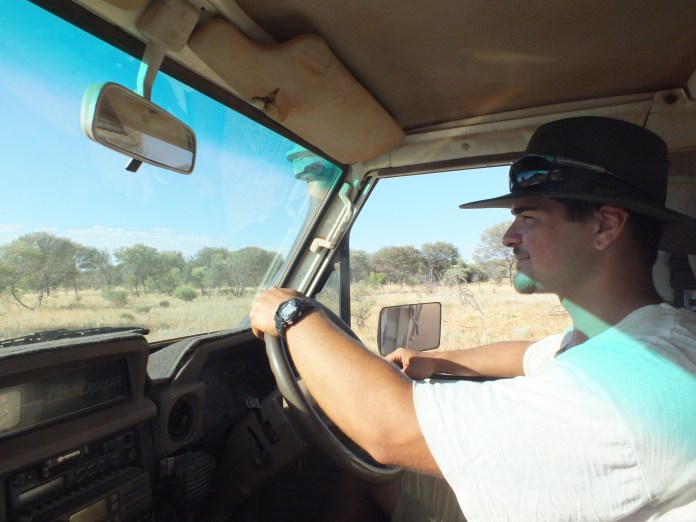
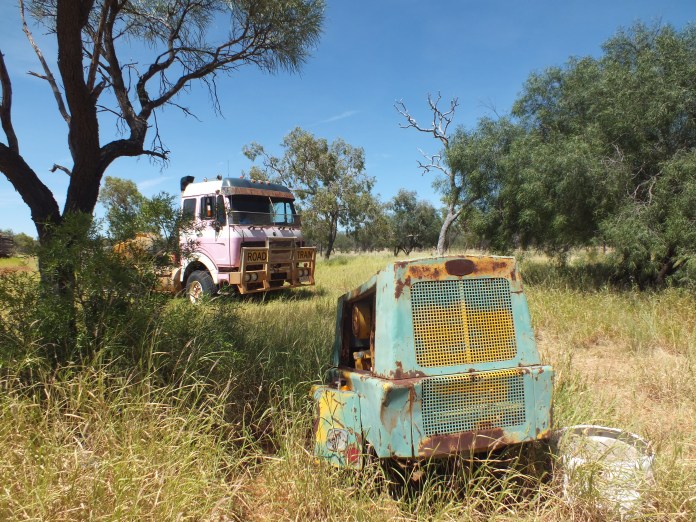
My favourite times were when we went driving across the station. Going to the tip was like going on a journey through time, from rusting cars from the 1950s to typewriters with clumps of grass growing through the keys, collections of washing machines, mountains of tyres, and pile after pile of metal poles, wheels, screws – anything you needed could be found there. We drove to where the roads and fences were being rebuilt, where herds of wild horses galloped past in clouds of dust and cattle scattered in terror as though they’d never seen such monsters before. Three of us squeezed into the front seat of a truck to go and see a dam, which we found by turning off the road at some unmarked but apparently significant point and driving right over bushes, trees and broken fence lines. I hadn’t expected the landscape to be so beautiful and to have so much character.

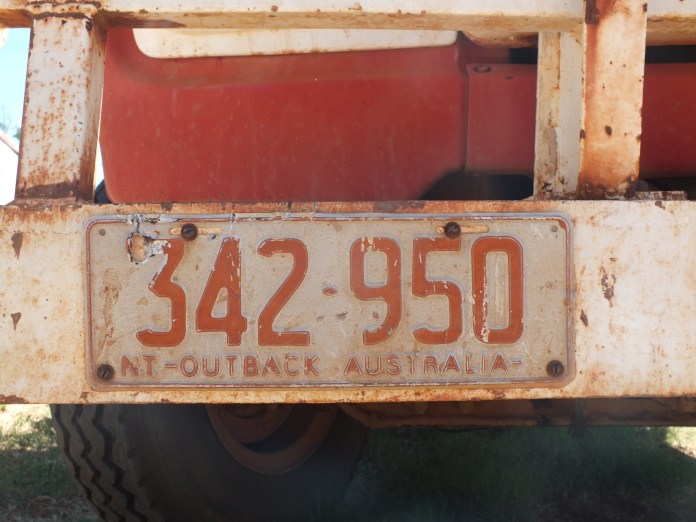
I loved living and working here so much. I loved the heat and being spoilt for sunrises, sunsets and the majestic Milky Way every single day. I loved getting up early and working hard, showering several times a day under water that refused to turn cold in a vain attempt to cleanse myself of red dirt. I loved the afternoons spent inside the cool homestead, drinking icy lime sodas, being domestic or doing patchwork, and listening to a calm Englishman’s voice reading Smiley’s People, while outside in the sweltering heat the grasshoppers and lizards and cockatoos carry on living, just as they always have.

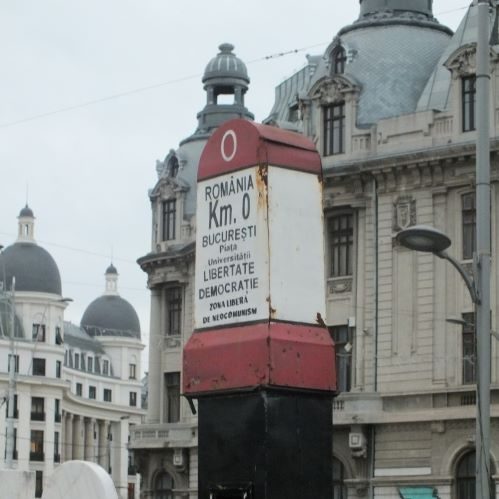
 Km. 0
Km. 0 
That is fascinating Iona, and well done for living peacefully with all the wild life. I was particularly interested to learn that Dianne, a widow, with six children all of whom have left home, is running her farm with volunteers. Here I am, a widow, running my little 10 acres with the help of volunteers. I look forward to meeting up with you one day and comparing experiences of volunteering. Go well. love Sophie xo
LikeLike