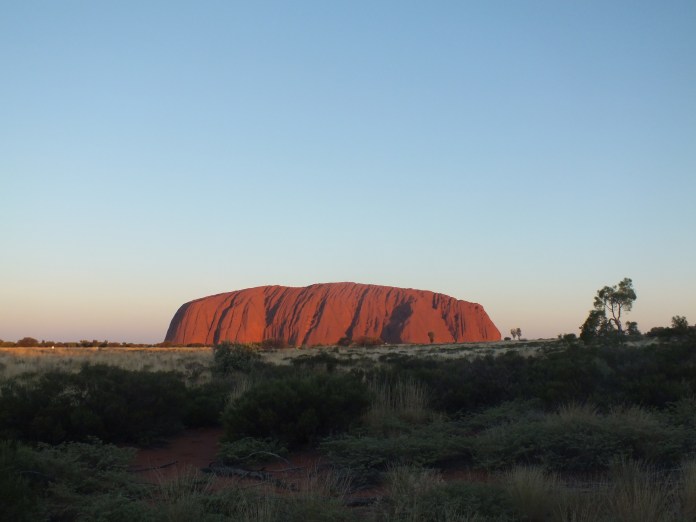
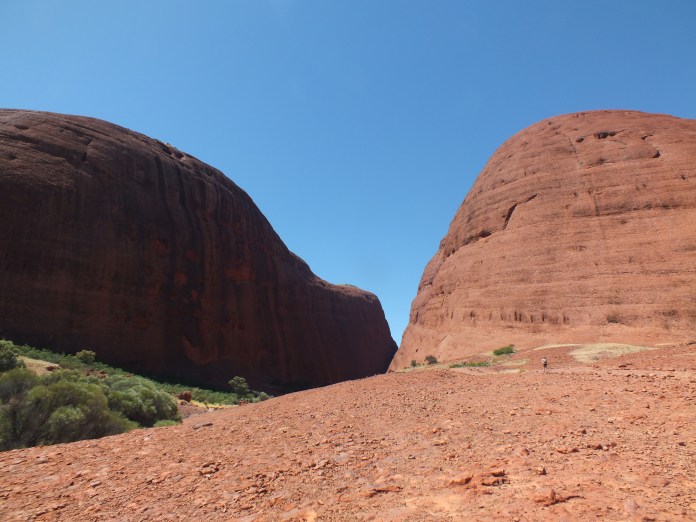
It was my last week in Australia. I’d been persuaded to see Uluru – not the magic glowing rock it’s sometimes made out to be, but a majestic and powerful creature of the earth – and began my journey north. From the bus I watched the landscape grow green and lush. Along the roadside were termite mounds ranging from tennis ball bumps to full-size snowmen creatures dressed in old t-shirts. Dark grey clouds appeared and glowered until late afternoon when it poured torrentially for five minutes, and I realised I hadn’t seen rain in over a month.
Stepping off in Darwin I was hit by the humidity: it was a physical resistance, like swimming through the air. In the hostel my air conditioning was mistakenly set to 26 degrees (which felt freezing) and I woke to find the floor and walls covered in a sticky layer of condensation. But now it’s only the end of the wet season – I can’t imagine what it’s like at Christmas.
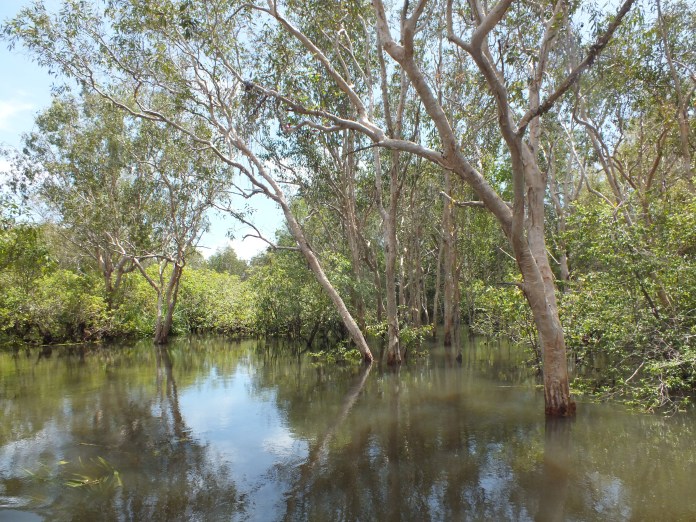
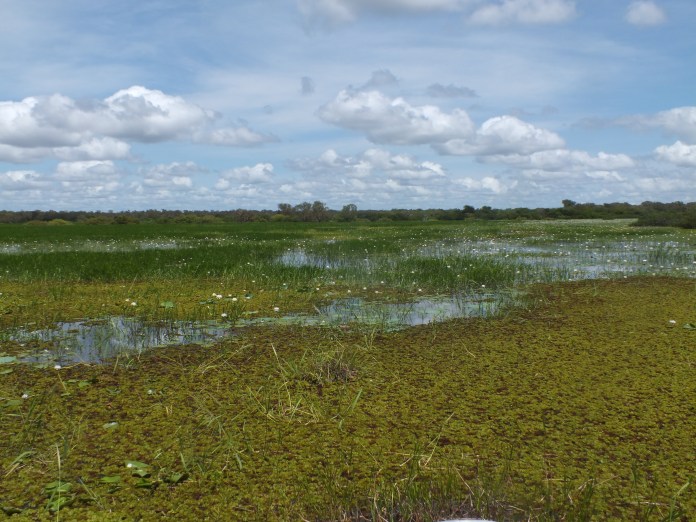
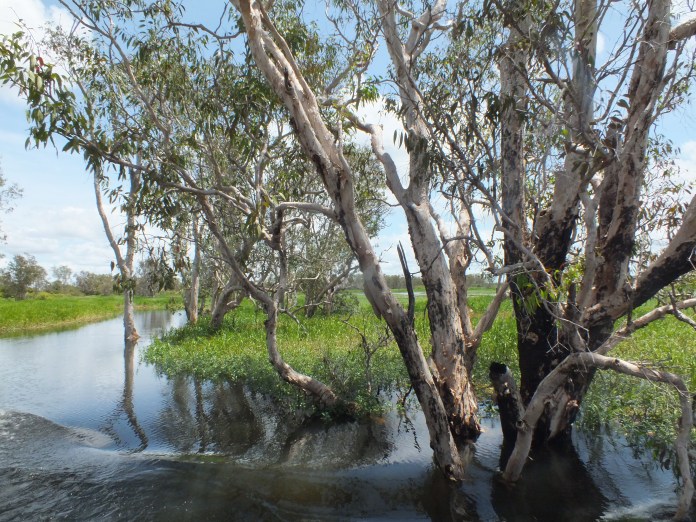
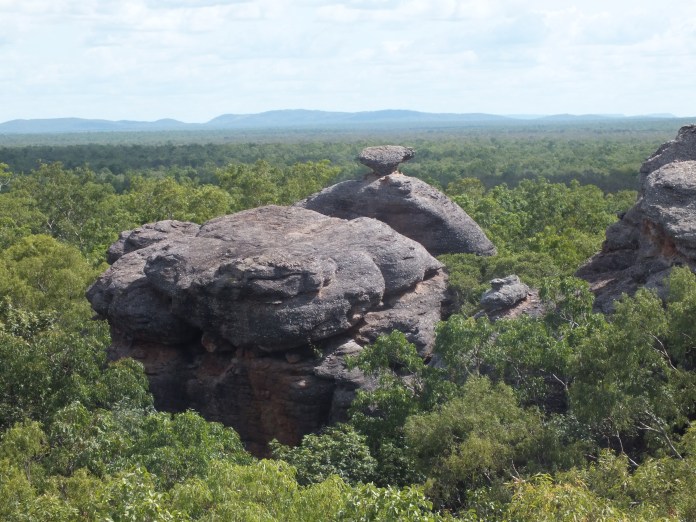
Since it’s the wet season it was harder to visit Kakadu, the massive national park in the top end of Australia. In fact, it was mostly underwater. I took a river cruise through parts that are dry land for the rest of the year. ‘Try to imagine my aunty standing underneath that tree fishing’, our guide said, pointing to a small bush – the few branches of the tree that still remained above water.
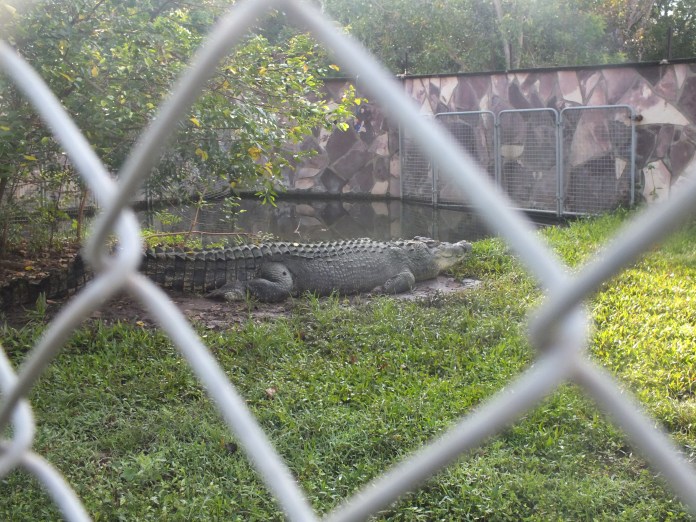
The water is beautifully tranquil, but murky and lethal. Before we set off in the boat we were given the compulsory lifebelt safety talk, but it ended with the instruction to never even think about using one since there are about 10,000 salties just waiting to eat you. It was very reassuring. The words of our guide kept on going through my head: ‘Remember, you’re no longer top of the food chain’. In the end, though, the closest I ever came to seeing a crocodile was the one caged in a roadside inn we passed, and the skull of the second largest croc in the world (the largest skull is in – where else – Russia). Instead we saw lilies, electric blue kingfishers, plump magpie geese, and lots and lots of still water.
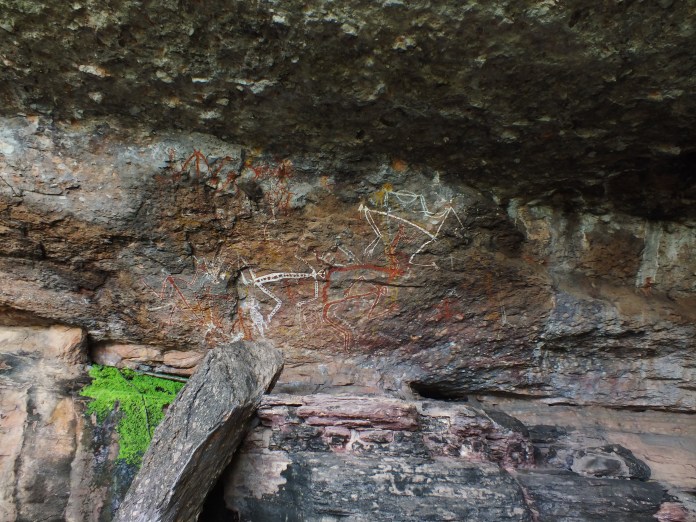
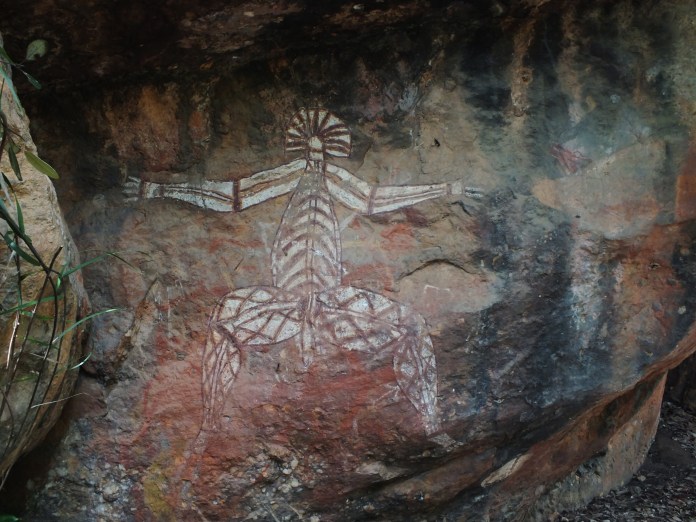
Kakadu is also home to some of the oldest rock art in the world. We saw a monster, painted in x-ray decorative style, who bashed women to death with a yam, a painting intended as a warning for women to stay near the camp. I thought the most interesting drawings were a series of very basic stick figures with balls for joints. They are a warning that this is sickness country and that if you stay your joints will swell up. Thousands of years later it was discovered that Kakadu sits on one of the world’s largest mines of uranium and what people were experiencing was radiation poisoning from the water.
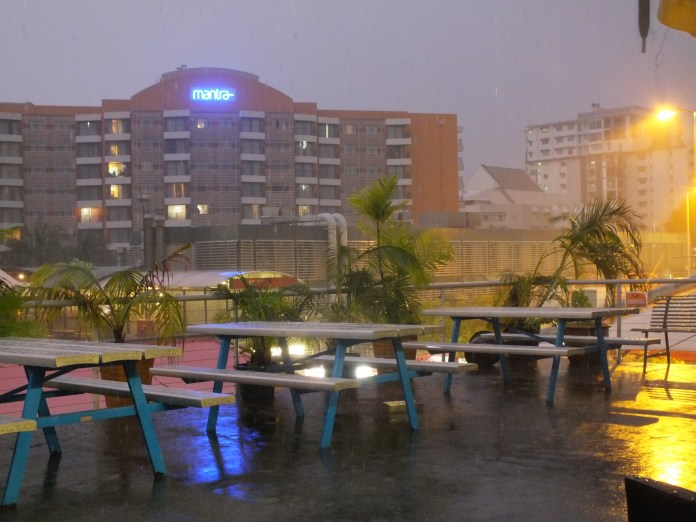
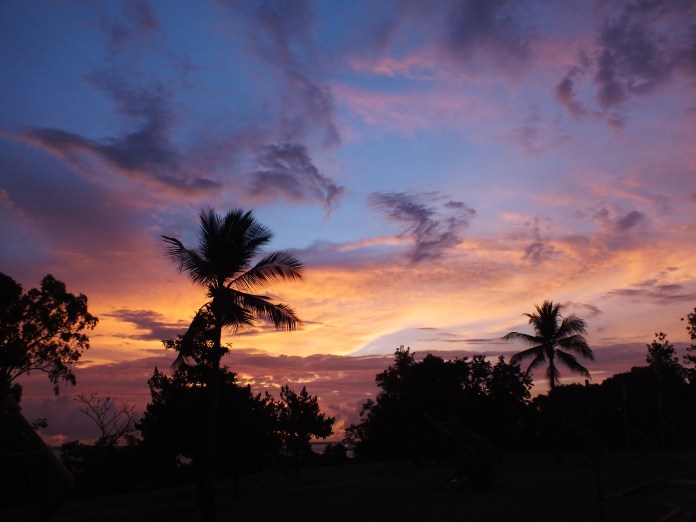
The small city of Darwin wasn’t quite as exciting as I hoped. I don’t know what I was expecting, maybe the old frontier town older generations talk about. It’s a quiet city, not unattractive, with a prominent WW2 history. The military presence is strong and Asia does feel very close – closer than Sydney or Melbourne. It did feel quite different from other places, with its massive bats, fragrant air, beautiful but untouchable water and spectacular sunsets.
It was a good place to say my goodbyes. On my last night a howling wind woke me up, and then the rain hit. It pummelled the sundeck and sunshade, making the swimming pool churn and knocking the potted palms over. Lightening bolts flashed like strobe lightning (frequent enough for me to get the photo below) and the thunderclaps rolled on for ages, sounding like atomic bombs. I woke again at 2am to catch my airport bus, but ten minutes before I had to go I realised I’d left my passport in the library photocopier (in a stupid fit of attempted organisation). I ran to the police station, but no help there, so ran to the library and hammered on the door until a security guard opened up. They looked at me very suspiciously, but went to have a look and returned, passport in hand! I sprinted back through the debris of the storm, only now feeling the humidity of the night – and even caught my airport bus on time. And it was in that hot, sweaty panic and the calm silence after the storm that I bid farewell to Australia.

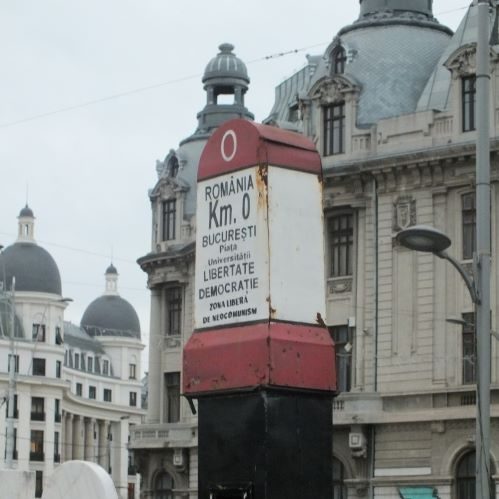
 Km. 0
Km. 0 
Iona, the combination of your photos and text always give a vivid portrait of the places you have travelled through. I particularly enjoyed Tasmania. You have an impressive skill at capturing water. What will you make of London on your return?
LikeLike
Hi Iona, I have thoroughly enjoyed your travels through Australia. Great photographs and narrative, could almost feel the heat and smell the smells !
Am pleased to hear you retrieved your passport in time to make your onward journey. I look forward to your next exciting posting.
I’m spending the Easter holidays in the South of France where we are enjoying glorious weather and there is nothing more to fear than the odd lap dog and the occasional mossie.
Bon Voyage and happy landing,
Carole
LikeLike